
All the power in the world means little if the car is carrying unnecessary weight.

Whenever a manufacturer unveils a new supercar, there are a few numbers we immediately want to know. Horsepower usually comes first, followed closely by the 0-62 mph (0-100 km/h) sprint. After that come figures such as top speed, braking performance, and aerodynamic efficiency.
But there’s another number that can be just as important—and it’s often overlooked: weight.
A powerful engine can make a car brutally quick, but excessive mass can undermine acceleration, handling, braking, and efficiency. In many cases, shedding weight can be more effective than simply adding horsepower. That’s one reason automakers have increasingly turned to carbon fiber, a lightweight and exceptionally strong material that can help dramatically reduce a vehicle’s mass.
For this list, we’ve rounded up 10 cars built with entirely carbon fiber bodies, showcasing just how far manufacturers have gone to keep weight under control while maximizing performance.
There are plenty of other incredible machines that make extensive use of carbon fiber but don’t qualify for this particular list. We’ve therefore left out cars such as the Lancia Delta Futurista, Ford GT, and Mercedes-AMG One, which feature numerous carbon-fiber components without having completely carbon-fiber bodies.
So, forget horsepower for a moment. These cars prove that sometimes the quickest way to go faster is simply to weigh less.
Table of Contents
Zenvo TSR-S
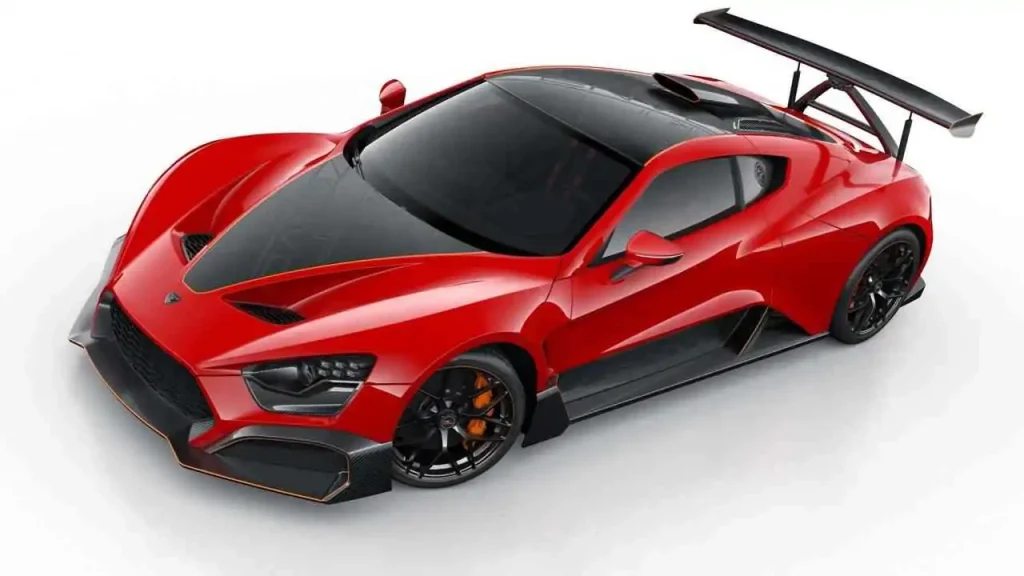
The Zenvo TSR-S combines a carbon-fiber body with a twin-supercharged-and-turbocharged 5.8-liter V8 producing more than 1,100 horsepower. Its standout feature is the Centripetal Wing, which tilts as the car corners to help improve stability. The result is an extremely powerful hypercar where lightweight construction and active aerodynamics work together.
W Motors Fenyr SuperSport

Dubai-based W Motors uses extensive carbon fiber to keep the Fenyr SuperSport’s weight under control while giving it an unmistakable appearance. A 4.0-liter twin-turbocharged flat-six developed with RUF produces close to 800 horsepower, making the Fenyr a serious contender in the ultra-exclusive hypercar world.
Singer Dynamics & Lightweighting Study

The Singer DLS applies modern carbon-fiber technology to the classic Porsche 911 formula. Developed with Williams Advanced Engineering, the car features lightweight composite bodywork and a naturally aspirated 4.0-liter flat-six producing more than 500 horsepower and revving to 9,000 rpm. Its focus is less on outright power and more on reducing weight and sharpening the driving experience.
Italdesign Zerouno Duerta

The open-top Zerouno Duerta combines dramatic carbon-fiber bodywork with a naturally aspirated 5.2-liter V10 producing around 610 horsepower. Built in extremely limited numbers, it uses exotic materials and intricate construction to create a lightweight, highly aerodynamic supercar that looks more like a concept car than a production vehicle.
Lexus LFA

The Lexus LFA is famous for its high-revving V10, but its carbon-fiber construction is equally significant. Lexus switched from an aluminum structure to a carbon-fiber-reinforced polymer monocoque to improve rigidity while reducing weight. With a 4.8-liter V10 producing around 552 horsepower and a redline near 9,000 rpm, the LFA remains one of Japan’s most technically ambitious supercars.
Koenigsegg Agera RS
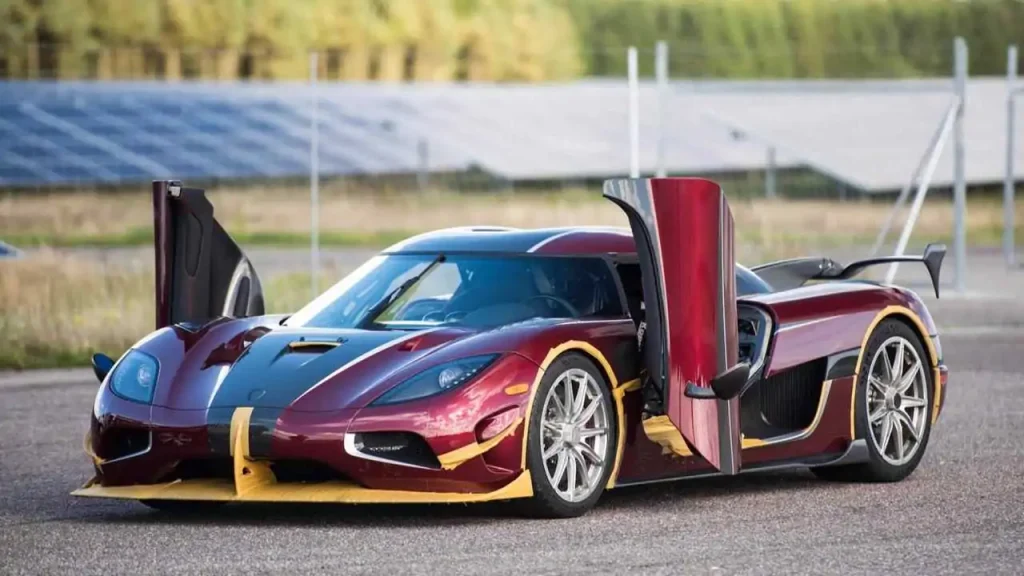
The Koenigsegg Agera RS pairs extensive carbon-fiber construction with a 5.0-liter twin-turbo V8 producing more than 1,100 horsepower in certain specifications. Its lightweight structure, sophisticated aerodynamics, and immense power helped make the Agera RS one of the defining high-speed hypercars of its era.
Hennessey Venom F5
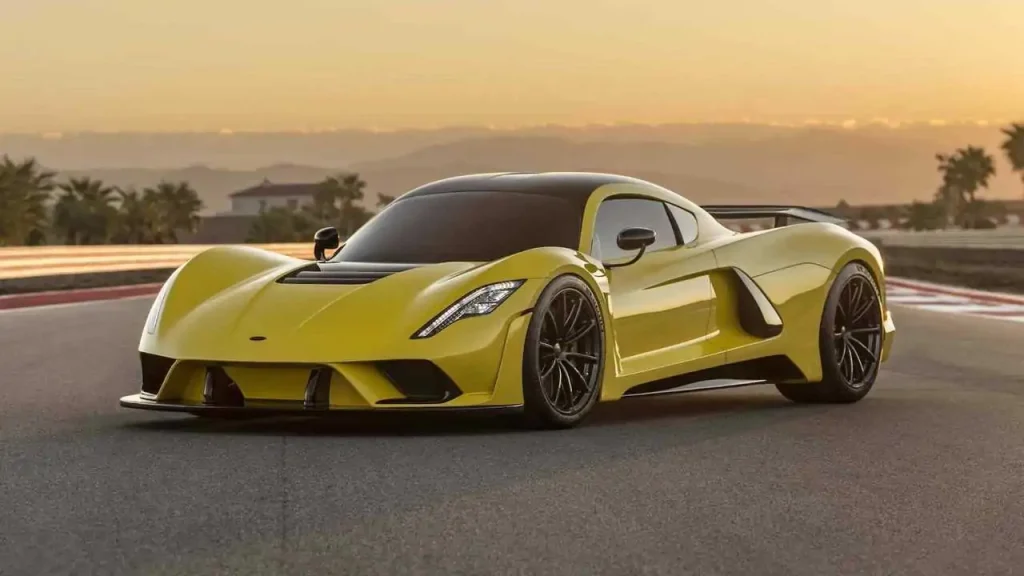
The Venom F5 was engineered around extreme speed, with a carbon-fiber monocoque and bodywork helping keep weight remarkably low. Its 6.6-liter twin-turbocharged Fury V8 produces well over 1,800 horsepower, giving the American hypercar an extraordinary power-to-weight ratio.
McLaren Speedtail
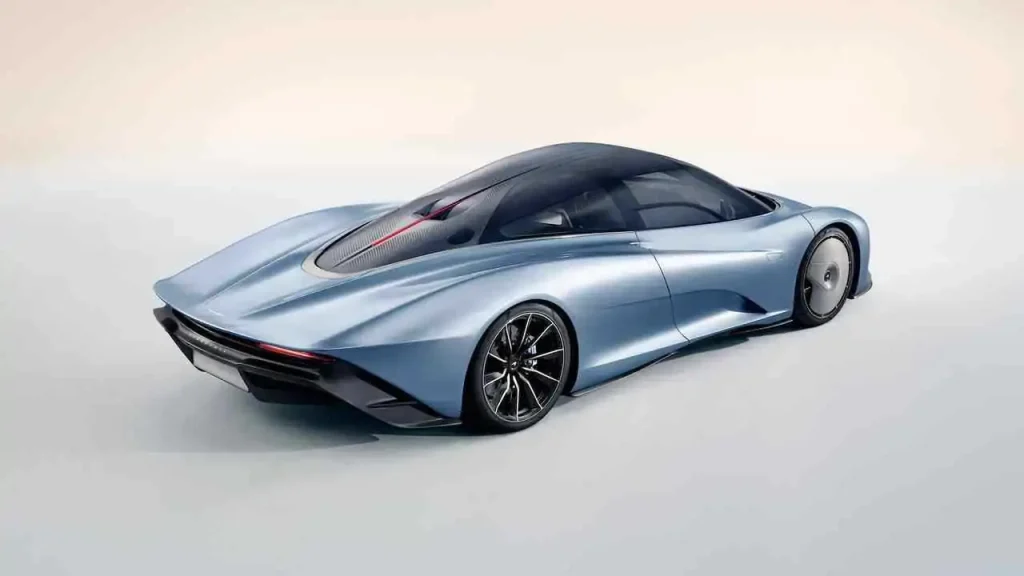
The McLaren Speedtail uses a carbon-fiber structure and bodywork to support its aerodynamic, high-speed design without adding unnecessary mass. Its hybrid powertrain combines a twin-turbocharged V8 with electric assistance for roughly 1,000 horsepower, while the central driving position and three-seat layout give it a character unlike any other McLaren.
McLaren Senna

The McLaren Senna was built around lightweight performance. Its carbon-fiber monocoque, extensive composite bodywork, enormous rear wing, and sophisticated aerodynamics work together to produce exceptional track performance. A 4.0-liter twin-turbocharged V8 supplies around 800 horsepower, while the low weight helps improve acceleration, braking, steering, and cornering.
Aston Martin Valkyrie AMR Pro
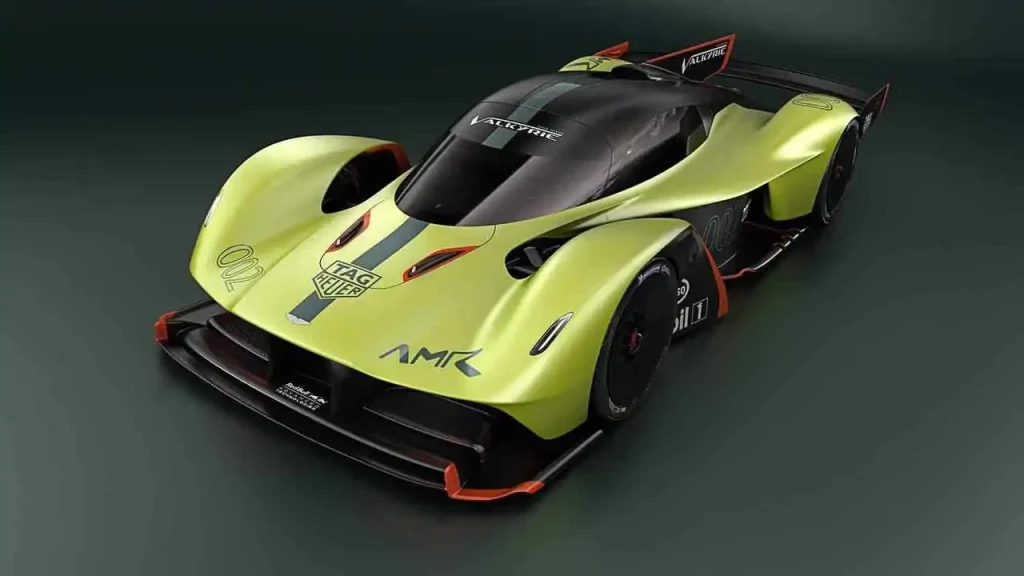
The Valkyrie AMR Pro pushes lightweight engineering toward race-car territory. Its carbon-fiber construction, extreme aerodynamic package, track-focused suspension, and naturally aspirated Cosworth V12 were developed with few of the compromises required by a road car. The result is an extraordinarily focused machine that demonstrates how carbon fiber can be used to maximize both performance and aerodynamic efficiency.