
From pioneering automobiles to quirky commuters, these unusual three-wheelers prove you don’t need four wheels to make automotive history. Fun fact: the world’s first gasoline-powered automobile rode on just three wheels.
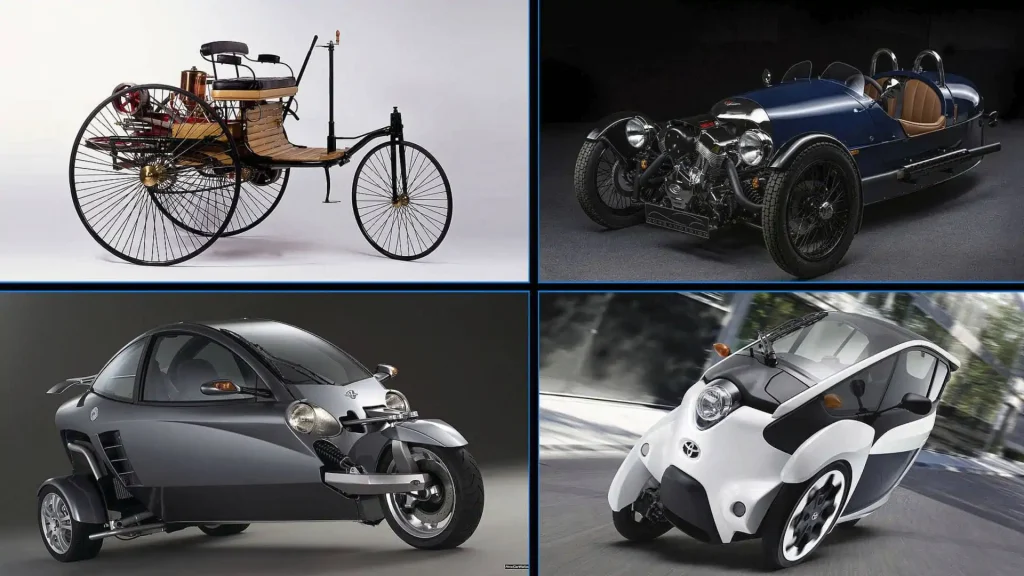
Three-wheeled vehicles have always occupied a fascinating corner of automotive history. While four wheels have become the standard for modern cars, some of the industry’s most innovative and memorable machines have managed with just three. In fact, the world’s first practical gasoline-powered automobile—the vehicle that launched the automotive revolution in the late 19th century—rode on three wheels, proving that groundbreaking ideas don’t always follow convention.
Over the decades, manufacturers have embraced the three-wheel layout for a variety of reasons. Some aimed to reduce production costs and improve fuel efficiency, while others sought lower weight, unique styling, or an entirely different driving experience. The result is an eclectic mix of vehicles that ranges from tiny city commuters and hardworking commercial trucks to futuristic electric concepts and thrilling open-air roadsters.
Many of these unconventional creations have become icons in their own right, while others remain hidden gems known only to dedicated enthusiasts. This list explores 10 of the most fascinating three-wheeled cars ever built, including the pioneering Benz Patent-Motorwagen, the practical Mazda K360 pickup, innovative leaning vehicles like the Carver One and Toyota i-Road, and modern performance machines such as the Polaris Slingshot, Vanderhall Venice, and Campagna T-Rex. Together, they demonstrate that sometimes removing a wheel is exactly what it takes to make automotive history.
Table of Contents
Benz Patent-Motorwagen (1886)
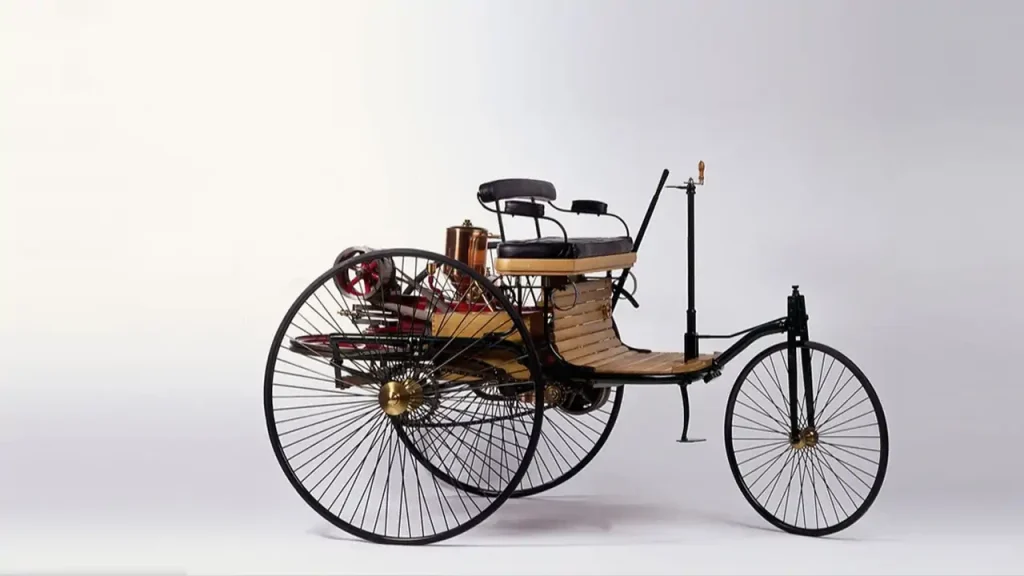
Every automobile on the road today can trace its roots back to the Benz Patent-Motorwagen. Designed by Karl Benz and patented in 1886, it is widely regarded as the world’s first practical gasoline-powered automobile. Its three-wheel layout simplified steering around Benz’s 954cc single-cylinder four-stroke engine, which produced roughly 0.75 horsepower. It wasn’t fast, but Bertha Benz’s historic long-distance journey in 1888 demonstrated that the unusual machine could be a practical form of transportation. Engine: 954cc single-cylinder | Power: Approximately 0.75 hp
Mazda K360 (1959–1969)
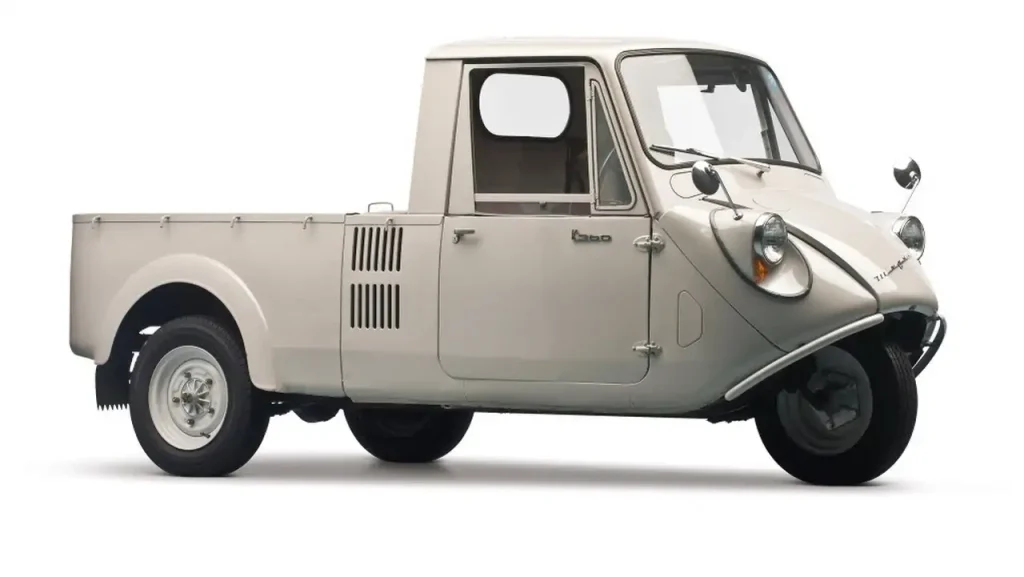
The Mazda K360 was a tiny three-wheeled commercial vehicle designed for Japan’s post-war economy. Its lightweight construction and 356cc air-cooled V-twin produced just 11 horsepower, but the truck could carry up to 660 pounds (300 kilograms). Affordable to operate and easy to maneuver, it became popular with small businesses, farmers, and delivery operators while helping Mazda establish itself before its move toward conventional four-wheeled vehicles. Engine: 356cc V-twin | Power: 11 hp
Reliant Regal (1953–1973)
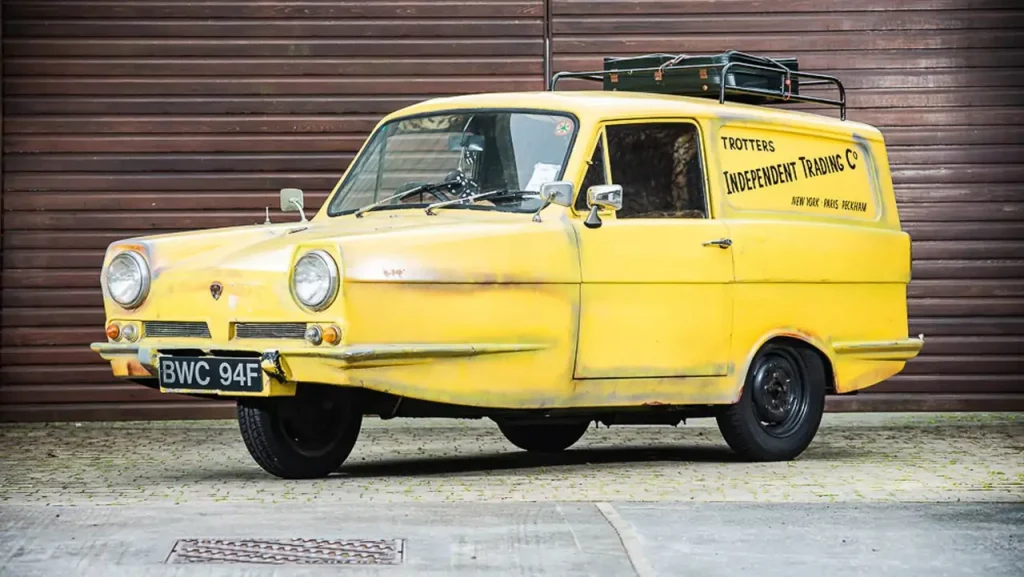
The Reliant Regal helped make three-wheel motoring a familiar sight on British roads. Its lightweight fiberglass body and economical four-cylinder engine kept running costs low, while Britain’s regulations allowed qualifying three-wheelers to receive motorcycle-style tax and insurance treatment. Produced for two decades, the Regal proved that an unconventional three-wheeled layout could be practical and affordable. Engine: 600cc–750cc inline-four | Power: Up to 40 hp
Morgan 3 Wheeler (2011–2021)
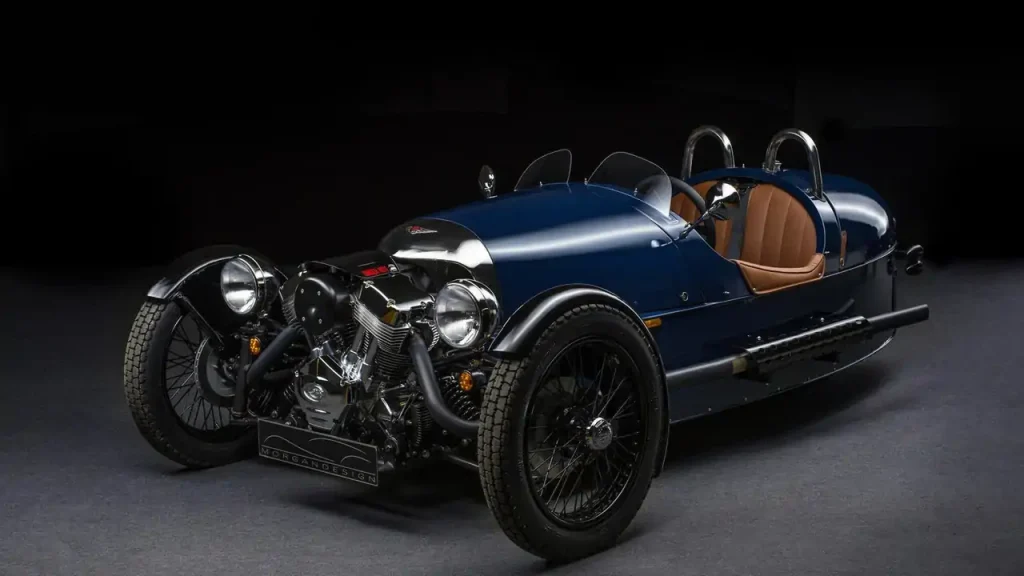
Morgan revived its traditional three-wheeled formula with the modern 3 Wheeler in 2011. Inspired by the company’s pre-war cyclecars, it combined exposed front suspension and retro styling with a 2.0-liter S&S V-twin mounted at the front. Weighing around 1,100 pounds (520 kilograms), the 82-hp Morgan delivered an intense open-air driving experience without relying on modern electronic complexity. Engine: 2.0-liter S&S V-twin | Power: 82 hp
Campagna T-Rex (1994–Present)
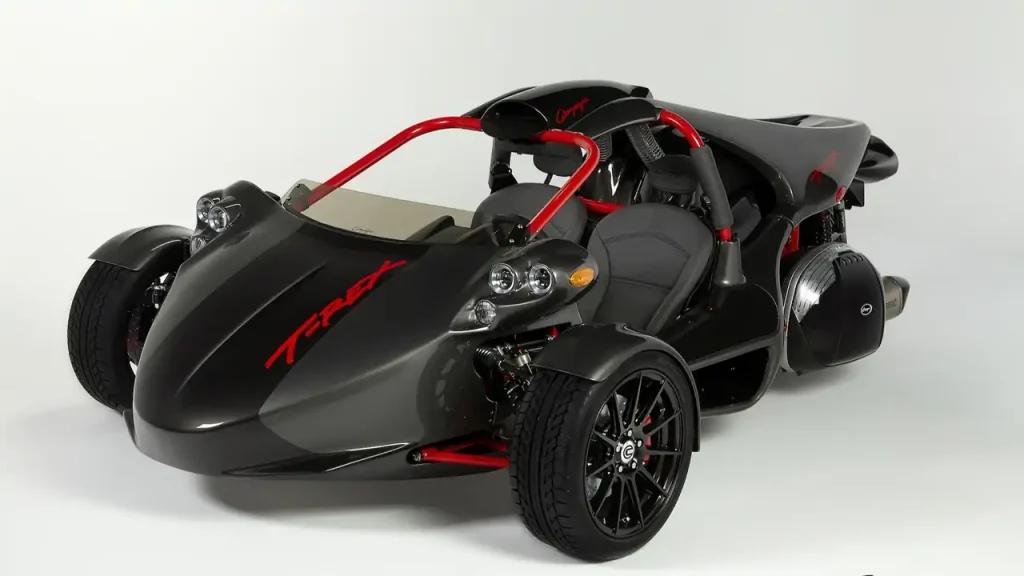
The Canadian-built Campagna T-Rex looks like a cross between a motorcycle and a single-seat race car, but it is designed for the road. Its tubular chassis, two front wheels, driven rear wheel, and motorcycle-derived powertrain create an extremely low and lightweight package. Modern versions use Kawasaki four-cylinder engines producing more than 200 horsepower, giving the T-Rex spectacular performance for a vehicle weighing less than 1,200 pounds (545 kilograms). Engine: 1,441cc Kawasaki inline-four | Power: 208 hp
Polaris Slingshot (2014–Present)
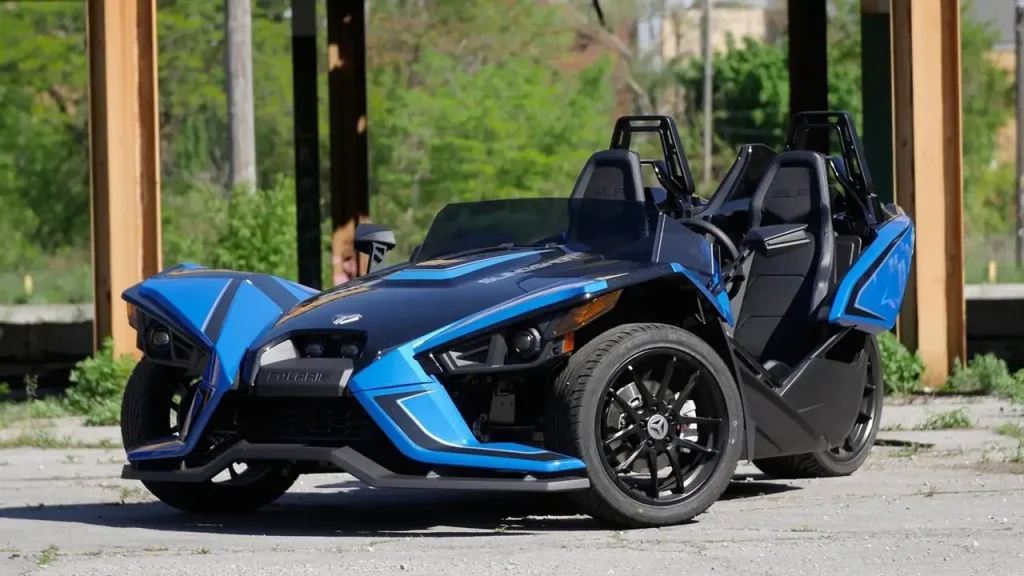
The Polaris Slingshot brought three-wheel motoring into the modern recreational-vehicle market. With two front wheels, a single driven rear wheel, side-by-side seating, and an open cockpit, it sits somewhere between a sports car and a motorcycle. Modern versions use a 2.0-liter four-cylinder producing up to 204 horsepower, while its legal classification varies by market. Engine: 2.0-liter inline-four | Power: Up to 204 hp
Vanderhall Venice Roadster (2017–Present)
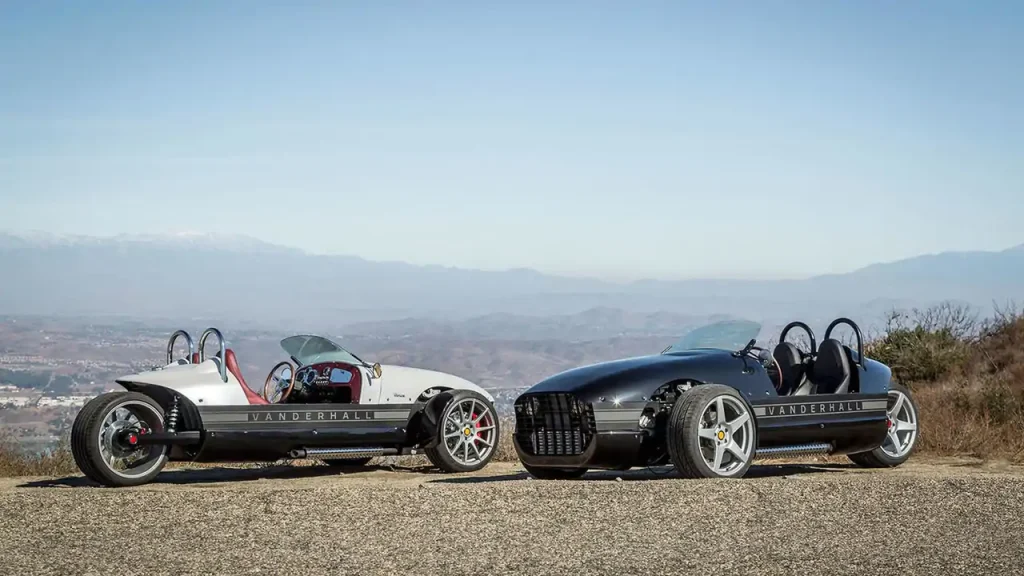
The Vanderhall Venice Roadster combines three-wheel performance with a more luxurious approach. Its retro-inspired body, handcrafted construction, leather interior, heated seats, and turbocharged engine give it a more upscale character than many competitors. A 1.5-liter turbocharged four-cylinder produces 194 horsepower and drives the front wheels, while the lightweight design allows impressive acceleration. Engine: 1.5-liter turbocharged inline-four | Power: 194 hp
Toyota i-Road (2013 Concept / 2015 Pilot Programs)
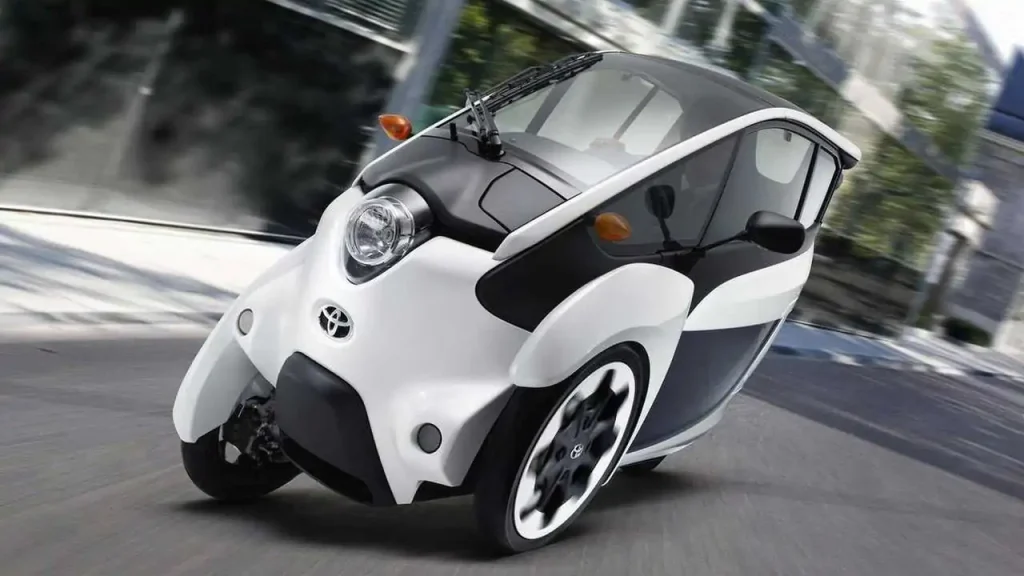
Toyota’s i-Road explored a radically different approach to urban transportation. The compact electric vehicle seats two people in tandem and uses Active Lean technology to tilt through corners like a motorcycle while retaining a car-like cabin. Toyota tested the i-Road in pilot programs, but it never progressed to mass production. Powertrain: Dual electric motors | Range: Approximately 31 miles (50 km)
Carver One (2007–2009)
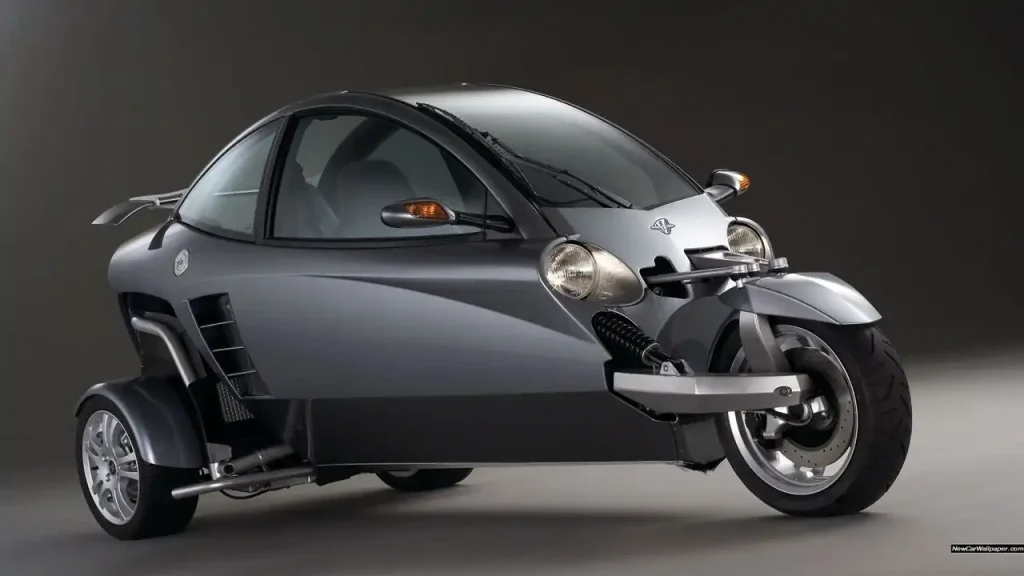
The Carver One combined a three-wheel layout with an innovative leaning system. Its Dynamic Vehicle Control technology allowed the enclosed passenger cabin to lean into corners while the rear drivetrain remained upright, creating a driving experience somewhere between a car and a motorcycle. A 659cc turbocharged four-cylinder produced around 68 horsepower and could propel the lightweight vehicle to nearly 115 mph. Engine: 659cc turbocharged inline-four | Power: 68 hp
Elio P5 Prototype (2015)
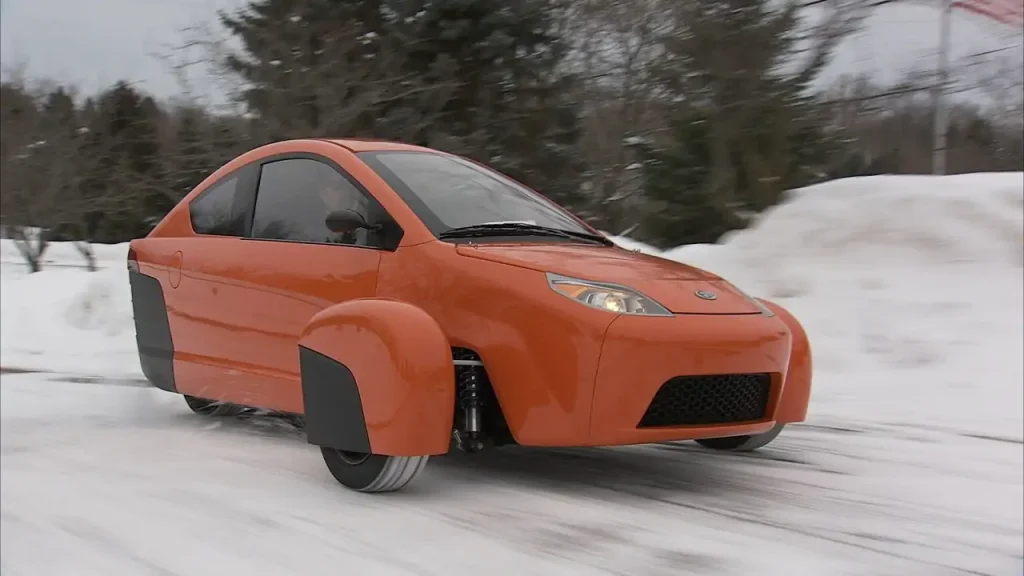
The Elio P5 was designed around one simple idea: extremely affordable and efficient transportation. Elio Motors promised tandem seating, aerodynamic bodywork, fuel economy of up to 84 mpg, and a target price below $7,000. Despite attracting tens of thousands of reservations, financial problems prevented the company from bringing the P5 into production, leaving it as one of the industry’s most notable three-wheeled “what ifs.” Engine: Planned 0.9-liter inline-three | Claimed Fuel Economy: Up to 84 mpg