
The Ford Mustang’s journey has been long, unpredictable, and nothing short of remarkable.
Ford reaching the 10 millionth Mustang is one of the most significant milestones in automotive history. Since its introduction in 1964, the Mustang has outsold every one of its domestic pony car rivals and remains the only original model from the segment’s golden era to stay in continuous production. More than six decades after creating the pony car formula, the Mustang continues to be one of Ford’s most recognizable and enduring nameplates.
To mark the occasion, Ford hosted a celebration at its world headquarters in Dearborn, Michigan, bringing together owners representing every generation of Mustang. The festivities culminated in a parade to the Flat Rock Assembly Plant, where the landmark 10 millionth Mustang—a Wimbledon White GT convertible, paying tribute to the color of the very first production Mustang—joined the celebration.
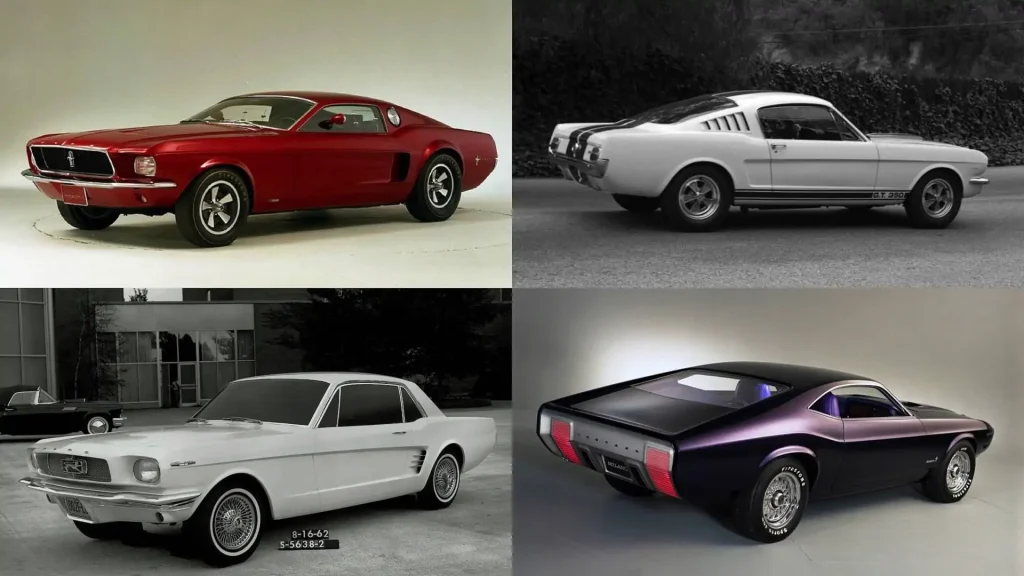
A milestone like this wasn’t achieved by production cars alone. Over the decades, Ford developed countless Mustang concept cars, design studies, and experimental prototypes that explored new styling, technology, and performance ideas. Some directly influenced future production models, while others remained fascinating “what if” exercises. Together, they tell the story of how the Mustang continually evolved, making these 10 concept cars an essential part of the road to the 10 millionth Mustang.
Table of Contents
1962 Mustang Cougar Proposal
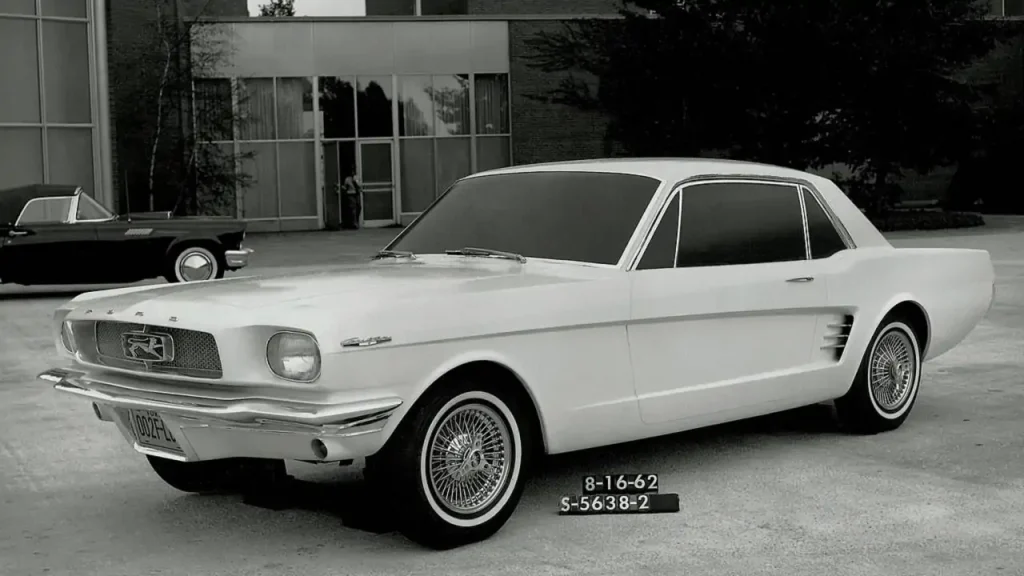
The 1962 Cougar proposal was the winning design from Ford’s internal competition to create a new affordable sporty car. Developed by Joe Oros, Dave Ash, and Gale Halderman, the design featured the long hood, short rear deck, compact greenhouse, and sporty proportions that would become Mustang signatures. Ford executives selected the Cougar proposal from several competing studio designs, putting the project on the path toward production. The Cougar name eventually went to Mercury, while the design evolved into the Mustang introduced in 1964.
1965 Mustang Shelby GT350 Prototype
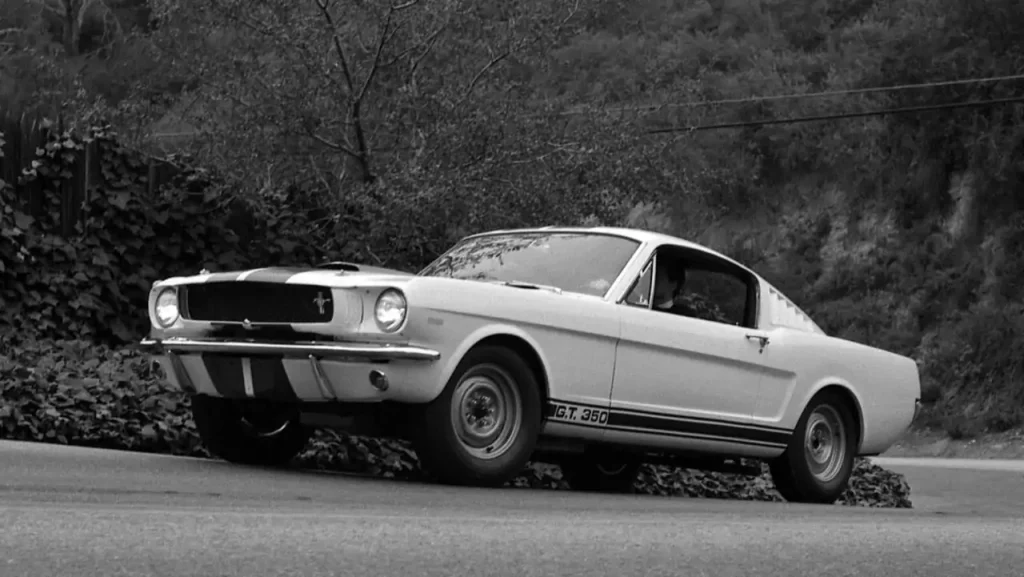
The Shelby GT350 prototypes showed how much performance could be extracted from the new Mustang. Shelby American transformed early Mustang fastbacks into serious performance machines with upgraded suspension, brakes, steering, and a more powerful 289-cubic-inch V8. The resulting GT350 became a competition-capable Mustang while retaining the basic character of the affordable Ford. It established the formula for turning the Mustang into a genuine performance car and laid the groundwork for decades of Shelby-badged Mustangs.
1964 Mustang Shorty Concept III
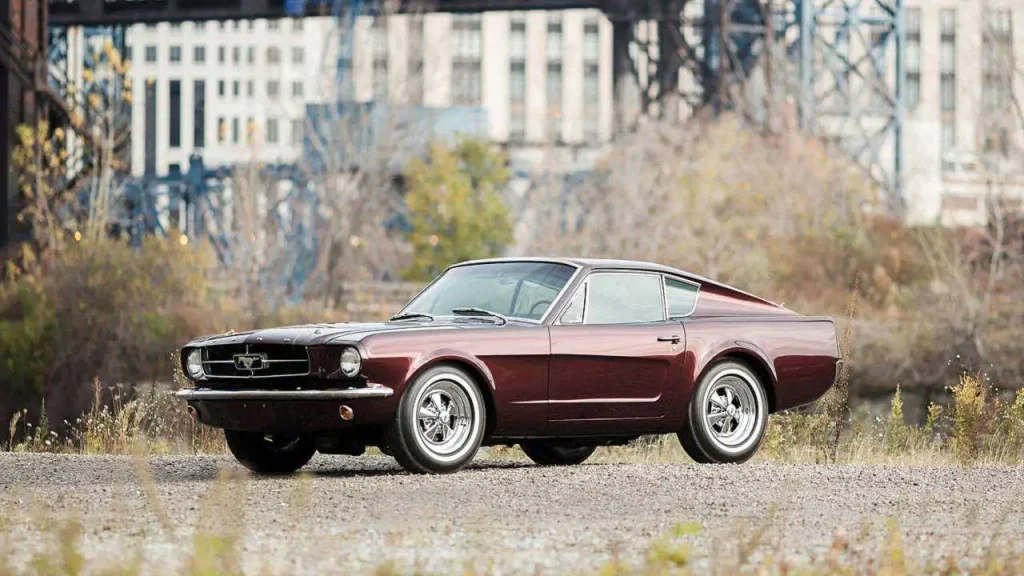
The Mustang III, better known as Shorty, explored a dramatically different interpretation of the new pony car. Instead of the Mustang’s practical 2+2 layout, the one-off prototype used a shortened body and two-seat configuration, giving it much sportier proportions. Ford had no serious plans to put it into production, but the car became part of the company’s continuing experimentation with the Mustang’s shape. Its abbreviated rear section made it one of the most unusual early Mustang prototypes.
1967 Mustang Mach I Concept
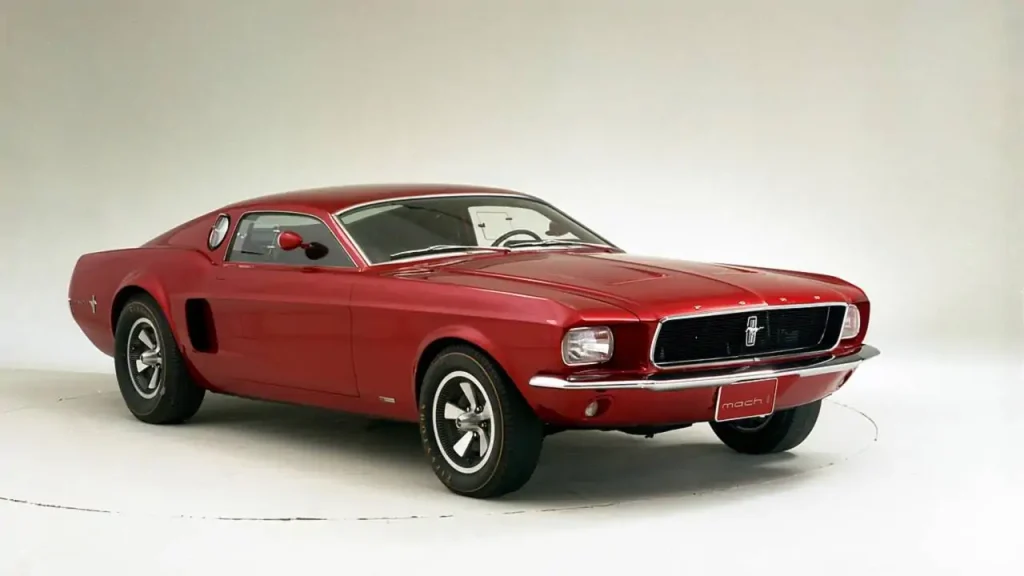
The 1967 Mustang Mach I concept previewed a more aggressive direction for Ford’s pony car as the first-generation Mustang entered its later years. The show car featured an extremely low roofline, dramatic fastback styling, a pointed front end, and performance-inspired details that made it look far more exotic than the production Mustang. The concept was shown at the Detroit Auto Show and went through several changes during its display life. Although it wasn’t simply a production Mustang preview, it helped reinforce the idea of a more aggressive, performance-focused Mustang.
1967 Mustang Allegro II Concept
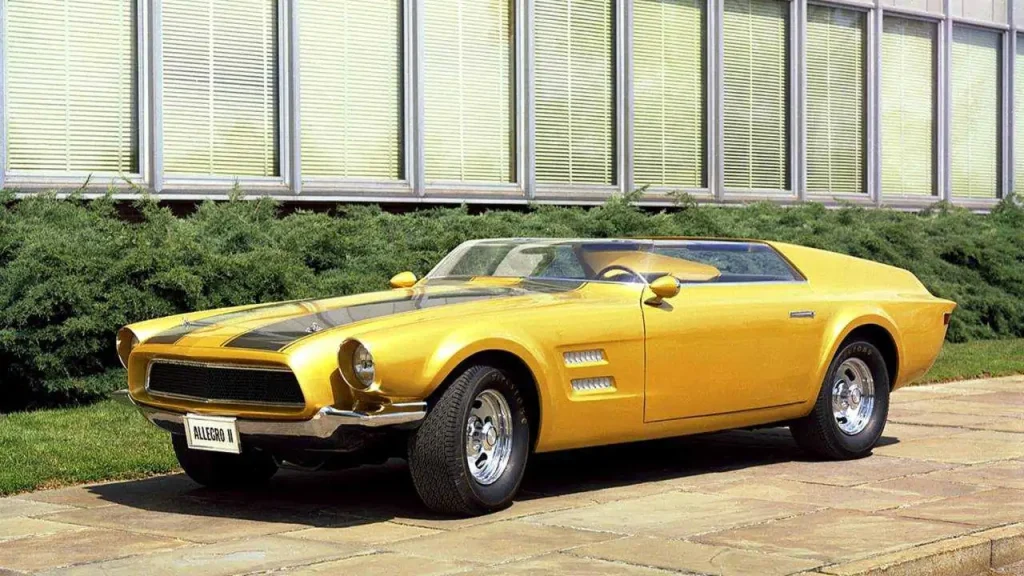
The 1967 Allegro II was another attempt by Ford to explore a two-seat sports car using Mustang-era design themes. It featured a very low windshield, open-air bodywork, dramatic rear flying buttresses, and a heavily revised rear section. Rather than previewing a specific production Mustang, the Allegro II was an experimental design exercise aimed at exploring a more exotic interpretation of Ford’s sporty-car identity. It ultimately remained a show car, but it demonstrated how far Ford’s designers were willing to move beyond the conventional Mustang formula.
1970 Mustang Milano Concept
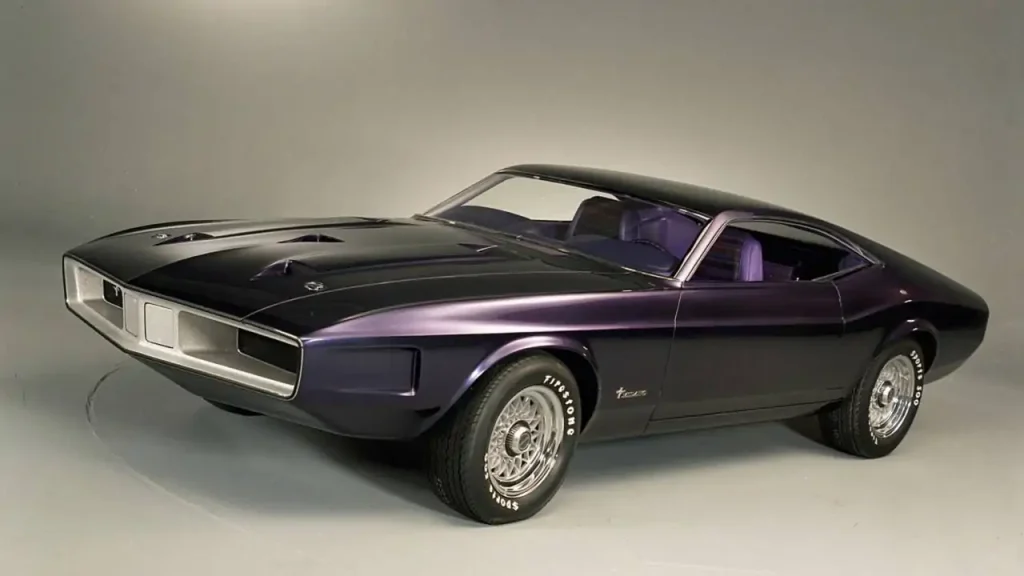
The Mustang Milano arrived in 1970 with styling that was considerably more dramatic than the production Mustang of the period. Its long, low body featured a sharply defined nose, aggressive front-end treatment, a fastback-like roofline, and a distinctive rear section. The concept previewed some of the styling themes that would appear on the larger 1971 Mustang, making it more than just a typical show car. It demonstrated Ford’s interest in giving the pony car a more aggressive and substantial appearance as the original Mustang generation evolved.
1974 Mustang Sportiva II Concept
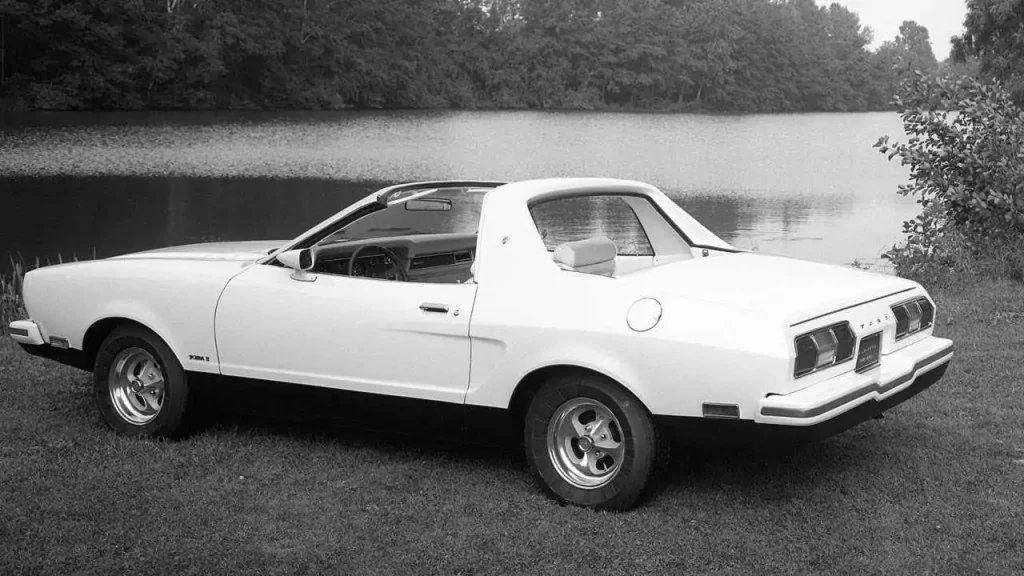
The Sportiva II appeared as Ford prepared to move the Mustang into a dramatically different era. Based around the smaller Mustang II, the concept combined the new car’s compact proportions with a sporty targa-style roof and more adventurous styling. The timing was significant because the Mustang II represented Ford’s response to changing consumer tastes and the difficult fuel economy environment of the 1970s. While the production Mustang II arrived in more conventional body styles, Sportiva II showed that Ford was still exploring ways to preserve the Mustang’s sporty character in a smaller package.
1980 Mustang RSX Concept
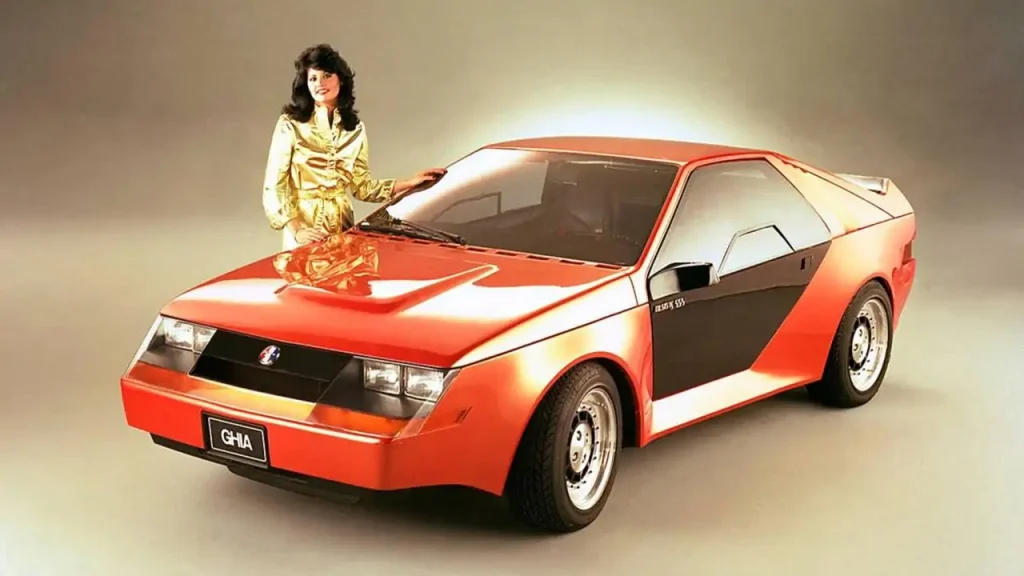
The RSX took the Fox-body Mustang in an unexpected direction by imagining it as a rally-inspired performance car. Created with Ford’s Ghia design studio, the concept featured altered proportions, a wider stance, shorter wheelbase, and increased ground clearance compared with the regular Mustang. Rather than focusing solely on drag-strip performance, the RSX suggested a Mustang capable of tackling rougher roads and rally stages. It never became a production model, but it demonstrated the versatility Ford saw in the Fox-body platform.
1993 Mustang Mach III Concept
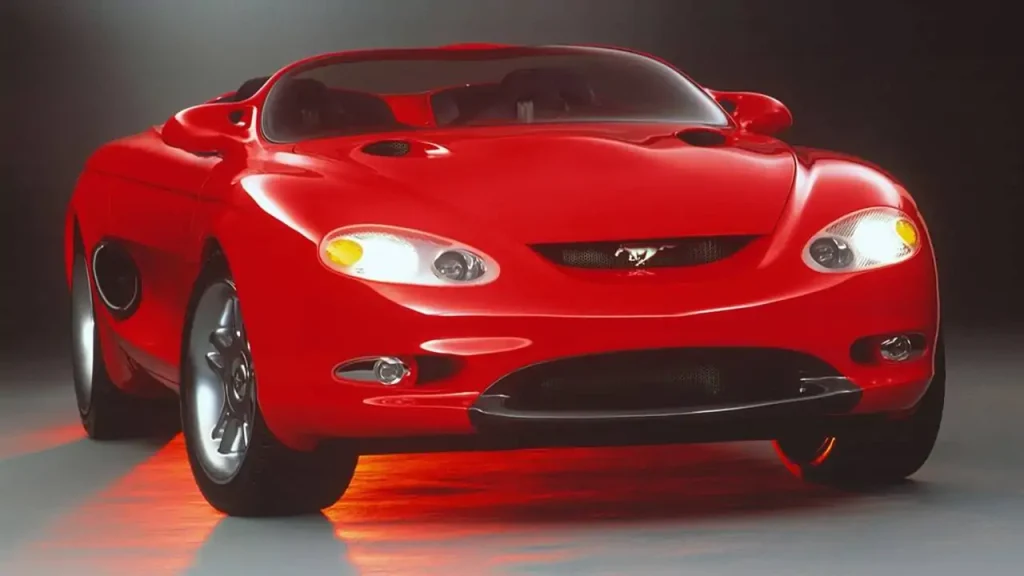
The 1993 Mach III was one of the most important Mustang concepts of the modern era because it previewed the styling direction of the fourth-generation car. Its rounded bodywork was a major departure from the boxier Fox-body Mustang, while the low windshield, muscular fenders, and sculpted surfaces gave it a distinctly modern appearance. The concept also packed serious performance hardware, including a supercharged 4.6-liter V8 producing a claimed 450 horsepower. Several of its design themes influenced the SN95 Mustang that arrived for 1994, making Mach III a genuine bridge between two generations.
2006 Mustang by Giugiaro Concept
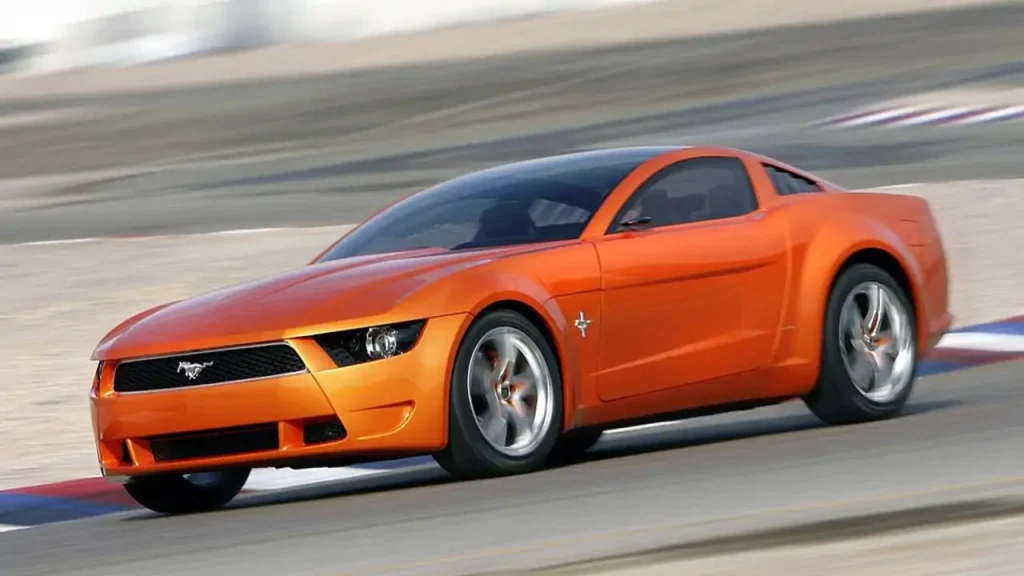
The 2006 Mustang by Giugiaro showed what happened when one of the world’s most famous automotive design houses reinterpreted America’s pony car. Created by Italian designer Fabrizio Giugiaro, the concept retained recognizable Mustang cues but gave them a much more European treatment, with a lower roof, heavily sculpted bodywork, a steeply raked windshield, and a futuristic interior. It was never intended as a direct production preview, but it demonstrated that the Mustang’s basic design language could be dramatically transformed without losing its identity.