
Modern turbocharged engines are delivering horsepower figures once reserved for V8s.
There was a time when serious performance was defined by engine size. A V8 was the traditional choice for muscle cars, sports sedans, and high-performance machines because more cylinders usually meant more power. Four-cylinder engines, meanwhile, were mostly associated with economy, reliability, and affordability.
That era is over.
Modern engineering has completely changed what a small engine can achieve. Turbocharging, direct injection, lightweight components, advanced cooling systems, and hybrid technology have allowed manufacturers to create four-cylinder engines with extraordinary output. Some now produce more than 200 horsepower per liter, while others deliver power figures that rival legendary V8 engines.
The biggest advantage of a high-output four-cylinder engine is not just power. These engines are smaller and lighter, improving handling, efficiency, and weight distribution. They allow manufacturers to build faster cars without the added weight and complexity of larger engines.
Here are 10 of the most powerful four-cylinder cars ever produced.
Table of Contents
Ford Mustang EcoBoost – 2.3-Liter Turbocharged
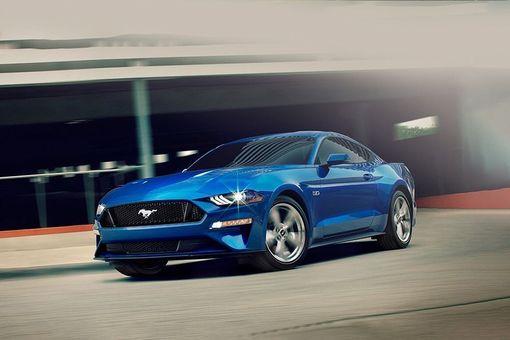
The Ford Mustang has long been synonymous with V8 performance, but the EcoBoost proves that the legendary pony car can still be quick with half as many cylinders.
Its 2.3-liter turbocharged four-cylinder produces 310 horsepower and 350 lb-ft of torque. Turbocharging gives the Mustang strong torque while keeping the engine smaller and lighter than the V8 found in the Mustang GT.
For drivers who want Mustang styling and performance without stepping up to the V8, the EcoBoost provides a compelling alternative.
Honda Civic Type R – 2.0-Liter Turbocharged
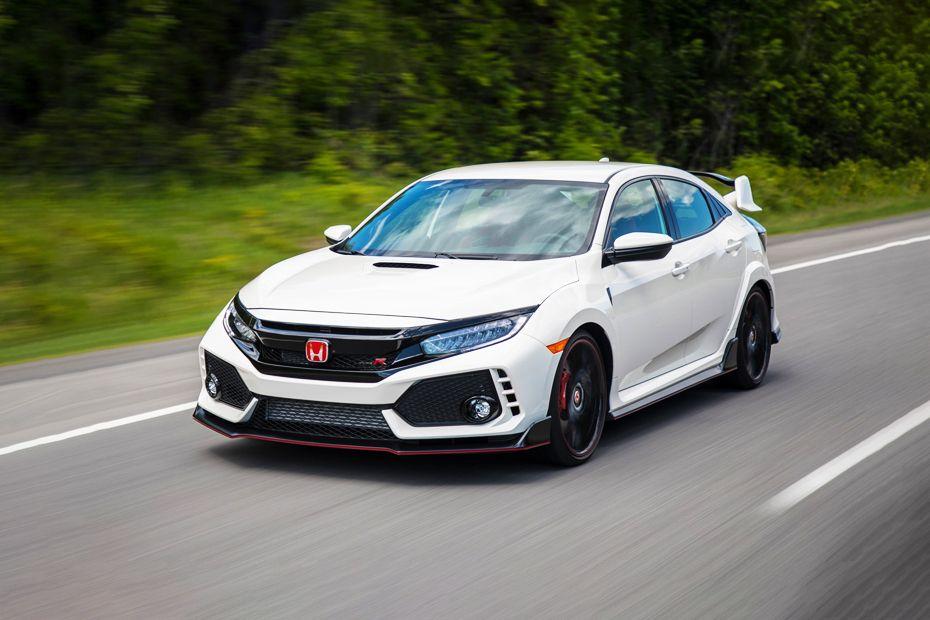
The Honda Civic Type R turned a practical hatchback into a serious performance machine.
The 2.0-liter turbocharged four-cylinder produces 306 horsepower and 295 lb-ft of torque in the FK8 generation. A six-speed manual transmission and limited-slip differential help make the most of the engine’s output.
Honda also gave the Type R an aggressive chassis and aerodynamic package, allowing it to perform exceptionally well on a racetrack while remaining practical enough for everyday use.
Subaru WRX STI – 2.5-Liter Turbocharged
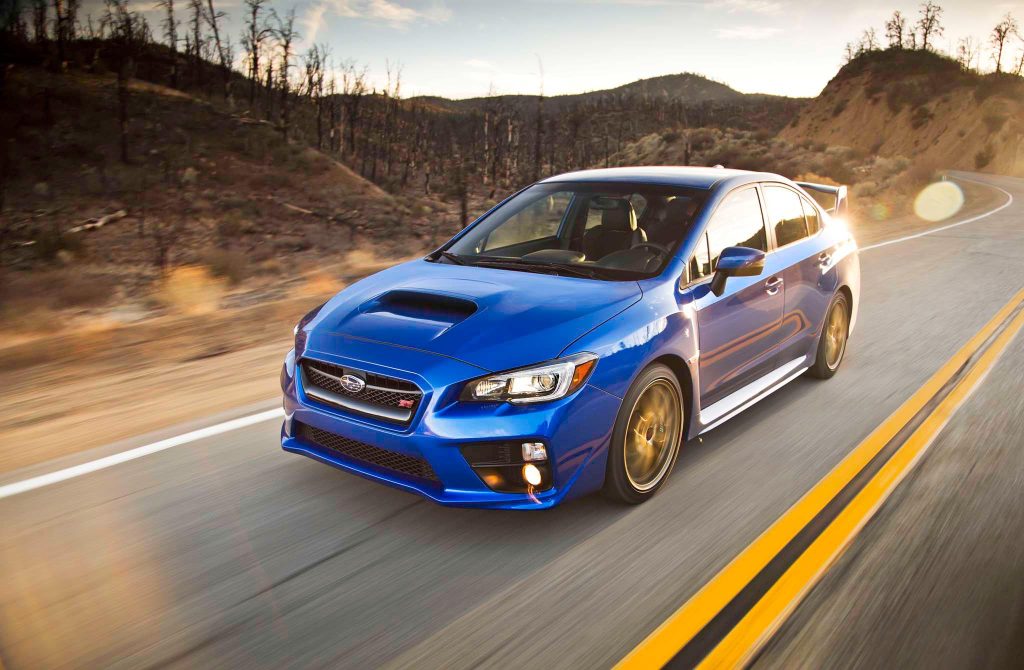
The Subaru WRX STI is one of the most recognizable turbocharged four-cylinder performance cars ever made.
Its 2.5-liter boxer-four produces 310 horsepower and 290 lb-ft of torque in later U.S.-market versions. The engine’s horizontally opposed configuration gives the Subaru a low center of gravity, while its all-wheel-drive system provides tremendous traction.
The STI’s rally heritage is also central to its appeal. It’s a car designed to deliver performance on roads where traction and control matter just as much as outright horsepower.
Porsche 718 Cayman/Boxster – 2.0-Liter Turbocharged
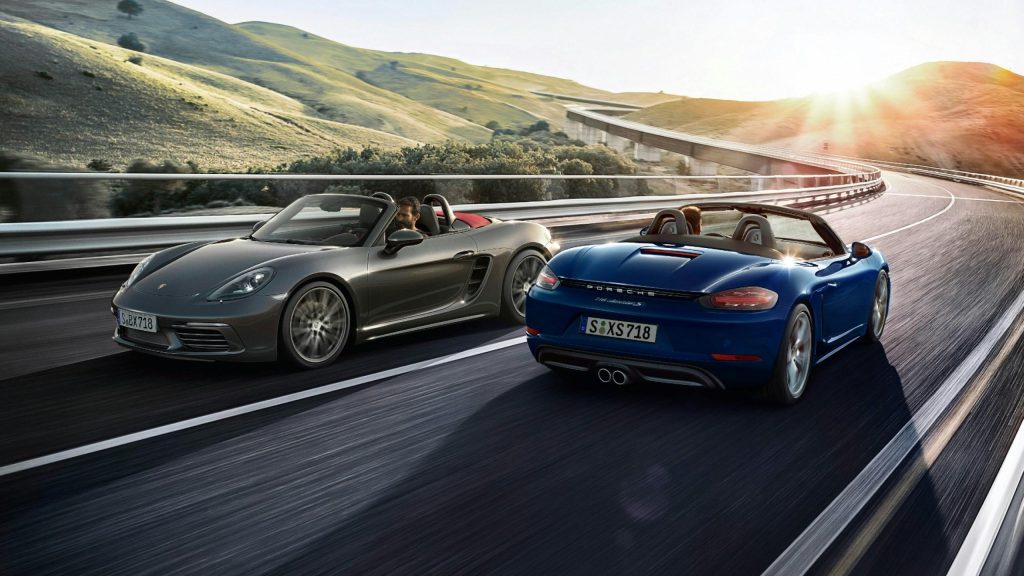
Porsche surprised some enthusiasts when it replaced six-cylinder engines with turbocharged four-cylinder power in the 718 Cayman and Boxster.
The 2.0-liter turbocharged flat-four produces 300 horsepower and 280 lb-ft of torque. With the engine mounted in the middle of the car, the 718 delivers excellent balance and precise handling.
The Cayman provides a fixed-roof sports-car experience, while the Boxster adds an open-top driving experience.
Volvo XC90/S90/V90/V90 Cross Country – Twin-Charged Four-Cylinder
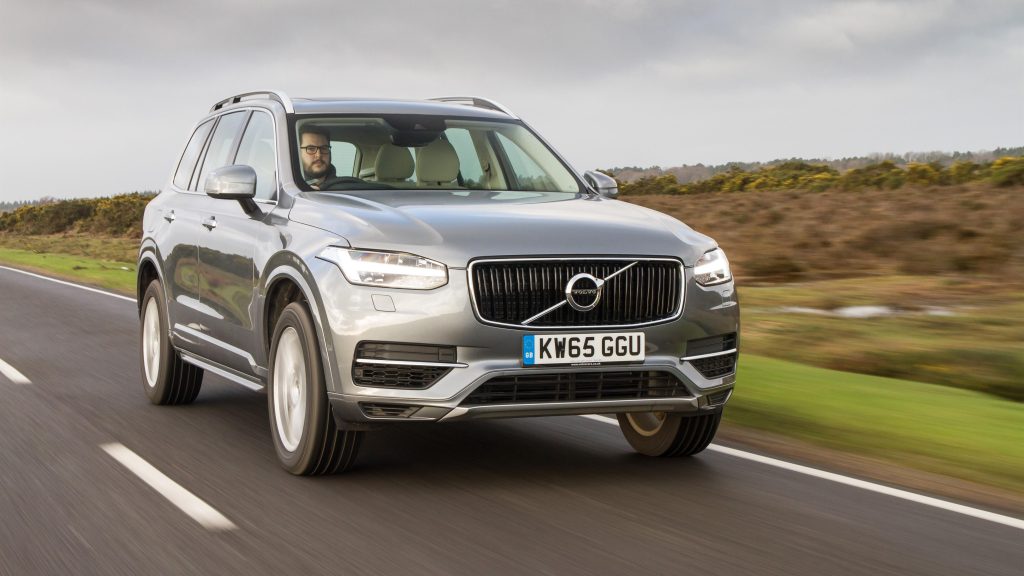
Volvo took a very different approach to four-cylinder performance by using both turbocharging and supercharging.
The company’s 2.0-liter Drive-E engine was used across models including the XC90, S90, V90, and V90 Cross Country. In T8 Twin Engine applications, the gasoline engine is supplemented by electric power, creating substantially more output than a conventional four-cylinder could produce on its own.
It’s an impressive engineering solution because Volvo managed to use a relatively small engine in vehicles ranging from luxury sedans to a large three-row SUV.
Porsche 718 Cayman S/Boxster S – 2.5-Liter Turbocharged
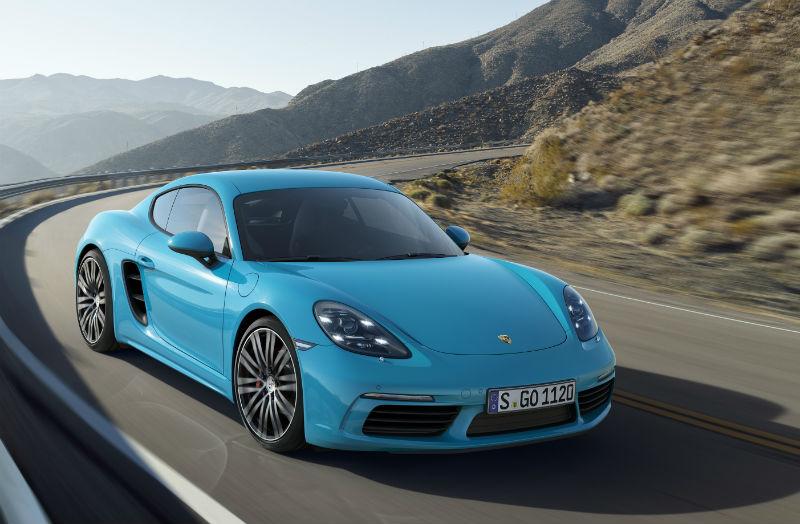
The Cayman S and Boxster S took Porsche’s four-cylinder formula a significant step further.
Their 2.5-liter turbocharged flat-four produces 350 horsepower and 309 lb-ft of torque. That’s a substantial increase over the 2.0-liter engine used in the standard 718 models.
The mid-engine layout makes excellent use of that power, giving the cars exceptional balance and agility. The Cayman S provides a focused coupe experience, while the Boxster S delivers similar performance with a retractable roof.
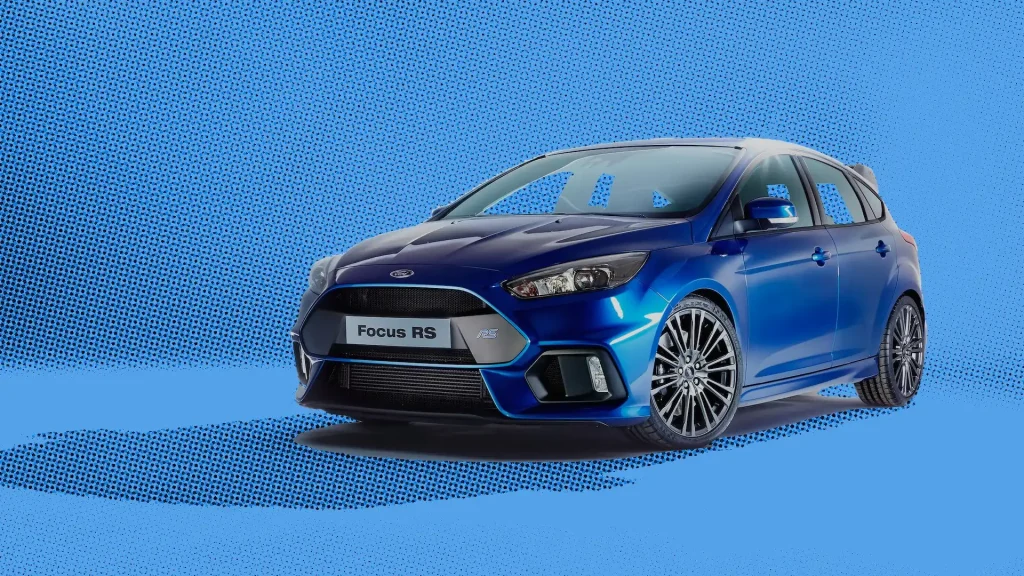
Ford Focus RS – 2.3-Liter Turbocharged
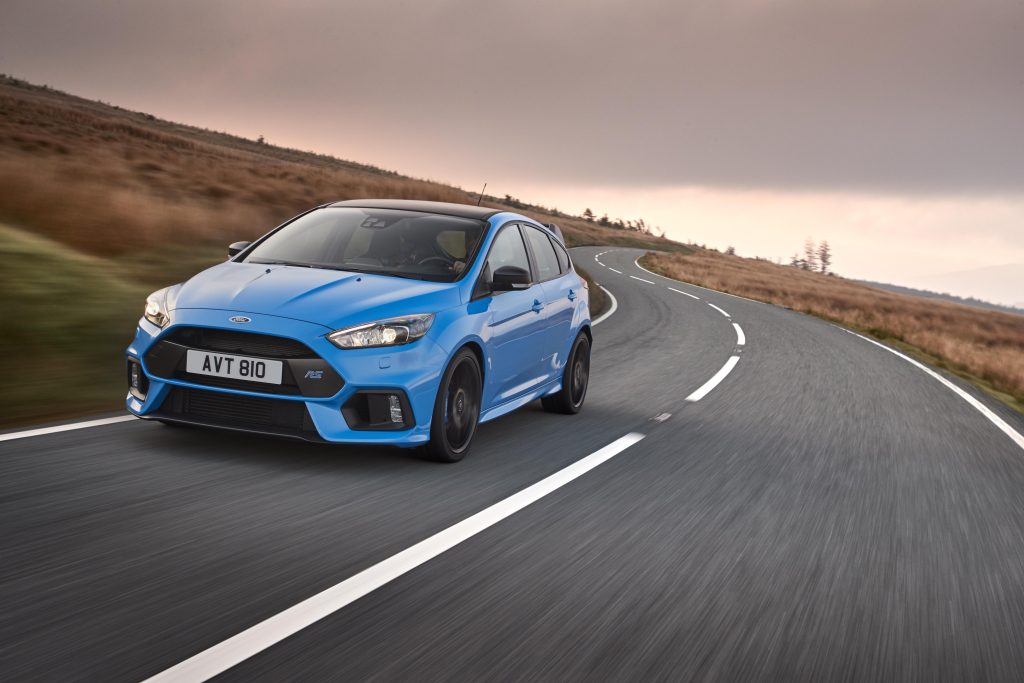
The Ford Focus RS took the familiar compact hatchback and turned it into something much more extreme.
Its 2.3-liter turbocharged four-cylinder produces 350 horsepower and 350 lb-ft of torque. The engine is related to the unit used in the Mustang EcoBoost, but Ford extensively developed it for the Focus RS.
An advanced all-wheel-drive system helps put the power down, while the RS’s performance-oriented suspension and drive modes make it particularly capable on winding roads and racetracks.
It was essentially a rally-inspired performance car disguised as a practical hatchback.
Volvo S60/V60 Polestar – Twin-Charged Four-Cylinder
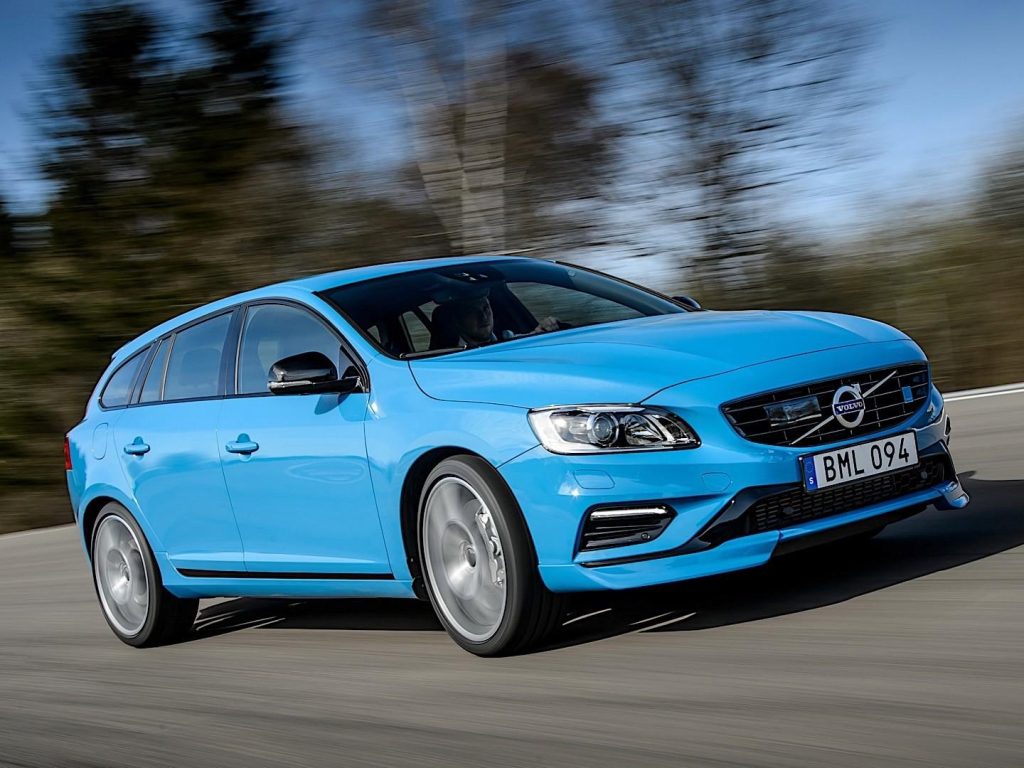
The Volvo S60 and V60 Polestar show just how much performance Volvo could extract from its Drive-E four-cylinder.
The 2.0-liter engine uses both a turbocharger and a supercharger, producing 362 horsepower and 347 lb-ft of torque in the specification represented here.
The powerplant is paired with all-wheel drive, allowing the sedan and wagon to deliver strong acceleration while maintaining the understated appearance that has traditionally characterized Volvo performance cars.
The V60 Polestar is particularly appealing because it combines sports-car performance with wagon practicality.
Mercedes-AMG CLA45/GLA45 – 2.0-Liter Turbocharged
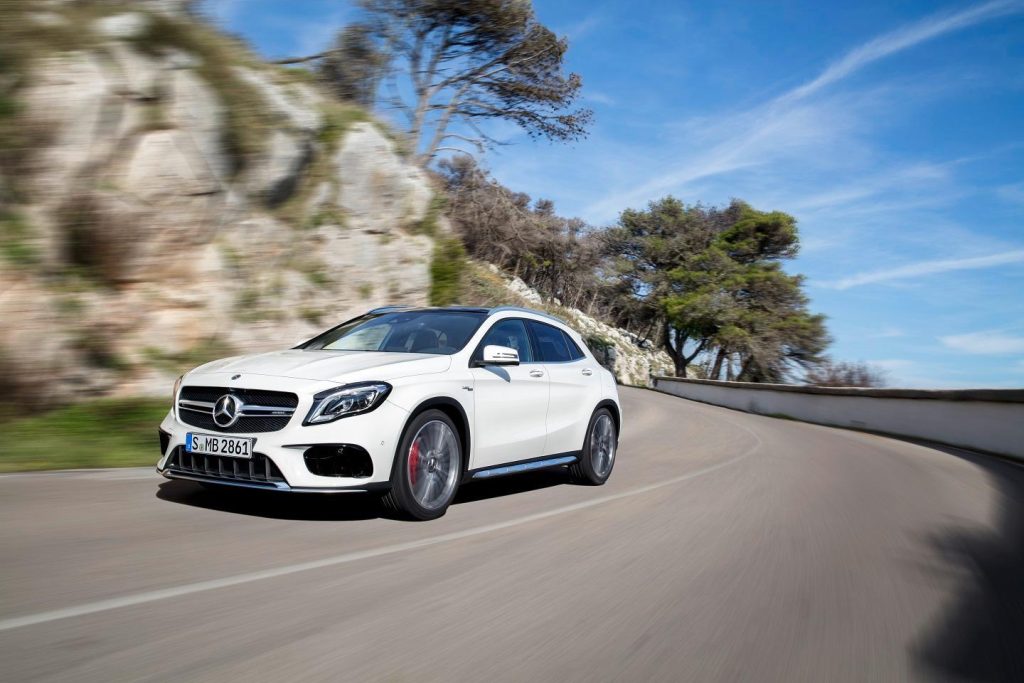
Mercedes-AMG demonstrated the extraordinary potential of a 2.0-liter engine with the CLA45 and GLA45.
The high-performance versions use a hand-built 2.0-liter turbocharged four-cylinder producing 375 horsepower in the earlier generation. Later versions of the M139 engine increased output to 416 horsepower and 369 lb-ft of torque.
The engine is paired with all-wheel drive and a quick-shifting dual-clutch transmission, giving these compact Mercedes models astonishing acceleration.
The CLA45 puts the power into a sleek four-door body, while the GLA45 delivers similar performance in a compact crossover package.
Mercedes-AMG A45 – 2.0-Liter Turbocharged
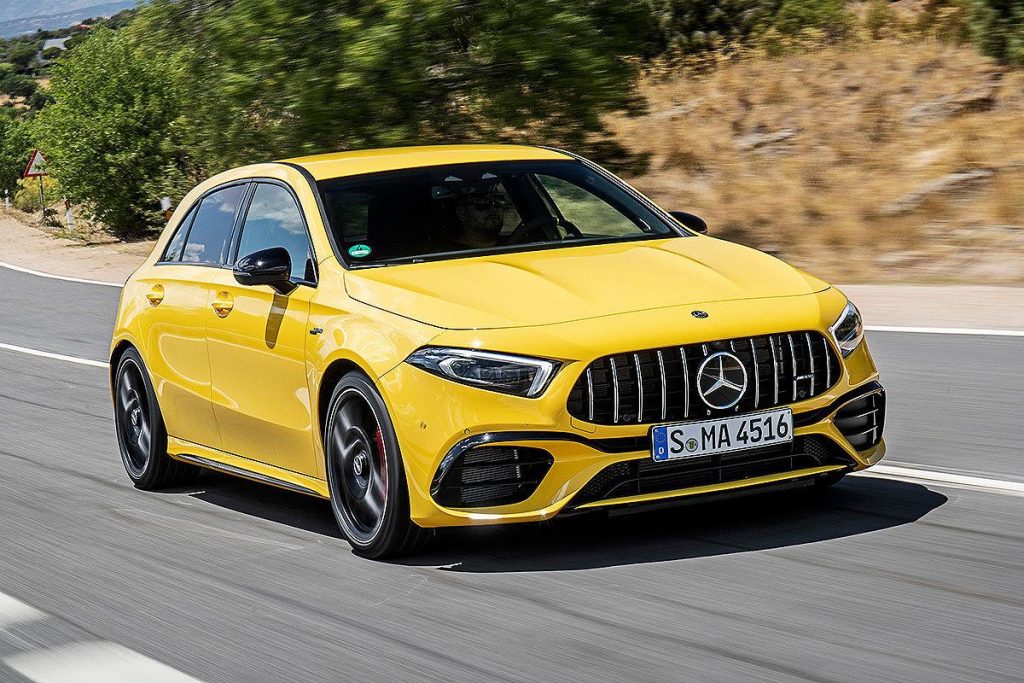
The Mercedes-AMG A45 sits at the top of the conventional gasoline-powered portion of this list.
The latest A45 S uses AMG’s remarkable 2.0-liter M139 turbocharged four-cylinder, producing 416 horsepower and 369 lb-ft of torque. That works out to more than 200 horsepower per liter—an extraordinary figure for a production engine.
AMG combines the engine with an advanced all-wheel-drive system and dual-clutch transmission. The result is a compact hatchback capable of performance figures that would have been associated with exotic sports cars not long ago.
The A45 is perhaps the clearest demonstration of how far modern four-cylinder technology has come.
Final Remark
From the Ford Mustang EcoBoost to the Honda Civic Type R, Subaru WRX STI, and Ford Focus RS, these cars prove that four-cylinder engines can deliver serious performance.
Porsche took the formula into the sports-car world with the 718 Cayman and Boxster, while Volvo demonstrated that four-cylinder technology could also power luxury sedans, wagons, and SUVs.
At the top, Mercedes-AMG showed just how extreme a modern 2.0-liter turbocharged engine can become, with the A45, CLA45, and GLA45 producing horsepower figures once reserved for much larger engines.
Ten cars, four cylinders each—and more than enough performance to prove that displacement isn’t everything.