
From the iconic DeLorean DMC-12 to the record-breaking Callaway SledgeHammer Corvette, these are the machines that captured the style, technology, and performance of the decade.
The 1980s was a decade of dramatic change, both around the world and in the automotive industry. As historic events reshaped society — from the eruption of Mount St. Helens and the fall of the Berlin Wall to the tragic loss of the Space Shuttle Challenger — car manufacturers were also entering a period of transformation.
Following the struggles of the 1970s, automakers embraced a new era of innovation, experimenting with bold designs, advanced electronics, turbocharging, and new approaches to performance. Some vehicles looked back to the past by borrowing styling cues from earlier classics, while others pushed toward the future with cutting-edge technology and futuristic designs.
The result was one of the most diverse periods in automotive history, producing everything from iconic movie cars and high-tech Japanese sports machines to revived American performance legends and European engineering masterpieces. From the unforgettable DeLorean DMC-12 to the record-setting Callaway SledgeHammer Corvette, these vehicles captured the imagination of enthusiasts and helped define the spirit of the eighties.
These are ten cars that represent the creativity, ambition, and excitement of a decade when the automotive world was changing faster than ever before.
Table of Contents
DeLorean DMC-12 (1981–1983)
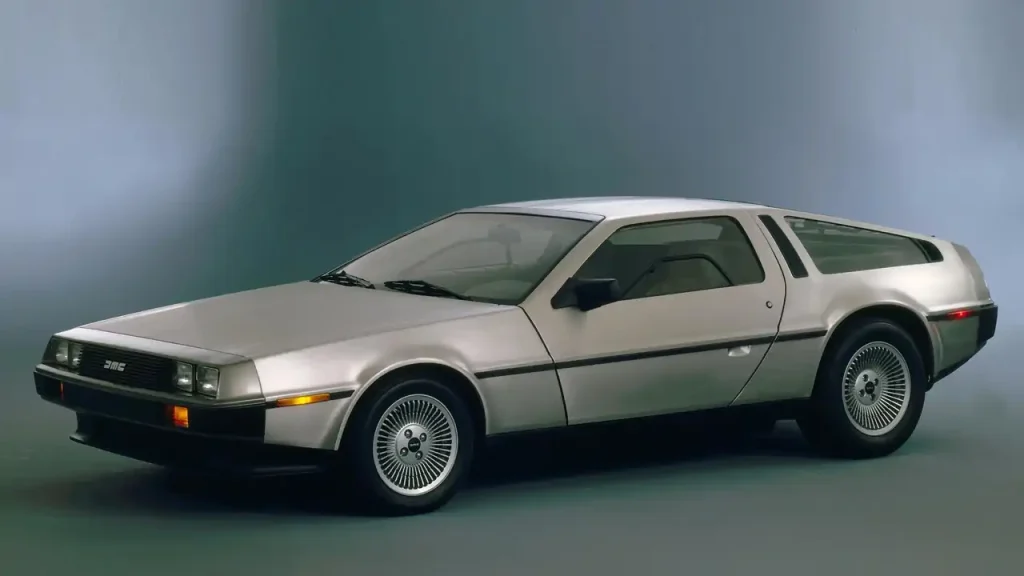
The DeLorean DMC-12 became one of the most recognizable cars of the 1980s, even though its production career was remarkably short. Introduced in 1981, the Irish-built sports car stood apart with its brushed stainless-steel body, wedge-shaped profile, and dramatic gullwing doors.
The design came from legendary Italian stylist Giorgetto Giugiaro, while the powertrain was supplied through the Peugeot-Renault-Volvo partnership. A 2.85-liter V6 produced roughly 130 horsepower, so the DMC-12 wasn’t particularly quick by sports-car standards. Its futuristic appearance, however, made it instantly memorable.
Its cultural status skyrocketed in 1985 when Back to the Future hit theaters. Michael J. Fox and Christopher Lloyd became stars of the film, but the DeLorean arguably stole the show as Doc Brown’s time machine. The movie transformed a short-lived sports car into one of the most famous automotive icons in popular culture.
The DMC-12 may not have been a sales success or a performance benchmark, but its stainless-steel construction, unusual styling, and Hollywood fame made it an unmistakable symbol of the 1980s.
Key Specs:
- Engine: 2.85-liter V6
- Power: Approximately 130 hp
- Transmission: 5-speed manual or 3-speed automatic
- Layout: Rear-engine, rear-wheel drive
- Production: Approximately 9,000 units
- Introduced: 1981
Toyota Corolla GT-S AE86 (1983–1987)
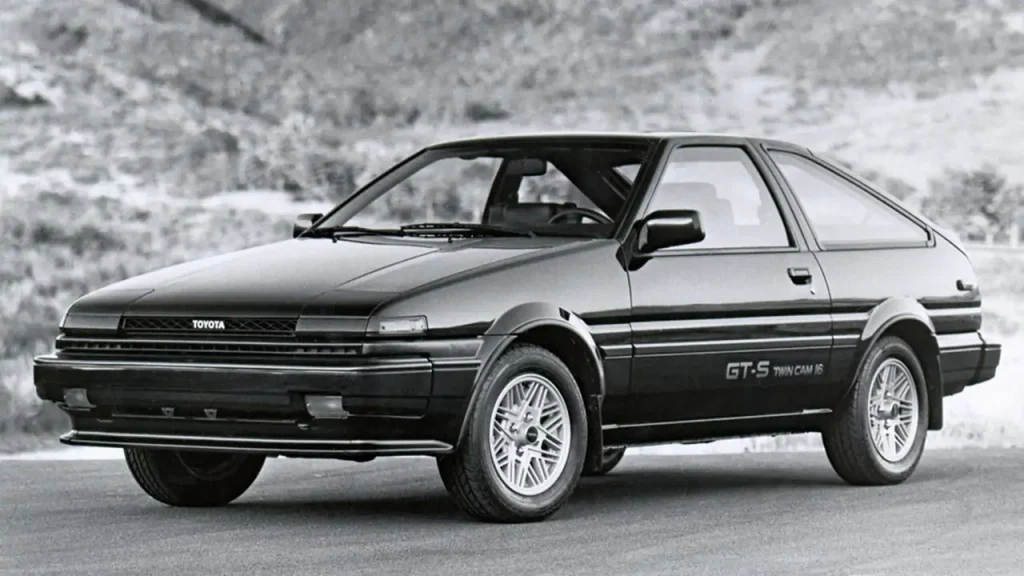
The Toyota Corolla GT-S AE86 proves that a great driver’s car doesn’t need huge horsepower. Its lightweight construction, rear-wheel-drive layout, simple mechanicals, and balanced chassis made it one of the most beloved Japanese performance cars of its generation.
Power came from Toyota’s 1.6-liter 4A-GE four-cylinder engine, which produced roughly 112 horsepower in U.S. specification. That figure was modest even for the period, but the AE86’s low weight allowed drivers to make the most of every horsepower.
The car’s straightforward mechanical layout also made it popular with grassroots racers and tuners. Its predictable handling and rear-wheel-drive configuration eventually made the AE86 a favorite in drifting.
Its reputation grew even further through the Initial D manga and anime series, where the Corolla became a symbol of Japanese driving culture. The AE86 showed that driving enjoyment could come from balance and responsiveness rather than outright power.
Decades later, it remains one of Toyota’s most celebrated enthusiast cars.
Key Specs:
- Engine: 1.6-liter 4A-GE inline-four
- Power: About 112 hp
- Transmission: 5-speed manual
- Drive: Rear-wheel drive
- Weight: Approximately 2,300 pounds
Mazda RX-7 FC (1985–1988)
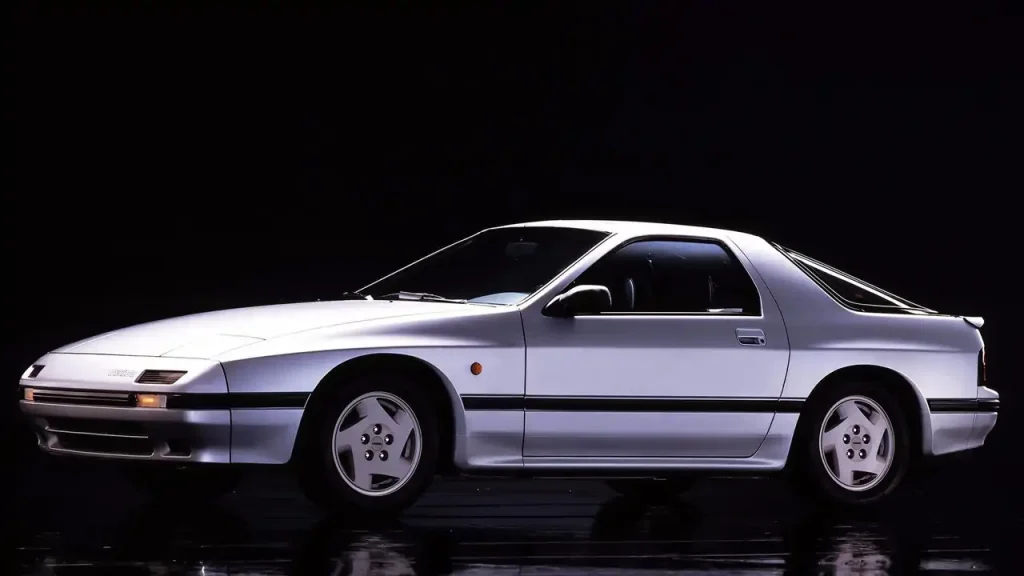
The second-generation Mazda RX-7 gave the company’s rotary-powered sports car a more sophisticated personality. Introduced in 1985, the FC replaced the first-generation model’s simpler design with smoother styling and a chassis influenced by European sports cars.
At its heart was Mazda’s unusual 1.3-liter twin-rotor Wankel engine. Buyers could choose between naturally aspirated and turbocharged versions, with the latter providing a substantial increase in performance.
The RX-7’s low weight, independent suspension, responsive steering, and well-balanced chassis made it an entertaining car on winding roads and racetracks alike. Its rotary engine also gave it a character that distinguished it from conventional piston-powered rivals.
The FC became a favorite among enthusiasts because it offered strong handling and plenty of tuning potential without the price of an exotic sports car. It also established the foundation for the legendary third-generation RX-7 that followed.
Key Specs:
- Engine: 1.3-liter twin-rotor Wankel
- Power: 146 hp naturally aspirated / approximately 182 hp turbocharged
- Transmission: 5-speed manual
- Drive: Rear-wheel drive
- Body: Two-seat sports coupe
Buick GNX (1987)
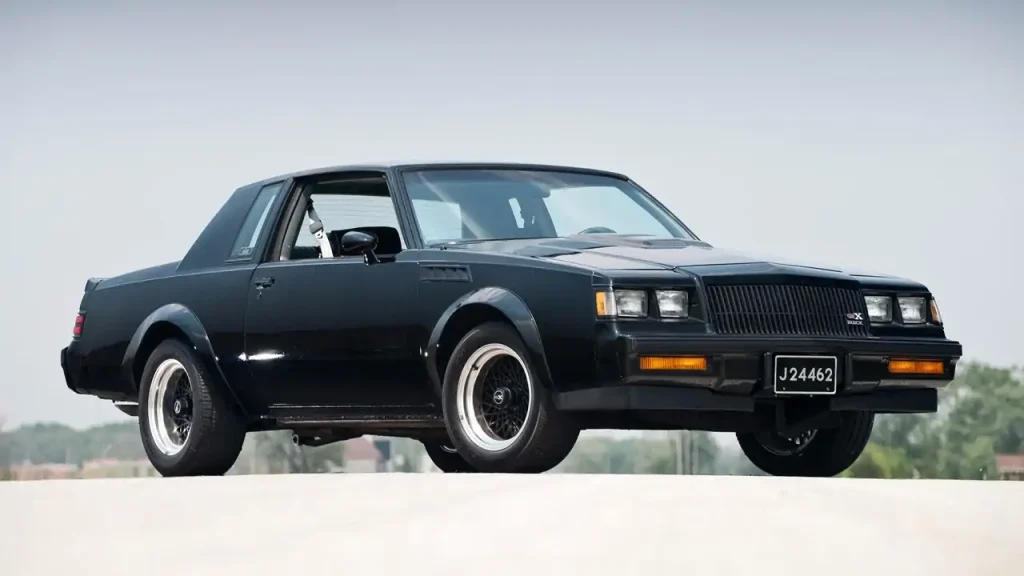
The Buick GNX was one of the decade’s biggest performance surprises. Based on the Grand National, it transformed an understated American coupe into a turbocharged machine capable of competing with much more expensive sports cars.
Developed with assistance from McLaren Performance Technologies, the GNX received an extensively upgraded version of Buick’s turbocharged 3.8-liter V6. Officially, the engine was rated at 276 horsepower and 360 lb-ft of torque, although contemporary testing indicated that the actual output could be considerably higher.
The combination of abundant torque, rear-wheel drive, and turbocharged power made the GNX exceptionally quick. Its dark, understated appearance only added to its appeal.
With just 547 examples produced, the GNX was rare from the beginning and has become highly collectible.
More importantly, the car represented a change in American performance thinking. The GNX showed that a turbocharged V6 could challenge traditional V8 muscle cars without relying on massive displacement.
Key Specs:
- Engine: Turbocharged 3.8-liter V6
- Power: 276 hp official rating
- Torque: 360 lb-ft
- Transmission: 4-speed automatic
- Production: 547 units
BMW M3 E30 (1985–1988)
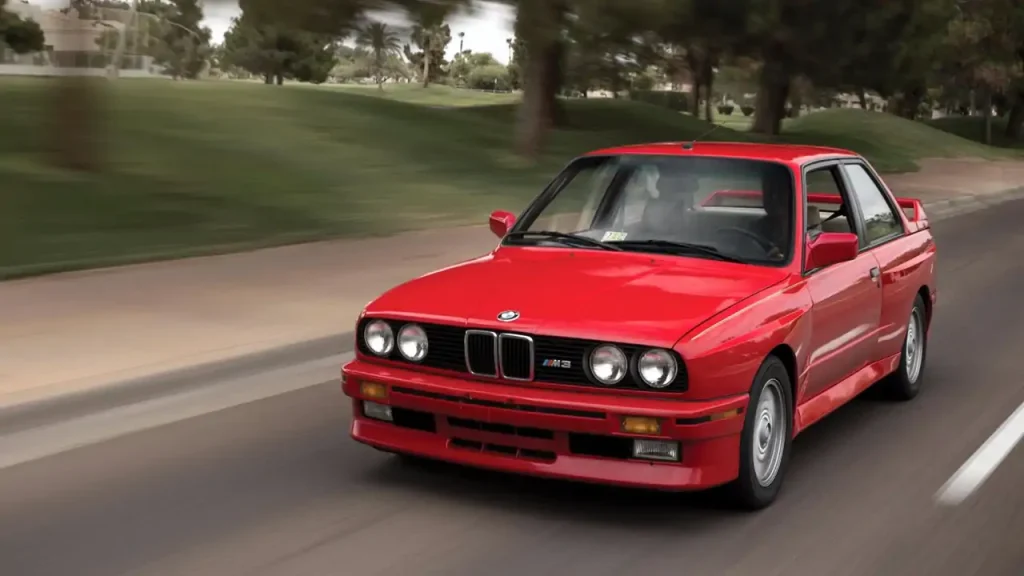
The first BMW M3 wasn’t created simply to make a faster 3 Series. It was developed as a homologation special so BMW could compete in touring-car racing, bringing genuine motorsport hardware to the street.
The E30 M3 used a high-revving 2.3-liter S14 four-cylinder rather than a larger engine. BMW also extensively reworked the suspension, brakes, bodywork, and aerodynamics to turn the ordinary 3 Series into a serious performance machine.
The strategy paid off. The M3 became a formidable force in touring-car competition, while its road-going version developed a reputation for precision and balance.
The E30 M3 established a formula that BMW would continue to evolve for generations: take a practical compact car, add serious motorsport engineering, and create something capable of both daily driving and track work.
It remains one of the most influential performance BMWs ever built.
Key Specs:
- Engine: 2.3-liter S14 inline-four
- Power: Approximately 192 hp
- Transmission: 5-speed manual
- Drive: Rear-wheel drive
- Purpose: Street-legal racing homologation special
Honda CRX Si (1988)
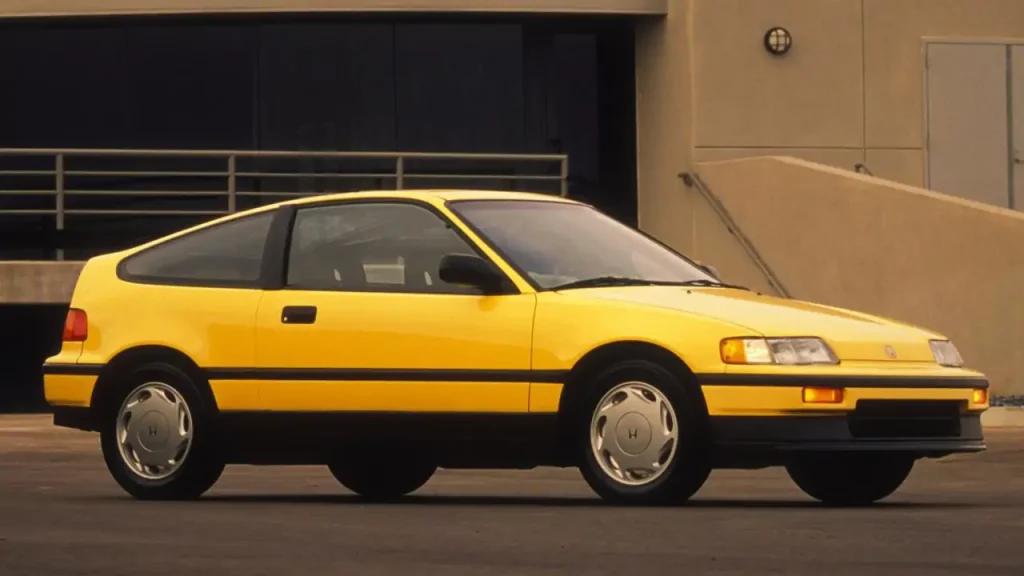
The 1988 Honda CRX Si represented a completely different approach to performance. Instead of chasing huge horsepower or exotic technology, Honda kept the formula simple: a lightweight body, a willing four-cylinder engine, and a manual transmission.
The CRX Si used a 1.6-liter four-cylinder producing approximately 105 horsepower. That wasn’t a particularly impressive figure even in the 1980s, but the car’s low weight made the most of every available horsepower.
Its front-wheel-drive layout, responsive handling, and compact dimensions made the CRX Si a favorite among younger enthusiasts. It was quick enough to be entertaining, inexpensive enough to own, and simple enough to modify.
The CRX also demonstrated an important shift in the performance market. Fun no longer required a V8, rear-wheel drive, or a European badge. A relatively inexpensive Japanese hatchback could deliver an engaging driving experience while remaining practical enough for everyday use.
The CRX Si became an early example of the lightweight performance philosophy that would influence countless enthusiast cars in the decades that followed.
Key Specs:
- Engine: 1.6-liter inline-four
- Power: Approximately 105 hp
- Transmission: 5-speed manual
- Drive: Front-wheel drive
- Weight: Under 2,000 pounds
- Year: 1988
Audi Quattro (1980–1991)
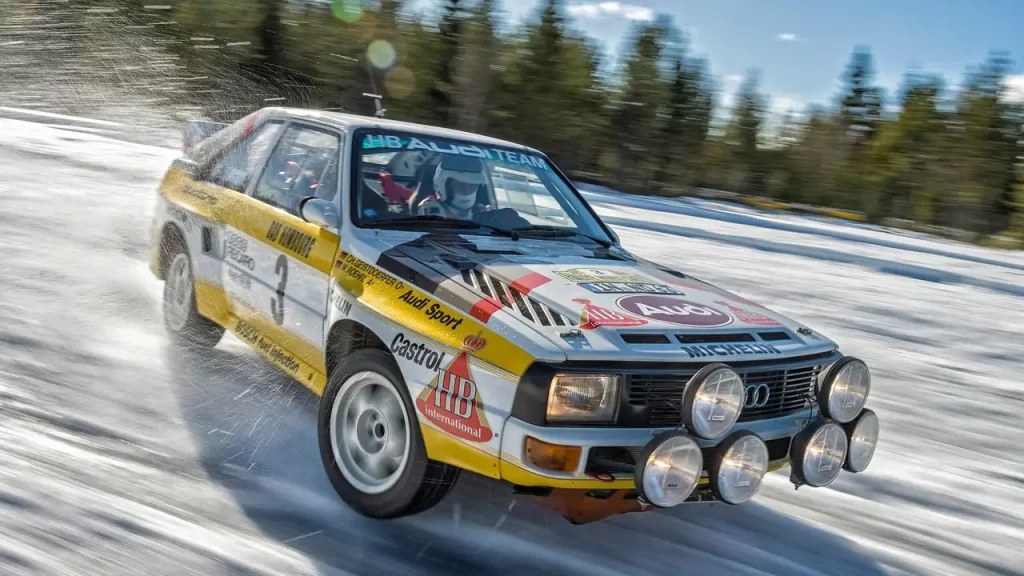
The Audi Quattro changed the performance-car landscape by demonstrating what all-wheel drive could accomplish when combined with turbocharged power.
Introduced in 1980, the Quattro paired a turbocharged five-cylinder engine with a permanent all-wheel-drive system. That combination gave Audi a major advantage in rallying, particularly on loose and slippery surfaces.
The Quattro’s success in motorsport forced competing manufacturers to reconsider how performance cars should put power to the ground. All-wheel drive was no longer viewed simply as a tool for off-road vehicles or poor-weather traction.
The road car was impressive, but its broader influence was even more significant. The technology pioneered by Audi helped establish all-wheel drive as an important part of modern performance-car engineering.
Key Specs:
- Engine: Turbocharged 2.1-liter five-cylinder
- Power: Approximately 200 hp
- Transmission: 5-speed manual
- Drive: Quattro all-wheel drive
- Racing Success: Multiple World Rally Championship victories
Callaway SledgeHammer Corvette (1988)
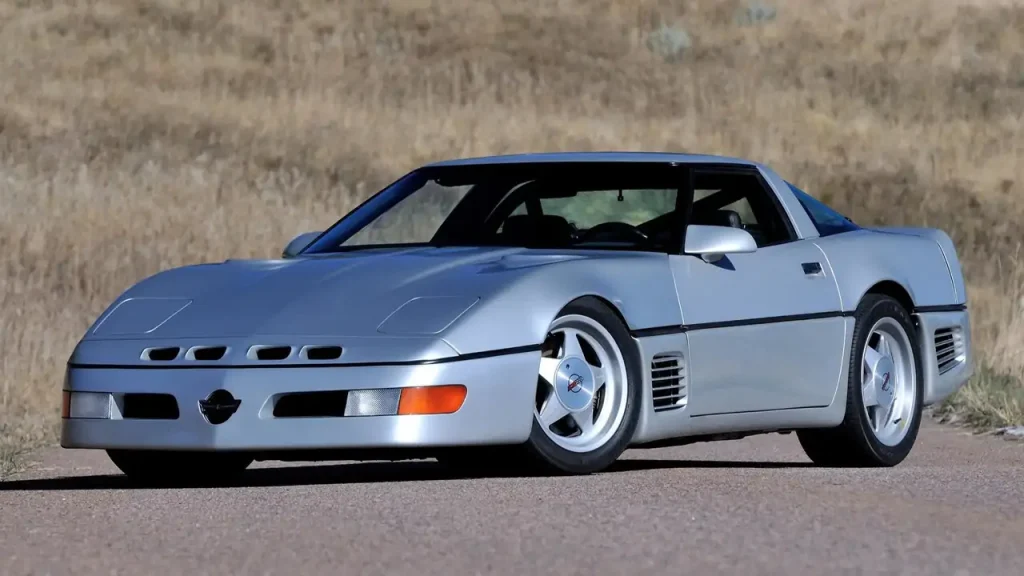
The Callaway SledgeHammer Corvette represented the wildest side of 1980s performance. Based on the Chevrolet Corvette C4, it turned an already capable American sports car into a machine capable of extraordinary speed.
Callaway fitted the Corvette with twin turbochargers and extensively upgraded the engine, cooling system, and aerodynamics. The resulting car produced more than 880 horsepower.
In 1988, the SledgeHammer reached a verified 254.76 mph, making it one of the fastest street-legal cars in the world.
What made the achievement particularly remarkable was that the SledgeHammer remained a usable road car. It retained amenities such as air conditioning and a conventional interior instead of becoming a stripped-down racing machine.
The SledgeHammer perfectly captured the decade’s fascination with extreme performance. It was proof that a road-going Corvette could be transformed into a 250-mph machine without losing its basic practicality.
Key Specs:
- Engine: 5.7-liter twin-turbo V8
- Power: 880+ hp
- Torque: 772 lb-ft
- Top Speed: 254.76 mph
- Year: 1988
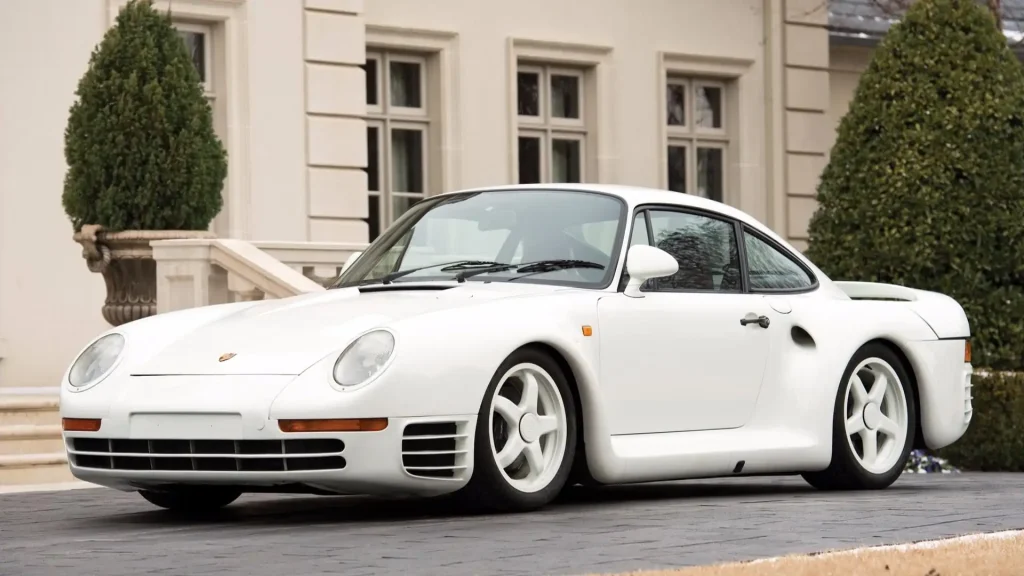
Porsche 959 (1986–1989)
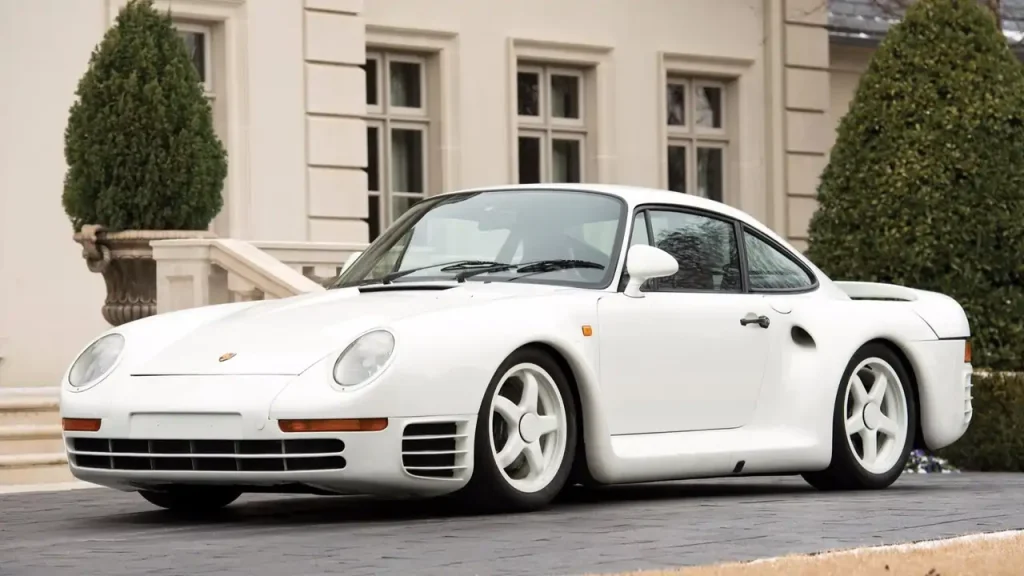
The Porsche 959 was arguably the most technologically sophisticated production car of the 1980s. Born from Porsche’s Group B rally ambitions, it eventually became a showcase for technologies that were years ahead of their time.
Its 2.8-liter twin-turbocharged flat-six produced around 444 horsepower. That power was sent through an advanced all-wheel-drive system, while computer-controlled suspension, lightweight construction, and sophisticated aerodynamics helped the 959 maintain impressive composure at speed.
The Porsche wasn’t simply designed to be fast in a straight line. Its engineering was intended to make the car effective across a variety of conditions.
That approach made the 959 fundamentally different from the Ferrari F40. Where Ferrari emphasized low weight and raw driving intensity, Porsche demonstrated how advanced technology could be used to make a supercar faster, more capable, and easier to control.
The 959 remains one of the greatest engineering achievements of the decade.
Key Specs:
- Engine: 2.8-liter twin-turbo flat-six
- Power: 444 hp
- Transmission: 6-speed manual
- Drive: Advanced all-wheel drive
- Top Speed: Approximately 197 mph
Ferrari F40 (1987–1992)
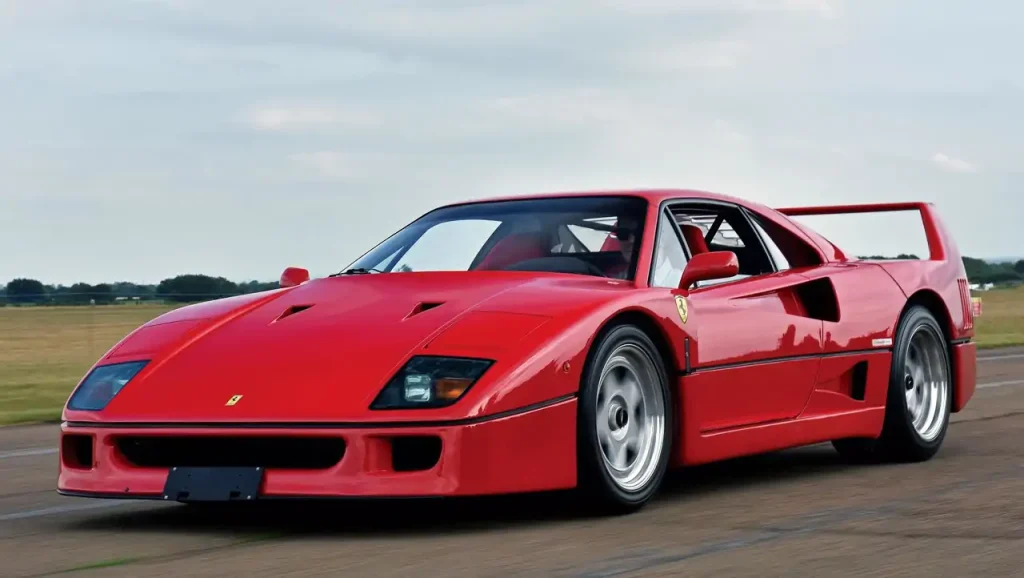
The Ferrari F40 is perhaps the single car that best represents the performance obsession of the late 1980s. Built to celebrate Ferrari’s 40th anniversary, it was the final new Ferrari personally approved by company founder Enzo Ferrari.
Rather than turning the F40 into a luxurious grand tourer, Ferrari focused relentlessly on reducing weight and maximizing performance. Carbon fiber, Kevlar, and aluminum were used throughout the car, helping keep its mass under control.
A 2.9-liter twin-turbocharged V8 produced approximately 478 horsepower, giving the F40 the kind of performance that was extraordinary for its era. It became the first production car officially capable of exceeding 200 mph.
The styling was just as uncompromising. Its huge rear wing, aggressive bodywork, low nose, and stripped-back interior made the F40 look more like a racing car that had escaped onto public roads.
The Porsche 959 may have offered greater technological sophistication, but the F40 delivered something different: pure, visceral speed with almost no compromise.
It became the ultimate poster car of the late 1980s and remains one of the most celebrated Ferraris ever built.
Key Specs:
- Engine: 2.9-liter twin-turbo V8
- Power: Approximately 478 hp
- Transmission: 5-speed manual
- Top Speed: Over 200 mph
- Production: Approximately 1,311 units
Conclusion
The 1980s produced some of the most memorable and influential cars in automotive history. It was a decade when manufacturers were willing to experiment with new technologies, unconventional designs, and increasingly ambitious performance targets.
The Toyota AE86 and Mazda RX-7 demonstrated how lightweight Japanese sports cars could build passionate followings, while the BMW M3 brought racing technology to the street. The Buick GNX showed the potential of turbocharging, and the Audi Quattro changed expectations for all-wheel-drive performance.
At the extreme end, cars such as the Lamborghini Countach, Porsche 959, Ferrari F40, and Callaway SledgeHammer pushed road-car performance into territory that seemed almost impossible only a few years earlier. Meanwhile, the DeLorean DMC-12 became a cultural icon after finding a second life on the big screen.
Together, these cars capture what made the 1980s so memorable: bold designs, emerging technology, outrageous performance, and a willingness to try something different. Decades later, they remain some of the cars most closely associated with an era when the automotive world was changing at remarkable speed.