
A pioneering mid-engine supercar that set a new standard for performance, while wearing one of the most breathtaking designs ever created.
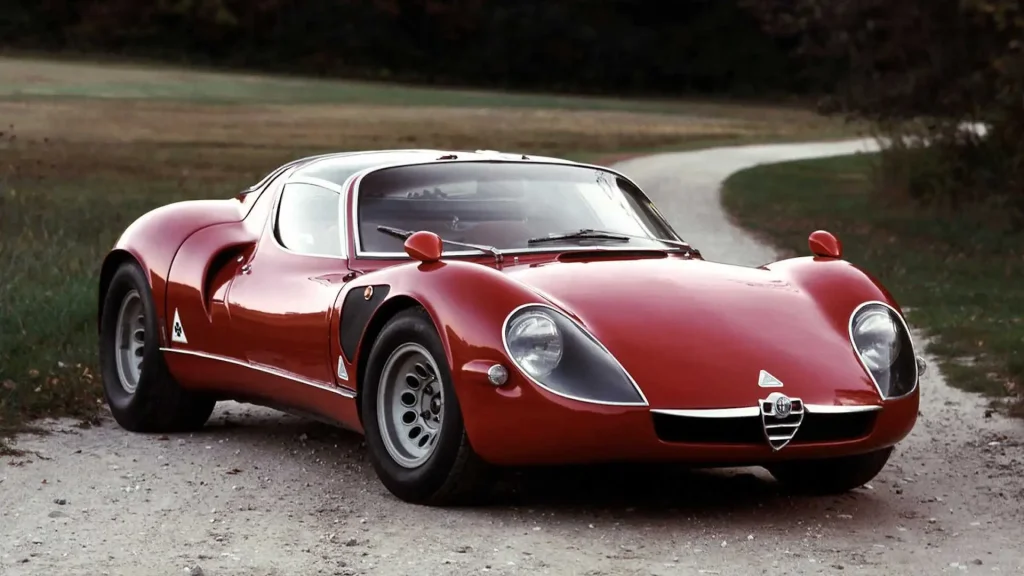
Name: Alfa Romeo 33 Stradale
Debut: September 1967, Monza, Italy
Engine: 2.0-Liter V8
Power: 227 Horsepower
Torque: 152 Pound-Feet
Original Price: $17,000
In the mid-1960s, Alfa Romeo decided to take the technology from its Tipo 33 racing program and turn it into something customers could drive on the road. The result was the 1967 Alfa Romeo 33 Stradale, a stunning two-seat sports car that combined race-bred engineering with some of the most beautiful bodywork ever created.
Race Car For The Road
In Italian, stradale refers to something designed for the road, and that’s exactly what the Alfa Romeo 33 Stradale was—at least technically. Its appearance suggested something far more extreme. Designed by Franco Scaglione, the dramatic bodywork looked like it had rolled straight off a racetrack, although closer inspection revealed the details that made it suitable for road use.
One of the 33 Stradale’s most notable features was its butterfly doors, which were among the first of their kind on a production car. Hinged at the A-pillars, they opened upward and incorporated large glass sections that extended from the beltline into the roof, creating a glass-heavy T-top effect reminiscent of the Ford GT40.
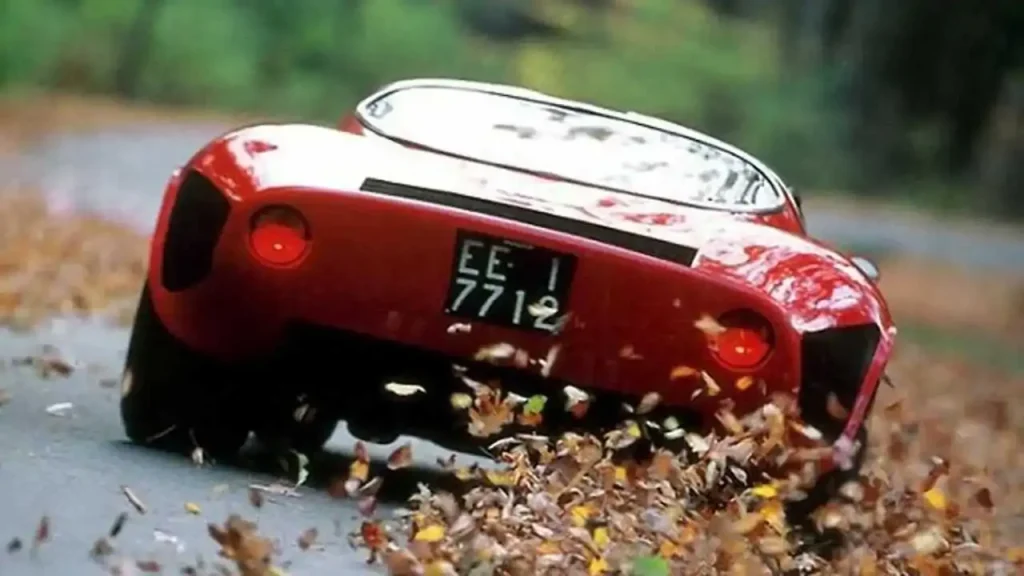
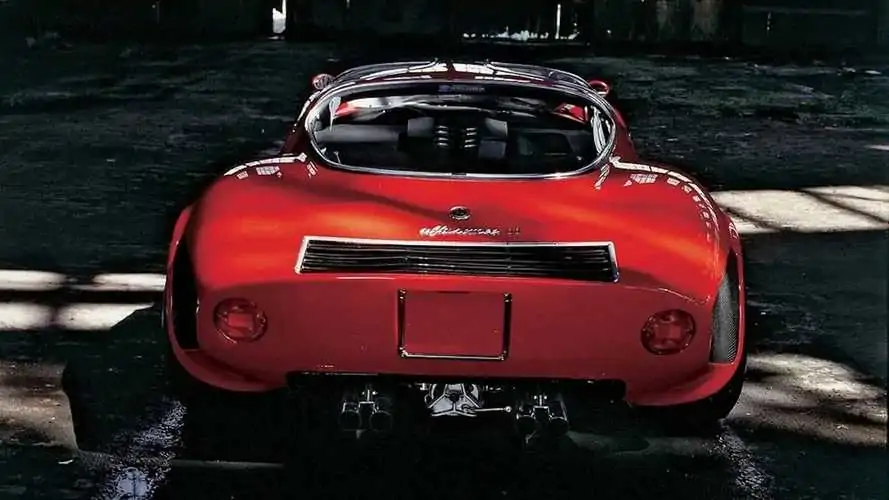
Despite its dramatic proportions, the Alfa was surprisingly compact, measuring just 156.3 inches long with a 92.5-inch wheelbase and an astonishingly low 39.0-inch overall height. The interior was considerably more luxurious than its race-bred appearance suggested, with leather upholstery, polished metal hardware, and deeply bolstered seats positioned extremely low to accommodate the unusual doors. Power came from a 2.0-liter V8 producing 227 horsepower (169 kilowatts) and 152 pound-feet (206 Newton-meters) of torque, with the engine driving the rear wheels through a six-speed Colotti transaxle.
A Closer Look At The 33 Stradale:
Rare And Unique
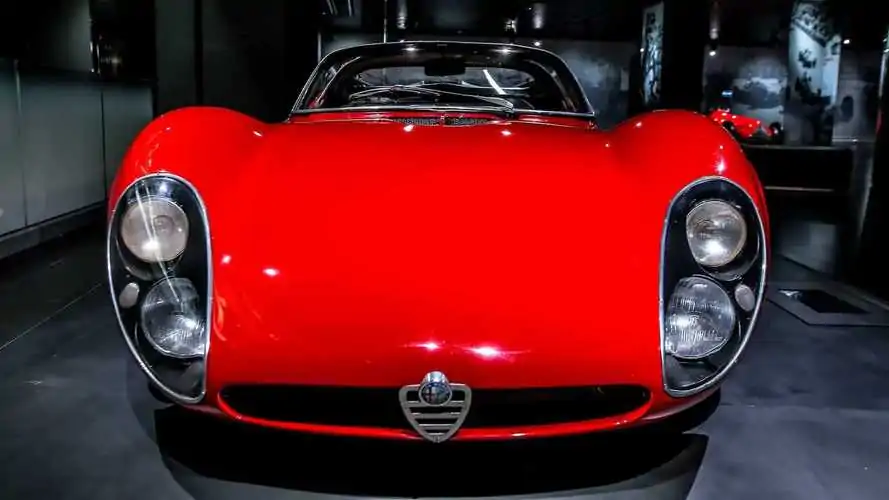
Only 18 examples of the 33 Stradale were built, and the cars aren’t completely identical. Because Carrozzeria Marazzi constructed the bodies by hand, small changes were introduced throughout production as the company refined its manufacturing process. As a result, individual cars can be distinguished by details such as their windshield-wiper arrangements and windshield mounting points. The first two prototypes also featured twin headlights, but those weren’t compatible with road-going regulations governing headlight height, prompting Scaglione to redesign the front end around single headlights.
The 33 Stradale’s influence extended well beyond the cars that actually reached customers. Five chassis were transformed into concept cars by three of Italy’s most famous design houses. Italdesign created the Alfa Romeo Iguana, while Pininfarina produced the 1968 P33 Roadster, 1969 33.2 Coupé Speciale, and 1971 Cuneo, with the latter sharing the P33 Roadster’s chassis. Bertone also used the platform for the 1968 Carabo and later the 1976 Navajo.
The influence of the 33 Stradale can also be seen in the modern Alfa Romeo 4C, particularly in its compact proportions and dramatic design. However, the combination of modern crash regulations, safety requirements, and the realities of contemporary production means that recreating the original 33 Stradale formula today would be extraordinarily difficult. That’s part of what makes the original so special: it came from an era when a road car could look remarkably close to a full-blown racing machine.