
When Honda brought race-bred engineering to the road, it created a supercar that challenged Ferrari on its own turf.
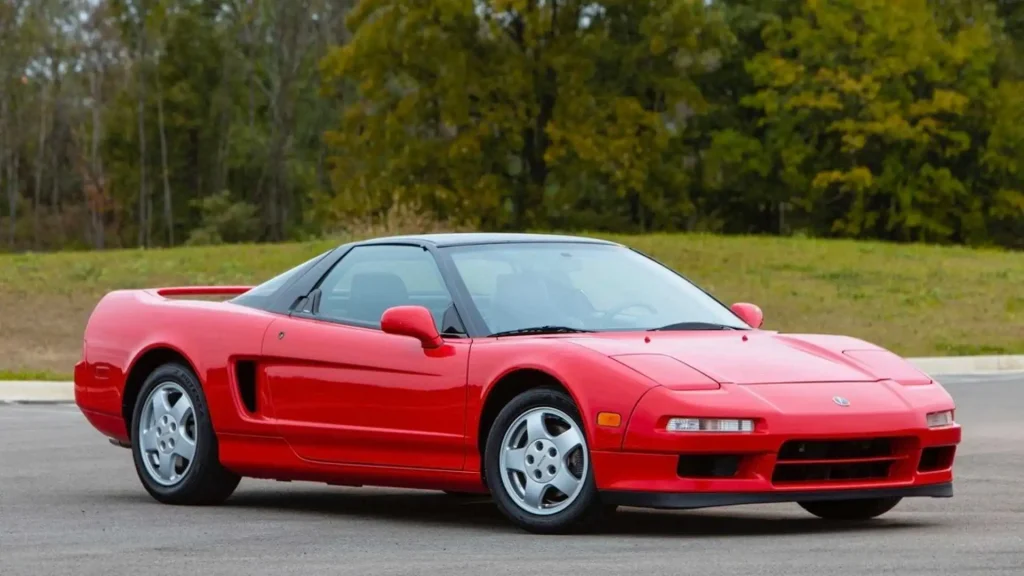
Name: Acura NSX
Production: 1990–2005
Engine: 3.0-Liter / 3.2-Liter V6
Power: Up to 290 Horsepower
Layout: Mid-Engine, Rear-Wheel Drive
In the late 1980s, Ferrari and Lamborghini dominated the exotic-car conversation. Their cars were breathtakingly fast and beautiful, but they could also be temperamental, expensive to maintain, and difficult to use as everyday transportation. Honda looked at that formula and decided it could build something better. The result was the Acura NSX, a mid-engine sports car that brought Japanese engineering discipline to the supercar world.
By the late 1980s, Japanese automakers had established themselves as serious players in the American market. Honda and Toyota were leading the charge, with the Accord and Camry becoming fixtures near the top of the U.S. sales charts. Their next target was the lucrative luxury market, and Honda, Toyota, and Nissan each created a dedicated premium brand. Acura arrived first in 1986, followed by Toyota’s Lexus and Nissan’s Infiniti in 1989.
Honda quickly found another use for Acura in America: giving its new mid-engine supercar a showroom worthy of its ambitions. The NSX was developed to take on established European sports cars from Porsche and Ferrari, so selling it alongside mainstream Honda models would have been an awkward fit. For American buyers, the car was therefore introduced as the Acura NSX.
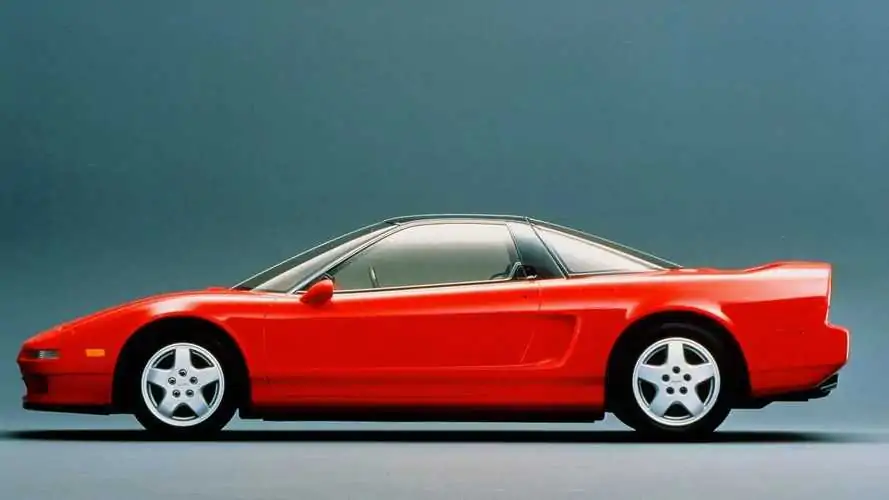
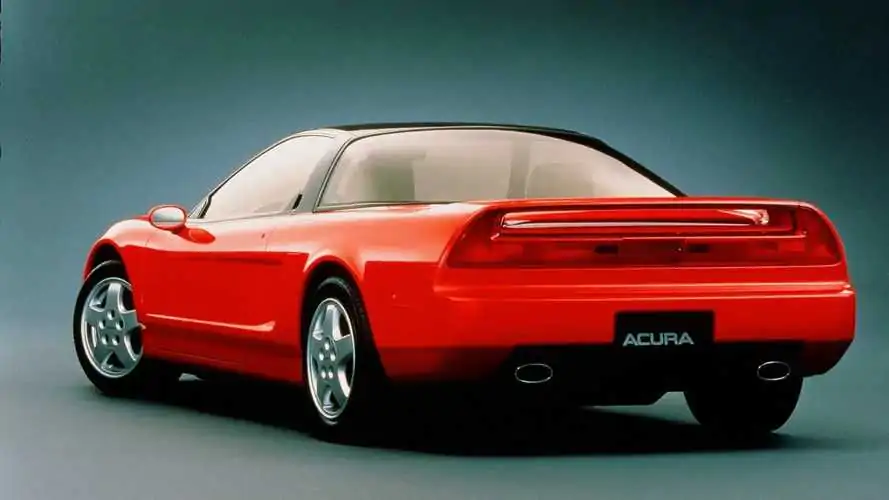
Mounted behind the two-seat cabin was a 3.0-liter VTEC V6 producing 270 horsepower and 210 pound-feet of torque, with power sent to the rear wheels through a six-speed manual transmission. Honda’s development team also benefited from input from Formula 1 champion Ayrton Senna, who was competing for McLaren with Honda power during the NSX’s development. The car combined supercar performance with advanced technology for its era, including anti-lock brakes and traction control, helping make it considerably easier to drive than many exotic cars of the period.
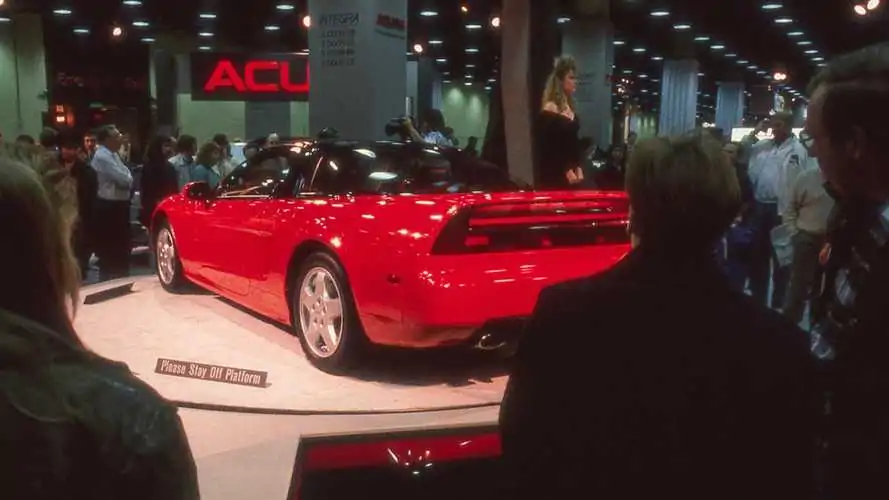
The NSX made its global debut at the Chicago Auto Show in February 1989, went on sale in Japan in January 1990, and reached American customers later that year in November. Reviews were highly positive, with Road & Track recording a 0-to-60-mph time of 5.7 seconds and a quarter-mile run of 14.0 seconds. The magazine concluded that the NSX belonged in the highest tier of sports and GT cars. Its performance was especially noteworthy because Honda had used the Ferrari 328 GTB as a development benchmark, yet the Ferrari was only about two-tenths of a second quicker to 60 mph despite its reputation and exotic pedigree.
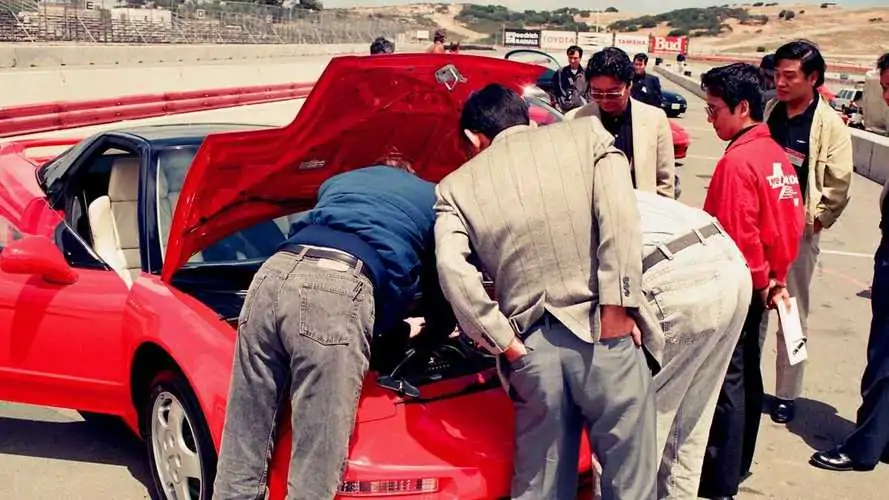
The NSX also looked the part. Its smooth, low-slung body featured flowing lines that rose toward an integrated rear spoiler, giving the car both aerodynamic purpose and an unmistakable silhouette. The pop-up headlights added an unmistakably exotic touch, while the side air intakes helped feed cooling air to the brakes and engine while giving the bodywork even more visual drama.
Honda continued to evolve the NSX during its long first-generation run. A Targa-style removable roof arrived in 1995, followed by a 3.2-liter VTEC V6 in 1997 that increased output to 290 hp. A major facelift followed in 2002, replacing the signature pop-up headlights with fixed bi-xenon units and bringing additional styling changes. U.S.-market cars also adopted the Targa configuration as Honda adapted the NSX to changing safety requirements and modern expectations.
After the 2005 model year, the first-generation Acura NSX finally retired. The nameplate remained absent for more than a decade before Honda returned with an all-new NSX for 2016, bringing an entirely different approach to the company’s supercar formula.
That’s the real legacy of the 1990–2005 Acura NSX. It didn’t just challenge Ferrari and Lamborghini on performance—it challenged the entire idea of what owning a supercar was supposed to be.