
How a 21-year-old Honda brought the basics of driving back into focus.
I can still remember the moment driving clicked for me. It happened on the legendary Tail of the Dragon, a 318-turn stretch of road winding along the North Carolina-Tennessee border, with me behind the wheel of my 2006 Mini Cooper S. It was early morning, the road was practically empty, and I was following a local driver in a Dodge Neon SRT-4. As I worked through corner after corner trying to keep the SRT-4 within reach, I started paying attention to things I’d never consciously noticed before—the subtle feedback through the steering wheel, the way the car’s weight shifted from one side to the other, and how each input affected what happened next. It felt as though someone had suddenly unlocked a new sense of communication between me and the car. That drive in 2007 became one of those moments I’ll never forget.
A lot has changed since that run through the Dragon. I’ve had the opportunity to drive plenty of incredible cars, but something else changed along the way: Cars became increasingly difficult to read. Where older vehicles seemed to communicate their every move through the steering, pedals, and chassis, modern cars often filter that information through layers of computers, sensors, and systems with names like Adaptive This and Dynamic That. There’s certainly no denying the benefits. Modern technology has made cars safer, more efficient, and remarkably capable. But for drivers who care most about feeling connected to the machine, all that sophistication doesn’t necessarily make the experience better.
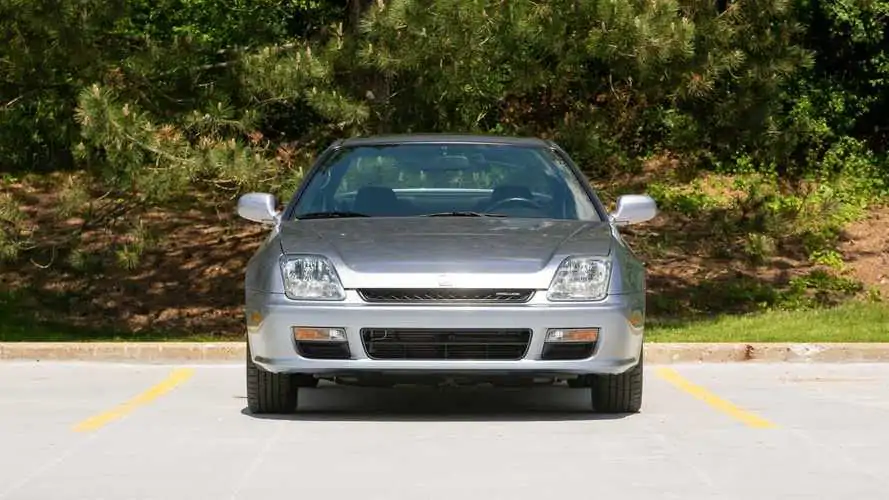
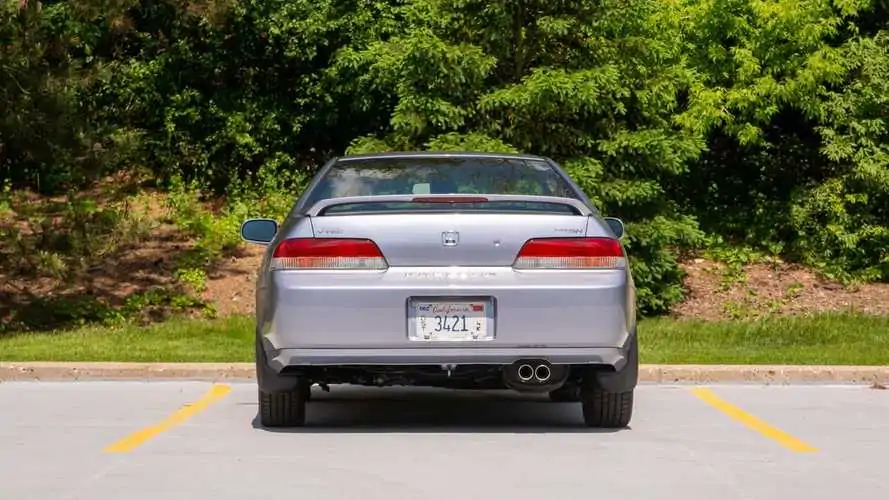
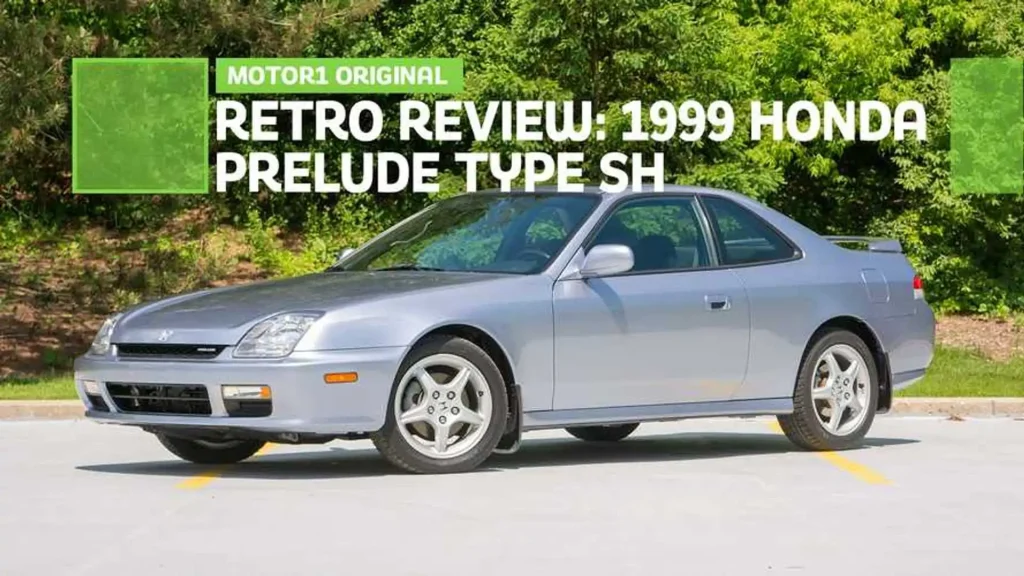
It took just an hour behind the wheel of a 1999 Honda Prelude Type SH to drive the point home. The particular Prelude is part of Honda’s collection and arrived at my driveway with barely more than 2,000 original miles on the odometer. It’s essentially a time capsule, having traveled fewer miles than many of the brand-new vehicles I drive for testing in a typical week.
My time with the Prelude was limited to a few days, so I wasted little time putting it on the road. At first, though, it felt almost refreshingly ordinary. Under the hood was a naturally aspirated 2.2-liter four-cylinder, sending its power through a five-speed manual transmission. That straightforward combination is becoming increasingly rare in today’s new-car market.
Modern turbocharged engines have become the norm, delivering thick waves of low-end torque that make acceleration almost effortless. Pair one with an increasingly sophisticated CVT—or, in a performance car, an automatic transmission capable of shifting faster than most humans ever could—and there’s very little work required from the driver. Push the accelerator and the car simply takes care of the rest.
The Prelude’s VTEC-equipped 2.2-liter demands a much more active approach. Honda rated the engine at 200 horsepower and 156 pound-feet of torque when new, but that peak torque doesn’t arrive until 5,250 rpm. By comparison, the Civic Hatchback Sport Touring I reviewed a few weeks earlier produced 162 lb-ft from just 1,700 to 5,500 rpm. Its turbocharged 1.5-liter made acceleration almost mindless—give the throttle a squeeze and the Civic immediately surged forward. The Prelude requires something different: more revs, more throttle, and a willingness to work for the performance.
The Prelude and its VTEC-equipped 2.2-liter demand an active driver.
The old Honda requires a much more deliberate approach. Getting away from a stop means working the four-cylinder because there’s not much happening below 3,000 rpm. Keep the revs climbing, however, and everything changes when the single-stage VTEC system switches to its more aggressive cam profile. The engine note takes on that unmistakable VTEC character, and suddenly the Prelude feels sharper, more responsive, and eager to keep pulling toward its lofty 7,400-rpm redline.
At first, I was hesitant to push a 21-year-old car this hard. That hesitation didn’t last long. Once I experienced VTEC kicking in, the whole process became addictive. The engine’s sound is raw and wonderfully unfiltered, delivering the kind of mechanical character that’s difficult to find in a modern car outside something as elemental as a Mazda MX-5 or another lightweight sports car.
To get the most from the Prelude, you also need to shift right near redline. Shift too soon and the revs fall sharply, forcing you to work your way back into the engine’s VTEC sweet spot. That extra effort is exactly what makes the Prelude so rewarding. Its engine doesn’t simply deliver performance at the push of a pedal—you have to earn it. You have to keep working it.
The Prelude Rewards Redline Shifts
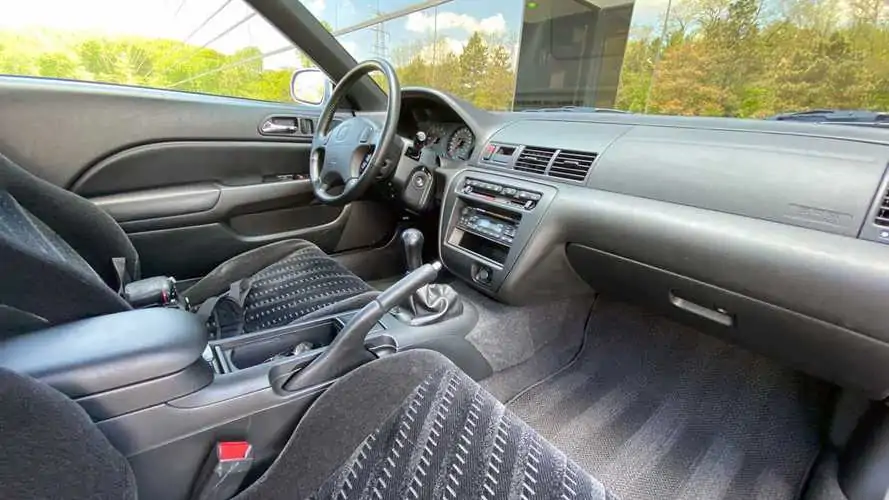
Thankfully, the five-speed manual is more than up to the task. Its biggest drawback is the lack of a sixth gear, which would make highway cruising easier, but otherwise the transmission is wonderfully smooth. The throws are noticeably longer than those in a modern performance car—in some ways, they bring to mind a current Jeep Wrangler—but that becomes part of the character once you’re pushing the car. There’s a satisfying mechanical feel every time the lever drops into the next gear, along with subtle vibrations that travel through the shifter as the engine gains or sheds revs. The clutch is light and progressive, though the slower throttle response and limited low-end torque mean you need to give it some extra gas when letting the clutch out.
Accelerating in the Prelude is nothing like driving a modern car. It asks you to pay attention, make deliberate inputs, and stay involved rather than simply pressing the accelerator and waiting for the electronics to do the work. That little bit of effort is exactly what makes the experience so rewarding—and something that’s increasingly rare in today’s instantly responsive cars.
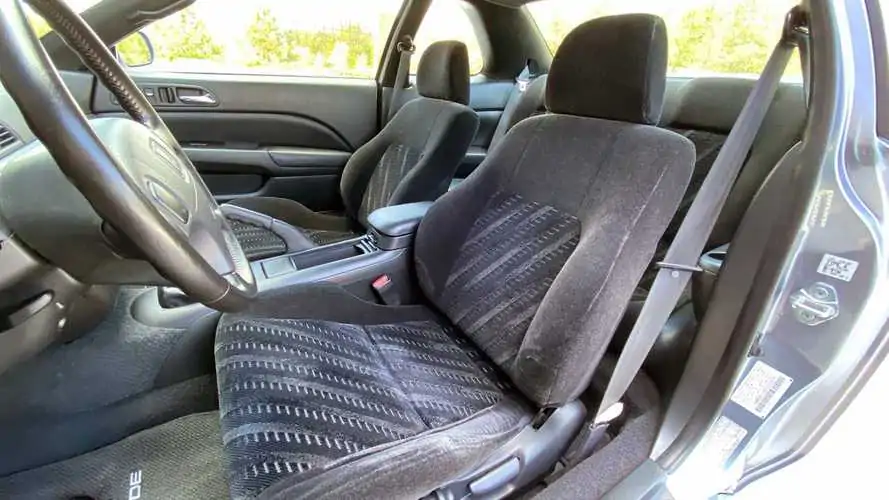
Where It Comes Alive
The Prelude’s powertrain may be memorable, but the car really comes alive in the corners. That doesn’t necessarily mean it’s a natural-born handler. This front-wheel-drive Honda places more than 60 percent of its weight over the front axle, while the 2.2-liter engine sits well forward in the bay. Predictably, the car has a strong tendency to understeer, even with the Type SH’s Active Torque Transfer System.
On paper, that relatively primitive torque-vectoring system should help the Prelude rotate more naturally, but my first corner suggested otherwise. Living in southeastern Michigan doesn’t exactly provide an abundance of winding roads, so an aggressive freeway ramp was about the closest thing I had to a proper test. I headed for the nearest cloverleaf to see what the Prelude could do.
As I approached the first ramp, I began downshifting and matching revs. The Prelude’s pedal spacing makes heel-and-toe work a little awkward, adding another challenge to the process. Then came the turn-in. I added steering input, waited for the car to respond, and added more. Then more again. I had completely underestimated just how relaxed the Prelude’s steering ratio was.
The Prelude’s hydraulic steering was slow to load up, and by the time it responded, I’d already misjudged the corner and pushed the car deep into understeer.
The Prelude’s 15.6:1 steering ratio isn’t particularly unusual. The Mazda MX-5 Miata, for example, comes in at 15.5:1, while the Ford Shelby GT350 is slightly slower at 16.0:1. What I wasn’t prepared for was how much less immediate the Prelude felt compared with modern electric power-assisted steering. The hydraulic rack didn’t build steering effort instantly, and by the time I realized how much input I needed, I’d already overcooked the corner and pushed the car into pronounced understeer.
Once I adjusted my technique, the Prelude’s laid-back steering started to make more sense. The considerable body roll became another source of information, telegraphing what the chassis was doing before the tires reached their limits. The hydraulic steering was remarkably communicative, relaying subtle changes in the road surface through the wheel. Its slower ratio also made it easier to make small, deliberate corrections. The Prelude doesn’t have particularly high limits, but those limits are easy to understand and approach, which makes the car surprisingly rewarding.
The chassis moves around quite a bit laterally, but never in a way that feels unpredictable. By comparison, something newer like the Civic Hatchback reacts much more sharply to steering inputs, immediately digging into a corner when you turn the wheel. The Prelude feels almost deliberately slow by comparison, with the suspension seemingly taking its time to respond to every command. None of this makes the Prelude especially agile, though. Understeer remains the defining trait when you push it through a corner, and ultimately, there’s only so much you can overcome when the physics start with a front-heavy, front-wheel-drive layout.
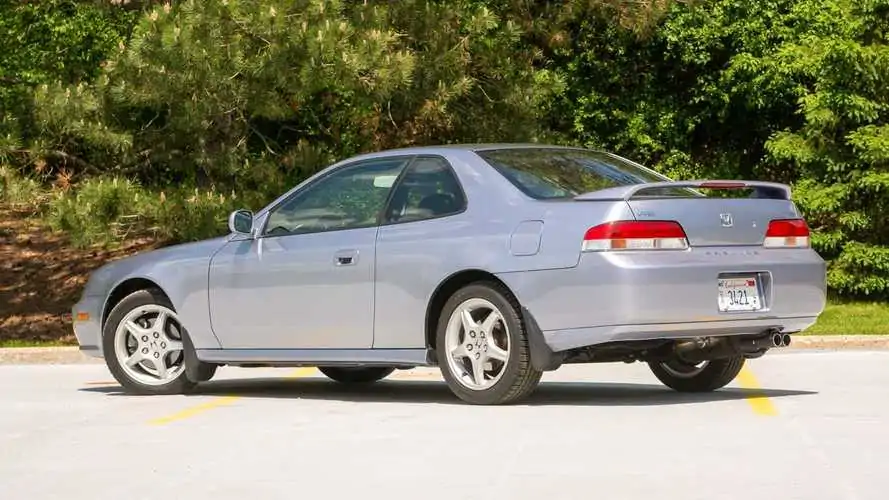
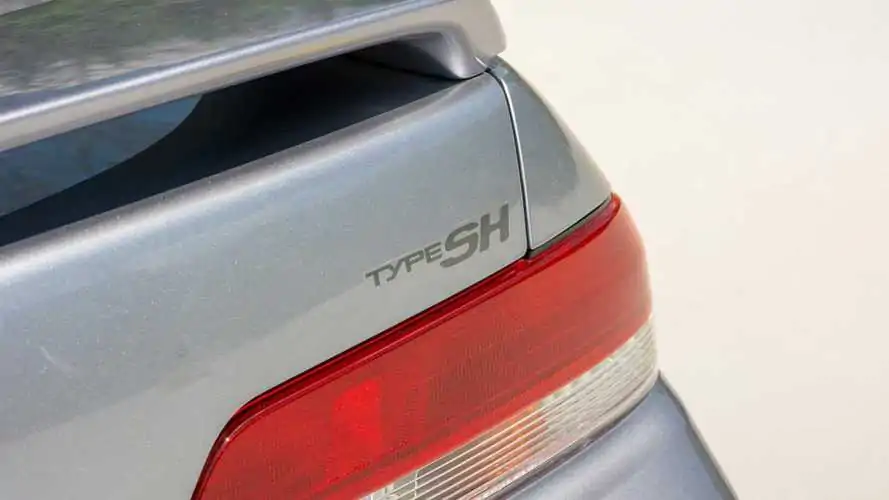
What Modern Cars Have Lost
I only had the museum-quality Prelude for a few days, but that first drive was enough to highlight just how dramatically cars have evolved—and what may have been lost along the way. Modern vehicles are undoubtedly safer, smarter, more efficient, and easier to operate. That’s not inherently a bad thing. I enjoyed the Civic Hatchback’s accessible power and predictable, effortless handling, and most drivers would probably prefer that kind of simplicity to the demands of the Prelude.
Still, after the Prelude was gone, I found myself missing the constant feedback it provided and the way it demanded something from me in return. It wasn’t a car you could simply point and drive without thinking. It required attention, input, and commitment, and in return it created a genuine sense of connection between driver and machine. That feeling took me back to what first made driving special—the kind of experience I had years ago while chasing that SRT-4 through the Dragon in my Mini. Modern cars may be better at almost everything on paper, but I’d gladly give up some of their convenience and refinement for the involvement an old-school car like the Prelude provides.
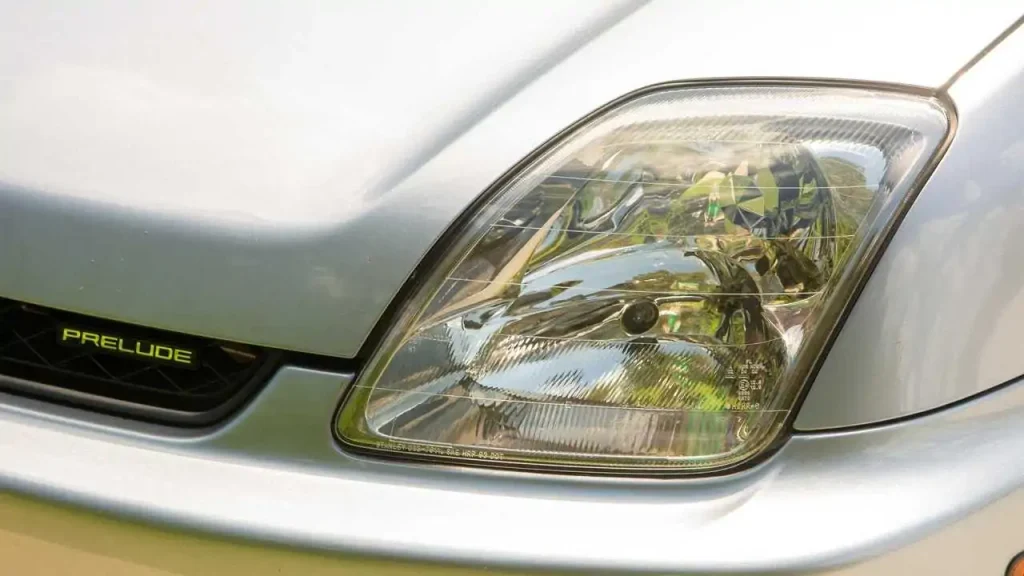
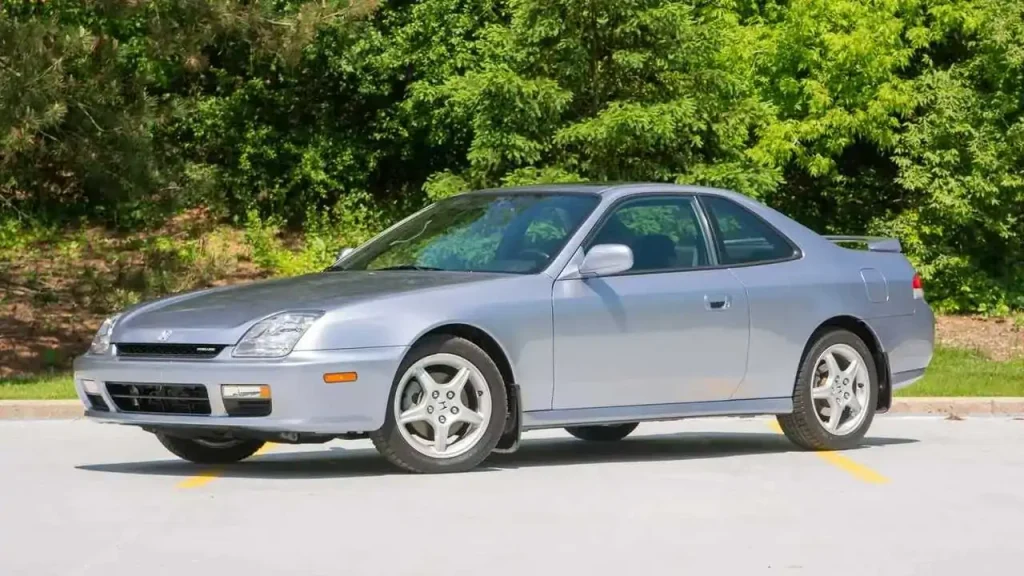
1999 Honda Prelude Type SH
Engine: 2.2-liter inline-four
Power: 200 hp / 156 lb-ft
Transmission: 5-speed manual
Drivetrain: Front-wheel drive
0-60 mph: 7.0 seconds (est.)
Fuel Economy: 20 city / 24 highway / 21 combined mpg
Curb Weight: 3,035 pounds
Seating: 4 passengers
Original Price: $26,365