
The V12-powered original that launched Pagani’s legendary supercar dynasty.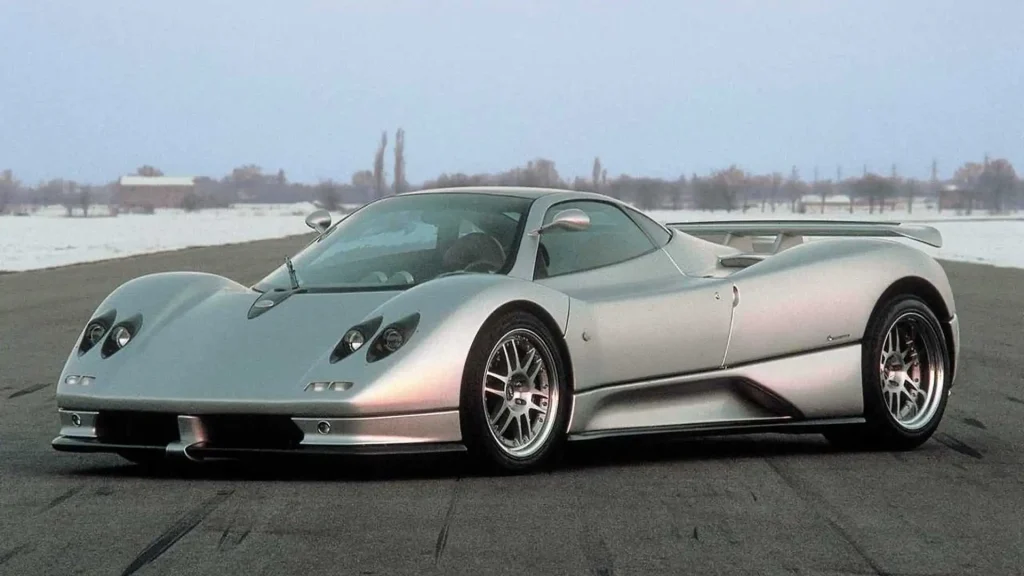
Name: Pagani Zonda C12
Debut: March 1999, Geneva Motor Show
Specs: 6.0-Liter V12, 394 Horsepower / 420 Pound-Feet
It’s easy to get distracted by Pagani’s latest creations, especially something as spectacular and wildly expensive as the 800-horsepower (596-kilowatt) Huayra Roadster BC. But before admiring a $3.5-million Pagani on Instagram, it’s worth remembering where the Italian marque began. Two decades earlier, Pagani introduced its first production car, the Zonda C12, establishing the foundation for everything that followed. It’s also the perfect starting point for our Supercar Sunday series.
Where It All Began
Horacio Pagani established Pagani Automobili in 1992, and the Modena-based company soon began developing its first automobile under the internal designation “C8 Project.” The car was initially intended to be called the “Fangio F1,” a tribute to legendary five-time Formula One champion Juan Manuel Fangio. After Fangio passed away in 1995, however, Pagani changed the name to Zonda C12.
A 1994 agreement between Mercedes-Benz and Pagani provided the young automaker with access to German-built V12 engines, giving the project a clear path toward production. Five years later, Pagani finally revealed the finished car to the world when the Zonda C12 made its public debut at the 1999 Geneva Motor Show.
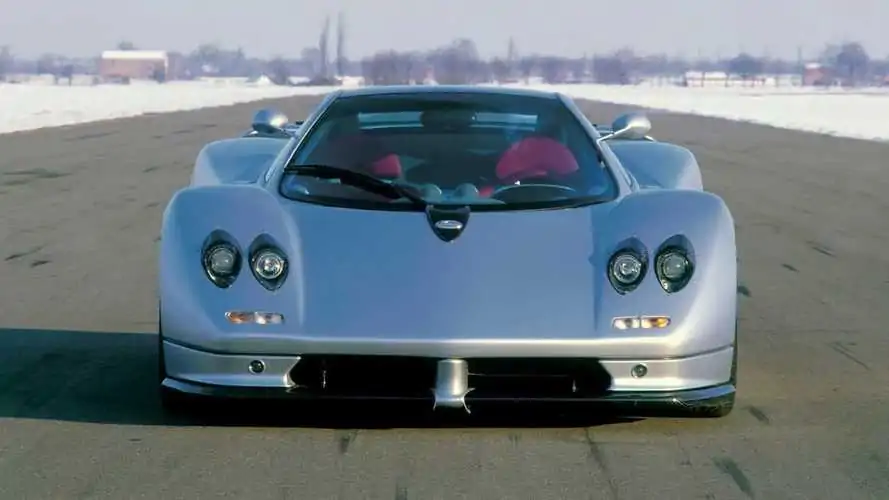
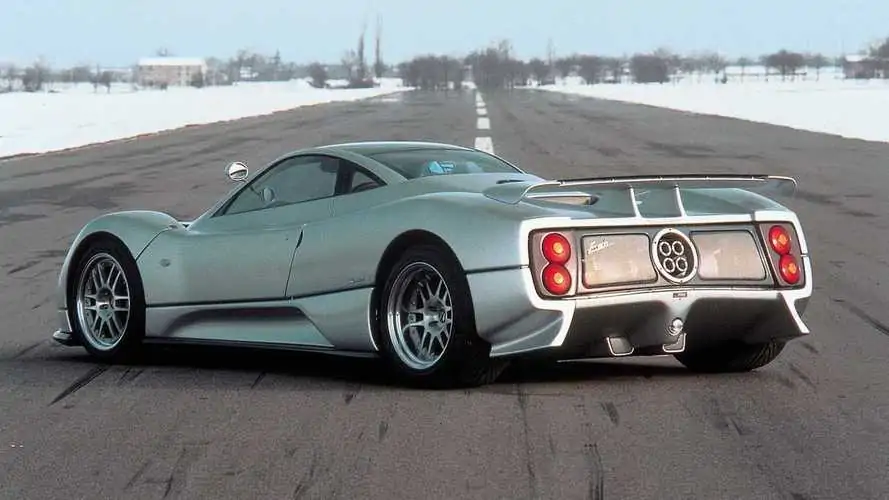
While many performance cars of the era focused heavily on lightweight aluminum construction, Pagani took an extensive approach to carbon fiber. The attention to detail was just as unusual. Leather straps, mesh, netting, and even zipper-like elements were incorporated into the design, creating a distinctive combination of exotic engineering and almost industrial-looking craftsmanship.
Pagani’s design philosophy was anything but conventional. Horacio Pagani envisioned a body with sensual proportions, dramatic wheel arches, and a rear section shaped around the curves of the human form. Inside, the seats were designed to envelop their occupants, combining a strong visual presence with a feeling of protection and support. The result was a car that looked unlike anything else in the supercar world.
Underneath all that carbon fiber sat a Mercedes-sourced 6.0-liter V12 producing 394 horsepower (293 kW) and 420 pound-feet (570 Nm) of torque. Those figures may seem modest compared with today’s 800-hp Paganis, but the C12 didn’t need enormous output to deliver serious performance. With a five-speed manual transmission and a curb weight of just 2,755 pounds, it could reach 60 mph (96 km/h) in approximately 4.2 seconds and continue to a top speed of around 185 mph (297 km/h).
A New Era For Pagani
The Zonda C12’s arrival was followed by an incredibly limited production run. Pagani built just five examples equipped with the original 6.0-liter V12. Later versions, including the Zonda S and Zonda 7.3, brought more power and further development, but the C12 remained special simply because it was the car that started everything.
More importantly, the C12 established Pagani as a legitimate name in the world of exotic performance cars. It arrived in an era dominated by machines such as the Lamborghini Diablo, while even more extreme creations like the Mercedes-Benz CLK GTR occupied the upper reaches of the supercar world. Against that backdrop, the Zonda C12 managed to create its own identity through a combination of carbon-fiber construction, dramatic styling, meticulous detailing, and a naturally aspirated V12.
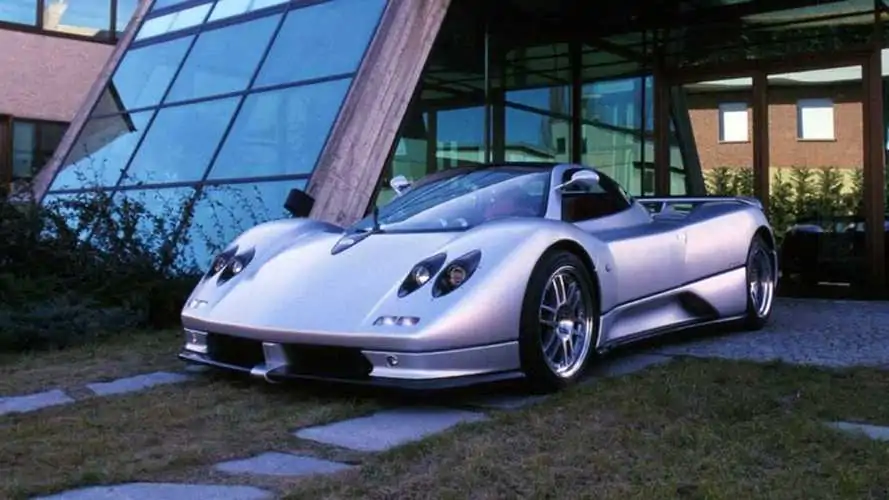
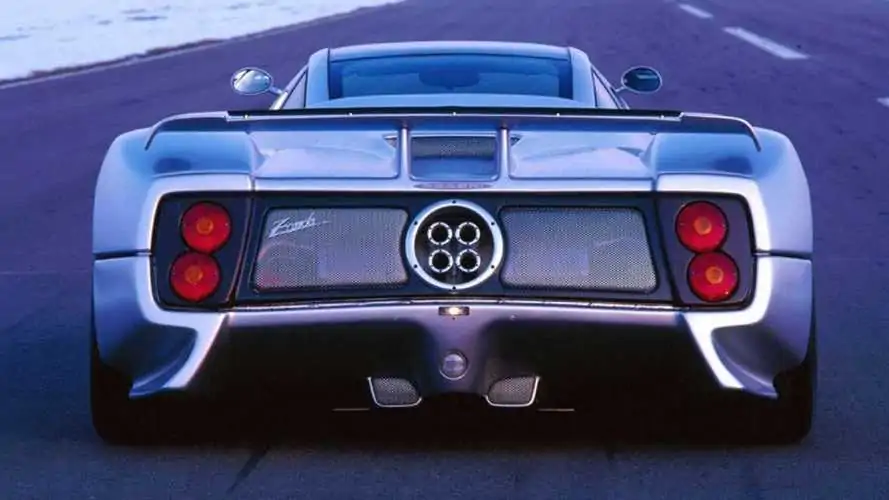
Pagani still owns the first Zonda C12, chassis number 001. The car originally served as a test and homologation vehicle before being completely restored through the company’s Pagani Rinascimento program. Chassis number 002 is the example shown here. To celebrate the Zonda’s 20th anniversary, Pagani brought its original creation back into the spotlight at the 2019 Geneva Motor Show, completing a fitting tribute to the car that launched the company into the supercar elite.