
These high-tech instrument clusters brought the future to the road decades ahead of their time.
The all-digital instrument cluster may feel like a modern trend, but the idea is anything but new. As automakers continue replacing traditional gauges with sleek thin-film-transistor liquid-crystal displays (TFT LCDs), it’s worth remembering that digital dashboards have been part of automotive experimentation for decades.
Long before today’s customizable displays and high-resolution screens, manufacturers in the 1970s and 1980s were already exploring futuristic ways to present vehicle information. Some production cars and concept vehicles featured digital instrument panels that looked like they belonged in a science-fiction movie, while others introduced designs that were more unusual than practical.
From innovative displays that predicted the technology we see today to quirky experiments that never quite caught on, these vehicles represent an important chapter in automotive design history. Most of the examples come from the 1980s, an era when digital technology was at its peak, though a few standout models from other decades also deserve recognition.
So, let’s take a nostalgic trip back in time and revisit some of the coolest cars ever fitted with digital dashboards.
Note: This list is not ranked in any particular order.
Table of Contents
Toyota Celica 2.0 GT-R
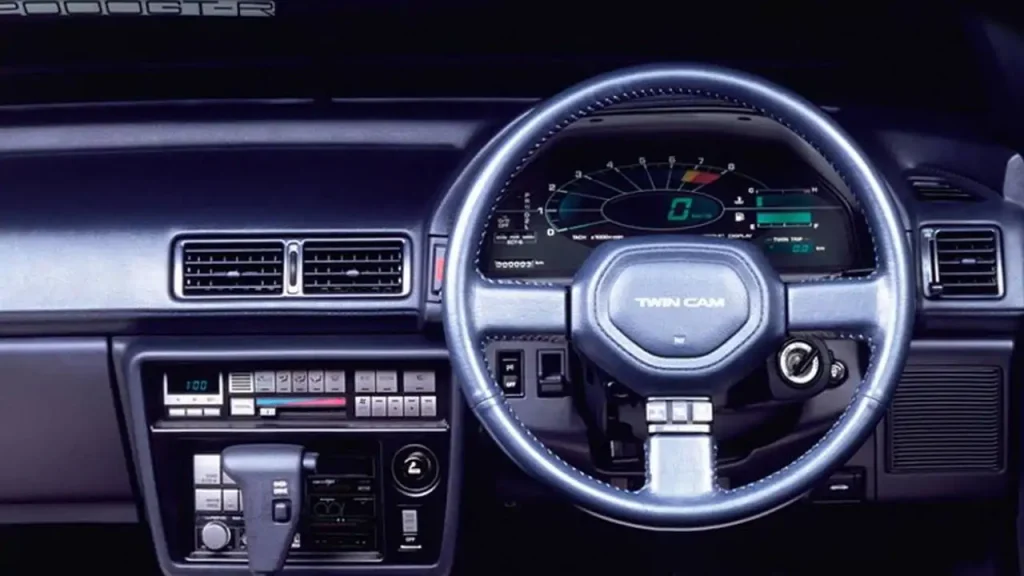
The Toyota Celica 2.0 GT-R brought some distinctly futuristic touches to a sporty Japanese coupe. Its digital instrumentation replaced the traditional look of analog gauges with glowing electronic displays, giving the Celica an unmistakably 1980s character.
Isuzu Piazza
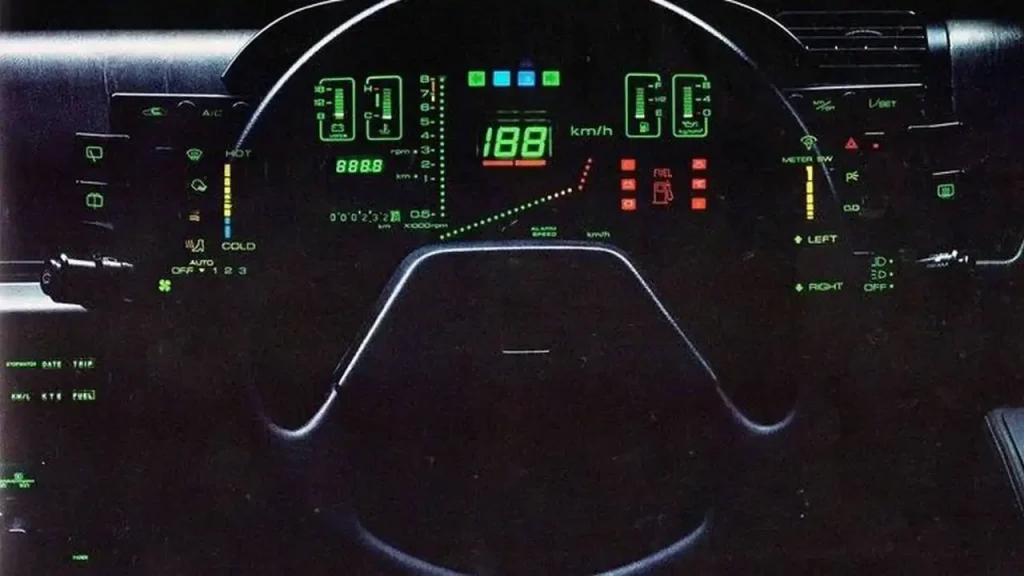
The Isuzu Piazza, also sold as the Impulse in some markets, had a sharp Giorgetto Giugiaro-designed body and an equally futuristic cabin. Its electronic instrumentation and collection of switches fit perfectly with the angular styling, making it one of the more interesting Japanese interiors of the era.
Alfa Romeo 90
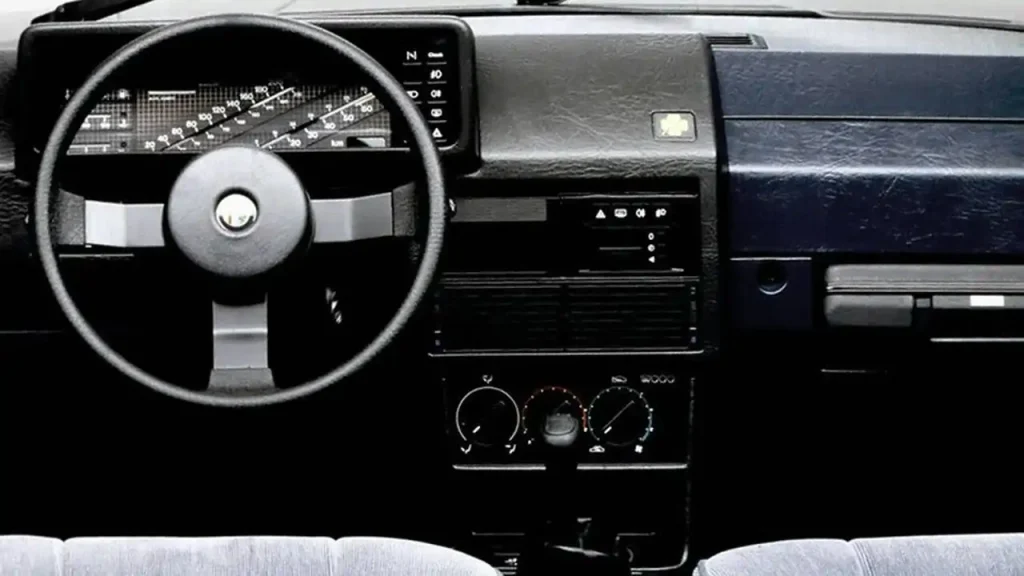
The Alfa Romeo 90 looked relatively conventional from the outside, but its cabin was another story. The dashboard featured a futuristic arrangement of digital instrumentation and controls that gave the sedan a surprisingly high-tech feel. It was one of those cars where the interior was arguably more adventurous than the exterior.
Opel Monza
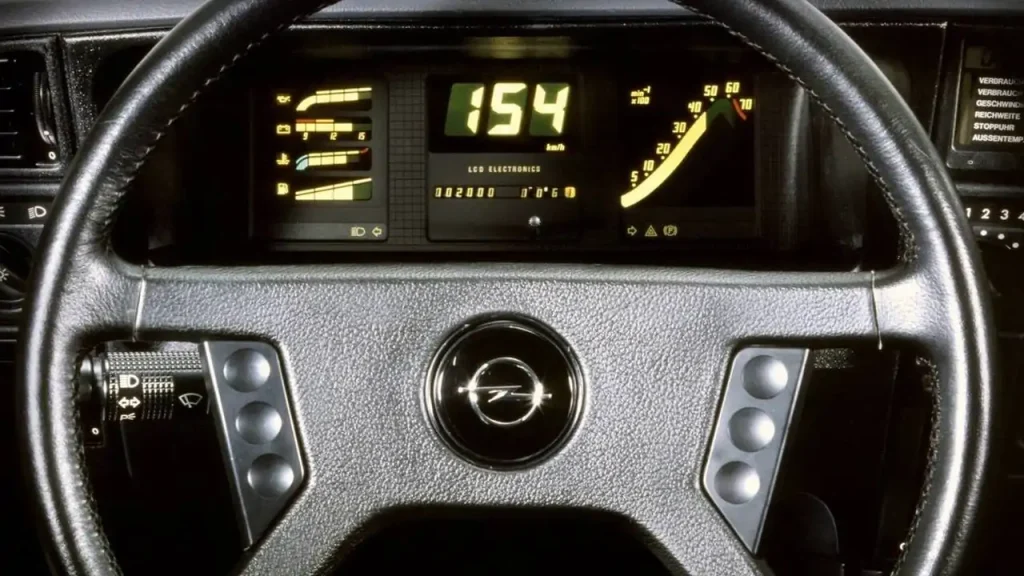
The Opel Monza combined classic grand-touring proportions with some decidedly futuristic technology. Its digital dashboard was particularly memorable, giving the large coupe a more modern personality than its traditional styling might suggest.
The Monza is also remembered as one of the standout European examples of the digital-dashboard era, alongside cars such as the Audi Quattro and later Subaru XT and Toyota Soarer.
Toyota Cressida
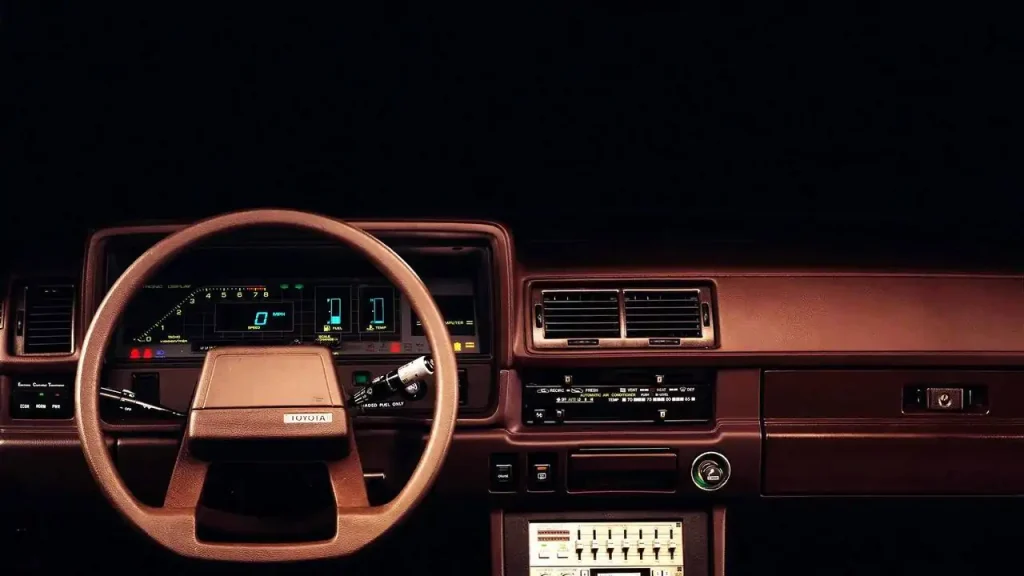
Toyota took a more restrained approach with the Cressida. Rather than surrounding the driver with an elaborate cockpit, the luxury sedan incorporated digital instrumentation into a relatively conventional dashboard. It was a subtle way of introducing futuristic technology without making the cabin look like a spaceship.
Unfortunately, these early electronic systems weren’t always as durable as modern displays, and some Cressida owners eventually experienced failures with the digital instrumentation.
Toyota Soarer
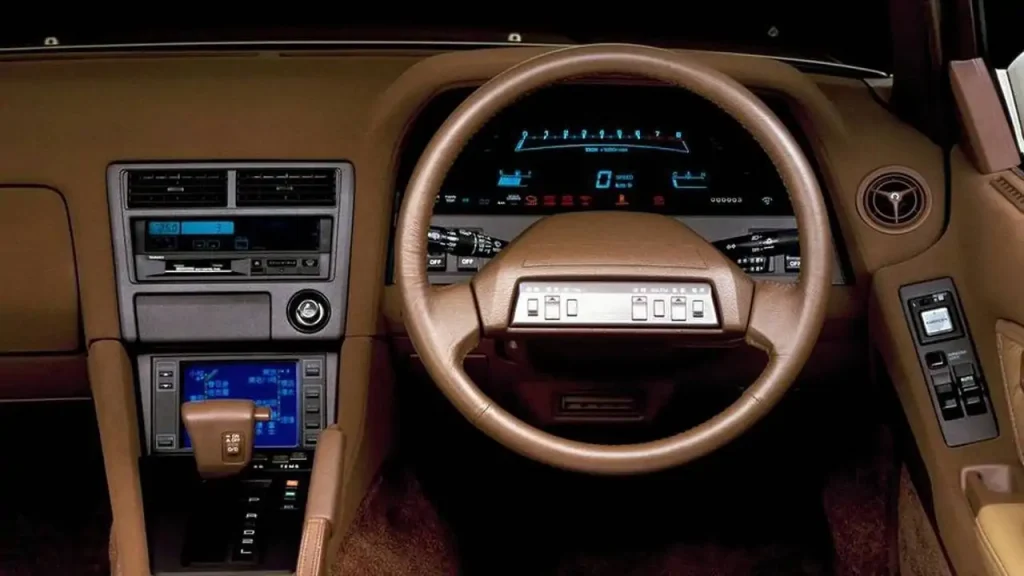
The Toyota Soarer was one of Japan’s technological showcases, so its futuristic instrumentation was perfectly appropriate. The luxury coupe combined digital displays with an advanced interior packed with electronic features, creating the sort of cockpit that seemed to belong in a science-fiction movie.
The Soarer became one of the better-known Japanese examples of the 1980s digital-dashboard craze.
Buick Reatta
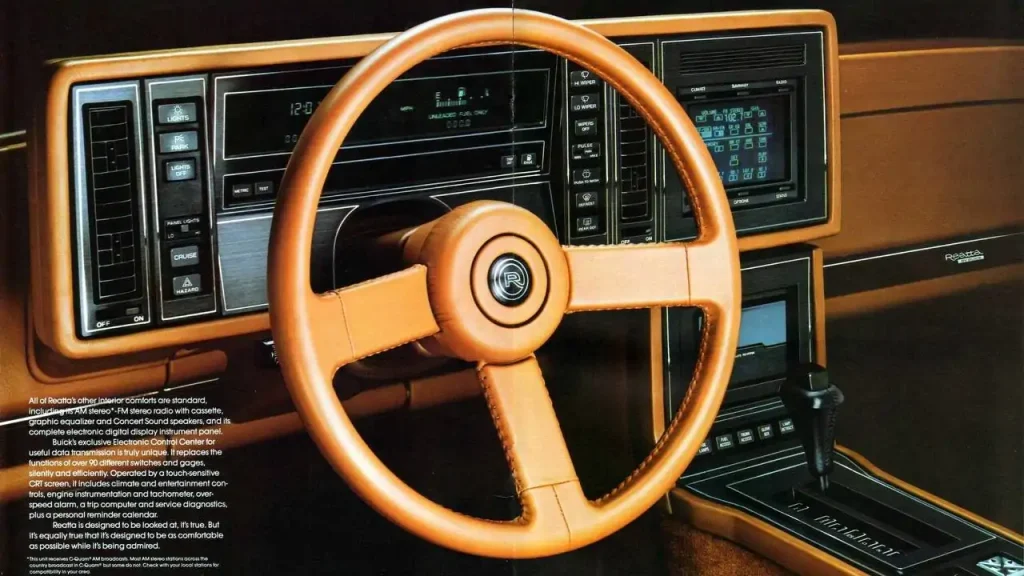
The Buick Reatta took digital technology well beyond simply displaying the speed and engine information. Its Electronic Control Center incorporated a touchscreen interface that allowed drivers to interact with various vehicle functions.
For the late 1980s, putting a touchscreen in a production car was remarkably ambitious. It wasn’t as slick as a modern infotainment system, but the basic concept was surprisingly familiar.
Subaru XT 4WD 1800 Turbo
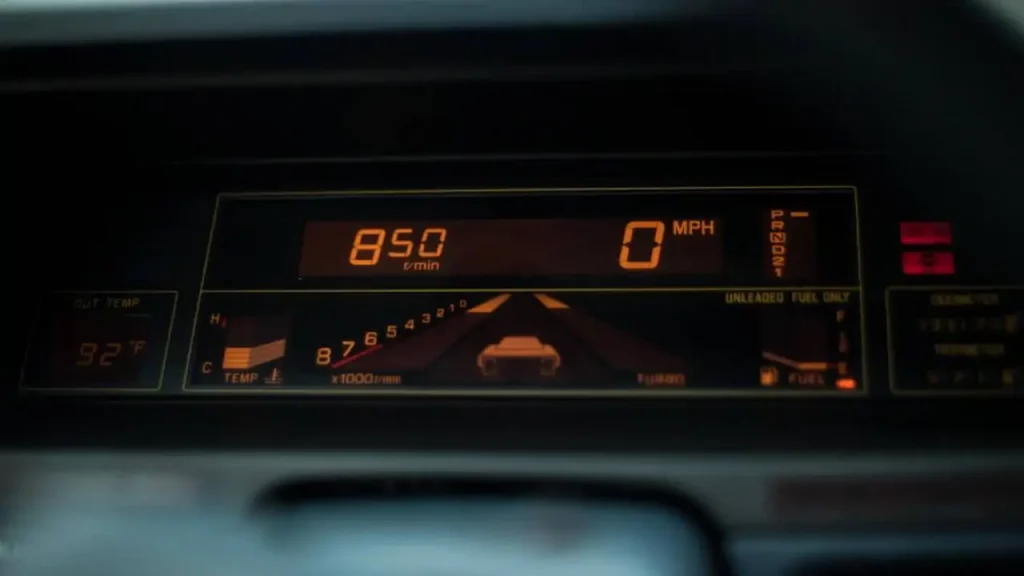
The Subaru XT was already an unusual-looking machine, and the interior continued the theme. Its digital dashboard added another layer of futuristic styling, while the driver faced an aircraft-inspired cockpit complete with unusual controls.
The XT’s combination of a wedge-shaped body, four-wheel drive, turbocharged engine, and digital instrumentation made it one of the more distinctive Japanese cars of the decade.
Mazda MX-03 Concept
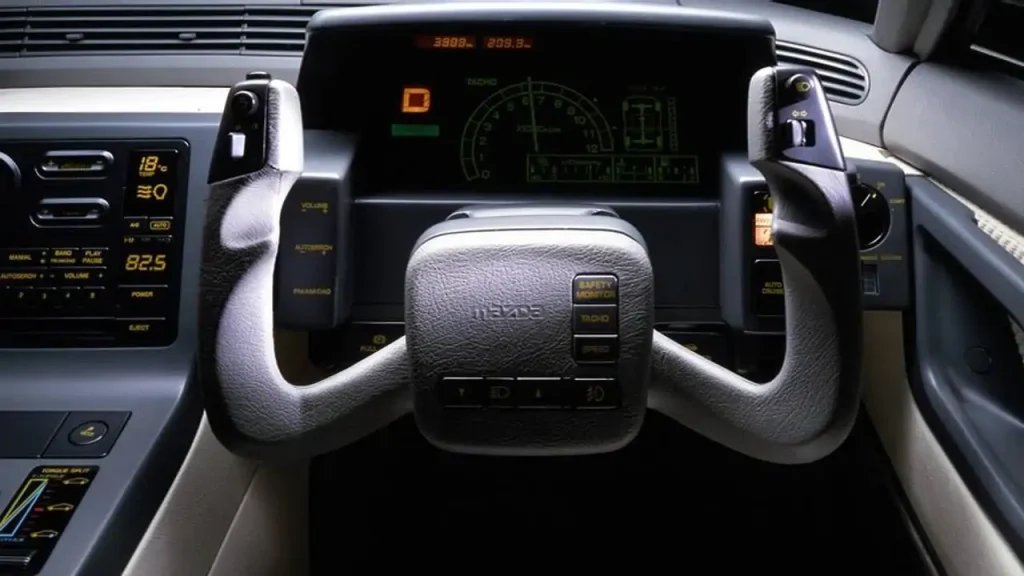
The Mazda MX-03 concept was essentially a rolling technology showcase. Introduced in 1985, it featured a futuristic cockpit inspired by aircraft, including a yoke-style steering wheel and an advanced digital display.
Mazda packed the concept with technology including four-wheel drive, four-wheel steering, a telephone, and a head-up display. It was an impressive preview of what the company imagined a high-tech performance car could become.
Volvo Tundra
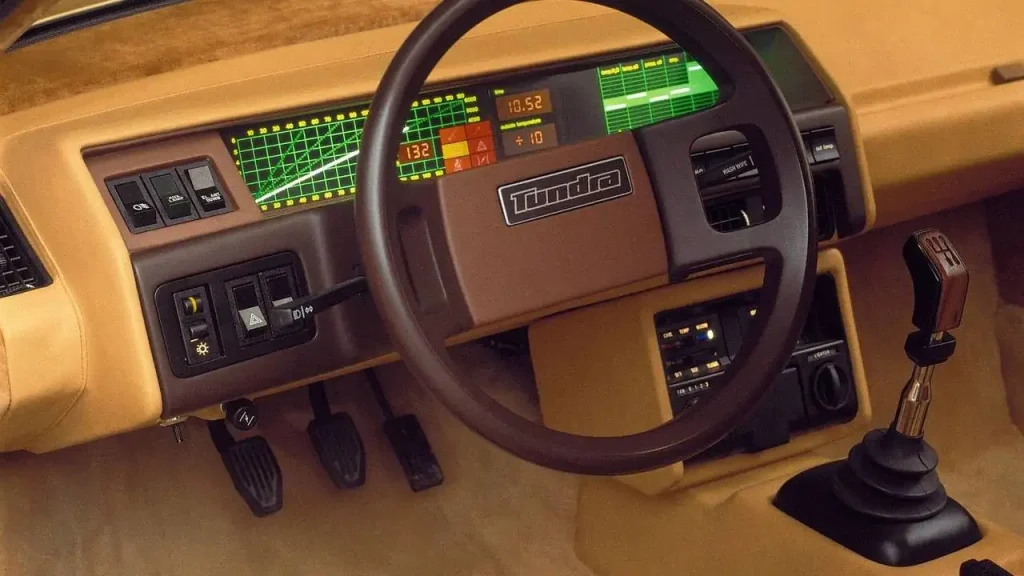
The Volvo Tundra was never intended to become a mainstream production car, but its influence was significant. The concept featured an extremely futuristic digital dashboard with broad electronic displays that looked nothing like the conventional gauges of the period.
The Tundra’s design was later sold to Citroën and became an important influence on the production BX, making this obscure concept particularly interesting in hindsight.
Peugeot Quasar
The Peugeot Quasar was a dramatic 1980s concept that pushed the digital-cockpit idea to the extreme. Its interior was filled with electronic displays and futuristic controls, giving the driver the impression of sitting behind the controls of a spacecraft.
Like many concepts from this era, practicality wasn’t necessarily the priority. The Quasar was about demonstrating what the future might look like.
Italdesign Orca Concept
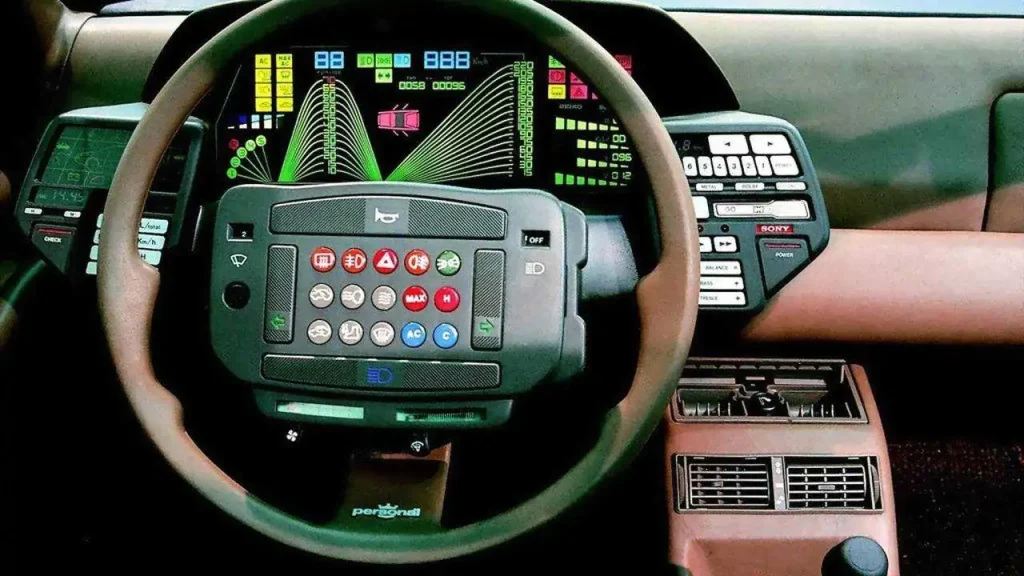
The Italdesign Orca concept took the idea of a digital dashboard and turned it into an entire cockpit experience. The dashboard wrapped around the driver with numerous displays, switches, and electronic controls.
Its steering wheel was particularly wild, with numerous functions incorporated directly into the wheel. The colorful digital graphics and enormous collection of controls remain a perfect snapshot of 1980s futuristic design.
Volkswagen Orbit Concept
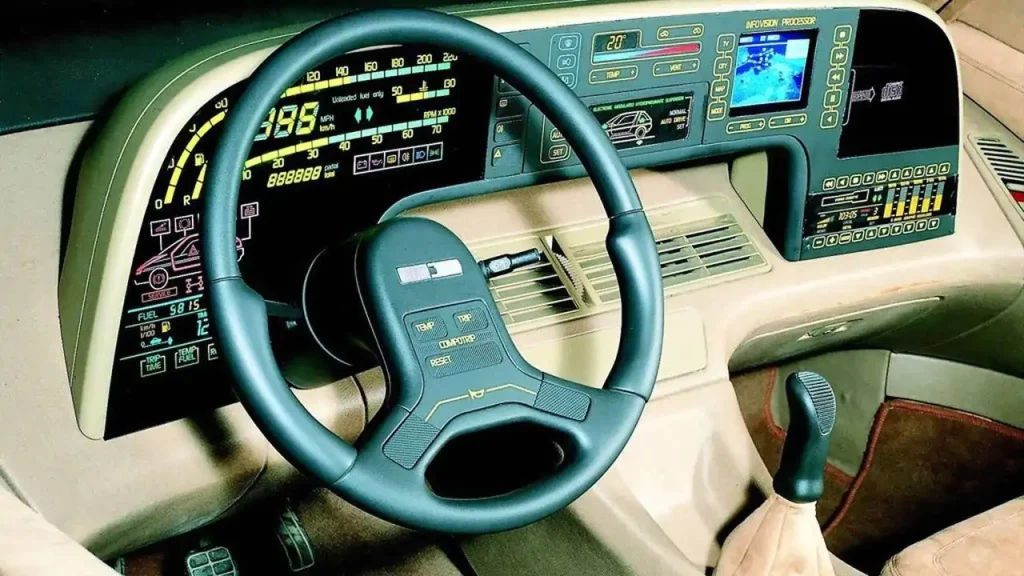
The Volkswagen Orbit was another Italdesign creation from 1986, and its interior looked years ahead of anything Volkswagen was actually selling. The concept featured multiple displays, touch-sensitive controls, a CD player, and a visual information system capable of displaying things such as maps and television.
The Orbit showed just how quickly designers were beginning to imagine the dashboard as an electronic information center rather than simply a place for gauges.
Nissan CUE-X Concept
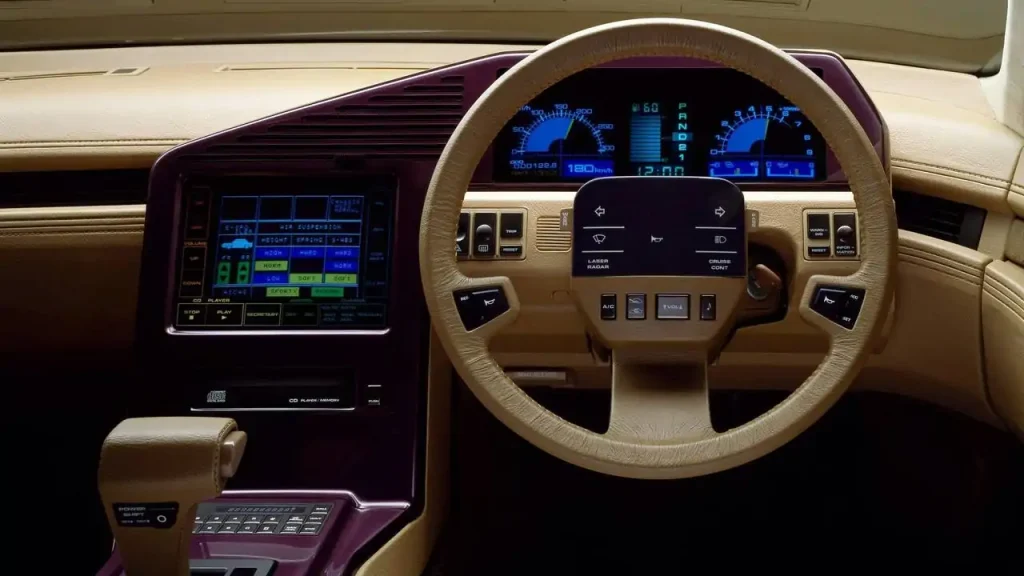
Nissan’s CUE-X concept from 1985 had a dashboard that wouldn’t look completely out of place in a modern concept car. It featured digital instrumentation, a multimedia screen, and a highly unusual single-spoke steering wheel packed with controls.
The concept demonstrated that Nissan was already thinking about centralized digital information and multifunction controls decades before those ideas became standard.
Lamborghini Athon Concept
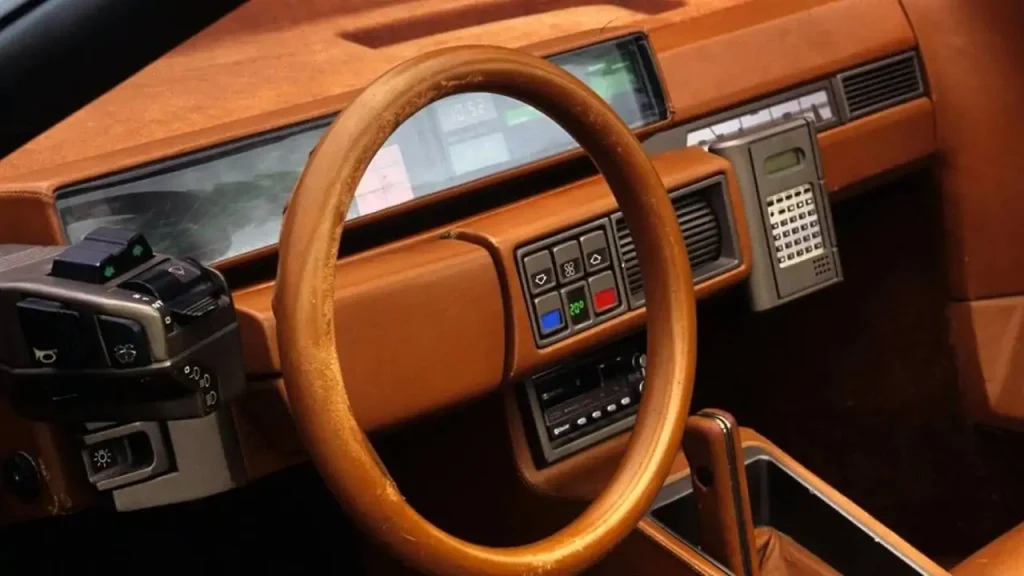
The Lamborghini Athon was a Bertone-designed concept from around 1980, and its digital dashboard was every bit as dramatic as the car itself. The display stretched broadly across the cockpit and used graphical representations instead of traditional circular gauges.
Interestingly, a very similar dashboard design later appeared in the Volvo Tundra concept. Both demonstrate how designers in this period were experimenting with ways to make digital information feel more visually exciting.
Oldsmobile Incas Concept
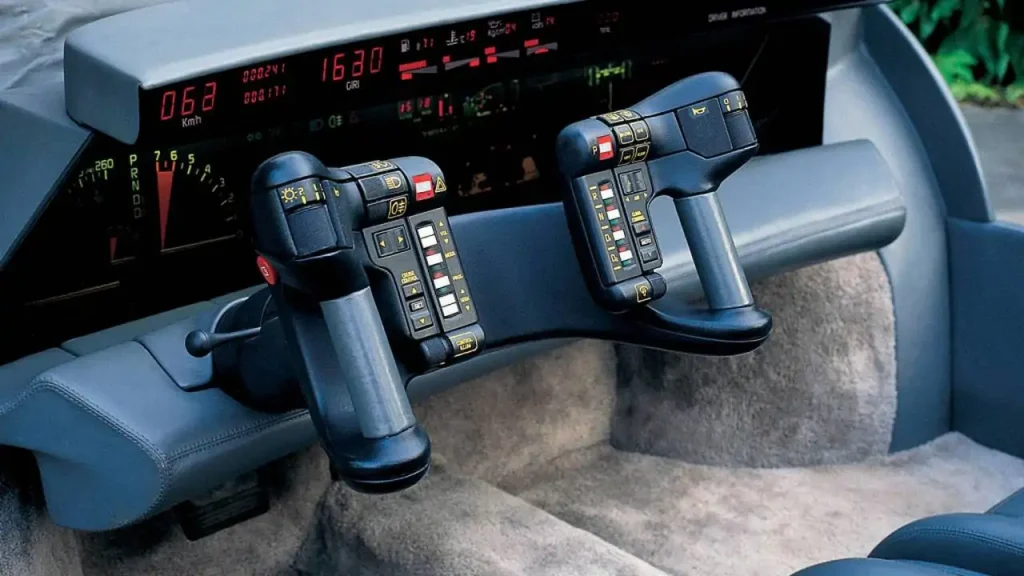
The 1986 Oldsmobile Incas may have one of the wildest interiors on this list. Designed by Italdesign, the concept replaced the conventional steering wheel with an aircraft-style control yoke covered in buttons.
The digital dashboard stretched across much of the cabin, while controls for functions such as the climate system, audio, cruise control, and transmission were incorporated into the yoke. It was an extraordinary vision of what an automotive cockpit could become.
Citroën Karin
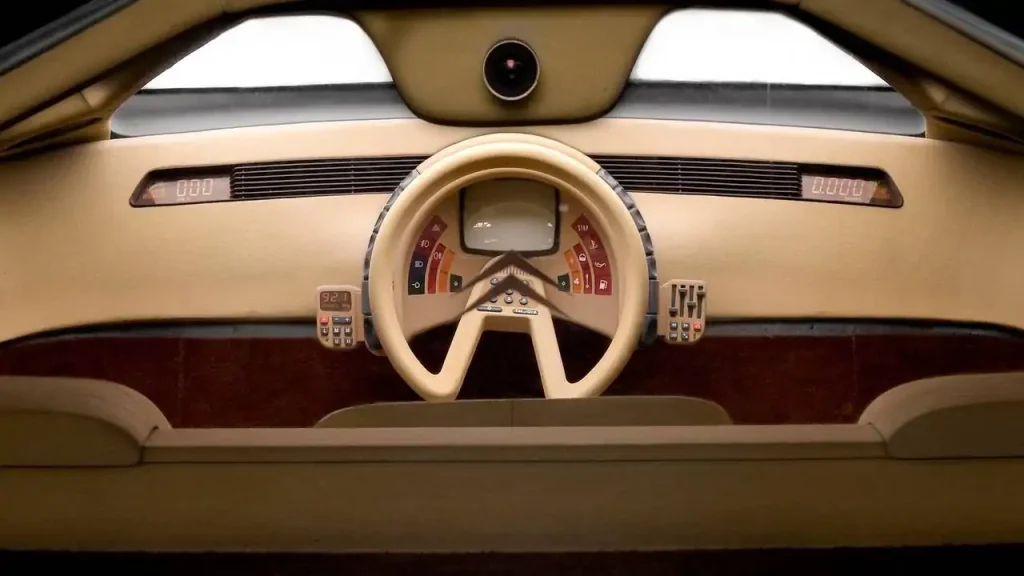
Citroën has never been afraid of unusual interior design, and the Karin concept was a perfect example. Its extreme wedge-shaped body was matched by a highly unconventional cockpit featuring digital instrumentation and an unusual steering arrangement.
The Karin looked less like a conventional automobile and more like a vehicle imagined for a futuristic movie. Its dashboard was every bit as experimental as its exterior.
Aston Martin Lagonda
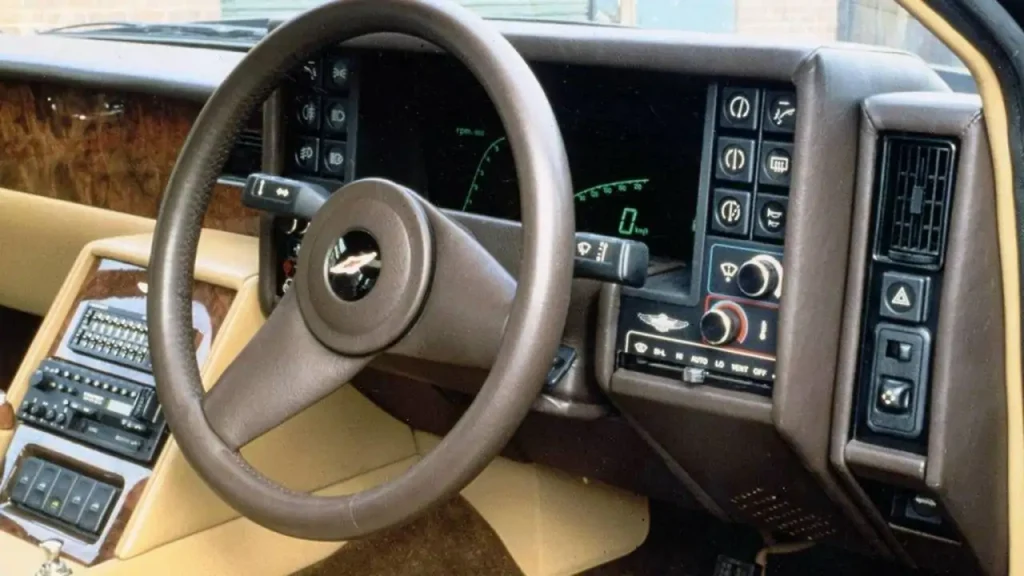
The Aston Martin Lagonda is arguably the most famous production car on this list when it comes to futuristic instrumentation. The wedge-shaped luxury sedan debuted with advanced electronic displays and touch-sensitive controls at a time when most cars still relied entirely on conventional gauges.
The system was famously complex and unreliable in its early form, but that didn’t make it any less impressive. Aston Martin eventually moved through several different display technologies, including gas-plasma, CRT, and vacuum-fluorescent systems.
Vector W8
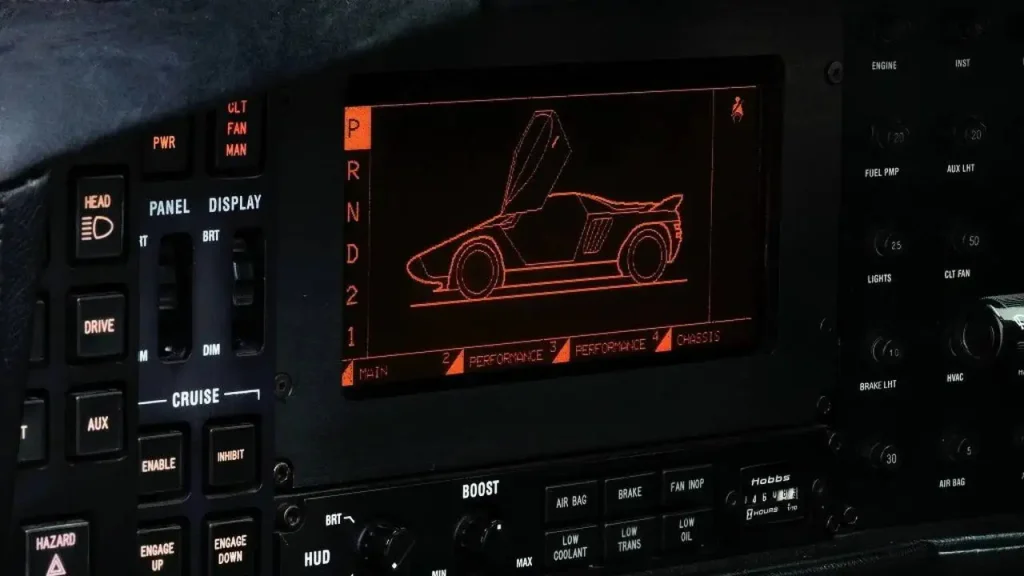
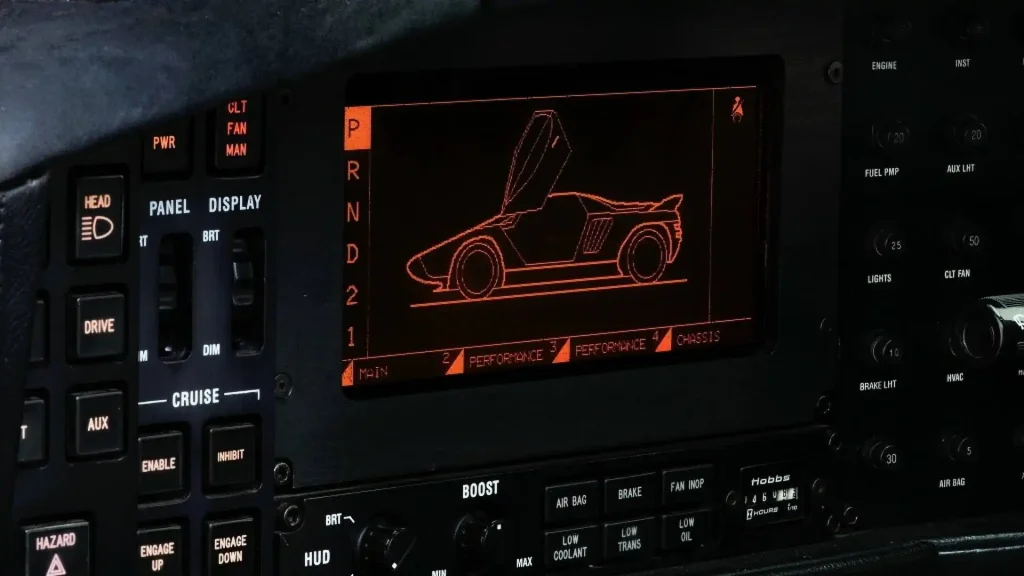
The Vector W8 took the digital-dashboard concept and gave it an unmistakably aircraft-inspired treatment. Its computerized instrument display allowed the driver to select from four different information screens, including performance and chassis displays.
Surrounded by buttons, switches, circuit breakers, and aircraft-style hardware, the W8’s cabin looked more like a fighter-jet cockpit than a conventional supercar interior.
Chevrolet Corvette C4
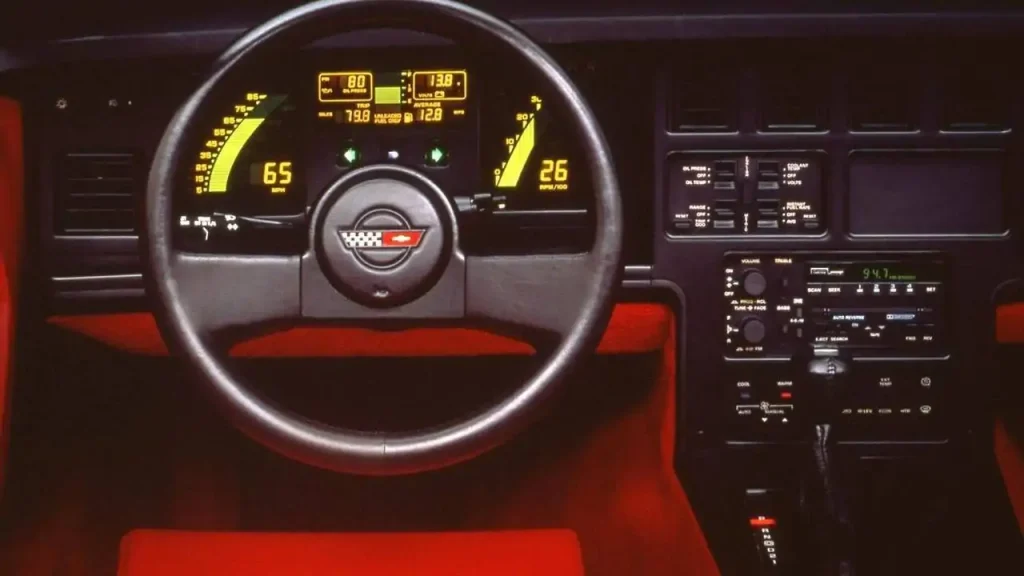
The fourth-generation Chevrolet Corvette deserves a place near the top because it brought digital instrumentation to a genuine production performance car. The C4’s three-display LCD instrument cluster was standard equipment when the generation debuted for 1984, replacing the conventional gauge layout with a distinctly futuristic arrangement.
The sharp-edged dashboard was a perfect match for the Corvette’s radically updated exterior. Even today, the C4’s glowing digital display is one of the most recognizable examples of 1980s automotive technology.
These 20 retro cars with the coolest digital dashboards proved that the dream of a futuristic automotive cockpit existed long before modern touchscreen displays and digital instrument panels became common.
Some systems were ahead of their time, some were unreliable, and some were simply strange. But together, they represent one of the most exciting periods in automotive history — an era when manufacturers weren’t afraid to experiment and imagine what the future of driving could look like.