
With a 887-hp electrified powertrain and blistering performance, the 918 Spyder showed Porsche how electric power could redefine the modern supercar.
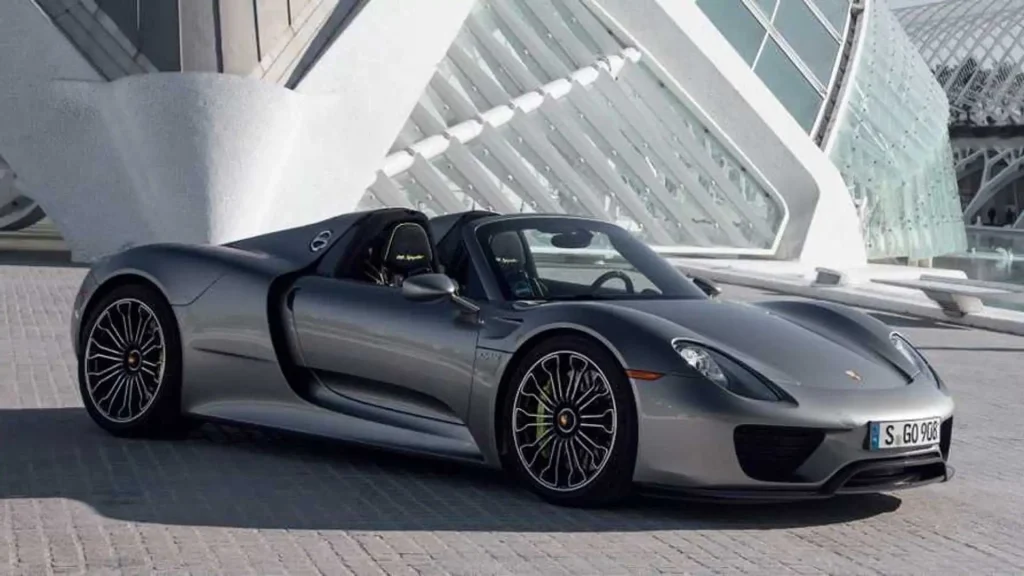
Name: Porsche 918
Debut: September 2013, Frankfurt Motor Show
Specs: 4.6-Liter Hybrid V8, 875 Horsepower / 944 Pound-Feet
The Start Of Porsche’s Electric Era
By the time the Porsche 918 Spyder made its production debut at the 2013 Frankfurt Motor Show, Porsche had already been teasing the idea for years, first showing the concept in Geneva. Looking back from 2019, the 918 feels even more significant as Porsche prepared to enter a new era of electrification with the upcoming Taycan.
The 918 was Porsche’s first production hybrid, and it certainly wasn’t a timid introduction to electric power. Its naturally aspirated 4.6-liter V8, derived from the RS Spyder Le Mans Prototype, produced 600 horsepower (447 kilowatts) and 398 pound-feet (539 Newton-meters) of torque. Two electric motors added another 282 hp (210 kW), bringing the combined output to an astonishing 875 hp (643 kW).
The timing of the 918’s arrival also put Porsche in direct competition with two other hybrid hypercars. Ferrari had introduced the nearly 1,000-hp LaFerrari just months earlier, while McLaren’s P1 had already established its own formula of a twin-turbocharged V8 paired with electric assistance, producing nearly 900 hp (671 kW). The 918 didn’t have the highest output of the trio, and at 3,602 pounds it was heavier than the 3,411-pound P1, but Porsche had another weapon: its ability to turn all that technology into serious track performance.
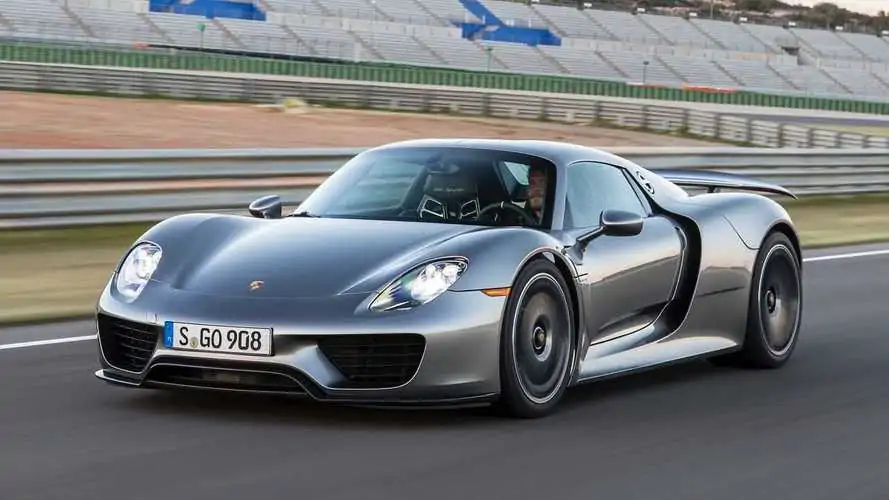
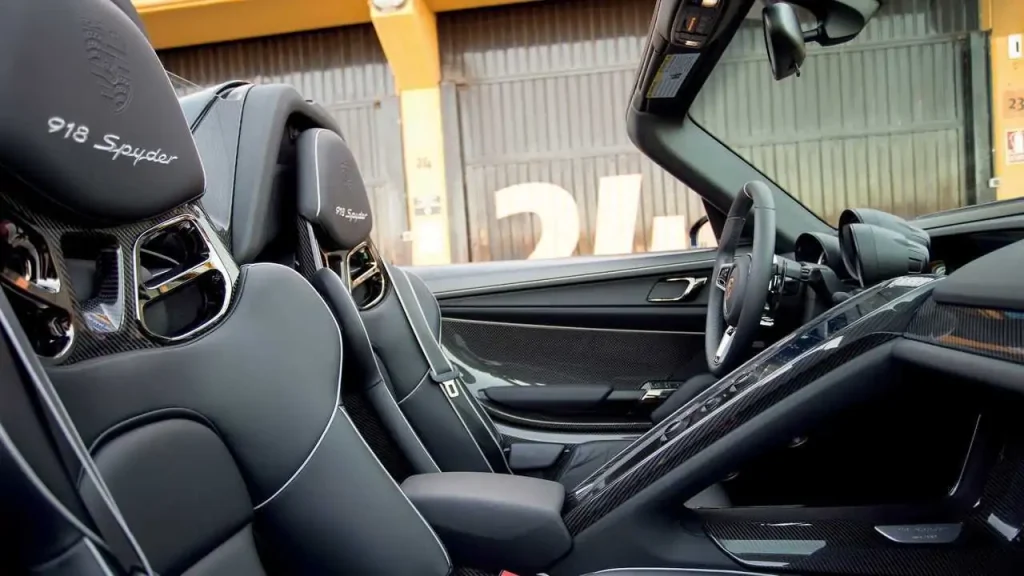
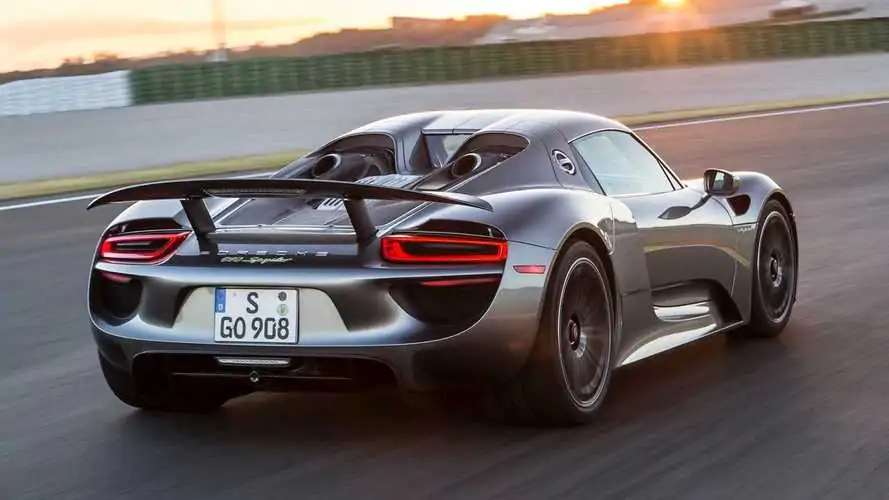
Conquering The ‘Ring
Only months after revealing the production car, Porsche took the 918 to the Nürburgring Nordschleife for one of the ultimate tests of its capabilities. With the optional Weissach Package helping cut weight, the hybrid hypercar completed the 12.8-mile (20.6-kilometer) circuit in just 6:57. That was 14 seconds quicker than the previous record and made the 918 the first production car to officially break the seven-minute mark.
The record helped cement the 918’s reputation, and demand quickly followed. Porsche’s limited one-year production run sold out within months, with 297 examples heading to the United States, while China and Germany each received about 100. Canada took 35, with the remaining cars distributed among other markets, including Switzerland and the Netherlands.
The Porsche 918 ultimately became more than another million-dollar hypercar. It served as an early demonstration of how electric power could complement Porsche’s performance philosophy rather than replace it. With the Taycan on the horizon and Porsche preparing for a much broader electrification strategy, the 918 offered a glimpse of where the company was heading—and proved that going green didn’t have to mean giving up speed, drama, or performance.