
What We Loved, What We’d Change, And What We’ll Miss Most
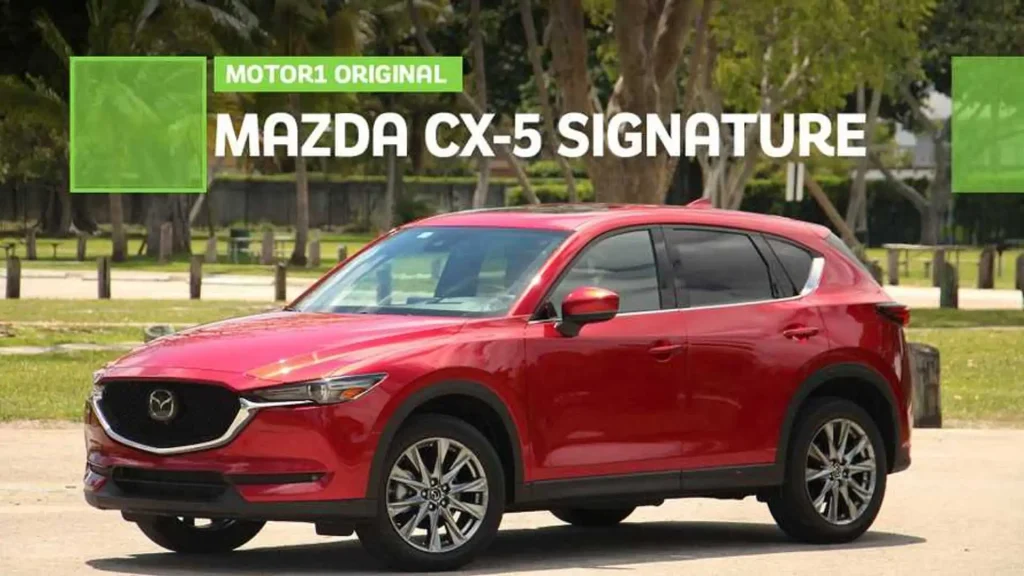
After almost five months behind the wheel of our long-term 2019 Mazda CX-5 Signature, the time has finally come to hand back the keys. We’ve driven the CX-5 before, but this extended stint gave us the opportunity to really get familiar with the top-tier Signature trim and everything it brings to the table. For 2019, Mazda introduced the Signature trim, adding features such as a surround-view camera, Apple CarPlay, and Android Auto, along with upscale touches including genuine wood trim and brown leather upholstery. At $37,935, however, our CX-5 carried a premium of more than $2,000 over the Grand Touring Reserve.
The Signature’s nicer cabin certainly makes the CX-5 feel more upscale, but opinions remain divided over whether those additional features justify the higher price. One thing we can agree on is the CX-5 itself. Its engaging driving dynamics and well-rounded nature make it one of the most appealing choices in the compact crossover class, particularly for shoppers who want something that feels a little more fun behind the wheel.
As our Soul Red CX-5 heads out the door, we’re taking one last look back at the highlights, quirks, and lessons from nearly five months of living with it.
Table of Contents
Clint Simone, Associate Editor, Video Producer
Favorite: Chassis And Steering
We drove plenty of crossovers during the CX-5’s stay, including the Subaru Forester and Toyota RAV4, but the Mazda consistently remained one of the most entertaining.
That’s because the CX-5 doesn’t drive like a generic family hauler. The steering has weight and accuracy, the chassis responds quickly to driver inputs, and the suspension keeps body motions under control without beating up occupants. The turbocharged engine gives the CX-5 enough punch to make highway merges and back-road runs genuinely enjoyable.
Most crossover buyers probably aren’t shopping based on steering feel, but Mazda clearly believes they should have the option. The CX-5 proves that practicality doesn’t have to come at the expense of driving enjoyment.
Least Favorite: Aging Infotainment
The biggest problem is the infotainment system. Mazda’s newer products have moved to a much more modern interface, making the CX-5’s setup feel dated.
Apple CarPlay and Android Auto are welcome additions for 2019, but they don’t completely solve the problem. Mazda’s native system can be slow to respond, while the graphics and interface lack the polish of newer competitors. The hardware underneath the CX-5 is still competitive; the electronics simply haven’t kept pace.
Bottom Line: Buy The Grand Touring Reserve
The Signature’s cabin is undeniably upscale, but some of its extras feel difficult to justify at this price. The surround-view camera is useful in theory, yet its small display limits its effectiveness. The wood trim and brown leather look excellent, but they’re hardly essential equipment.
I’d save the money and choose the Grand Touring Reserve. It delivers most of the CX-5’s strengths without pushing the price toward $40,000.
Jeff Perez, Senior Editor
Favorite: Kodo Styling
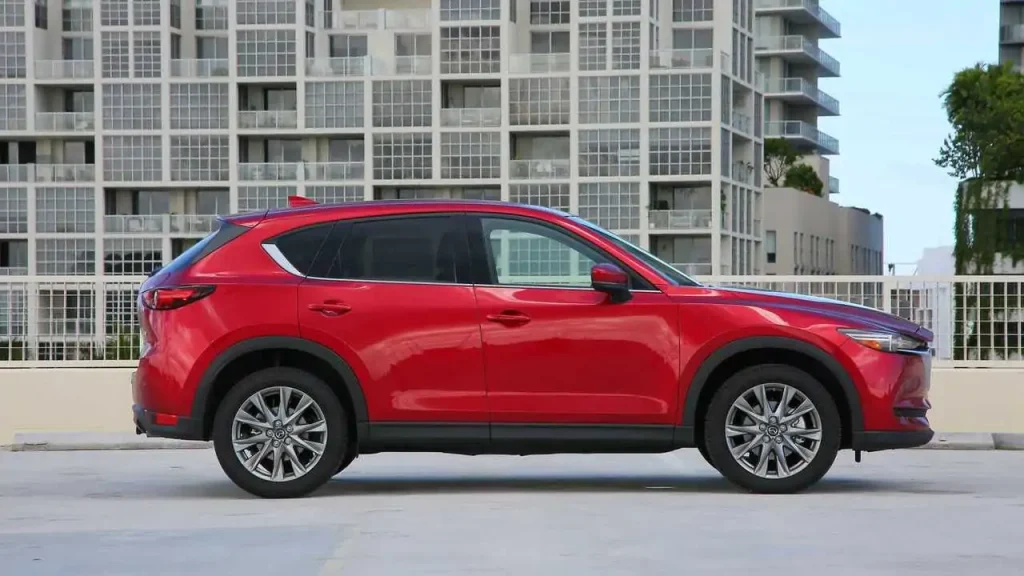
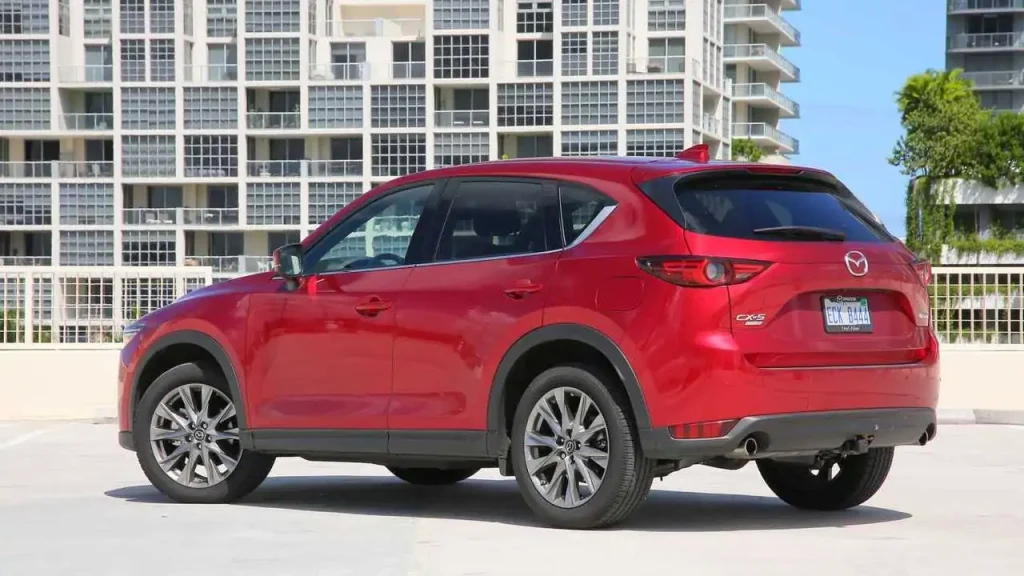
The CX-5’s driving dynamics get plenty of attention, but its styling deserves equal credit. Mazda somehow made a mainstream compact crossover look genuinely expensive.
Our Soul Red tester looked particularly sharp with its 19-inch wheels, while the company’s Kodo design language gives the body clean lines, tight proportions, and just enough aggression. There’s nothing excessive about the CX-5’s design, yet it still manages to stand out in a crowded parking lot.
Inside, the same philosophy continues with attractive materials and a straightforward dashboard. The result is a crossover that looks and feels more premium than its price suggests.
Least Favorite: Outdated Infotainment
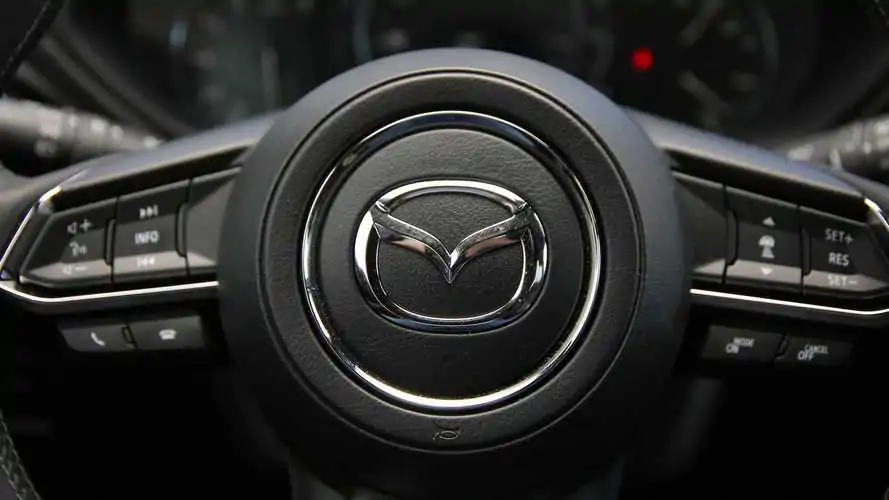
The cabin’s biggest flaw is the technology. The 7.0-inch infotainment display already feels small and dated, and the interface isn’t particularly intuitive.
The rotary controller can make certain functions cumbersome, while the graphics look primitive compared with Mazda’s newer systems. The difference becomes even more obvious after driving a Mazda3 or CX-30 equipped with the newer 8.8-inch display.
For a crossover that otherwise feels so polished, the infotainment system is an obvious weak spot.
Bottom Line: The CX-5 Needs A Tech Refresh
The formula itself works. The CX-5 looks good, drives well, rides comfortably, and delivers excellent value. Give it Mazda’s newer infotainment hardware and software, and it would be extremely difficult to criticize.
Until then, buyers have to decide whether the CX-5’s driving character is worth putting up with its aging electronics.
Greg Fink, Senior Editor
Favorite: Refined Driving Dynamics
The CX-5 feels right from the driver’s seat. The steering has a satisfying heft, the controls are well positioned, and the suspension strikes an excellent balance between ride comfort and handling.
Road noise is also kept under control, giving the cabin a quiet, composed atmosphere. Add the turbocharged engine’s strong midrange torque and the CX-5 starts to feel less like an economy crossover and more like a genuinely premium vehicle.
Least Favorite: Infotainment And Cameras
Unfortunately, the infotainment system is frustrating. Inputs can take too long to register, the interface isn’t especially intuitive, and touchscreen operation is restricted once you’re moving beyond low speeds.
The camera system isn’t much better. The rearview camera’s image quality is mediocre, and the Signature’s surround-view system doesn’t deliver the clarity we’d expect from a nearly $40,000 vehicle.
Those shortcomings stand out because so much else about the CX-5 feels carefully engineered.
Bottom Line: Rivals Are Catching Up
The CX-5 remains one of the best-driving compact crossovers on the market, but competitors have become increasingly sophisticated.
The Toyota RAV4 and Subaru Forester, for example, offer newer infotainment systems and driver-assistance features that give them an advantage in everyday usability. Mazda fights back with something those rivals can’t quite replicate: an engaging chassis and a potent turbocharged engine.
Our Signature tester’s 2.5-liter turbocharged four-cylinder produces 250 horsepower and 310 pound-feet of torque, enough to push the CX-5 to 60 mph in around 6.2 seconds. That’s serious performance for a compact crossover.
But performance isn’t everything. A crossover is ultimately a vehicle people use for commuting, errands, road trips, and family duty. For many buyers, a better infotainment system or more advanced driver assistance may be more valuable than quicker acceleration.
That’s where the CX-5 is beginning to show its age.
2019 Mazda CX-5 Signature: Long-Term Test Specs
| Specification | Details |
|---|---|
| Engine | Turbocharged 2.5-liter four-cylinder |
| Power | 250 horsepower |
| Torque | 310 pound-feet |
| Transmission | Six-speed automatic |
| Drive | All-wheel drive |
| 0-60 MPH | 6.2 seconds |
| Curb Weight | 3,825 pounds |
| Fuel Economy | 22 city / 27 highway / 24 combined mpg |
| Seating | Five |
| Towing | 2,000 pounds |
| Cargo Volume | 30.9 / 59.6 cubic feet |
| Base Price | $36,890 |
| As-Tested Price | $39,885 |
After nearly five months, the CX-5 leaves a strong impression. The turbo engine is punchy, the chassis is genuinely entertaining, and the cabin has enough refinement to make long drives easy. It’s a crossover with real driving character, which is something the segment desperately needs.
The biggest issue isn’t the hardware—it’s the technology. Mazda built a remarkably good compact crossover, but its aging infotainment and camera systems prevent the CX-5 from feeling completely modern.
We’d gladly keep the CX-5 around. We’d just take the Grand Touring Reserve, pocket the savings, and wait for Mazda to give the cabin’s electronics the same attention it gave the chassis.