
Bigger and lighter than before, the new SUV combines V6 gasoline and diesel power with some of the brightest LED headlights in its class.
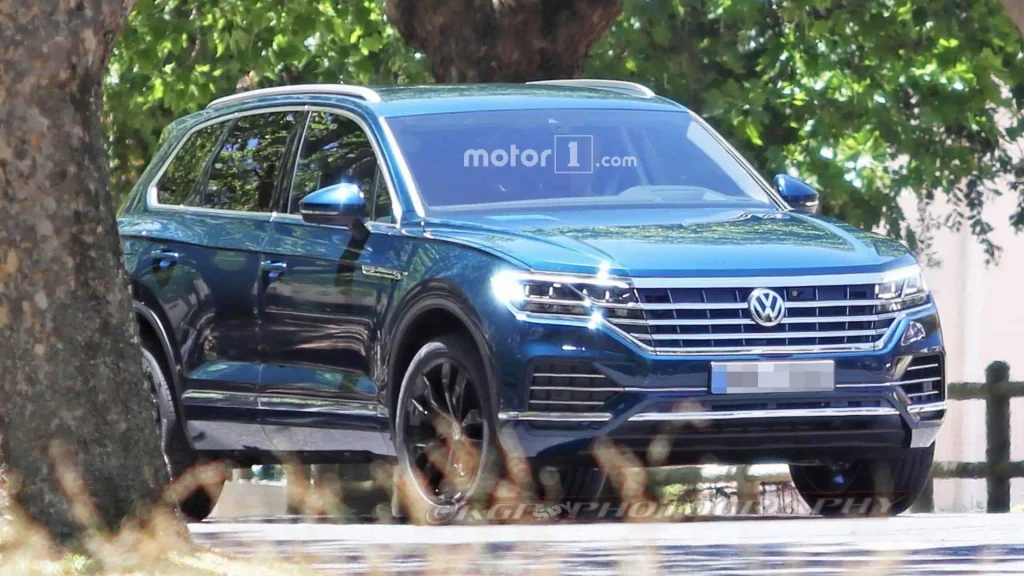
First launched in 2002, the Volkswagen Touareg was already positioned as the brand’s premium SUV. For its third generation, however, Volkswagen planned to give the Touareg an even more prominent role, making it the brand’s flagship SUV following the end of the Phaeton era. And while “all-new” is a phrase automakers sometimes use rather generously, it genuinely applies to the 2019 Touareg.
Table of Contents
What Is It?
The third-generation Touareg shares its engineering with some of the Volkswagen Group’s most prestigious SUVs. It is closely related to the latest Audi Q7 and Porsche Cayenne, while the same family also includes the more luxurious Bentley Bentayga and Lamborghini Urus.
The new Touareg moves to the MLB Evo platform, helping Volkswagen cut roughly 100 kilograms (220 pounds) from the previous model. Despite that weight reduction, this remains a substantial SUV, with the entry-level version expected to weigh just under two tons.
The new model also grows by around 8 centimeters (3.1 inches), with much of that additional length going toward the wheelbase. That extra space should make the cabin more comfortable, particularly for rear-seat passengers. Cargo capacity also increases, reaching approximately 810 liters.
What Does It Look Like?
Volkswagen Group products tend to evolve their styling rather than completely reinvent it, and the Touareg follows that formula. The overall shape remains familiar, but the front end receives a significant makeover inspired by the Volkswagen Arteon, with the grille and headlights visually flowing into one another.
Volkswagen also planned to give the Touareg some of the brightest full-LED headlights in its class.
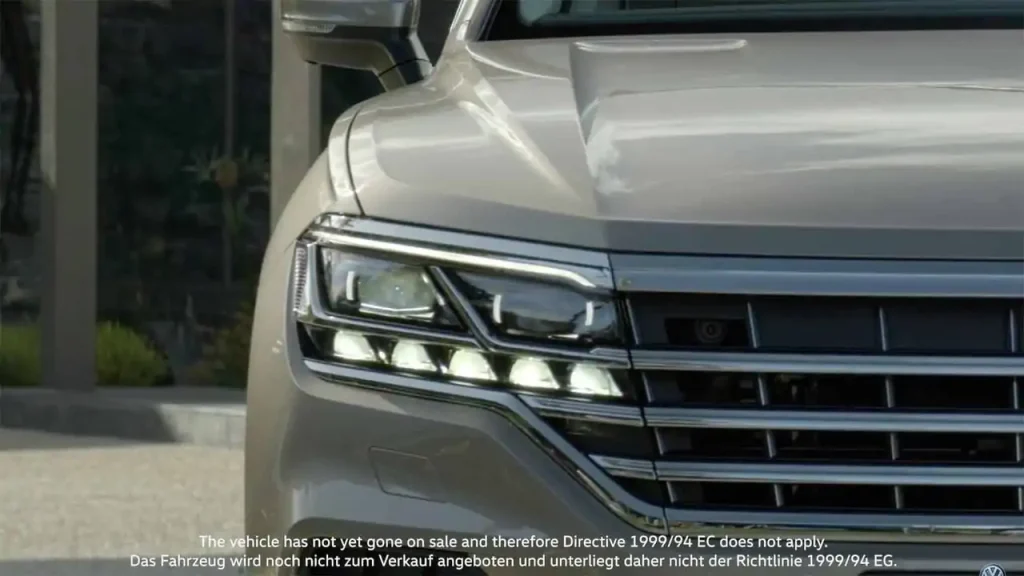
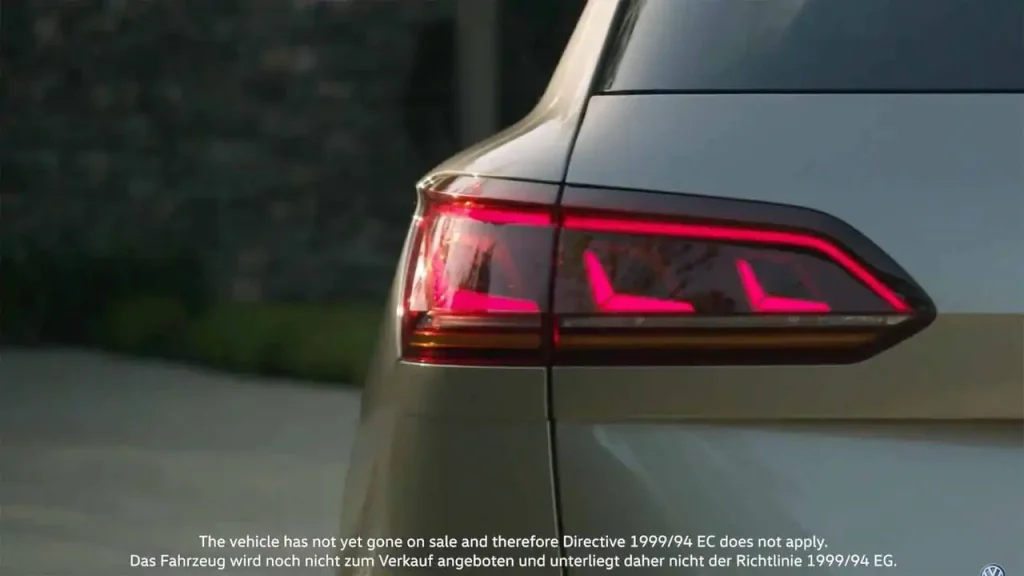
Spy photographs revealed much of the exterior before the official debut. At the rear, slimmer taillights give the SUV a more modern appearance, while the centrally positioned “Touareg” lettering echoes the Arteon’s design treatment. Another welcome detail is that the prominent exhaust outlets are functional rather than merely decorative, with larger tips fitted to the gasoline-powered version.
Inside, however, the changes are far more dramatic. The redesigned dashboard centers around a 12.3-inch digital instrument display and an enormous 15-inch touchscreen. Together, they make up what Volkswagen calls the Innovision Cockpit, giving the driver and passengers extensive options for customizing the vehicle’s displays and functions.
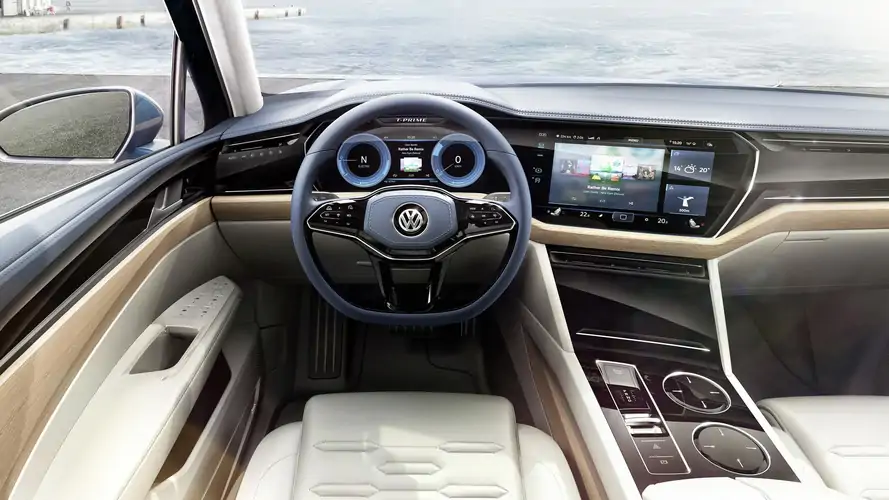
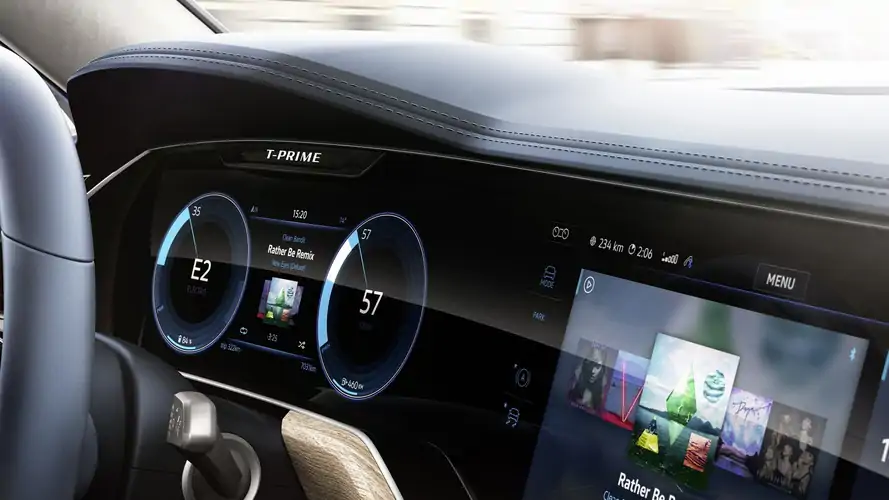
The cabin could also be equipped with Elegance and Atmosphere packages, while exterior buyers would have options including chrome and black styling packages.
What’s Under The Hood?
At launch, Volkswagen planned to offer the 2019 Touareg with two V6 engines: one gasoline and one diesel. The gasoline V6 would produce approximately 340 horsepower, while the diesel would deliver 286 hp and a substantial 443 pound-feet (600 Nm) of torque.
A more powerful V8 turbodiesel was scheduled to join the lineup in 2019. Volkswagen was also developing a plug-in hybrid version, although at the time it had not finalized whether the combustion engine would be a four-cylinder or six-cylinder unit.
For drivers planning long-distance trips, Volkswagen would offer an optional 90-liter fuel tank, compared with the standard 75-liter tank. The larger tank would provide additional range between fuel stops.
Technology
The Innovision Cockpit is only one part of the Touareg’s technology overhaul. The SUV would also offer GPS-assisted adaptive cruise control capable of adjusting the vehicle’s speed based on upcoming road conditions.
Other available technology would include night vision, a head-up display, and a newly developed premium audio system.
The Touareg would also benefit from four-wheel steering. At speeds up to 31 mph (50 km/h), the rear wheels turn in the opposite direction from the front wheels to improve maneuverability. Above 50 km/h, they turn in the same direction as the front wheels to enhance stability.
An advanced air-suspension system would provide several ride-height settings. At speeds between 25 and 43 mph (40–70 km/h), the suspension could raise the vehicle by 25 mm (1 inch). In Sport mode, it would lower by the same amount for improved road dynamics.
The Touareg could also automatically lower itself by 25 mm when traveling between 75 and 87 mph (120–140 km/h) for more than 30 seconds. Above 87 mph (140 km/h), the lower setting would engage automatically. At the other end of the spectrum, Off-Road mode could raise the SUV by as much as 70 mm (2.8 inches) in its highest setting.
When Will We See It?
Volkswagen announced that it would officially unveil the third-generation Touareg on March 23 in Beijing, China, with sales expected to begin in the months that followed.
However, American buyers would not get the new-generation SUV. Volkswagen of America decided not to bring the Touareg back to the U.S. market.
Production would continue at Volkswagen Group’s factory in Bratislava, Slovakia, alongside the Audi Q7 and Porsche Cayenne.
A lengthy video filmed in Zaragoza, Spain, also provided additional information about the new Touareg and its development.