
How does Chevrolet’s production-ready C8 compare with the radical CERV III concept?
The mid-engine Corvette is finally a reality. With the arrival of the 2020 Chevrolet Corvette Stingray, Chevrolet transformed America’s iconic sports car in a way that enthusiasts had been anticipating for decades. The C8 moved the V8 behind the passenger compartment, giving the Corvette exotic proportions, improved weight distribution, and the performance potential to challenge some of the world’s best sports cars.
But the C8 wasn’t General Motors’ first attempt at building a mid-engine Corvette. Far from it.
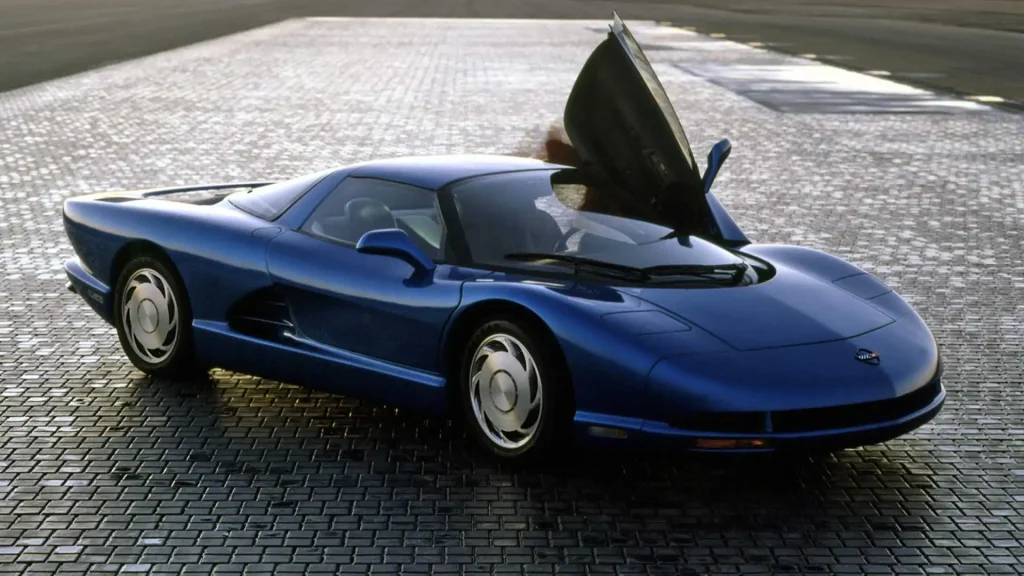
Over the years, GM developed numerous prototypes and race cars exploring the mid-engine idea, but the 1990 CERV III stands out as one of the most ambitious. It was arguably the closest GM came to turning a mid-engine Corvette into a production car before the C8 finally arrived nearly three decades later.
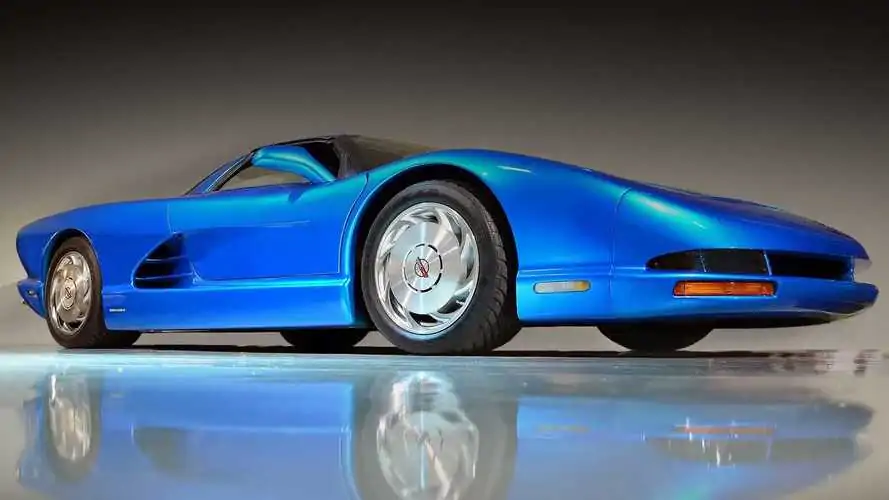
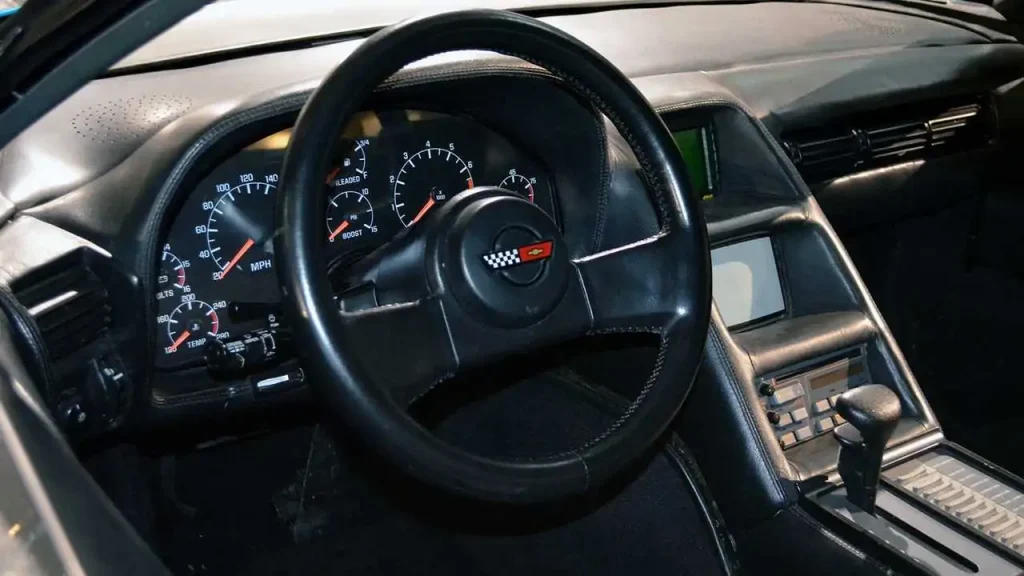
What’s particularly fascinating is just how well the CERV III’s specifications compare with the modern Corvette. Despite being designed in an entirely different era, the CERV III featured technology that still sounds impressive today, including adjustable suspension, a lightweight composite body, four-wheel steering, a six-speed automatic transmission, and all-wheel drive. In fact, the prototype had one feature the original C8 Stingray didn’t offer: power sent to all four wheels.
The CERV III was much more than an experimental styling exercise. It was a serious engineering project designed to explore the possibility of an American mid-engine supercar. Its origins can be traced back to the 1985 Corvette Indy Concept, an exceptionally futuristic machine that used a twin-turbocharged 2.8-liter V8 derived from IndyCar technology and was envisioned with more than 600 horsepower.
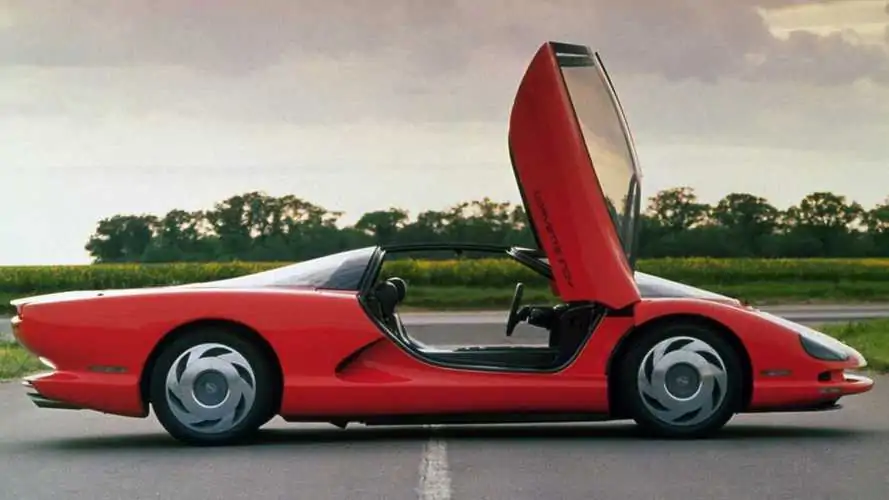
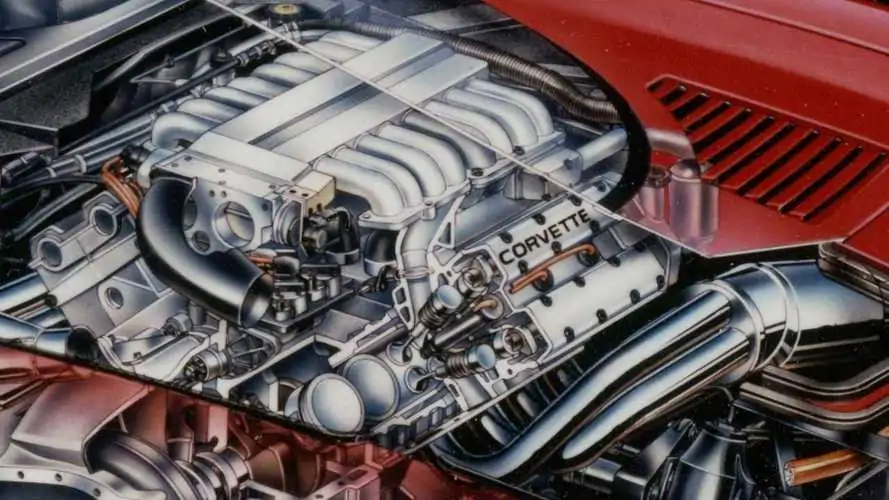
As development progressed, the project moved toward a 5.7-liter DOHC V8 related to the LT5 used in the 1990-1995 Corvette ZR-1. For the CERV III, engineers added a pair of turbochargers, bringing output to an estimated 650 horsepower. That figure is still impressive today, but in 1990 it was staggering. Remember, this was an era when a 300-hp sports car was considered seriously powerful.
The CERV III also didn’t have the benefit of today’s electronic safety net. Modern performance cars use sophisticated stability-control systems, advanced traction management, electronically controlled suspension, and active aerodynamic systems to help drivers manage enormous amounts of power. The CERV III was experimenting with advanced technology, but it came from a time when much of that electronic wizardry simply didn’t exist.
Put the CERV III next to the 2020 Corvette Stingray and the numbers tell an interesting story.
| Specification | 2020 Corvette Stingray | 1990 CERV III |
| Engine | 6.2-liter LT2 V8 | 5.7-liter LT5 V8, twin-turbo |
| Transmission | 8-speed dual-clutch automatic | 6-speed automatic |
| Power | 490 hp | 650 hp |
| 0-60 mph | Under 3 seconds | Under 4 seconds |
| Top Speed | Not yet confirmed | Approximately 225 mph |
| Estimated Price | Under $60,000 | Approximately $300,000 in 1990 |
The CERV III clearly wins the horsepower contest. Its twin-turbocharged V8 produced around 160 more horsepower than the naturally aspirated LT2 in the C8 Stingray. It was also expected to reach approximately 225 mph, a remarkable target for a 1990 prototype.
Yet the C8 could potentially accelerate harder.
Chevrolet estimated that the 2020 Stingray could reach 60 mph in less than three seconds, thanks in large part to its mid-engine layout, sophisticated chassis, modern tires, and eight-speed dual-clutch transmission. The CERV III’s estimated sub-four-second sprint was spectacular for its era, but three decades of development have allowed the C8 to extract substantially more performance from considerably less horsepower.
Then there’s the price, which might be the most remarkable difference of all.
Chevrolet targeted a starting price of less than $60,000 for the C8 Stingray. The CERV III, had it reached production in something resembling its prototype specification, was estimated to cost around $300,000. That’s not simply a large difference; that’s an entirely different automotive universe. And remember, that $300,000 figure represents 1990 dollars.
Of course, comparing the two cars directly isn’t entirely fair. The C8 Stingray was engineered as a production sports car that customers could actually buy, service, and drive every day. The CERV III was essentially a technological showcase designed to demonstrate what GM engineers could accomplish.
Had the CERV III entered production with its 650-hp twin-turbo V8, all-wheel drive, four-wheel steering, adjustable suspension, and advanced construction, it would have occupied a very different part of the market. Its natural rivals would have been exotic machines such as the Jaguar XJ220 and McLaren F1 rather than conventional sports cars.
That’s what makes the CERV III so significant. It wasn’t simply predicting a mid-engine Corvette. It was envisioning a Corvette capable of competing at the highest level of the performance-car world.
The C8 Stingray takes a different approach. Instead of building a six-figure technological flagship, Chevrolet took the mid-engine concept and made it attainable. The 6.2-liter LT2 V8 produces 490 horsepower in standard form, while the available performance exhaust increases output to 495 hp. Power is sent through an eight-speed dual-clutch transmission, and the result is a Corvette capable of genuine supercar acceleration without a supercar price.
The C8 also benefits from everything the automotive industry learned during the 30 years between these two cars. Modern tires provide vastly more grip, computer-controlled systems can manage traction and stability, transmissions shift faster, chassis tuning is more sophisticated, and manufacturing techniques allow Chevrolet to build a mid-engine aluminum structure at a price that would have been difficult to imagine in 1990.
In that sense, the C8 isn’t simply a newer version of the CERV III. It’s the result of decades of engineering lessons learned from projects like it.
And that inevitably raises the biggest question: what if GM had actually put the CERV III into production?
Could we have seen a mid-engine Corvette during the C5 era? Could Chevrolet have challenged Ferrari, Lamborghini, Jaguar, and McLaren years earlier? Perhaps. But the CERV III also demonstrates why the company may have been wise to wait.
The technology required to make a mid-engine Corvette affordable and usable simply wasn’t as mature in 1990. The CERV III could demonstrate what was possible, but turning those ideas into a reliable production car at a reasonable price was another matter entirely.
Nearly 30 years later, the C8 Stingray finally made the dream work.
The CERV III remains the more outrageous machine on paper. With 650 hp, twin turbochargers, all-wheel drive, four-wheel steering, and a projected 225-mph top speed, it was an extraordinary piece of engineering for its time. The C8, however, is the one that actually delivers the mid-engine Corvette experience to regular enthusiasts.
That’s ultimately the difference between the two.
The 1990 CERV III showed what a mid-engine Corvette could become. The 2020 C8 Stingray showed that Chevrolet could finally build one for the real world.
After waiting nearly three decades, Corvette fans finally got their mid-engine car. And judging by the C8’s performance and price, it may have been worth the wait.