The Porsche 911 proves that a serious sports car can also be an outstanding grand tourer.
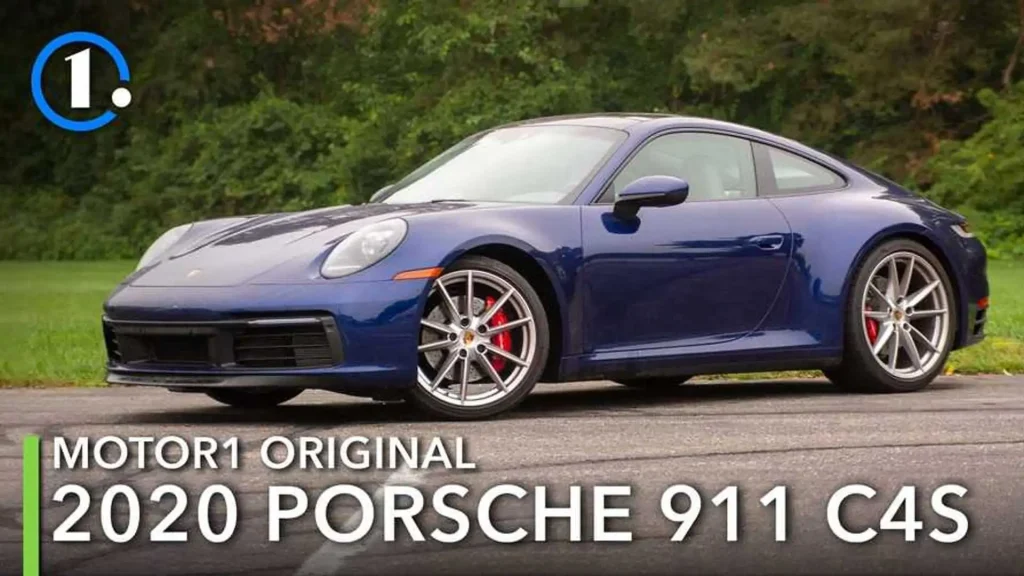
Someday, I’m going to own a Porsche 911. Until that day arrives, I spend far too much time scrolling through Bring A Trailer, Cars And Bids, AutoTrader, and Porsche’s own used and certified pre-owned listings. And one thing keeps jumping out at me: way too many Porsche owners barely drive their 911s.
I’m not talking exclusively about the expensive, hardcore stuff like the GT2 and GT3, either. The internet is packed with ordinary Carrera models showing ridiculously low mileage. Even older cars aren’t immune. AutoTrader has a 2003 996 with just 31,000 miles, along with a 911 Turbo showing only 5,200 miles. But the real head-scratcher is this 1982 911 SC with just 2,500 miles. A 1982 car with only 2,500 miles? I have to ask: Why?
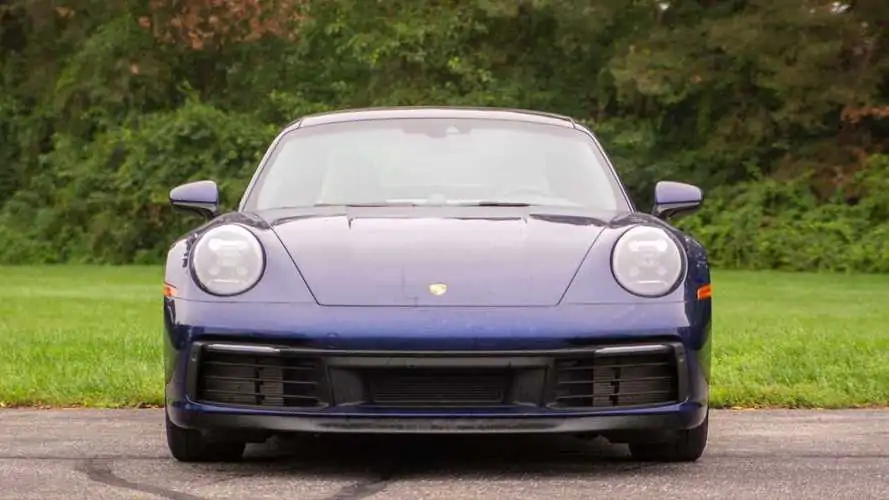
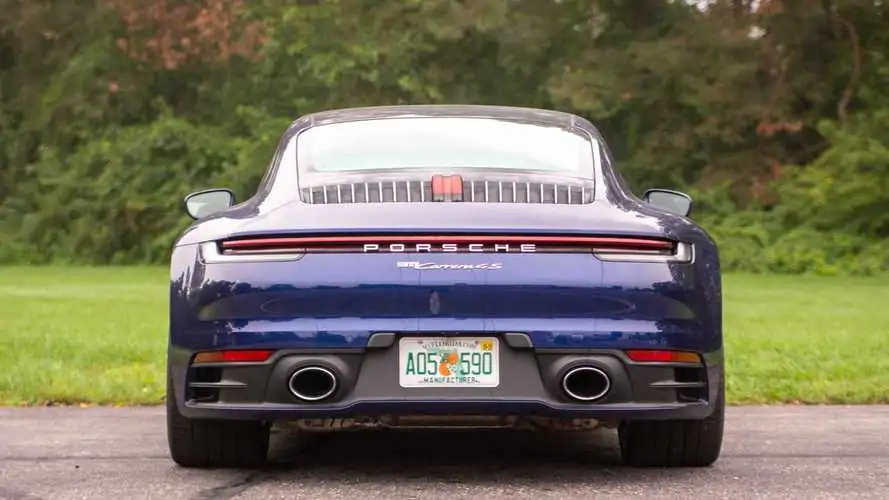
To prove that my bias against low-mileage 911s is justified—and hopefully help create a future filled with affordable, high-mileage examples—I embarked on a 400-mile trip from metro Detroit to Berlin, Ohio, in a Porsche 911 Carrera 4S with a seven-speed manual. The journey quickly confirmed what I suspected: the 911 isn’t just spectacular on winding back roads. It’s equally impressive on the highway and surprisingly easy on fuel. Put it all together, and you have an ideal road-trip machine—one that deserves to be driven, and driven often.
Balanced Equipment, Balanced Route
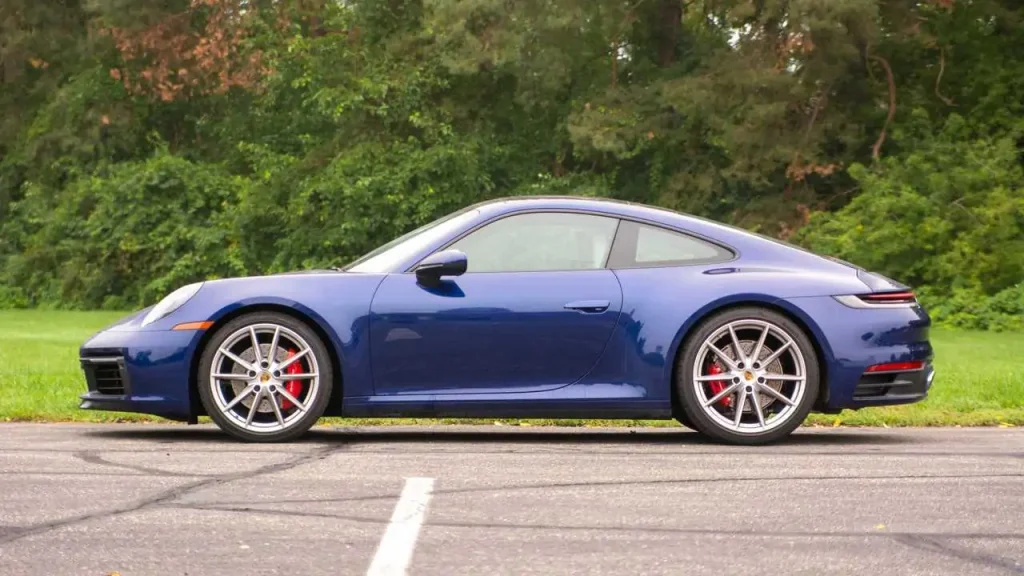
but it was hardly short on performance hardware. The Sport Package brought a lowered version of Porsche Active Suspension Management and a sport exhaust, while rear-axle steering and the seven-speed manual transmission—with the standard Sport Chrono package—added even more driver-focused appeal.
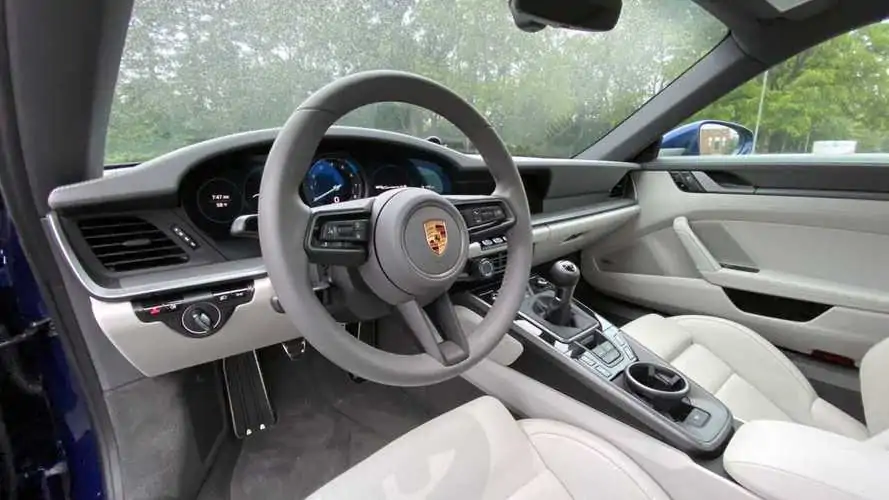
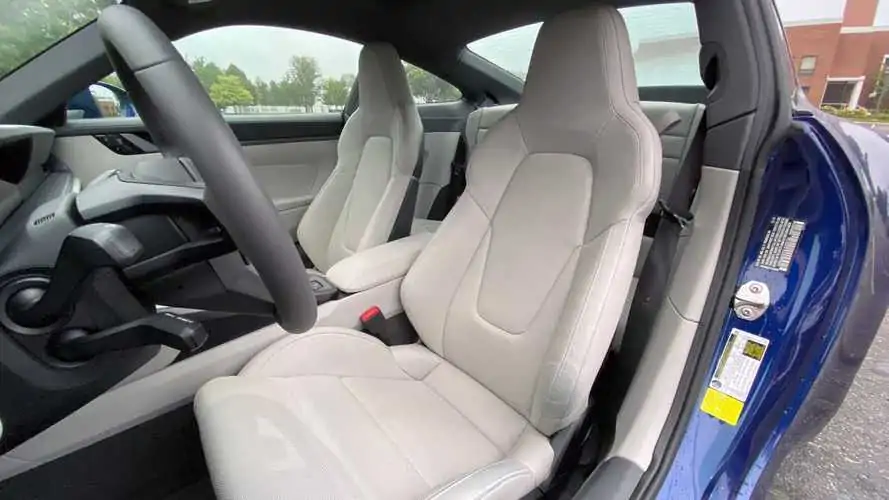
The rest of the options leaned toward comfort, including ventilated 18-way Adaptive Sport Seats, a full-leather interior, and a Bose sound system. Combined with the standard equipment, they gave this 911 a well-rounded character rather than turning it into an all-out track weapon. The seats are especially good for long stretches behind the wheel, while the generous use of leather makes an already excellent cabin even more inviting.
The route was just as evenly balanced. The roughly 400-mile round trip split its time between Interstate 75 and the Ohio Turnpike on one end and winding rural roads on the other, with the occasional horse-drawn carriage providing a reminder that this wasn’t exactly a racetrack. It was the kind of mix that gave the 911 plenty of opportunities to show why it works so well as both a sports car and a grand tourer.
The Grand-Touring Side
For the first stretch of the trip, the 911 moves effortlessly between Michigan’s battered roads and Ohio’s much smoother highways. The twin-turbocharged 3.0-liter flat-six delivers seemingly endless acceleration, with a thick wave of torque available across the rev range. And yet, despite all that shove, this manual C4S is technically the slowest Carrera S you can buy—not that anyone would call it slow.
With the PDK-equipped C4S, Porsche claims a 0-to-60-mph time of just 3.2 seconds. Opting for the seven-speed manual and putting the shifting duties in human hands stretches that figure to a manufacturer-estimated 4.0 seconds. That’s also two-tenths slower than the base Carrera with its PDK, while the seven-speed manual isn’t offered on the non-S model. I suspect Porsche knows exactly why: give the base Carrera a manual and its 0-to-60 time would probably land somewhere around 4.5 or 4.6 seconds.
Despite all that performance, this manual-transmission model is technically the slowest Carrera S you can buy—but calling it slow would be a stretch.
The lowered suspension and low-profile Pirelli tires—245/35R20 up front and 305/30R21 at the rear—keep the 911 closely connected to the pavement, but selecting Comfort mode takes much of the edge off. On decent roads without a steady diet of potholes and expansion joints, the Porsche settles into a surprisingly serene rhythm. Wind noise is minimal, tire noise stays subdued, and the Bose audio system, paired with a steady stream of podcasts through standard wireless Apple CarPlay, easily masks whatever road harshness remains.
The cabin itself is an excellent place to spend several hours. The standard four-way seats are perfectly adequate, but the 18-way Adaptive Sport Seats are a worthwhile upgrade for $3,470. They offer generous support under the thighs and across the bolsters, along with enough lumbar and seat adjustments to accommodate just about any body type. The premium leather upholstery adds another $4,260, making the combined nearly $8,000 spent on seats and upholstery a significant investment. In a 911, though, it’s money well spent.
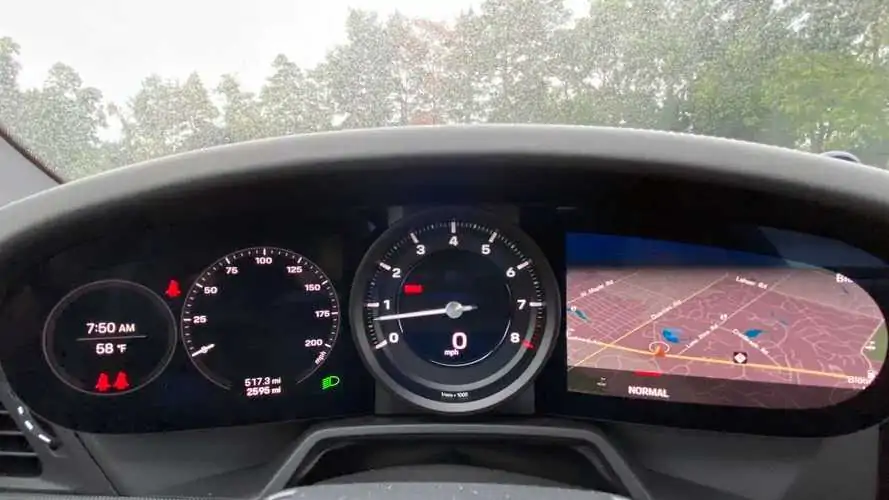
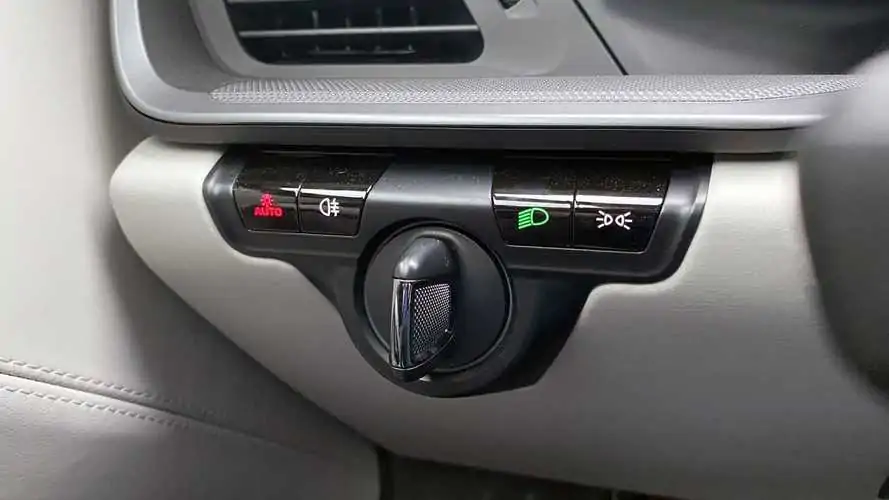
Over the course of the trip, one omission became increasingly difficult to ignore: the 911’s lack of active driver-assistance features. Call me spoiled, lazy, or both, but these systems make long, monotonous highway stretches considerably easier to tolerate. My C4S had none of them—not lane-keeping assistance, not blind-spot monitoring, and not adaptive cruise control. Porsche offers those features as individual options rather than bundling them into a convenient safety package, but this particular car wasn’t equipped with any.
More frustrating still, adaptive cruise control and Porsche’s InnoDrive system—which combines adaptive cruise control and lane-keeping assistance with GPS and other data for smoother, more predictive operation—are available only with the automatic transmission. I understand the reasoning from a production and cost perspective, but that doesn’t make the limitation any less disappointing. Even a base Honda Civic can be equipped with adaptive cruise control alongside a manual gearbox. Driver-assistance technology won’t make a sports car more exciting, but it can make living with one every day—and putting serious miles on it—much easier.
Welcome To Amish Country
The highway stretches are broken up by quieter country roads running from south of Sandusky, Ohio, to Berlin and back. Here, the 911 winds through tiny farming communities and past fields of corn nearing harvest, trading high-speed cruising for a slower, more pastoral rhythm. It’s also where the seven-speed manual starts to show some of its less polished traits.
At the occasional stoplight in these small towns, the heavy, somewhat vague clutch and long pedal travel become increasingly annoying, especially when paired with the engine’s sluggish throttle response. No matter how carefully I worked the pedals, pulling away smoothly was harder than it should have been, while the shift from first to second demanded far more concentration than a car this expensive ought to require. On the open highway, the manual feels perfectly suited to the 911. In Amish Country, it can feel like work.
Working this old-school transmission slows the pace of driving and forces you to pay closer attention to every shift.
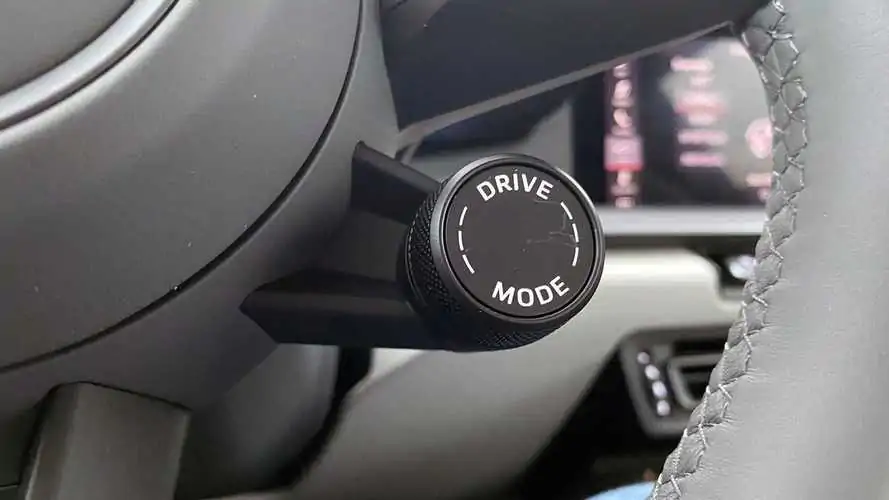
Fortunately, the tiny farming communities eventually gave way to a growing number of winding back roads, and that’s where the 911 really came into its own. Switching the drive-mode dial to Sport Plus sharpens the entire car, making the throttle, chassis, and responses feel noticeably more immediate. The manual transmission adds another layer of involvement, particularly with its automatic rev-matching function. It reacts quickly and consistently, blipping the throttle to match engine speed as the shifter moves toward a lower gear. My only gripe was that disabling rev matching required leaving Sport and Sport Plus modes behind. I never found a way to keep the more aggressive settings while taking full control of the downshifts myself.
Sport Plus also makes pulling away from a stop smoother thanks to its crisper throttle response. At the same time, it opens the valves in the dual exhaust, allowing the rear-mounted flat-six to make its presence known. Add the distinctive whistle of the twin turbochargers, and the 911 produces a soundtrack that’s every bit as addictive as its performance. And then there’s that manual gearbox, which makes every winding mile feel like an event.
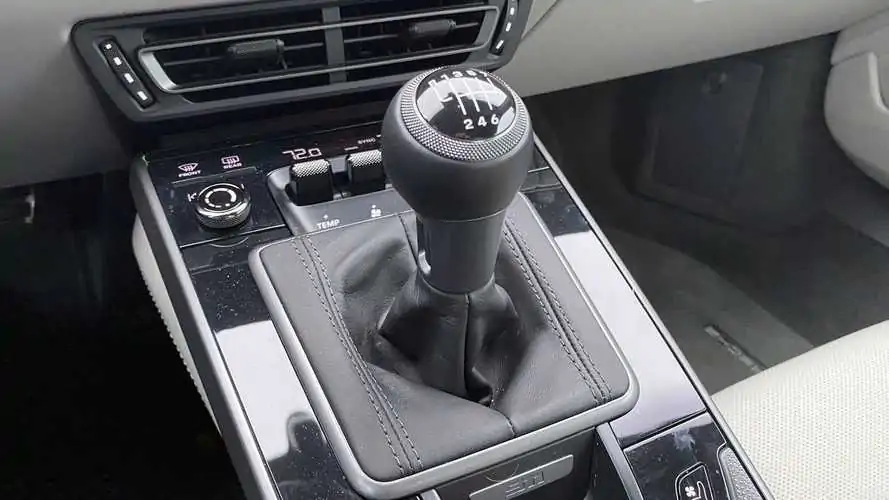
To be fair, the standard PDK is the objectively better transmission. It shifts faster than any driver possibly could, while the manual comes with a few quirks that won’t appeal to everyone. The shifter can feel slightly rubbery through the gates, and the throws are surprisingly long, making each gear change feel less immediate than in some rival sports cars.
But those shortcomings are easy to forgive once you’re on the move. Every shift feels rewarding, whether you’re grabbing the next gear while powering out of a corner or dropping a gear under braking. The old-school gearbox deliberately slows the experience down, forcing you to stay engaged with what the car is doing rather than simply letting the transmission handle the work.
That’s ultimately what makes this 911 so special. It’s astonishingly quick, comfortable enough for long highway stretches, and packed with clever technology, yet the manual transmission preserves a wonderfully analog core. Beneath all the sophistication is still the same basic recipe that made the Carrera such an enduring sports car: driver, machine, and a road worth exploring.
The magic is that the 911 manages to be brutally quick, genuinely comfortable, and technologically sophisticated while still preserving a core of old-school driving character.
The handling, meanwhile, is thoroughly modern. With the PASM Sport suspension dialed up, its adaptive dampers keep body movements impressively controlled, while rear-axle steering gives the 911 a level of agility and turn-in sharpness that makes its roughly 3,400-pound curb weight feel almost irrelevant. Still, after experiencing the car’s chassis, I’d have a hard time ordering a 911 without Porsche Dynamic Chassis Control. The active anti-roll-bar system largely eliminates body lean, making an already capable cornering machine feel even flatter, more composed, and more athletic.
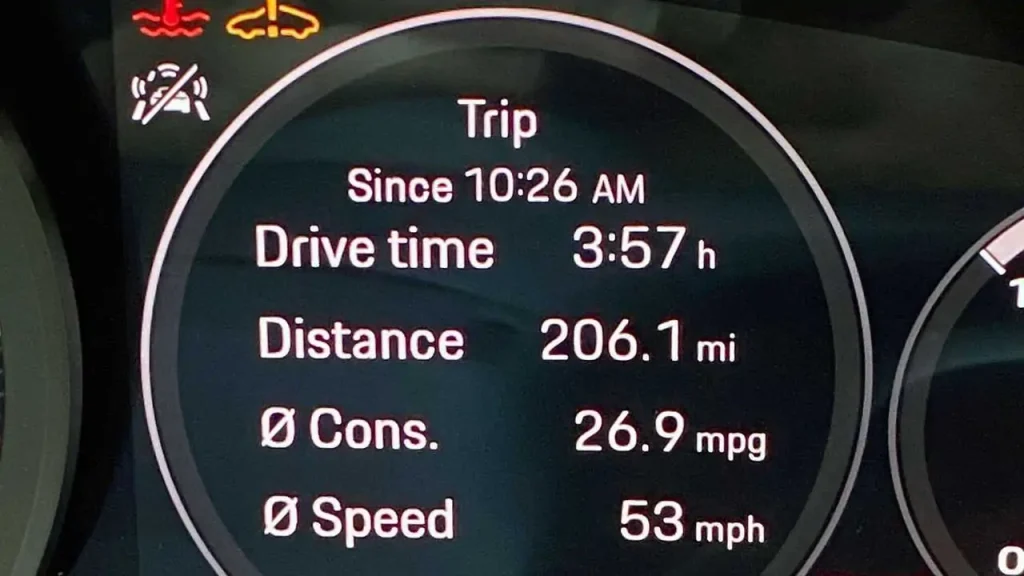
A 443-horsepower twin-turbocharged flat-six doesn’t exactly suggest fuel-sipping behavior, but the 911 Carrera 4S proved surprisingly efficient. Across the 400-mile trip, it averaged 28.6 mpg, comfortably exceeding the manual C4S’s 25-mpg EPA highway rating. That result is even more impressive given that about half the journey involved spirited driving rather than careful fuel-saving. There was no coasting down hills, crawling along at low speeds, or other hypermiling nonsense, either. The 911 simply returned excellent mileage while being driven with the enthusiasm its performance encourages.