
The latest 911 combines decades of evolution with smarter technology, sharper performance, and a thoroughly modern platform.
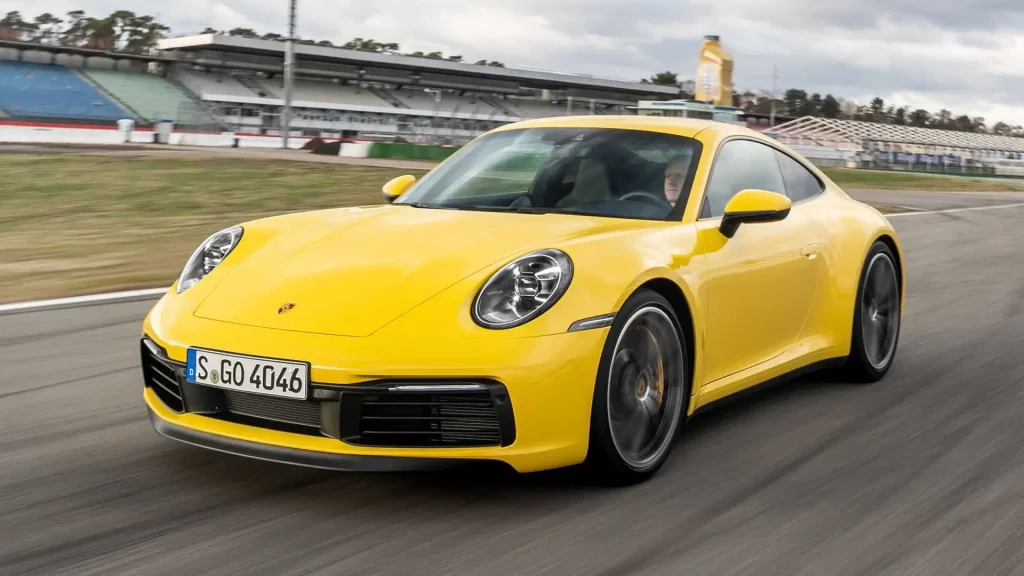
Designing a new Porsche 911 is one of the automotive industry’s toughest exercises in evolution. Porsche has to improve performance, technology, efficiency, comfort, and safety while preserving the qualities that have made the 911 an icon for generations. Change too little and the new car risks feeling outdated; change too much and the company’s famously devoted enthusiasts may question whether it is still a 911 at all.
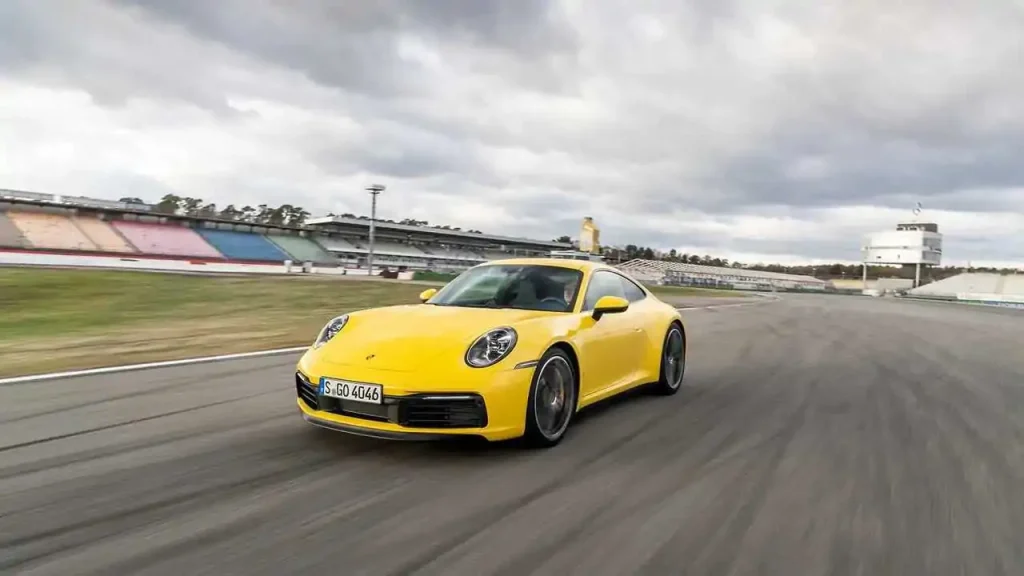
That helps explain why Porsche’s rear-engined sports car has evolved at such a measured pace. Each generation builds on the previous one rather than attempting to reinvent the formula. We got an early look at that philosophy during a visit to Porsche’s headquarters and production facility in Zuffenhausen, followed by time at Germany’s Hockenheimring.
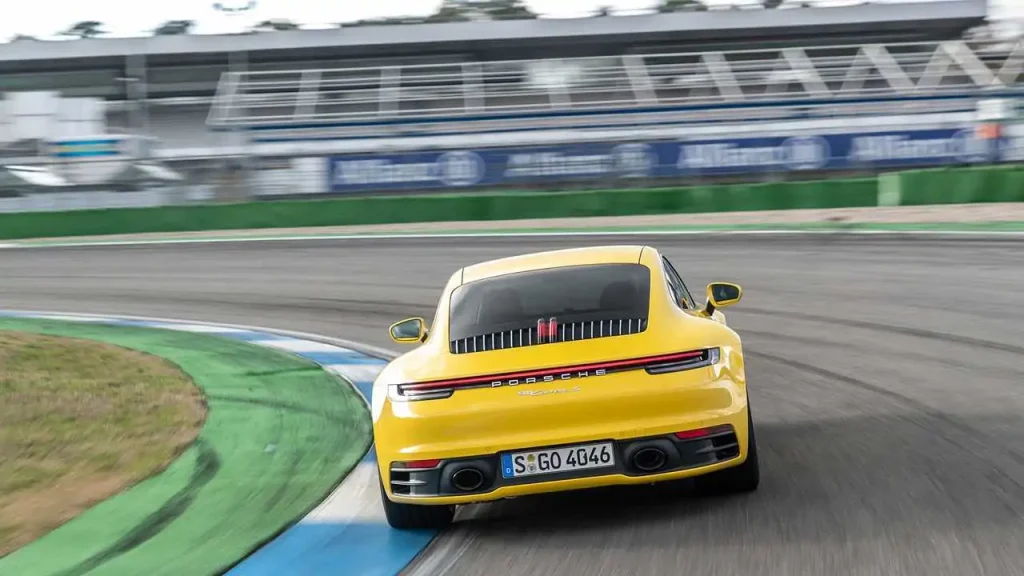
Although a full driving evaluation of the 992 would have to wait, passenger laps around Hockenheim offered an early indication of what Porsche had been working on. The new 911 brings more power, a substantially more advanced electronic architecture, additional safety equipment, a new Wet driving mode, a stiffer and lighter body structure, and a revised suspension. Yet despite all those changes, Porsche’s objective remained the same: make the 911 easier to drive quickly without taking away its distinctive character.
Powertrain
The first versions of the 992 to arrive were the Carrera S and Carrera 4S, both powered by a twin-turbocharged 3.0-liter flat-six. Output climbed to 443 horsepower and 390 pound-feet of torque, representing gains of 23 hp and 22 lb-ft compared with the outgoing Carrera S.
Those numbers translate into meaningful performance. The rear-wheel-drive Carrera S can reach 60 mph in 3.5 seconds, while the Carrera 4S needs just 3.4 seconds. Adding the Sport Chrono Package cuts those figures to 3.3 and 3.2 seconds, respectively. Both versions have a claimed top speed of 191 mph.
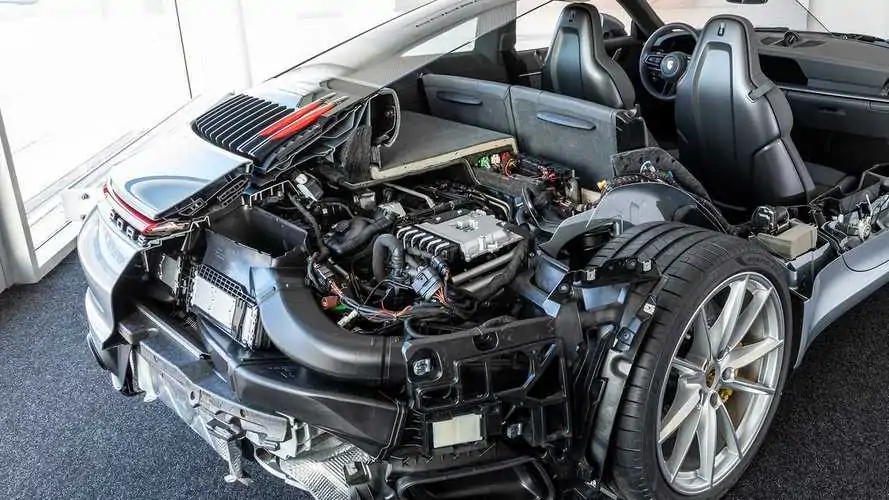
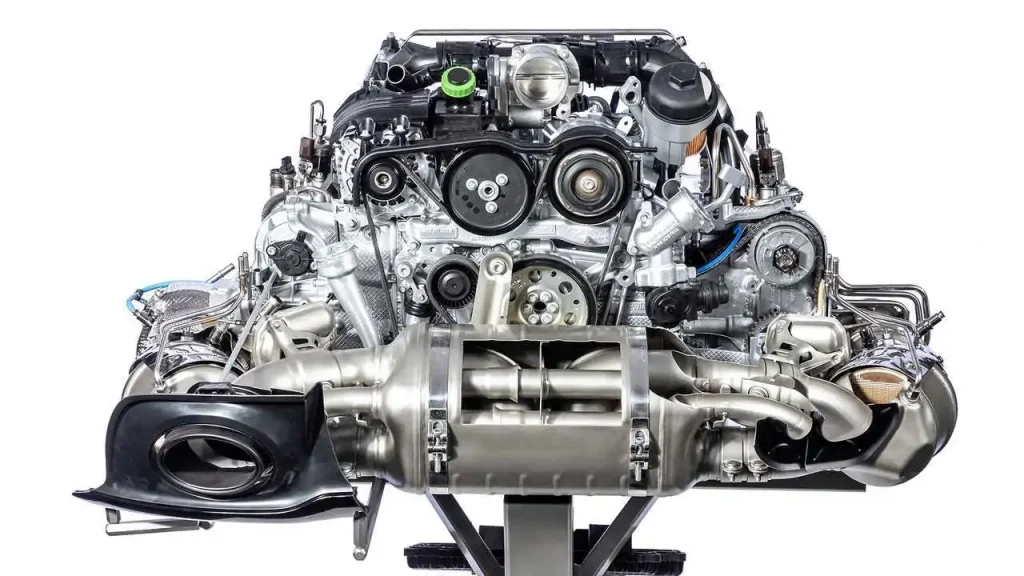
Although Porsche described the engine as new, the 9A2 Evo is more accurately an extensively revised version of the 991.2’s 3.0-liter flat-six. Engineers fitted a redesigned cast-iron exhaust manifold and larger turbochargers with electric wastegates, larger compressor wheels, and larger turbine wheels. The changes were intended to reduce turbo lag, although peak torque arrives later than it did in the previous engine, at 2,300 rpm instead of 1,700 rpm.
Porsche also redesigned the intercooler arrangement. The units moved from the inner sections of the rear bumper to a position above the muffler. Although that location introduces some additional heat exposure, it allowed Porsche to increase the size of the intercoolers and raise cooling capacity by roughly 14 percent.
European-market cars also receive gasoline particulate filters to comply with emissions regulations. North American cars do without them, meaning the U.S.-specification 911 should have a somewhat more pronounced exhaust note. The European car still sounds unmistakably like a Porsche, with the familiar flat-six character remaining prominent at both startup and high engine speeds.
The other major powertrain development is the new eight-speed PDK dual-clutch transmission. Borrowed from the Panamera, the gearbox is considerably more significant than simply being an additional ratio. Its architecture was designed with potential hybrid applications in mind, including space for an electric motor at the rear of the transmission.
The transmission can handle up to 590 lb-ft of torque, considerably more than the Carrera S produces. That leaves considerable headroom for future applications. In the conventional gasoline-powered 911, meanwhile, the eight-speed PDK delivers the rapid shifts expected from Porsche while reducing the jolt associated with gear changes. The result should be smoother acceleration without sacrificing shift speed.
Chassis And Body
The 992 is larger than its predecessor, continuing the gradual expansion of the 911 platform. At 177.9 inches long, the new car is actually longer than a Chevrolet Corvette of the era. It is also heavier overall, with a Carrera S weighing about 3,382 pounds compared with approximately 3,219 pounds for the outgoing 991.2.
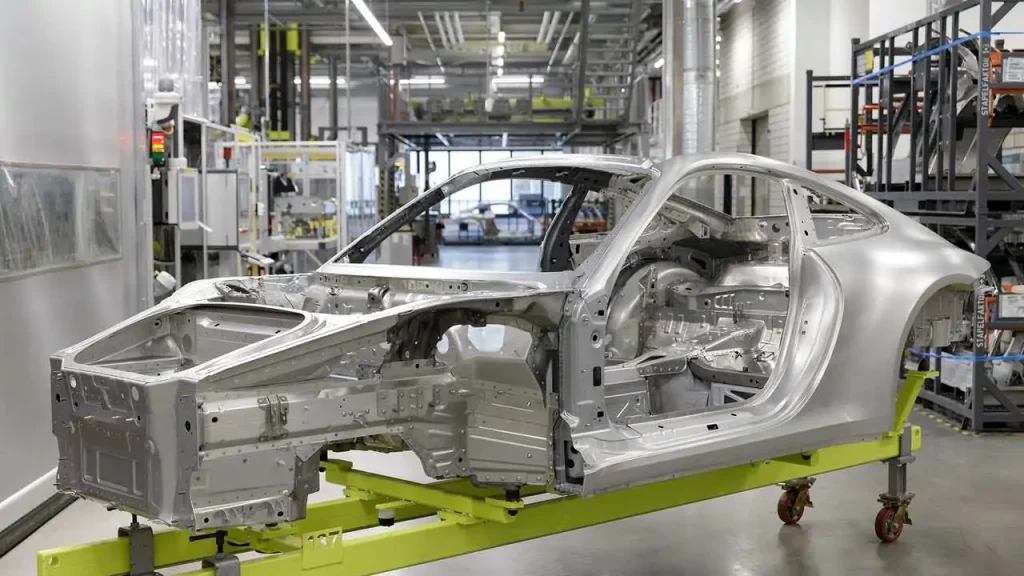
However, the increase in curb weight doesn’t tell the entire story. Porsche actually reduced the weight of the body structure by about five percent. The body-in-white is more than 25 pounds lighter than before, despite the larger dimensions.
Much of that reduction comes from a greater use of aluminum. Porsche increased aluminum content by seven percent while cutting cold-rolled steel usage by roughly 37 percent. High-strength steel remains in critical areas such as the A-pillars and portions of the door structure, while aluminum is used extensively throughout the rest of the body. The doors and rear fenders, in particular, switched from steel construction to aluminum.
The revised structure is also stiffer, with both bending and torsional rigidity increasing by roughly five percent.
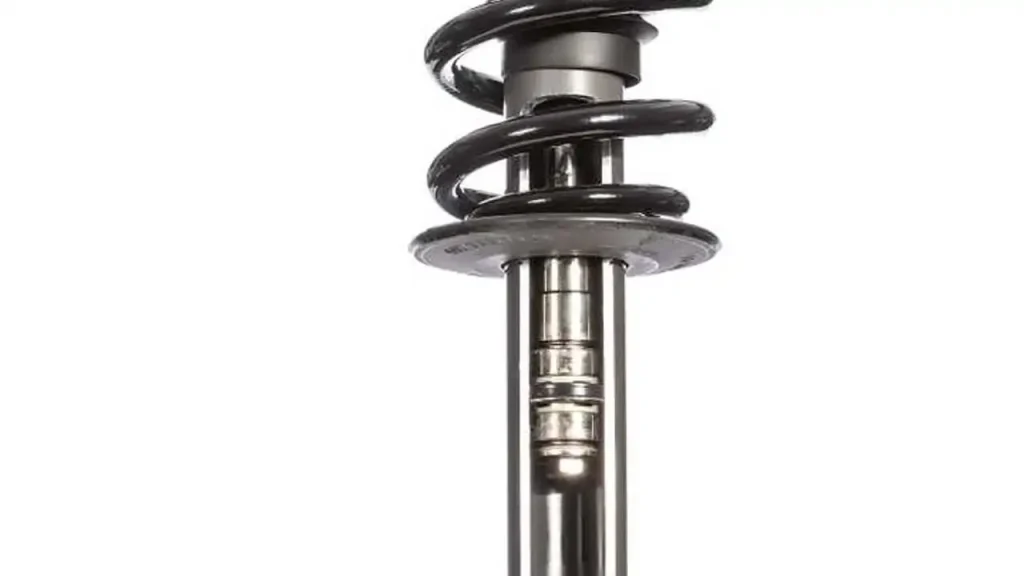
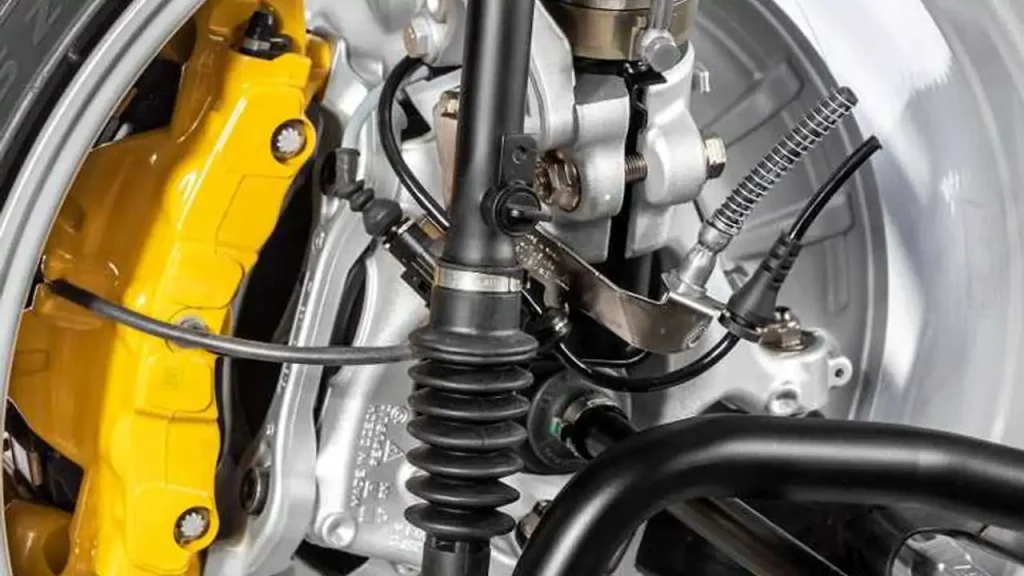
Porsche paired that stronger, lighter body with revised suspension hardware. Spring rates increased at all four corners, with the exact changes varying between the standard suspension and the sport chassis. The front springs became 15 percent stiffer on the standard setup and 18 percent stiffer with the sport chassis, while the corresponding rear increases were 14 and 23 percent.
The 992 also receives new dampers for Porsche Active Suspension Management. The variable dampers use Porsche-developed software to continuously adjust their behavior according to driving conditions and road surfaces. Their operating range is broader than before, allowing the suspension to provide greater firmness when driving aggressively while also offering more compliance when comfort is the priority.
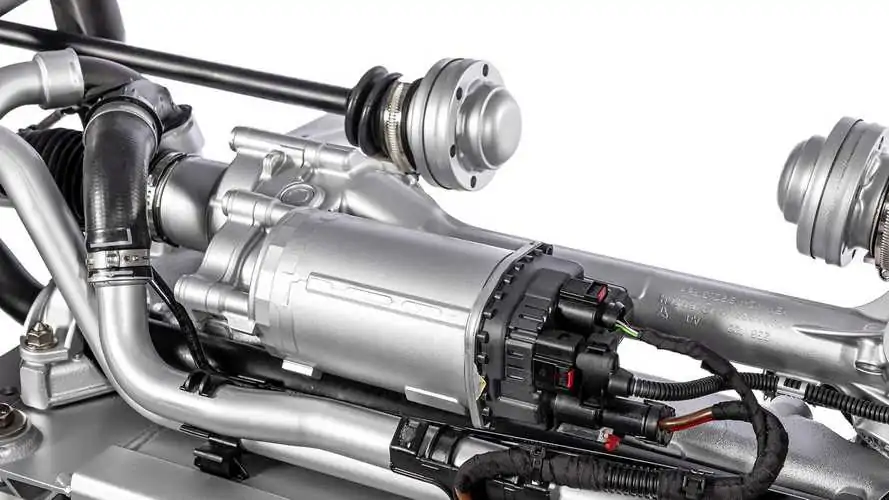
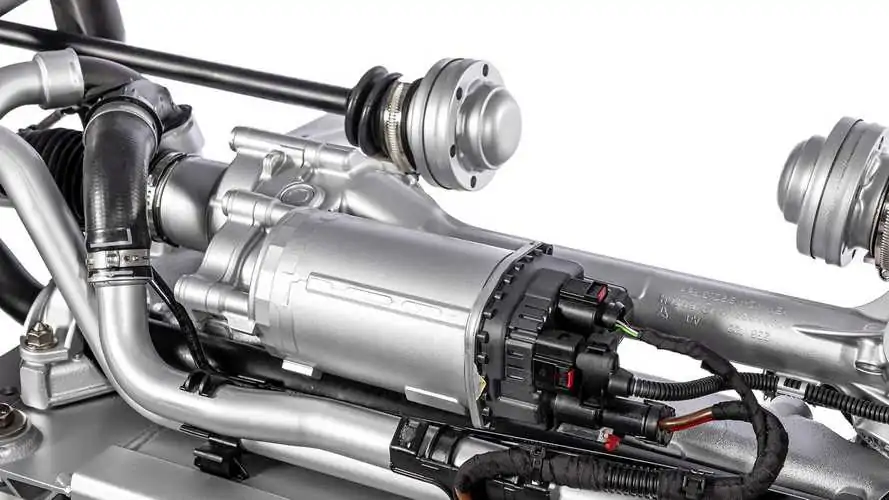
Steering received attention as well. The new steering rack is approximately 11 percent quicker than the previous 911’s, or about six percent quicker on cars equipped with rear-wheel steering. The standard system has a 15:1 ratio, while rear-steer models use a 14.1:1 ratio.
Passenger-seat impressions can only tell part of the story, but the early signs at Hockenheim were promising. The 992 remained composed even when crossing aggressive curbs and rumble strips, while the steering appeared to require relatively small inputs to make significant changes in direction.
Porsche also adopted a staggered wheel-and-tire setup. The front axle uses 245/35 tires on 20-inch wheels, while the rear receives wider 305/30 rubber on 21-inch wheels. The additional rear grip also prompted Porsche to enlarge the rear brake rotors on the Carrera 4S from 13.0 to 13.8 inches.
The brake pedal itself is lighter, shedding approximately 0.66 pounds. Porsche also revised its leverage ratio to provide a shorter pedal action and improved feedback during hard braking. Another significant change is the move from a conventional pneumatic brake booster to an electrically assisted system.
Even the engine mounts received attention. Porsche relocated them farther forward and outward to better align them with the flat-six’s center of gravity. The result is a stiffer connection between the engine and chassis, helping the car respond more immediately to sudden changes in direction. The same basic philosophy applies to the dynamic engine mounts included with the Sport Chrono Package.
Technology
The biggest philosophical change for the 992 may not be mechanical at all. Porsche has equipped the new 911 with substantially more technology while attempting to keep that technology from interfering with the driving experience.
The dashboard contains nearly 25 inches of combined display area. Two configurable seven-inch screens sit on either side of the traditional central tachometer, giving the driver access to navigation, vehicle information, safety functions, and other data. A full-screen navigation display and information from the optional night-vision system can also be shown.
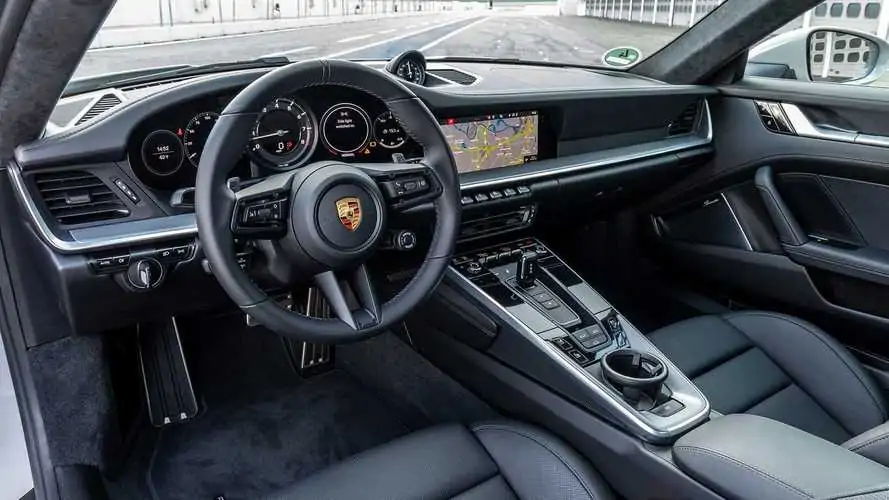
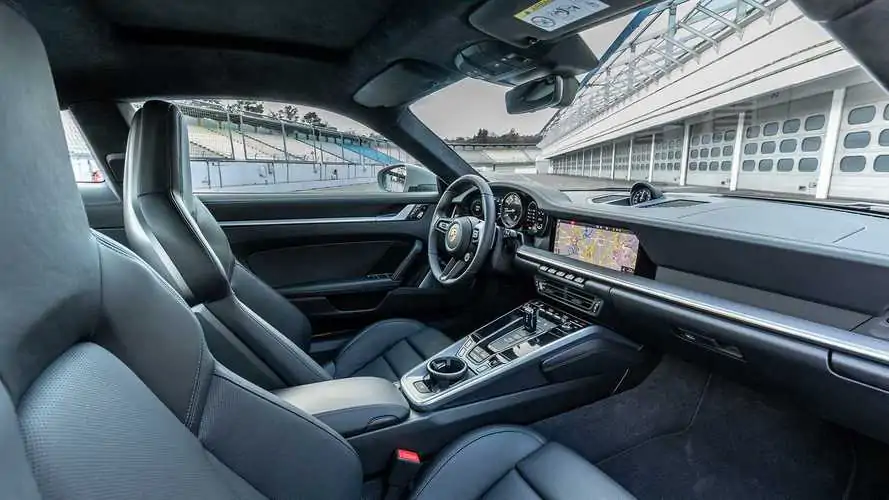
In the center of the dashboard is a 10.9-inch touchscreen running software shared with newer Porsche models such as the Panamera, Cayenne, and Macan. Five dedicated shortcut buttons provide quick access to frequently used functions, while the home screen can be customized.
The addition of active safety technology may be more controversial among traditional 911 enthusiasts. However, Porsche hasn’t attempted to turn the 992 into a semi-autonomous sports car. The systems are primarily designed to warn the driver and intervene when necessary.
Automatic emergency braking and lane-keeping assistance are among the notable additions. Lane-keeping assist does not attempt to continuously center the car in its lane. Instead, it intervenes when the system detects that the vehicle is drifting toward the lane markings.
Forward-collision warning and automatic emergency braking work in stages. The system initially identifies a potential obstacle, prepares the braking system, and alerts the driver with visual and audible warnings. If the driver does not react, the system can apply an initial braking impulse, followed by stronger intervention if necessary. Seat-belt pretensioners can also activate as the situation develops.
Traffic-sign recognition is another available feature, displaying detected speed limits and other relevant road information in the driver’s field of view.
Perhaps the most interesting new electronic feature is Wet Mode.
Porsche Wet Mode
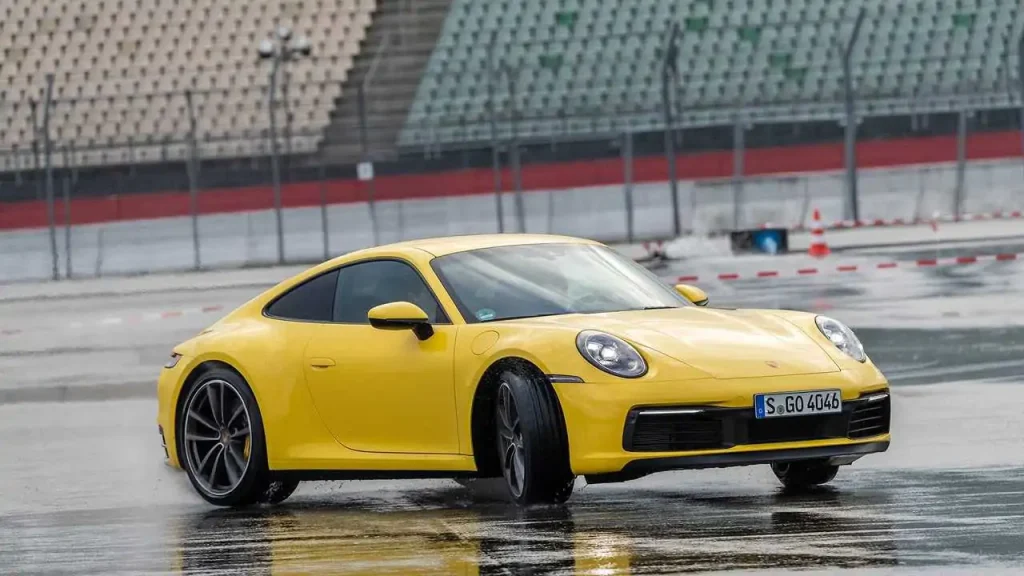
Wet roads have always been a particular challenge for powerful rear-engined sports cars, especially when they’re fitted with wide, low-profile performance tires. Porsche’s solution was to create a system capable of detecting wet conditions and preparing the 911 for them.
Sensors positioned near the front wheel wells continuously monitor water spray. When the system determines that the road is sufficiently wet, it alerts the driver and recommends activating Wet Mode.
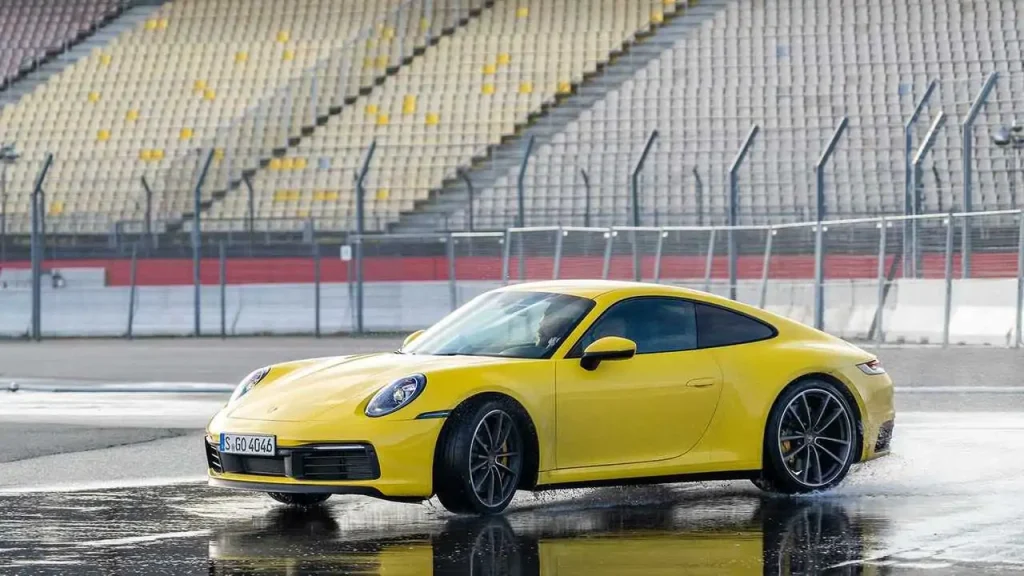
Once selected, the car modifies several systems simultaneously. Throttle response becomes less aggressive, torque is delivered more progressively, and the PDK shifts more gently. On all-wheel-drive versions, additional torque can be sent toward the front axle.
The stability and traction-control systems also become more sensitive, while the ABS threshold is lowered. The active aerodynamic system moves toward its maximum-downforce configuration, and the torque-vectoring system changes its differential-lock strategy.
The result is intended to make the 911 more predictable when grip is limited without requiring the driver to understand every individual electronic intervention taking place underneath them.
The New 992
The 992 represents one of the most comprehensive updates in the 911’s long history. Porsche didn’t radically alter the formula, but it upgraded nearly every part of it.
The new 911 is larger, more powerful, stiffer, and more technologically sophisticated. Its body uses more aluminum, its suspension has a wider range of capability, its steering is quicker, and its transmission gains an additional ratio. At the same time, the cabin receives a much more modern electronic interface and a suite of new safety systems.
That makes the 992 arguably the most technologically advanced 911 yet. The bigger question is whether all that additional technology changes the connection between driver and machine that has defined the model for decades.
A passenger lap around Hockenheim could provide only a preview. The real answer would have to wait until the 992 could be driven from behind the wheel.