
The Ridgeline’s Blend Of Truck Utility And SUV Comfort Makes It A Great Camping Companion
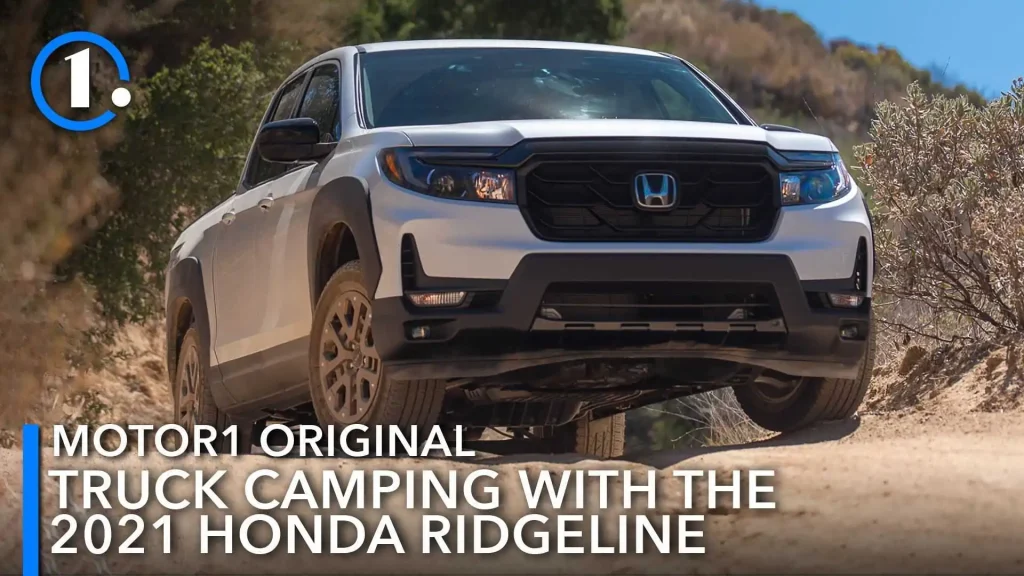
For more than a month, I’d been living out of my 1995 Toyota Hiace Super Custom, traveling between national forests and taking my all-wheel-drive van, equipped with all-terrain tires, up narrow dirt roads that wind thousands of feet into the mountains. (Ed.: Read Victoria’s van life series at The Drive.) I spend my nights high in the mountains, writing, taking photos, and soaking up the quiet that comes with being far from civilization.
So when Honda offered me a new Ridgeline to review, my first question was whether I could take it off-road. And I didn’t mean a leisurely drive down a well-maintained gravel path. My van has seen its share of rough terrain, because the best dispersed camping spots rarely sit beside paved roads or groomed trails. They’re usually at the end of routes marked for four-wheel drive, with tire tracks that look like they’ve been there since the Carter administration. Honda gave me the go-ahead to explore, and I was eager to get the updated Ridgeline dirty and find out how it performed as a truck.
A Jack of All Trades
Since its debut, the unibody Honda Ridgeline has faced criticism from people who say it isn’t a proper truck. As car enthusiasts, we often push vehicles toward increasingly specialized roles. Sports cars get lower suspensions and stiffer setups to shave fractions of a second off lap times, while off-road rigs gain remote-reservoir shocks and extreme suspension articulation to conquer the toughest trails around Moab. With so many purpose-built machines available, it’s easy to dismiss vehicles designed to handle a little bit of everything, as though versatility were a weakness rather than a strength.
The Ridgeline doesn’t do itself any favors on paper, either. It comes exclusively with a 3.5-liter V6 producing 280 horsepower and 262 pound-feet of torque, figures that put it around the middle of the midsize pickup segment. While those numbers are perfectly respectable, the truck’s maximum towing capacity of 5,000 pounds falls well short of several rivals. For roughly the same price, a V6-powered Chevrolet Colorado can tow up to 2,600 pounds more, giving traditional truck buyers a compelling reason to look elsewhere.
The Ridgeline’s 3.5-liter V6 produces 280 horsepower and 262 pound-feet of torque, but its towing capacity leaves it trailing much of the midsize-truck competition.
The Ridgeline’s payload capacity tops the compact and midsize truck segment, but only by 23 pounds over the Ford Ranger and Chevrolet Colorado. That’s roughly the weight of a single cinder block—not exactly a game-changing advantage. Add in its unibody construction, which differs from the traditional body-on-frame design still used by most rivals, and it’s easy to see why the Ridgeline has faced criticism throughout its life.
That criticism, however, overlooks how many people actually use their trucks. I live in Texas, where pickups are practically the default choice for suburban commuters. My neighborhood is full of trucks owned by people who occasionally go camping, work in the oil fields, or haul their boats to the lake. They buy them for those specific jobs, but most days are spent commuting, sitting in traffic, cruising down the freeway, and stopping at shopping centers to pick up groceries.
A pickup might not be the ideal vehicle for those everyday tasks, but it can be the perfect tool for a hunting trip, a rough dirt road, or a drive out to a pipeline with a bed full of equipment. Many owners accept the compromises that come with truck ownership because, when those less frequent jobs arise, their vehicles are ready to handle them.
A well-rounded truck should do more than excel at occasional heavy-duty work. It needs enough capability to tackle off-road trails and enough bed space to carry whatever its owner requires, while remaining comfortable and manageable during the countless hours spent driving around town or on the highway. After all, most trucks spend far more time in everyday traffic than they do in the environments where their abilities truly shine.
Living out of a truck feels like the most intense test of its functionality possible.
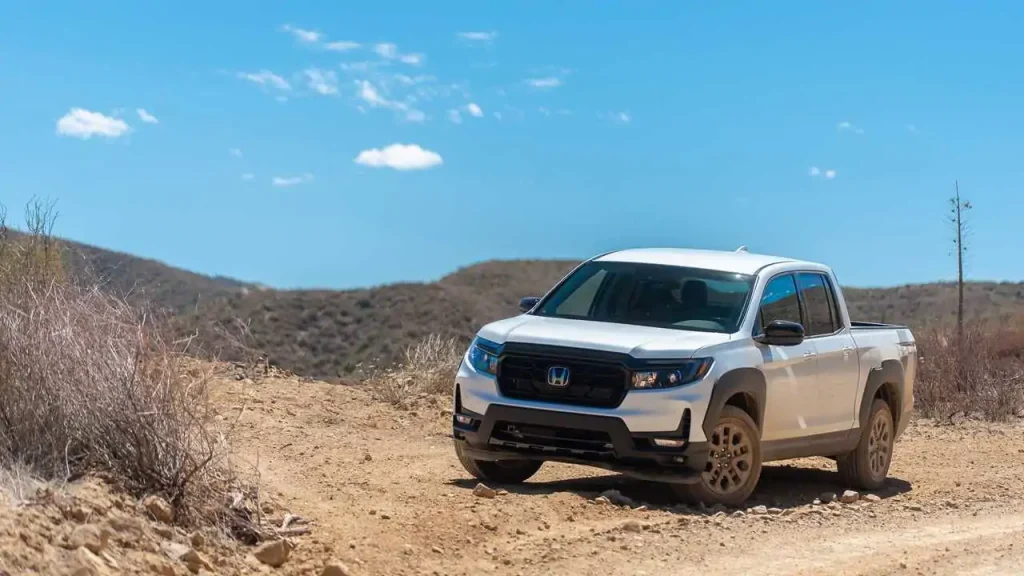
Fortunately, I picked up the Ridgeline in Los Angeles, a city that offers an unusually good mix of conditions for testing a pickup. My base Sport model came with the HPD package, adding bold gold wheels and flared fenders that give it a tougher look without going overboard. LA’s web of freeways, crowded strip malls, and narrow suburban streets puts everyday usability to the test, while the rugged desert mountains surrounding the city offer an entirely different challenge.
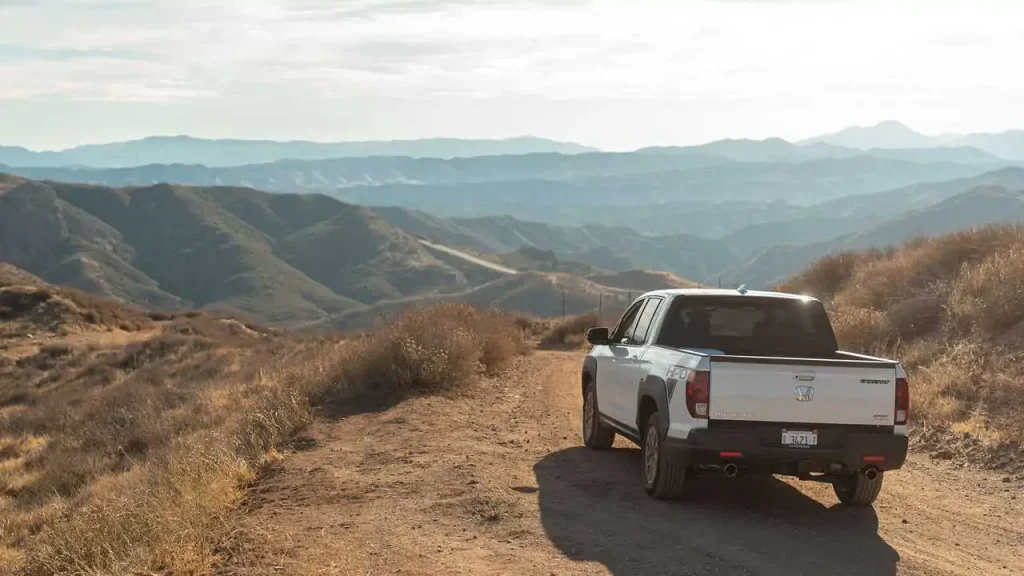
The trails of Angeles National Forest seemed like the perfect place to see whether the Ridgeline’s all-wheel-drive system and ground clearance lived up to their spec-sheet promises. And if I wanted to find out just how practical a truck could be, there was no better test than using it as a home on wheels.
From Freeways To Forests
The trails of Angeles National Forest promised a chance to put the Ridgeline’s all-wheel-drive system and ground clearance to the test, especially on riverbeds and washed-out fire roads. But before heading into the wilderness, I had to tackle a challenge that probably confronts most vehicles in Los Angeles: sitting in traffic.
The average LA commuter loses six days and 23 hours each year to traffic jams, making comfort behind the wheel a serious consideration. Fortunately, the Ridgeline makes a strong impression when it comes to cabin space and seating comfort. The numbers back that up, too, with class-leading shoulder room for a midsize pickup: 62.0 inches up front and 61.5 inches in the rear. More importantly, its crossover-based platform gives the cabin a more relaxed, carlike feel. It doesn’t feel like a traditional truck, and in this case, that’s a very good thing.
All told, I’d happily make the Ridgeline my daily commuter, especially since its fuel economy wasn’t bad, either.
On the interstate, the Ridgeline’s ride comfort and cabin noise felt less like those of a Toyota Tacoma or even my beloved all-terrain-tire-equipped Hiace, which had brought me to Southern California, and more like a tall sedan. That refinement made a real difference during hundreds of miles spent crossing Los Angeles to visit friends and attend car shows. I could easily see myself commuting in the Ridgeline every day, and its fuel economy was reasonable, too. Despite heavy traffic, dirt-road driving, and a few stationary breaks with the air conditioning running to escape the unseasonable heat, I averaged just over 19 miles per gallon.
Before reaching the dirt roads leading to my campsite, though, I had to navigate the technical twists and turns of Angeles Crest Highway. With the canyon roads winding ahead, I found myself wondering about a different aspect of the Ridgeline: just how much did it actually handle like a car?
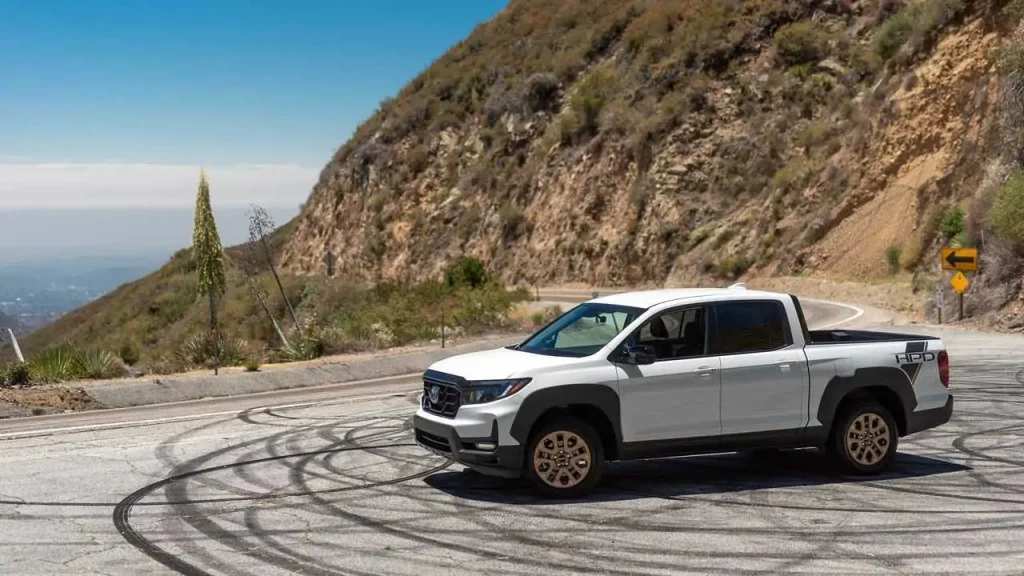
To my surprise, the Ridgeline proved quite capable on the winding mountain roads. It wouldn’t have stood a chance against an NSX, but put it up against a rental Nissan Altima and the Honda could have held its own. For a pickup, that’s impressive. Its precise steering made negotiating tight corners far easier than in most of the trucks and vans I’ve driven through the mountains, and that was good enough for me.
Using the steering-wheel paddles to work through the nine-speed automatic in Sport mode turned out to be more entertaining than I expected. Of course, a “serious enthusiast” is supposed to tackle some of the continent’s finest driving roads in a sports car with sticky tires and a manual gearbox, right? Apparently, the Ridgeline had other ideas.
Nobody buys a truck for its handling, but the Ridgeline’s willingness to indulge my spirited driving says a lot about just how refined it is.
I’ll admit it: hearing the V6 growl as I hit the brakes and used the paddles to call up the lowest possible gear was ridiculously entertaining. I even carried enough speed through the sweeping corners to send the lid flying off the cooler in the bed. The result? My last slice of pie ended up smeared across the rear window. By that point, it was safe to say I was enjoying myself. Handling might not be high on most truck buyers’ priority lists, but the Ridgeline’s ability to put up with my antics says plenty about its civilized character.
Roughing It Comfortably
At last, it was time for the test I’d been looking forward to most: taking the Ridgeline off-road. It offers 7.2 inches of ground clearance and standard all-wheel drive, featuring Honda’s Intelligent Variable Torque Management system, or i-VTM4. The setup combines mechanical differentials with wheel-speed sensors to identify slippage and distribute torque where it’s needed. Several selectable traction modes also help tailor the system to different surfaces.
Once I reached the dirt, I switched to Sand mode, which relaxes traction control to allow more wheelspin and help keep the truck moving through loose terrain. Any lingering doubts about the Ridgeline’s off-road abilities quickly faded. After cruising through the paved mountain switchbacks above Los Angeles, I turned onto the rougher trails and powered up a 15-percent grade, sending dirt flying from all four wheels. That was a pretty convincing demonstration of what the Honda could do.
The Ridgeline tackled every challenge I put in its path without breaking a sweat.
I set out to find the toughest trails I could in Angeles National Forest. Most of the park’s fire roads were closed for the summer, but the smaller, more remote northern section of the sprawling 700,000-plus-acre forest still offered plenty of obstacles. I’ll admit that I did a number on the Ridgeline’s front air dam, which helps improve highway fuel economy but wasn’t designed for this kind of punishment. Beyond that, though, the truck took everything in stride without any major trouble.
Even dry river crossings felt less daunting than they might have in my purpose-built van, thanks to the Ridgeline’s extra ground clearance. That evening, I parked high in the mountains, about a mile above the city, cranked up the stereo, and unfolded a chair beside the truck. The bass made the bedliner vibrate as I sang along to my favorite tracks in the middle of nowhere, free to butcher every lyric without an audience.
When it was time to sleep, I tucked my food, water, and clothes beneath the rear bench seat. The hollow storage space swallowed roughly $100 worth of Clif bars, water, Gatorade, and other essentials with room to spare. Then I stretched out across the rear bench for the night. Sleeping horizontally in any vehicle can be a challenge because of the limited width, but I found the Ridgeline surprisingly comfortable, even if my height made things a little snug.
With more time, I would have liked to try Honda’s optional tent designed for the Ridgeline. It offers additional room to stretch out and can stand independently or attach to the truck bed for a more integrated camping setup. Unfortunately, it isn’t a common feature on equipped models, so I had to make do with the standard Sport’s interior. That turned out to be a reasonable compromise, especially once temperatures dropped in the desert mountains after sunset. The warmth inside the cabin made sleeping there a much more appealing option.
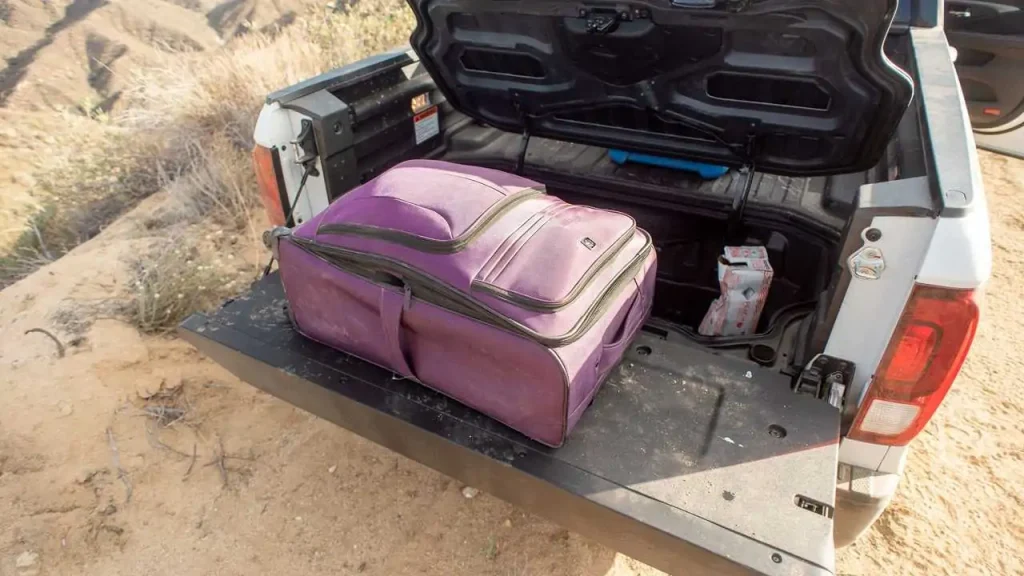
The next morning, I opened the Ridgeline’s watertight, lockable in-bed trunk and brushed my teeth while sitting on the tailgate. That storage compartment quickly became one of my favorite features. When camping in remote areas, I need to bring along medications, a laptop, camera gear, clothes, and other valuables. The ability to lock those items away in a dedicated compartment is a huge advantage, especially since most pickups lack the kind of enclosed storage you’d normally associate with a car. I’d expected the trunk to be useful, but it proved even more valuable than I’d imagined.
With so much of my gear tucked away in the trunk, I had room to bring a couple of friends along for an off-road adventure. The cabin proved impressively spacious for three tall women, with the Ridgeline offering best-in-class rear legroom of 36.7 inches, plus enough room for supplies to last several days away from civilization and cell service. Even the hour-and-20-minute drive from Venice to the trails was comfortable. With a tent, the three of us could have camped together without much trouble. There was plenty of space for both passengers and provisions, and we could easily have stayed out longer than I had the truck.
One More Thing for the Trails: Proper All-Terrain Tires
The biggest drawback I encountered while taking the refreshed Ridgeline off-road was the risk of damaging its sharp, beautifully sculpted sheet metal. The 2021 facelift looks fantastic, but Honda raised the hood to give the truck a more muscular appearance, which compromised forward visibility when approaching steep inclines.
My other complaint? The lack of proper all-terrain tires. The updated Ridgeline comes with all-season rubber featuring redesigned sidewalls and faux knobby detailing that suggests off-road capability without delivering much extra grip. Fortunately, the i-VTM4 all-wheel-drive system kept me from feeling seriously limited by traction on challenging sections. However, the truck showed noticeable understeer through smooth dirt corners, where a more aggressive set of tires would have helped it hold its line.
When it came to other truck duties, I can’t claim to have tested every possibility, but I did my best to put the Ridgeline to work. I even made a trip to IKEA. I didn’t buy much, since my home is a van, after all, but the bed is wide enough to accommodate a properly secured sheet of plywood, which says plenty about its practicality. The Ridgeline comes with just one bed length, measuring 63.6 inches and offering 33.9 cubic feet of cargo space. Thanks to the minimally intrusive wheel wells and standard bed liner, you can make excellent use of that space. During my test, though, my priorities were simpler: hauling a cooler and bringing home a BLÅHAJ.
After nearly a week of imagining all the ways I could put the Ridgeline to the test, and watching the Honda tackle everything with ease, I was left with one question: What more could you really want from a truck?
Honda has built a pickup that gets the fundamentals right. It handles a wide range of jobs while recognizing that most of its life will be spent on paved roads. The Ridgeline would meet every truck-related need I could reasonably throw at it, and it’s more comfortable around town than any rival I’ve driven. You don’t have to sacrifice everyday comfort for genuine utility, even when crawling through traffic on Interstate 5. That balance is what makes the Ridgeline such a compelling pickup.