
Hyundai’s compact pickup is finally getting ready to hit the road.
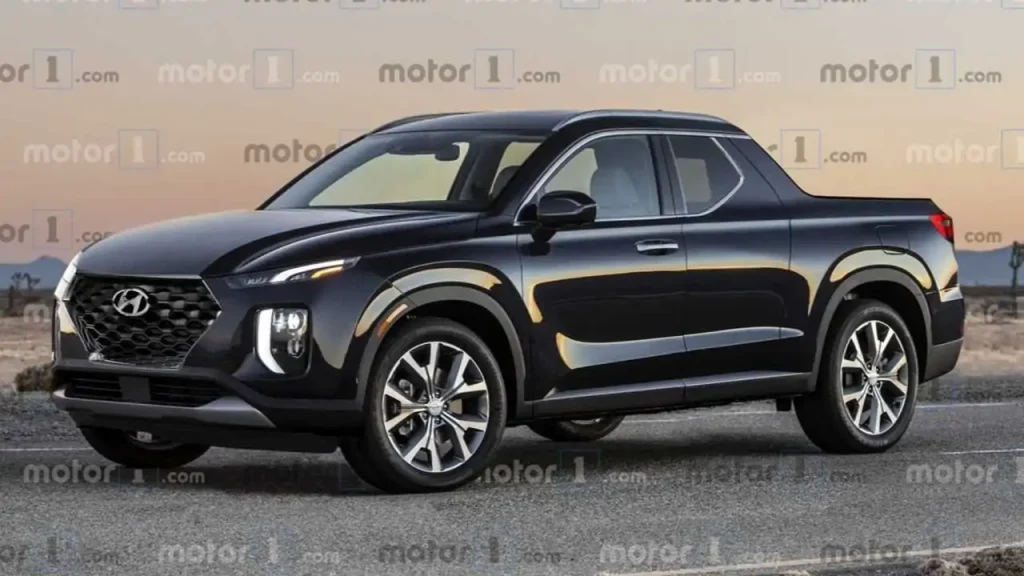
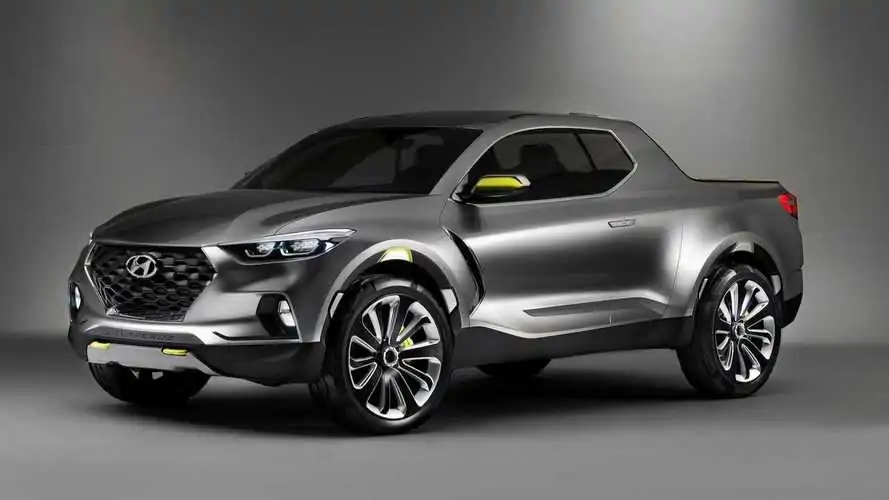
Remember the original Hyundai Santa Cruz concept? It made quite an impression when it debuted at the Detroit Auto Show in early 2015, with its sleek styling and promise of an eventual production pickup. But five years later, the production model was still nowhere to be found.
That could finally change in 2021. Over the years, we’ve followed the rumors, leaks, and reported details surrounding Hyundai’s long-awaited compact pickup, with signs pointing to a possible debut as early as this year. Until then, here’s everything we know about the upcoming Hyundai Santa Cruz.
Table of Contents
What Name Will Hyundai Use?
There are plenty of clues suggesting Hyundai will carry the “Santa Cruz” name from the original concept into production. The automaker filed a trademark for Santa Cruz with the U.S. Patent and Trademark Office in August, giving the name some extra credibility. It also fits neatly with Hyundai’s existing crossover naming strategy. Santa Cruz would sit comfortably alongside models such as the Santa Fe, Tucson, and Palisade, all of which take their names from U.S. cities or places.
What Will the Production Model Look Like?
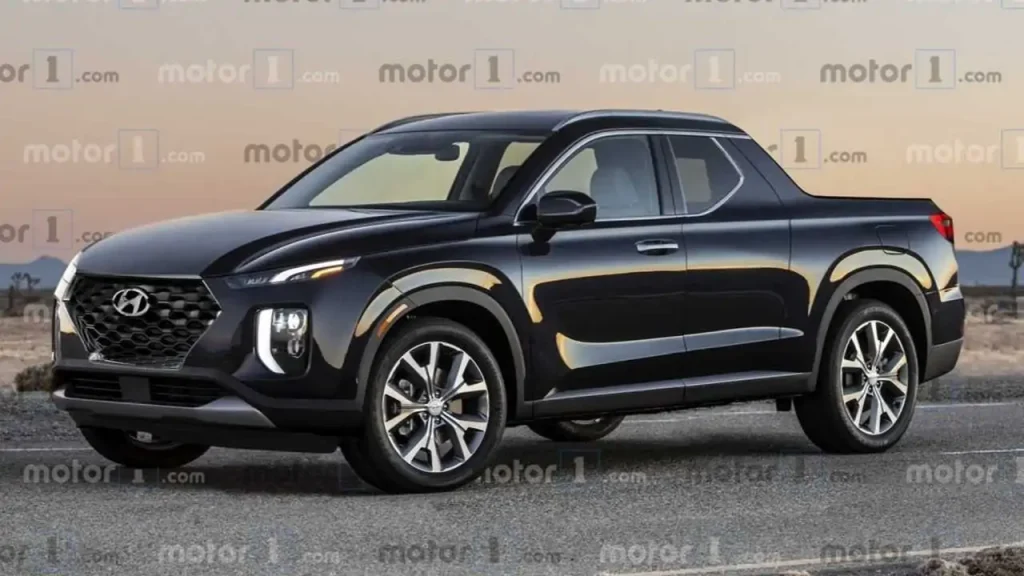
The production Santa Cruz is expected to retain some of the 2015 concept’s styling, though likely with a more restrained design and less aggressive bodywork. Hyundai’s newer design language, including the grille and headlight treatment seen on models such as the Venue and Palisade, should also make its way onto the pickup. Our rendering above offers an idea of how those elements could come together on the production truck. A leaked image showing the truck’s bare body, meanwhile, suggests that some of the concept’s defining proportions will survive, including its short bed and sloping C-pillar.
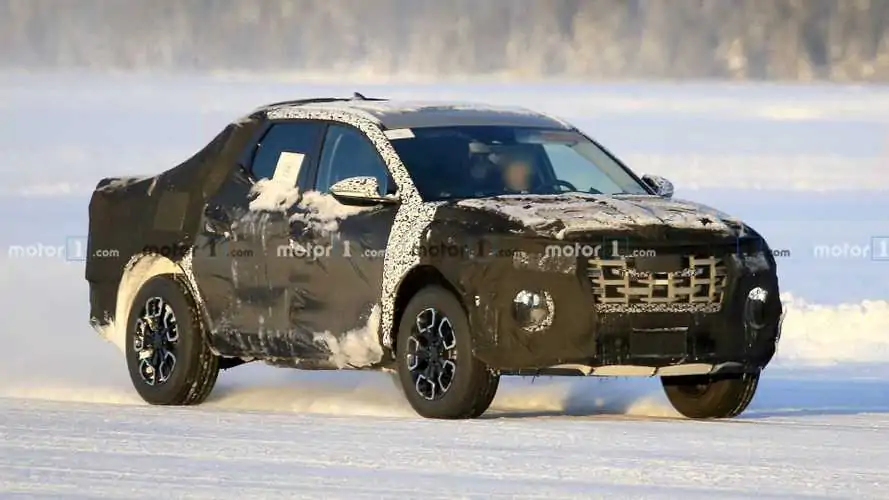
Spy photos haven’t revealed much in terms of details, but they do provide a clearer sense of the Santa Cruz’s overall size and proportions. The images further suggest that the production model will retain the concept’s general shape, albeit in a more practical form. They also reveal a distinctive set of 10-spoke wheels that appear ready for production.
What Will Power the Santa Cruz?
The Santa Cruz will likely use one of Hyundai’s existing gasoline engines, with the turbocharged 2.5-liter four-cylinder and the 3.8-liter V6 from the Palisade among the possible candidates. The V6 develops up to 291 horsepower, giving the compact pickup plenty of muscle for everyday driving and hauling.
There’s also been speculation about a turbocharged 3.0-liter diesel borrowed from the Genesis GV80. Producing 278 horsepower and 434 pound-feet of torque, the diesel would be an appealing option for a pickup, although reports suggest it would be limited to commercial applications outside the U.S. For American buyers, front-wheel drive is expected to be standard, with all-wheel drive available as an option.
Will It Use a Body-on-Frame Platform?
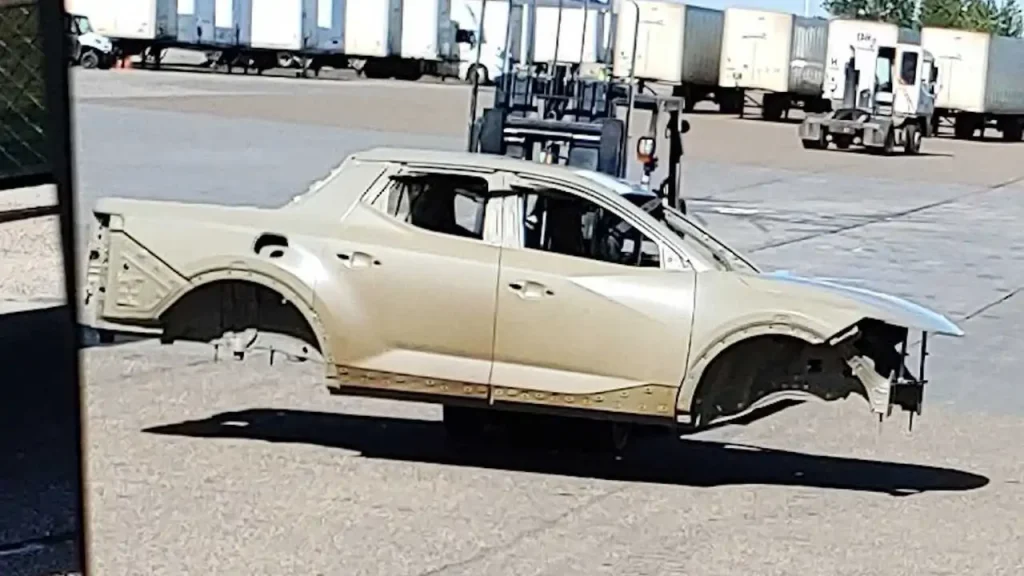
It’s still up in the air. The original 2015 Santa Cruz concept used unibody construction, and that seemed like the logical choice for the production model given Hyundai’s extensive lineup of unibody crossovers. However, a report from September 2019 suggested the pickup could instead adopt a more traditional ladder-frame chassis.
Hyundai Australia CEO John Kett hinted at that possibility in an interview with Australian publication WhichCar, saying that if Hyundai was going to build a ute, it needed to deliver genuine utility and functionality. That comment fueled speculation that the Santa Cruz could be more truck-like beneath the skin.
Since then, though, there haven’t been enough reports to confirm the claim. Until Hyundai officially reveals the production pickup, it remains unclear whether the Santa Cruz will use a body-on-frame platform or stick with unibody construction.
Where Will It Be Built?
Production of the Santa Cruz is expected to begin in 2021 at Hyundai’s assembly plant in Montgomery, Alabama. The pickup will be built alongside models such as the Sonata and Elantra, marking another major addition to the facility’s U.S. production lineup.
Hyundai announced the plan in November, with Byungjin Jin, president and CEO of Hyundai Motor Manufacturing Alabama, expressing confidence in the plant’s workforce and its ability to build the new pickup for American buyers.