
There’s a lot to cover.
SUVs, have reshaped the luxury market, but the traditional sedan still has plenty of life left in it. For many buyers, moving into a taller vehicle means paying extra for a higher seating position and a little more ground clearance without gaining much else. That leaves plenty of room for a well-designed sedan to make its case.
Mercedes-Benz has no plans to abandon that segment, with a lineup that stretches from the compact A-Class Sedan and CLA to the flagship S-Class. The brand’s most prestigious sedan is about to enter a new generation, with its debut just weeks away. Until then, here’s everything Mercedes has officially revealed about the upcoming model.
What Is the New S-Class?
Few cars have carried the flagship-sedan mantle as consistently as the S-Class. Across decades of development, Mercedes has used its largest sedan to introduce advances in comfort, safety, performance, and technology before gradually bringing many of those features to models lower in the lineup. The W223 generation is expected to continue that tradition, serving as a showcase for innovations that will eventually spread throughout the broader Mercedes-Benz range.
The next-generation S-Class will move to the second iteration of Mercedes’ Modular Rear Architecture (MRA), with buyers expected to choose from standard-, long-, and extended-wheelbase versions. The lineup will also span several distinct variants, including Mercedes-Benz, AMG, Guard, Maybach, and Pullman models. Mercedes won’t bring back the S-Class Coupe or Convertible, instead shifting those roles to future generations of the AMG GT Coupe and SL.
In standard-wheelbase form, the new sedan will have 3,106 millimeters (122.2 inches) between its axles, an increase of 71 mm (2.8 inches) over the outgoing W222. The long-wheelbase model stretches that figure by another 51 mm (2.0 inches), reaching 3,216 mm (126.6 inches). Despite the added size, Mercedes says the new S-Class will be considerably lighter than its predecessor, thanks in part to a body containing nearly 60 percent aluminum. S-Class chief engineer Jürgen Weissinger confirmed those details in an interview with Autocar.
The S-Class may be growing in size, but Mercedes has a clever way to make it feel considerably smaller from behind the wheel. An advanced rear-wheel-steering system can turn the rear wheels by up to 10 degrees, helping dramatically reduce the car’s turning circle. Mercedes says the technology can cut roughly two meters from the standard-wheelbase model’s current 10.2-meter turning circle, making the large sedan much easier to maneuver in tight urban spaces.
The system also benefits the S-Class at higher speeds, where rear-wheel steering can improve stability and agility. At low speeds, the rear wheels turn opposite the fronts to make tight turns easier. As speed increases, they switch to turning in the same direction as the front wheels, although the angle is limited to 1.7 degrees. S-Class chief engineer Jürgen Weissinger described the setup as a “game-changer,” noting that the new sedan can achieve a tighter turning circle than even the smaller A-Class.
A Familiar Shape With A Few Changes
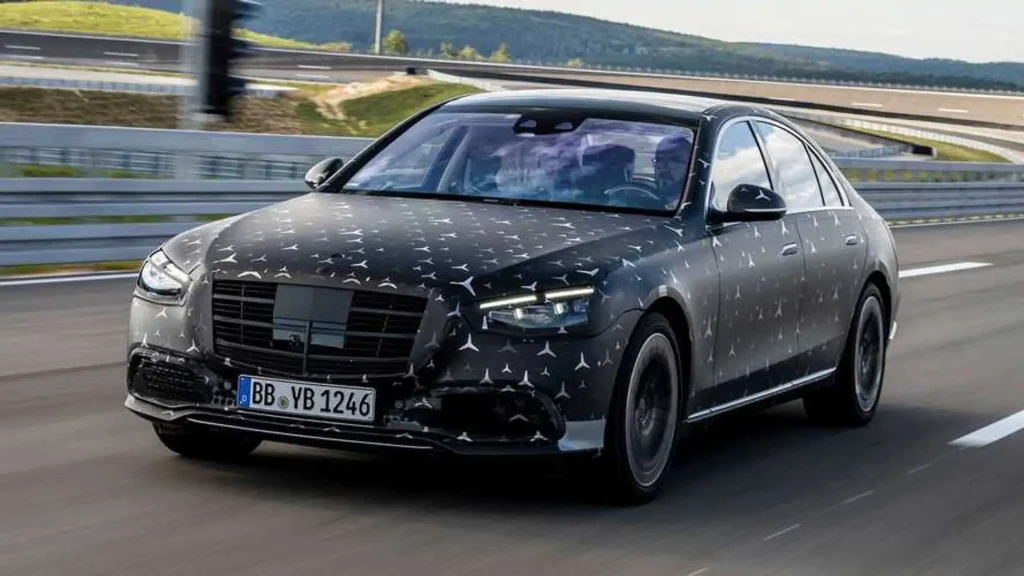
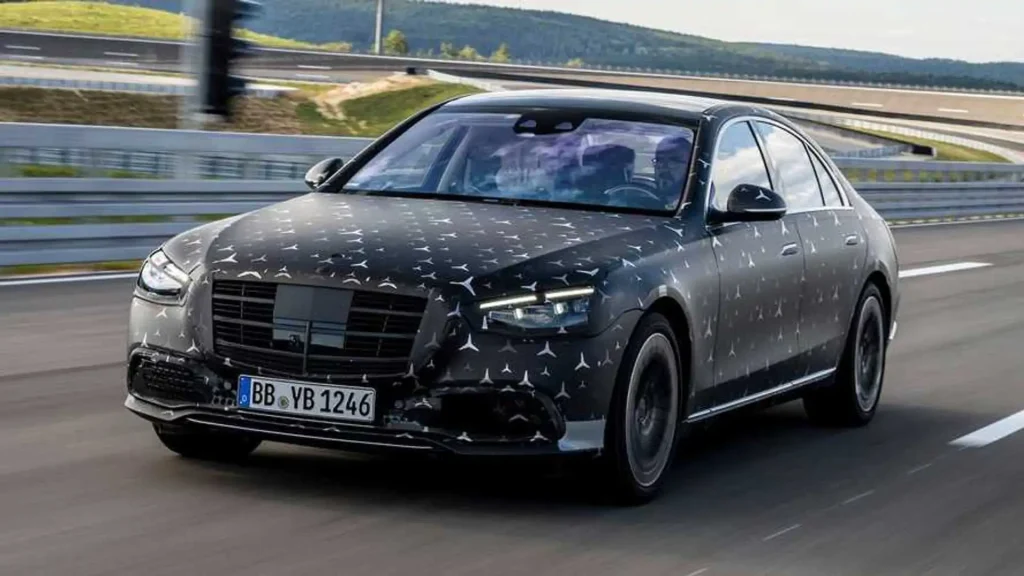
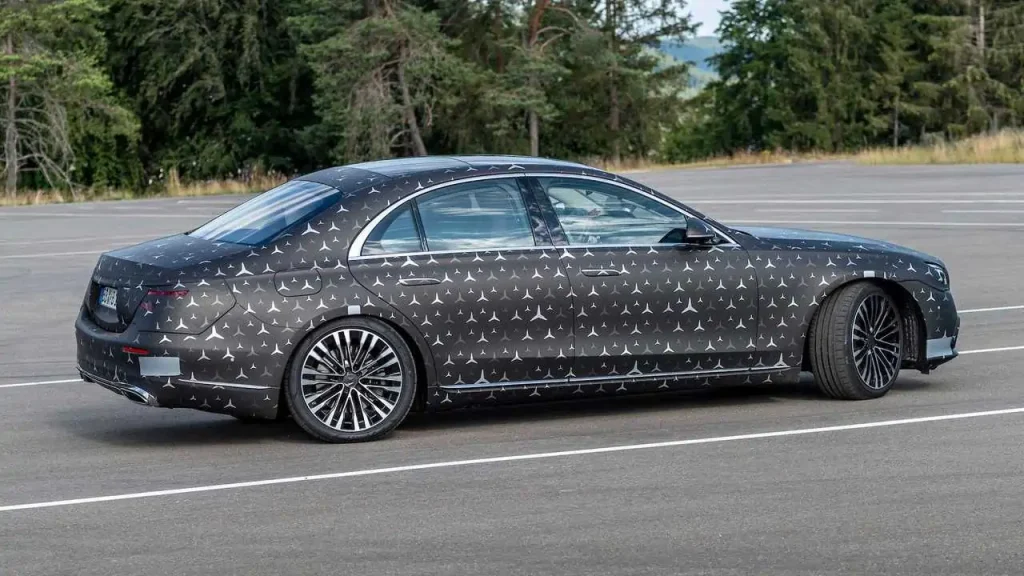
Mercedes-Benz isn’t known for radically reinventing the S-Class with every generation, and the W223 follows that established formula. The overall silhouette remains unmistakably S-Class, but there are a few notable changes, including slimmer horizontal taillights that stretch into the trunk lid and flush-fitting electronic door handles that extend outward when needed.
Spy photos and Mercedes’ own previews have already made the sedan’s familiar design difficult to miss, but the W223’s most significant changes aren’t necessarily obvious at first glance. Engineers have worked extensively on its aerodynamics, giving the new S-Class a drag coefficient of just 0.22—the lowest in its class. The smoother bodywork, including those flush door handles, helps reduce aerodynamic resistance and should contribute to improved fuel efficiency as well.
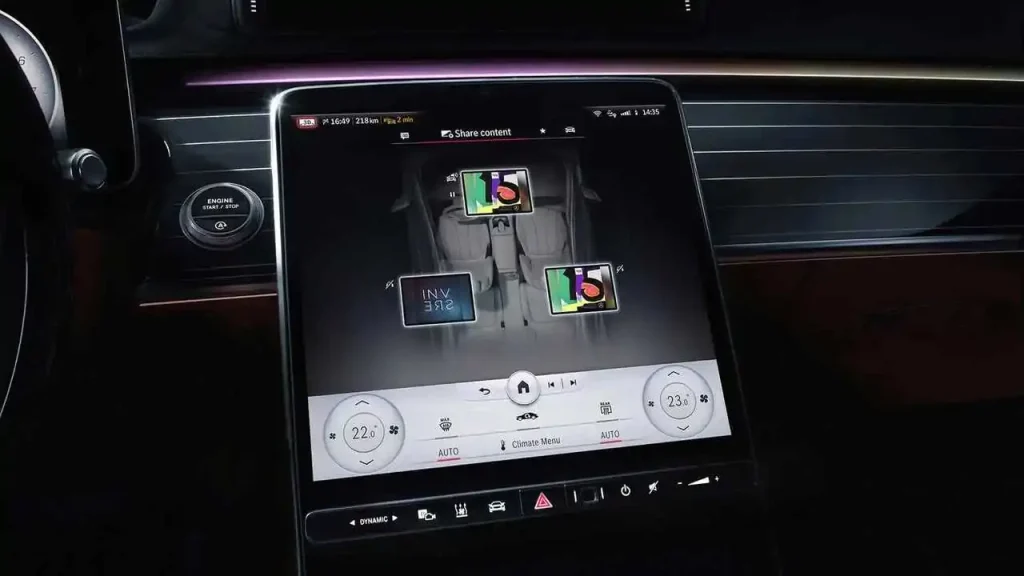
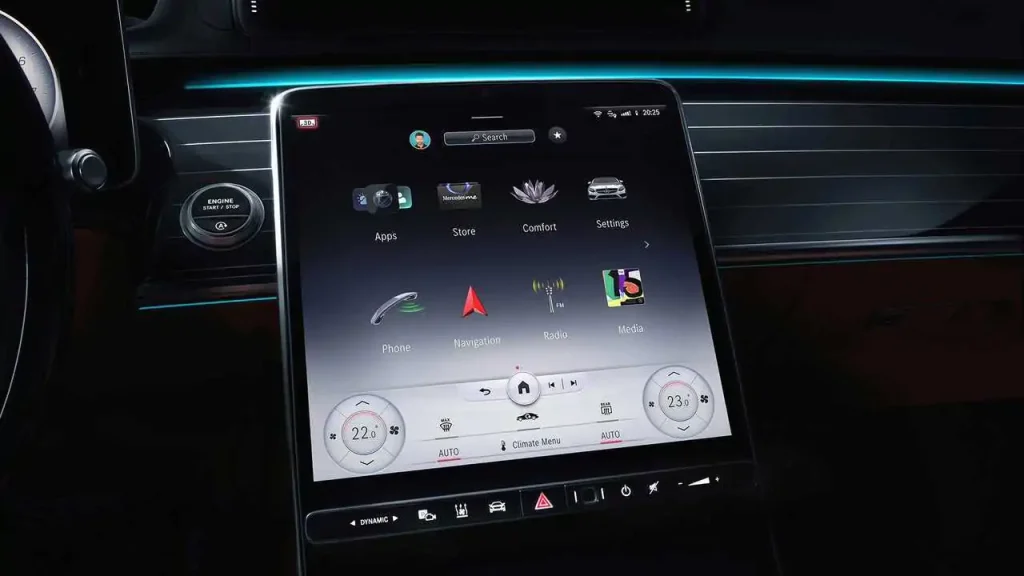
Inside, the W223 will represent a much bigger departure from the outgoing S-Class than its exterior does. Mercedes is giving the dashboard and overall cabin layout a major overhaul, with previews already revealing a high-tech interior that can feature as many as five displays while eliminating 27 traditional controls. At the center of it all is a large 12.8-inch touchscreen, while an augmented-reality head-up display will bring another first to the segment.
The longer wheelbase versions should also provide an exceptionally spacious rear compartment, giving passengers plenty of room to stretch out. Mercedes plans to reveal the interior in greater detail on August 12, when the company is expected to show the cabin’s full collection of luxury features, technology, and comfort equipment.
What Powers The S-Class?
Mercedes-Benz is preparing an extensive engine lineup for the W223, with the exact mix varying by market. Buyers in countries where engine displacement carries a hefty tax burden will have access to four-cylinder engines, while larger markets will get familiar straight-six and V8 options. At the top of the range, the Maybach will retain a V12, while the AMG version is set to pair its twin-turbocharged 6.0-liter engine with 4Matic all-wheel drive for the first time.
The S-Class will also embrace electrification. Although the EQS is positioned as Daimler’s dedicated electric flagship, the W223 will offer a plug-in hybrid as well. The announced S580e combines a turbocharged 3.0-liter inline-six with an electric motor and a 31.2-kWh battery borrowed from the GLE 350de. Mercedes is targeting an electric-only driving range of around 62 miles (100 kilometers), likely under the WLTP testing cycle.
According to figures revealed by Auto Motor und Sport, the S580e will produce a combined 375 kW, equivalent to 503 horsepower. The publication also reported details on the entry-level European diesel, a 3.0-liter inline-six expected to serve as one of the lineup’s volume sellers. It will reportedly deliver 282 hp and 600 Nm (443 lb-ft) of torque.
Where Is It Made?
The W223 S-Class will roll out of Mercedes-Benz’s Factory 56 in Sindelfingen, Germany, a massive 220,000-square-meter (54.36-acre) facility that the automaker describes as one of the world’s most advanced vehicle production plants. The factory will handle production of the new flagship sedan along with other high-end Mercedes models planned for later in the decade, including members of the electric EQ family.
What Will It Cost?
All the added technology and engineering are unlikely to come without a higher price tag. In Germany, the outgoing W222 starts at €89,128 for the S350d, while the entry-level gasoline model, the S450, carries a €96,552 starting price. U.S. pricing begins at $94,250 for the S450. Mercedes had not yet announced pricing for the new generation, but an increase over the outgoing model would not be surprising.
When Does It Debut?
Mercedes is scheduled to reveal the redesigned S-Class on September 2. Its subsequent public auto-show debut remains uncertain, however, as the COVID-19 pandemic had already forced the cancellation of numerous major events. With the October Paris Motor Show canceled, the Los Angeles Auto Show in November could be the next opportunity to see the W223 in person—assuming the event goes ahead as planned.