
The hot hatch came up a little short on torque, but that may actually be a good thing.
Mini has taken its performance formula to an entirely different level with the 2021 Mini John Cooper Works GP. The limited-production hot hatch delivers 302 horsepower and 332 pound-feet of torque from a turbocharged 2.0-liter four-cylinder, enough to hit 60 mph in 5.0 seconds and reach 165 mph. For a car wearing the Mini badge, those numbers are seriously impressive and represent a dramatic evolution from the brand’s earlier performance models.
But how much power does it actually put to the wheels? To find out, we took our John Cooper Works GP to Detroit Tuned,, one of North America’s leading Mini-focused performance shops. The company has been working with Minis for more than 15 years, with owner Chad Miller and his team handling everything from cosmetic upgrades to extensive performance builds.It was the perfect place to put the most powerful Mini ever through its paces.
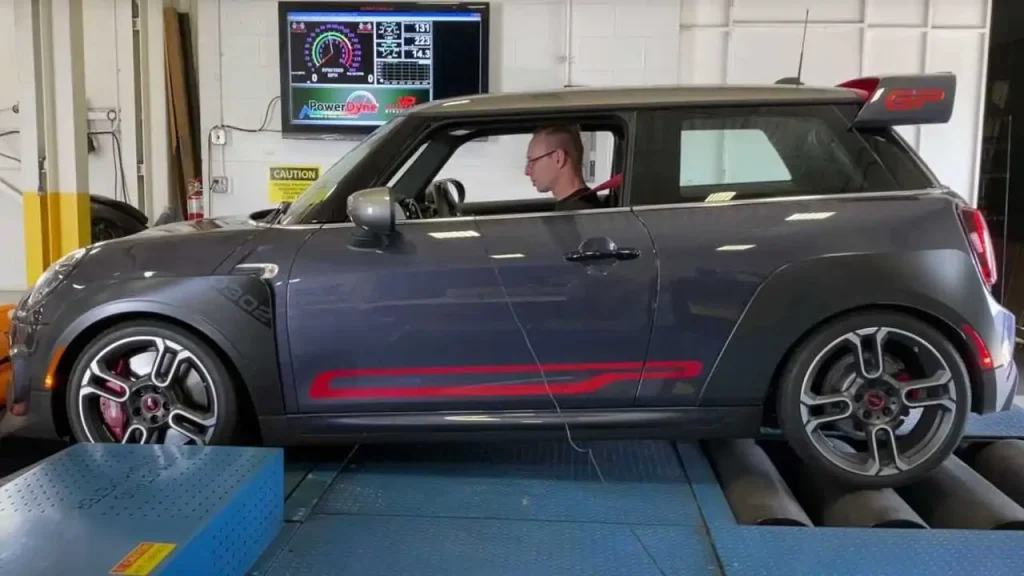
Miller backed the GP onto the shop’s Mustang dynamometer and prepared the car for a series of pulls. Getting the Mini into dyno mode proved to be more complicated than expected, however. The GP’s digital instrument cluster, which debuted for the model year on the high-performance JCW as well as the electric Mini Cooper SE, created some initial challenges.
Once the team figured out how to access the appropriate settings, it was time to see what the GP could produce.
After three pulls, the Mini delivered an impressive 261 horsepower at the wheels, with the figure corrected for weather conditions. Assuming roughly 15 percent drivetrain loss, that works out to approximately 300 horsepower at the crankshaft—almost exactly matching Mini’s advertised output.
Torque was a different story.
The GP produced 256 lb-ft at the wheels, which translates to approximately 294 lb-ft at the engine. That’s noticeably below the factory-rated 332 lb-ft figure.
There are several possible explanations for the discrepancy. Conditions weren’t exactly ideal for testing, as temperatures were extremely high and humidity was heavy. The type of dyno also matters. Mustang dynamometers can produce lower readings than Dynojet systems, so the GP could potentially show different numbers under cooler conditions or on another machine.
In other words, the dyno results don’t necessarily mean Mini overstated the engine’s capabilities. Testing variables can have a significant impact on the final figures.There’s also an argument that producing slightly less torque might not be such a bad thing.
After spending a week behind the wheel of the John Cooper Works GP, the car’s performance already feels aggressive. With more than 300 horsepower in a lightweight front-wheel-drive hatchback, putting all that power to the pavement can be challenging. A little less torque can make the car easier to manage and may help reduce unwanted wheelspin.
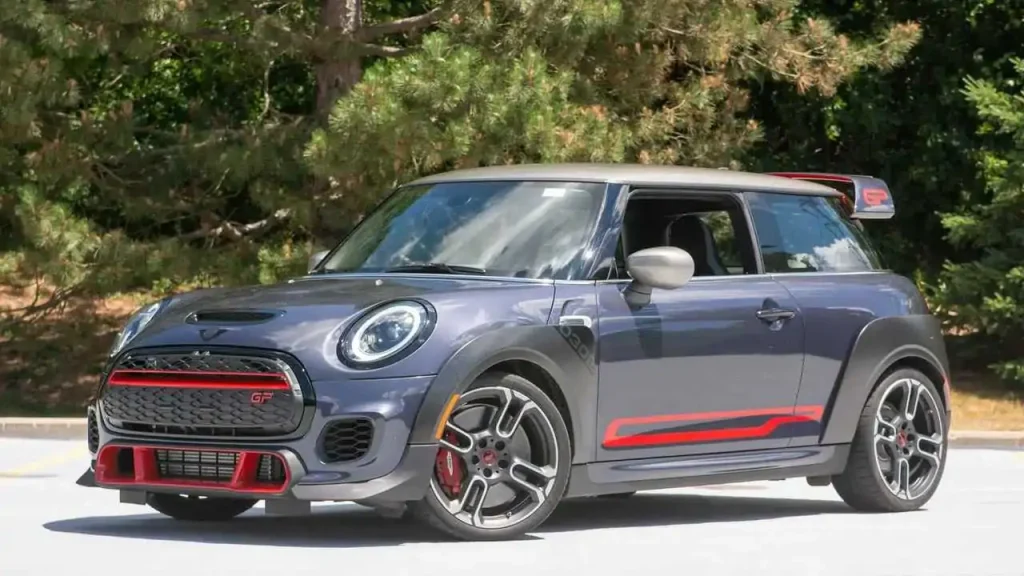
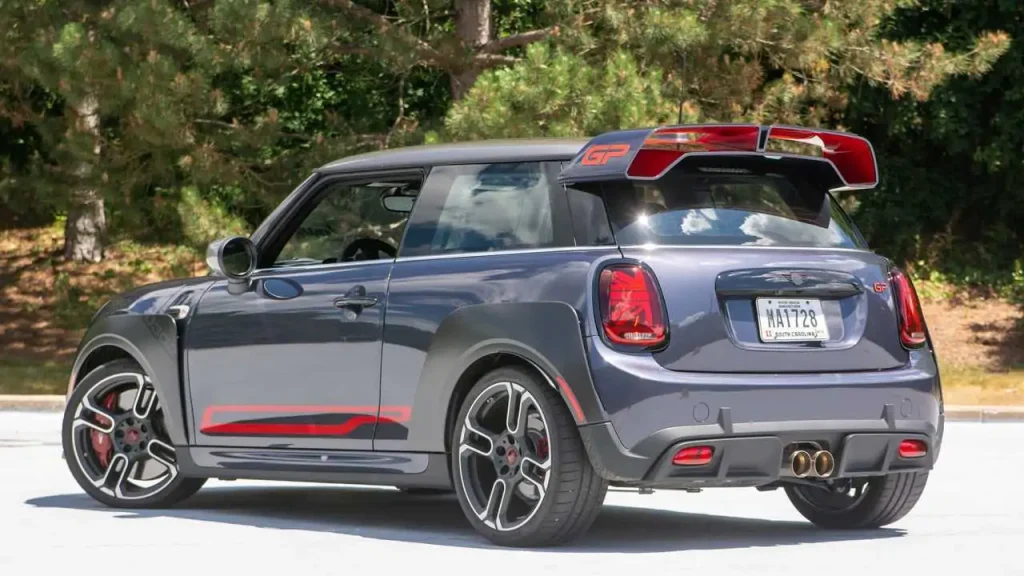
Ultimately, the dyno confirmed what the GP’s specifications already suggested: this is an extremely potent Mini. While its measured torque fell short of the advertised figure, its wheel-horsepower result was remarkably close to expectations. And on the road, the GP’s combination of power, aggressive chassis tuning, and front-wheel-drive character makes it one of the wildest Minis ever produced.we started to wonder if all that torque might actually be a little excessive. Find out why in our full first drive of the Mini John Cooper Works GP to see exactly what we’re talking about.