
See how Toyota’s hybrid crossover compares with rivals from Chevrolet, Ford, Honda, Hyundai, Kia, and Nissan.
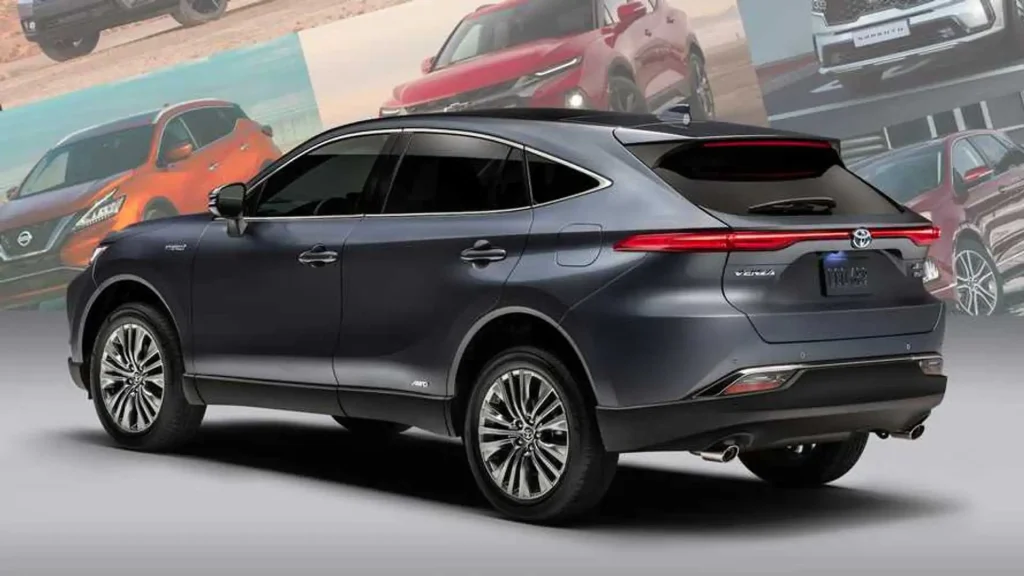
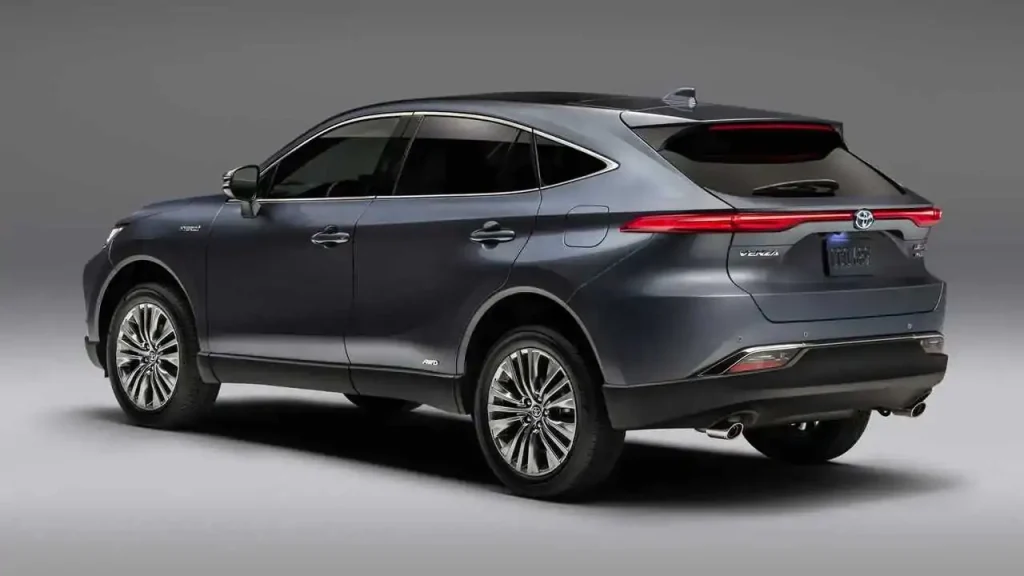
The 2021 Toyota Venza brings a familiar name back to Toyota’s lineup, but this time it’s attached to an entirely new vehicle. Its return comes as crossovers continue to dominate the market, prompting automakers to expand their offerings in the segment. Toyota hasn’t revealed every detail about the new Venza yet, but the information released so far gives us enough to see how it stacks up against its rivals.
Powertrain & Performance
| Spec | Venza | Blazer | Edge | Passport | Santa Fe | Sorento | Murano |
|---|---|---|---|---|---|---|---|
| Engine | 2.5L Hybrid | 2.5L I4 / 2.0T / 3.6L V6 | 2.0T / 2.7T V6 | 3.5L V6 | 2.4L I4 / 2.0T | 2.4L I4 / 3.3L V6 | 3.5L V6 |
| HP | 219 | 193 / 230 / 308 | 250 / 335 | 280 | 185 / 235 | 185 / 290 | 260 |
| Torque | — | 188 / 258 / 270 | 275 / 380 | 262 | 178 / 260 | 178 / 252 | 240 |
| Transmission | — | 6/9AT | 8AT | 9AT | 8AT | 6/8AT | CVT |
| MPG | 40* | 24 / 23 / 21 | 21 / 23 / 24 | 21 / 22 | 22 / 23 / 24 / 25 | 20 / 22 / 23 / 25 | 23 |
The Venza takes a different approach from virtually every rival listed here. Every version uses a hybrid-assisted 2.5-liter four-cylinder engine producing 219 horsepower. That output puts the Toyota toward the lower end of the segment, with competitors offering considerably more power in their upper trims.
But horsepower isn’t the Venza’s main selling point. Toyota estimates the hybrid powertrain will deliver 40 mpg combined, a remarkable figure compared with the mostly low-20-mpg fuel economy of its competitors. If that estimate holds up in real-world testing, efficiency could become one of the Venza’s biggest advantages.
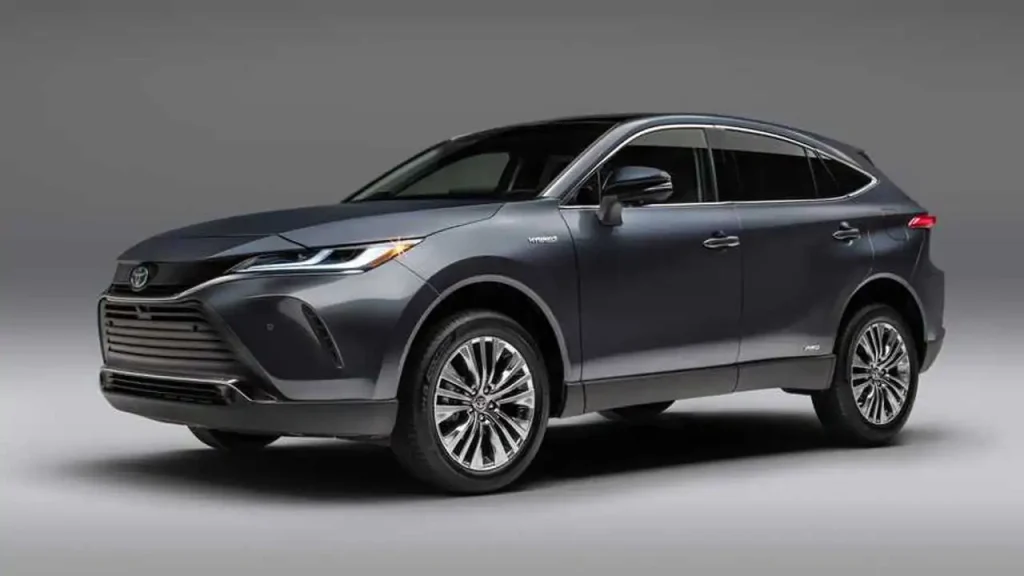
All-wheel drive is also standard. Rather than using a traditional mechanical system, the Venza employs electric motors to power the rear axle, giving the crossover additional traction without requiring a conventional driveshaft.
Interior, Technology, and Cargo Space
| Spec | Venza | Blazer | Edge | Passport | Santa Fe | Sorento | Murano |
|---|---|---|---|---|---|---|---|
| Cargo | 36.3 cu. ft. | 30.5 | 39.2 | 41.2–50.5 | 35.9 | 38 | 31.1–32.1 |
| Screen | 8.0 / 12.3 in. | 8.0 in. | 8.0 in. | 8.0 in. | 7.0 / 8.0 in. | 7.0 / 8.0 in. | 8.0 in. |
| Phone Tech | CarPlay / Android Auto / Alexa | CarPlay / Android Auto | CarPlay / Android Auto | CarPlay / Android Auto | CarPlay / Android Auto | CarPlay / Android Auto | CarPlay / Android Auto |
The Venza offers 36.3 cubic feet of cargo space behind the second row. That’s respectable for a two-row crossover, although the Ford Edge, Honda Passport, and Kia Sorento offer more room.
Technology is another area where Toyota aims to make the Venza stand out. An eight-inch infotainment display is standard, while the Limited gets a larger 12.3-inch screen and the XLE can be upgraded to the same size. Apple CarPlay and Android Auto are included, along with Amazon Alexa compatibility.
The available technology list goes beyond the infotainment system. Buyers can opt for a nine-speaker audio system, a 10-inch head-up display, and a digital rearview mirror. One of the Venza’s most interesting features is its panoramic glass roof, which can transition between a transparent and frosted appearance at the push of a button.
The Venza comes standard with a six-speaker audio system, while buyers can upgrade to a nine-speaker setup. Available technology and comfort features include a 10-inch head-up display, a digital rearview mirror, and an innovative panoramic glass roof that can switch between clear and frosted modes.
The 2021 Venza is scheduled to arrive at U.S. dealerships this summer. Toyota has yet to announce pricing, so we’ll have to wait for those details before seeing how the new crossover stacks up against its competitors.