
Two appealing crossovers from the same brand – but which one is worth your money.
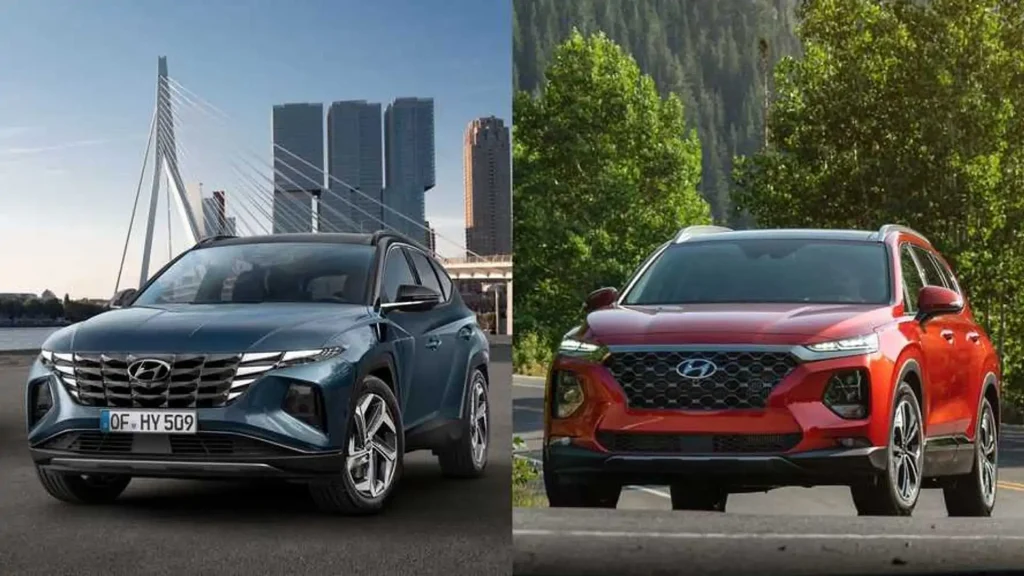
See our coverage of the 2022 Hyundai Tucson here, and watch the livestream here.
The new 2022 Hyundai Tucson makes a bold first impression with its sharp styling. An edgy front fascia, angular bodywork, and distinctive knife-like taillights give the compact crossover an aggressive look. But while the Tucson’s design is certainly eye-catching, its improvements beneath the skin are what make it an especially compelling package.
Hyundai buyers have plenty of crossovers to choose from, too. Alongside rivals from other automakers, the brand’s lineup includes the Venue, Kona and Kona Electric, Tucson, Santa Fe, Palisade, and Nexo. Of those models, the Santa Fe is the most interesting comparison for the new Tucson because of its similar size and positioning.
Hyundai had already revealed images of the refreshed 2021 Santa Fe along with a few preliminary details, but complete information wasn’t expected until later in the year, closer to the SUV’s arrival at dealerships. That leaves us comparing the new 2022 Tucson with the 2020 Santa Fe for now. Looking at their dimensions, powertrains, and available equipment, the two crossovers appear surprisingly well matched on paper.
Table of Contents
Tucson vs. Santa Fe: Size
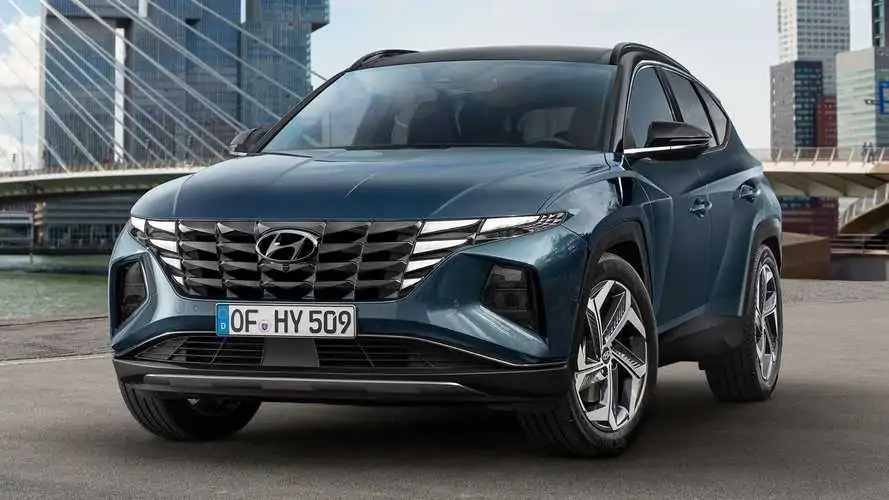
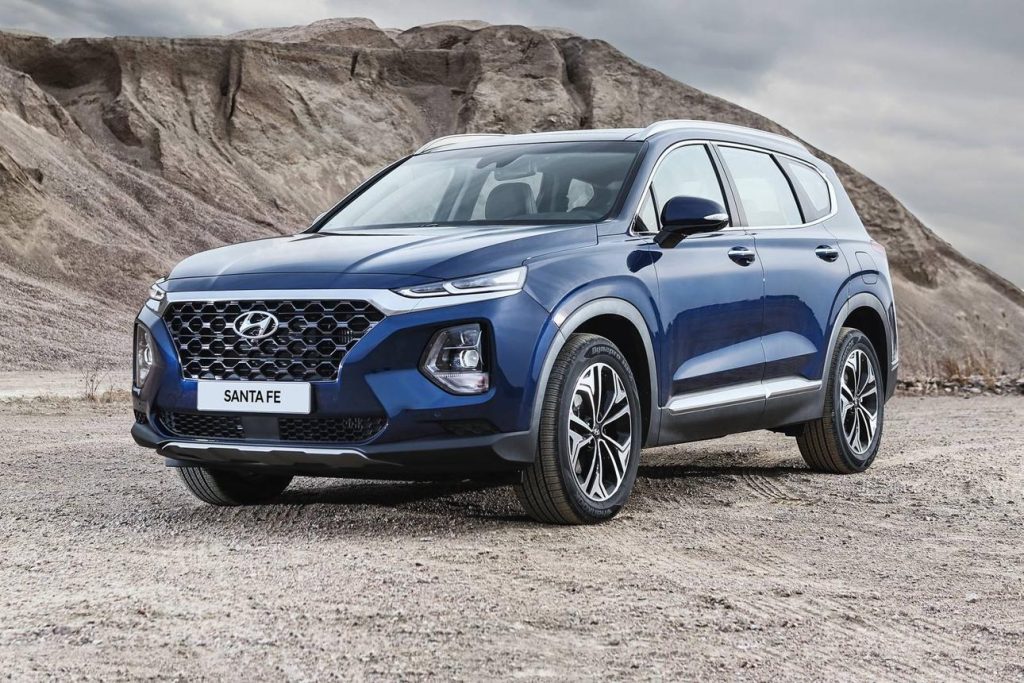
The Santa Fe is clearly the larger of these two Hyundai SUVs. The 2022 Tucson rides on a 105.5-inch wheelbase and measures 177.2 inches long and 73.4 inches wide. The Santa Fe has a longer 108.9-inch wheelbase, stretches 187.8 inches from bumper to bumper, and measures 74.4 inches wide.
That extra size gives the Santa Fe an advantage in overall passenger and cargo capacity, although the Tucson isn’t necessarily less useful in every situation.
The Tucson provides 38.7 cubic feet of cargo space behind the second row and 63.5 cubic feet with the rear seats folded. The Santa Fe offers 35.9 cubic feet behind the second row but expands to an impressive 71.3 cubic feet with those seats folded.
That creates an interesting choice. The Tucson actually offers more room with all five seats in use, while the Santa Fe provides greater maximum cargo capacity.
Rear-seat space is competitive, too. The redesigned Tucson gains roughly an inch of rear legroom compared with its predecessor, bringing the figure to about 39.2 inches. The Santa Fe remains slightly roomier at approximately 40.9 inches.
| Model | Wheelbase | Length | Width | Cargo Capacity |
|---|---|---|---|---|
| Hyundai Tucson | 105.5 inches | 177.2 inches | 73.4 inches | 38.7 / 63.5 cu. ft. |
| Hyundai Santa Fe | 108.9 inches | 187.8 inches | 74.4 inches | 35.9 / 71.3 cu. ft. |
Tucson vs. Santa Fe: Power and Performance
The 2022 Tucson introduces a new range of powertrains. The standard gasoline model uses a 2.5-liter four-cylinder producing approximately 190 horsepower and 182 pound-feet of torque, paired with an eight-speed automatic transmission.
The more interesting option is the 1.6-liter turbocharged hybrid, which produces a combined 230 hp and 258 lb-ft of torque and uses a six-speed transmission. Hyundai also planned a Tucson plug-in hybrid using the same basic 1.6-liter engine, giving buyers another electrified option.
The Santa Fe’s gasoline lineup offers a 2.4-liter four-cylinder producing 185 hp and 178 lb-ft, while the available turbocharged 2.0-liter engine generates 235 hp and 260 lb-ft.
On paper, the Tucson hybrid is particularly compelling. Its 230 horsepower output comes close to the Santa Fe’s more powerful turbocharged engine, while its electrified powertrain should provide a significant efficiency advantage.
When it comes to powertrains, the Tucson’s new hybrid setup looks like the stronger choice on paper. Its output nearly matches the Santa Fe’s most powerful engine, while its conventional hybrid system should deliver better fuel economy thanks to the Tucson’s smaller, lighter body.
| Model | Engine | Horsepower | Torque | Transmission |
|---|---|---|---|---|
| Hyundai Tucson | 2.5L / 1.6L Hybrid | 190 / 230 hp | 182 / 258 lb-ft | 8-speed / 6-speed |
| Hyundai Santa Fe | 2.4L / 2.0L Turbo | 185 / 235 hp | 178 / 260 lb-ft | 8-speed |
The Tucson Has the Technology Advantage
The new Tucson’s interior looks and feels considerably more modern than the cabin of the older Santa Fe.
An 8.0-inch touchscreen is standard, offering Apple CarPlay and Android Auto. Higher trims receive a larger 10.3-inch display with navigation, split-screen functionality, and voice controls. A fully digital instrument cluster is also available, giving the Tucson a distinctly high-tech appearance.
The 2020 Santa Fe, by comparison, starts with a 7.0-inch touchscreen, with an available 8.0-inch display adding navigation and other features.
That makes the Tucson the clear winner in this comparison when it comes to infotainment design and cabin technology. The Santa Fe’s updated model-year equipment narrows the gap, but the newer Tucson benefits from being designed with a more modern digital experience in mind.
Tucson vs. Santa Fe: Price
Pricing also plays an important role. The 2021 Tucson started at around $23,700 in the U.S., so the redesigned 2022 model was expected to receive a modest increase. The 2020 Santa Fe started at approximately $26,275.
The Santa Fe’s higher price makes sense given its larger dimensions and additional space, but the Tucson’s newer design and technology make the smaller SUV an especially attractive value proposition.
It’s also important to remember that Hyundai was preparing an updated Santa Fe for the 2021 model year. That redesign was expected to bring new technology and powertrain improvements, making the comparison between the two SUVs even closer.
The Verdict
Hyundai has made the choice between these two SUVs surprisingly difficult. The Tucson is smaller, but its redesigned cabin, distinctive styling, impressive technology, and electrified powertrains make it feel like a vehicle from a class above.
The Santa Fe counters with greater overall dimensions, more maximum cargo capacity, additional rear-seat room, and stronger available gasoline power.
For buyers who spend most of their time in the city or want the latest technology and efficiency, the 2022 Tucson is the more compelling choice. If you regularly haul bulky cargo, carry passengers on long trips, or simply want a larger SUV with more conventional power, the Santa Fe remains worth the step up.
Ultimately, neither is a bad choice. The Tucson and Santa Fe simply approach the compact-crossover market from different directions, giving Hyundai shoppers two strong options without forcing them into a one-size-fits-all SUV.