
An overland adventure through mountains, deserts, forests, and some of America’s most spectacular landscapes.
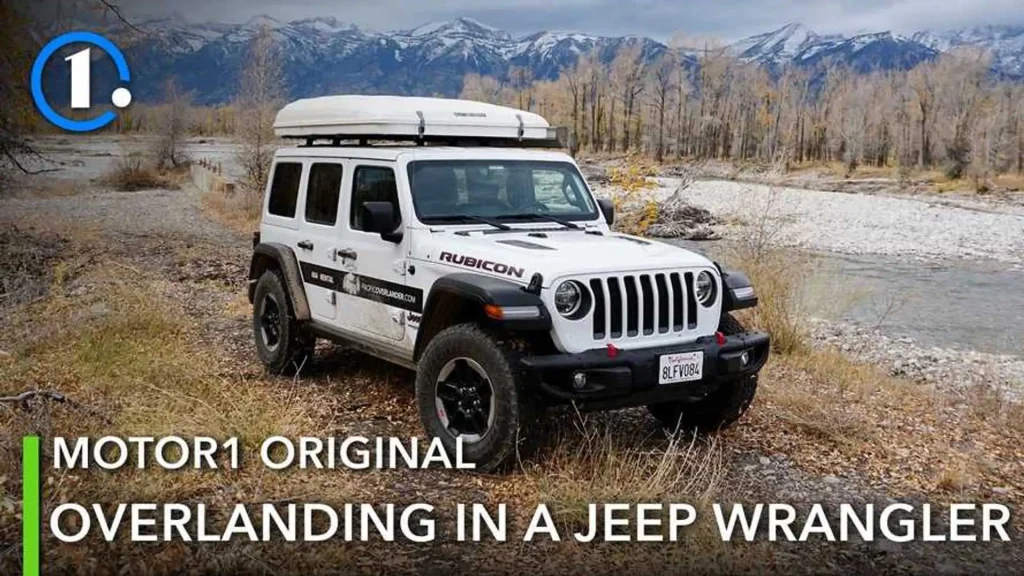
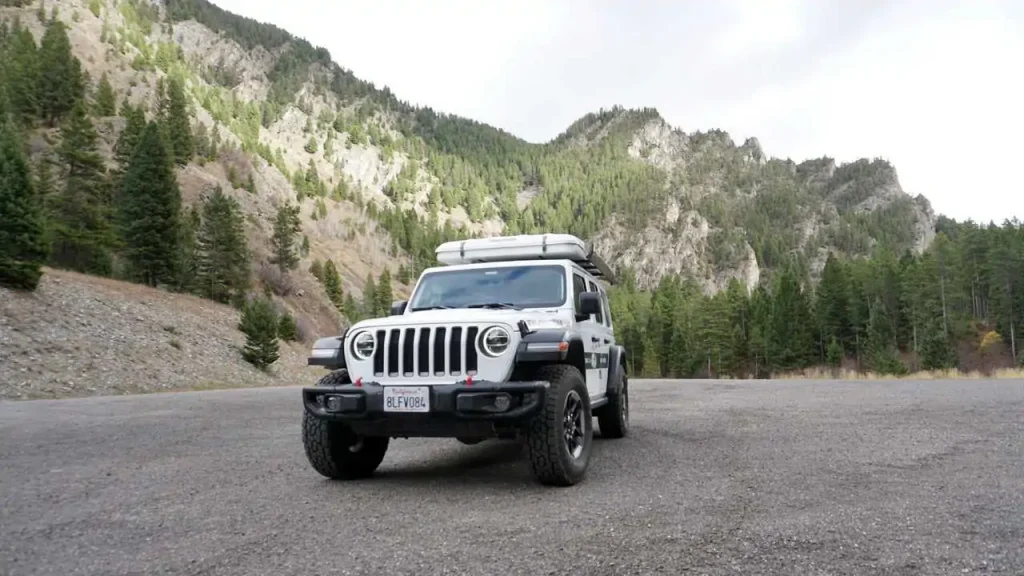
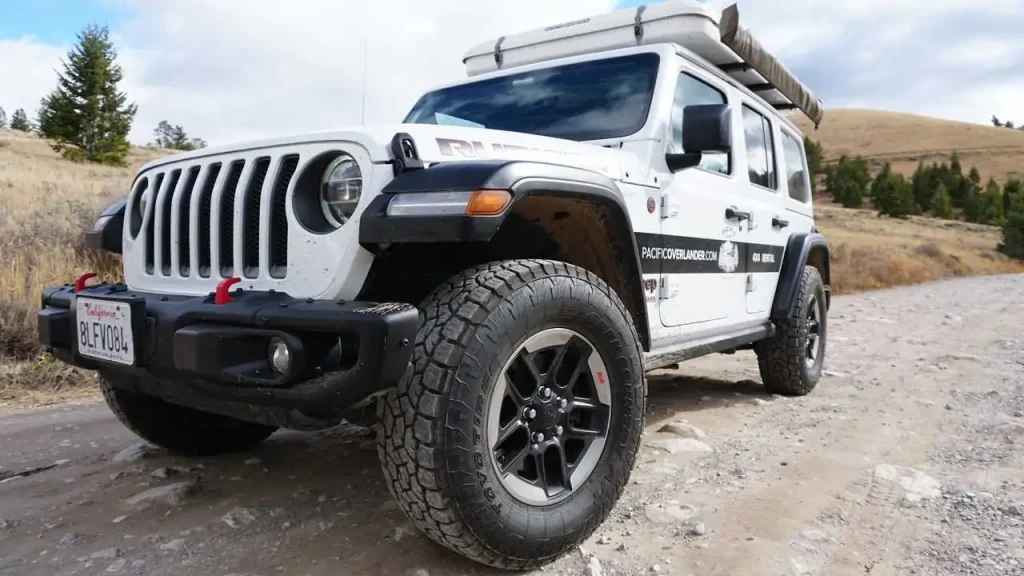
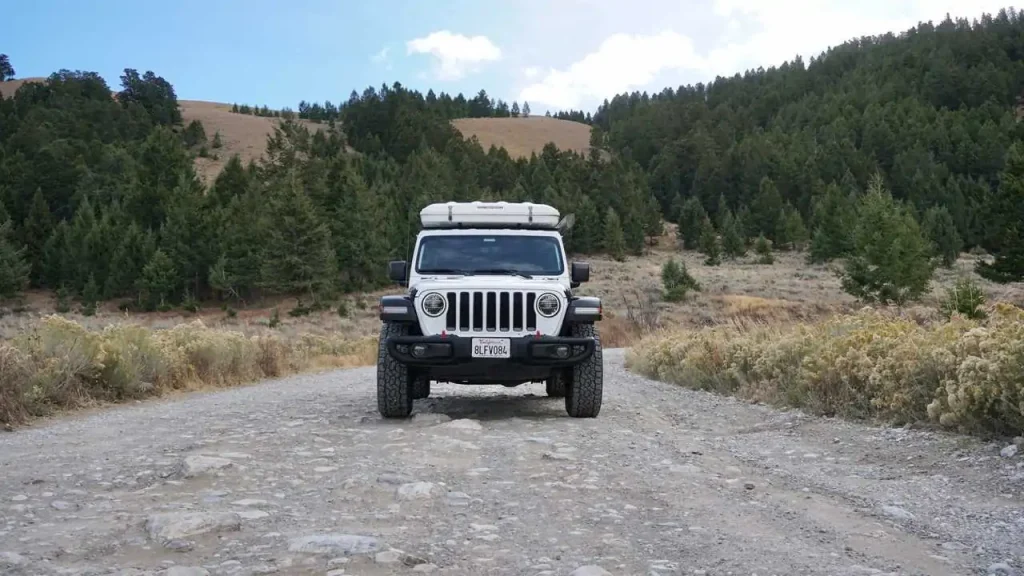
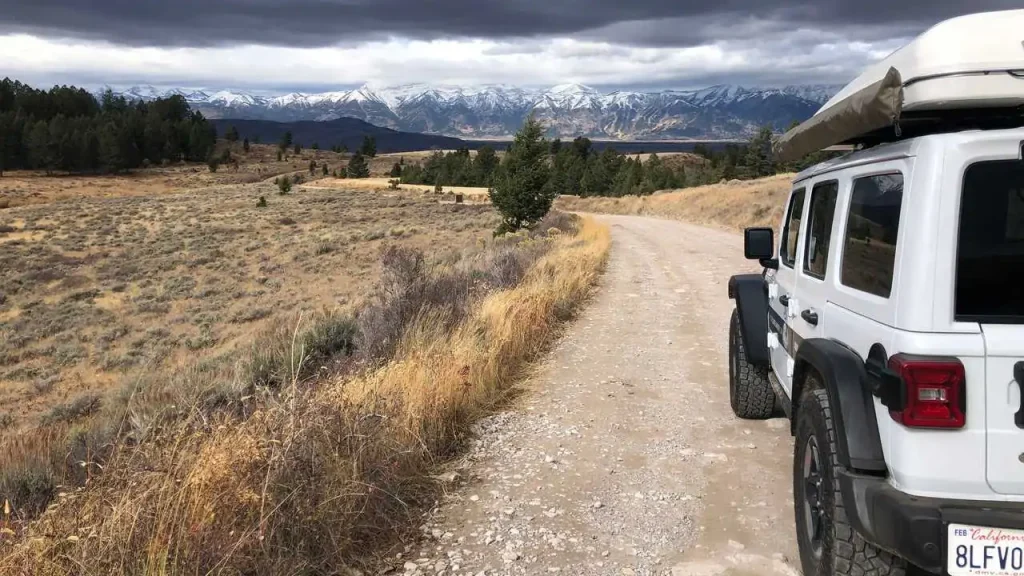
About an hour or two outside Los Angeles, the landscape quickly transforms into rugged high desert, with fire-scarred hills stretching across the horizon. The vehicle for this adventure is a Jeep Wrangler Rubicon, outfitted with Toyo’s Open Country A/T III all-terrain tires, enough Pacific Overlander equipment to remain self-sufficient for a week or two, and a roof-mounted Airtop tent. Aerodynamics clearly weren’t the priority here—the wind noise and constant vibrations suggest the Wrangler has roughly the aerodynamic efficiency of a moving truck, although it looks considerably better doing it.
The mission is straightforward: leave the city behind, head into the open country, and spend some time chasing the mountains, legendary vistas, towering peaks, and that unmistakable blue Pacific horizon. There is something about reaching those wide-open landscapes that provides an immediate sense of calm, especially after an unusually chaotic year. With the right vehicle and a little distance from civilization, the trip promises to be the perfect antidote to cabin fever.
Finding The Perfect Window
Planning the trip proved far more complicated than simply picking a destination and hitting the road. Finding the right vehicle was only the beginning. Massive wildfires were spreading across the western United States, filling the air with smoke and forcing changes to the original itinerary, while constantly shifting coronavirus restrictions brought campground closures and regional travel limits. Since camping was central to the adventure, the approaching end of the outdoor season added another challenge as temperatures dropped and fewer campgrounds remained open. Eventually, everything fell into place: the right Jeep, a brief stretch of favorable weather, and a chance to escape the city. With the Wrangler loaded with gear and a tent secured to the roof, it was finally time to head west. As the fires eased and the smoke began to clear, a window opened in mid-fall for the journey to begin, and the miles toward Death Valley offered a welcome escape from the noise of everyday life.
After crossing from California into Nevada, I stopped in Las Vegas for coffee at the Wynn and a quick look at the city during such an unusual time. The Wrangler’s 33-inch tires and roof-mounted tent presented a potential problem when it came to the parking garage, so I decided not to take any chances and parked on the roof instead. With that much equipment stacked above the Jeep, it seemed like the sensible choice.
Getting into the hotel feels more like entering an airport than a Las Vegas resort. Everyone passes through a metal detector and receives a pat-down, while women’s bags are searched. Inside, staff members wear masks, but many guests are less consistent about following the rules. Plexiglass dividers have been installed around the roulette table, yet a small, energetic crowd still gathers shoulder to shoulder, cheering, jeering, and high-fiving as cocktail servers make their rounds. They’re familiar Vegas sights, but in a year unlike any other, they feel strangely out of place.
I grab a large coffee to go and sip it in the parking lot while searching for potential campsites. Darkness has already settled over the desert, but I’m planning to drive for several more hours without a firm destination in mind. The trip came together quickly, so my itinerary is intentionally loose, with no fixed stops or carefully planned schedule—and I prefer it that way. Many established campgrounds have already closed for the season, but that’s not much of a problem. I’ll find a suitable patch of Bureau of Land Management (BLM) land to set up camp and get some rest before continuing toward my first major destination: Jackson, Wyoming, and Grand Teton National Park.
A mile farther up the Strip, I stop for gas—my second fill-up of the day, and one of what will become an unusually frequent series of fuel stops. While I’m pumping, a couple of panhandlers approach before eventually moving along. I step inside to browse the snacks, and when I come back out, someone is standing near the Jeep, looking inside. It doesn’t seem like admiration so much as a quick assessment of whether there’s anything worth taking. At the next traffic light, a man in the street aggressively offers me what appears to be a selection of narcotics. I’d been in Vegas less than a year earlier, but without the usual waves of tourists, the city feels like it has slipped back into its Wild West frontier days.
Miles Into The Desert
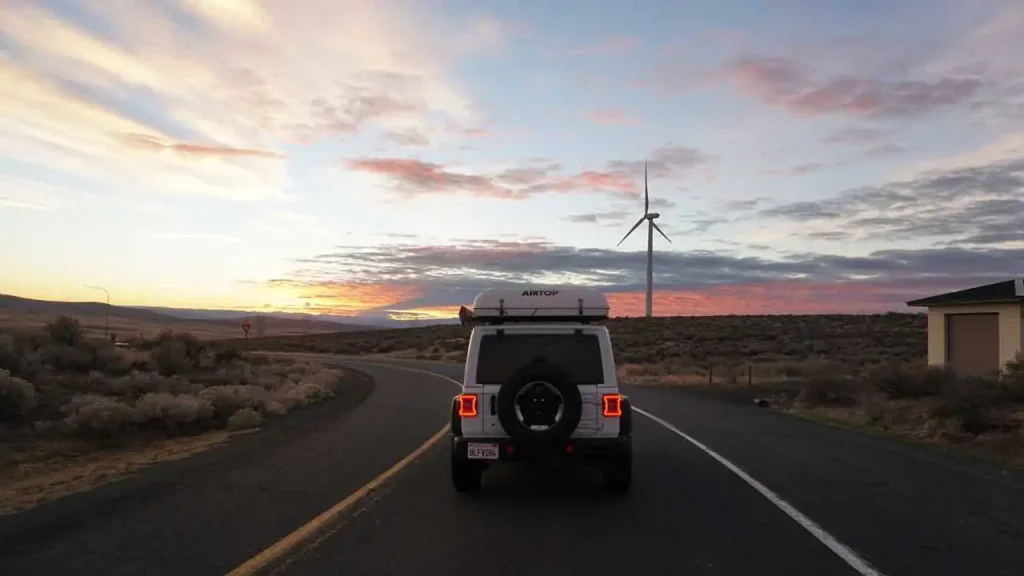
The radio is on, a cup of black coffee in hand, as I settle into a gusty night drive. There’s a fair amount of weight on board, but Jeep’s proven 3.6-liter V6 has plenty of power in reserve. The JL-generation Wrangler also benefits from a new eight-speed automatic transmission, which makes putting that power to the ground noticeably smoother. I roll the windows down and let the cold desert air rush into the cabin. Daytime driving offers plenty of scenery—and the views on this trip will only get better—but lately I’ve grown to appreciate the meditative quality of a long drive after dark.
Strong gusts do their best to shove Ruby—as I’ve unimaginatively named this Rubicon—and me around the road. Almost immediately after crossing into Arizona, though, the pavement improves. There are still a handful of states I haven’t visited, but I can’t think of one that consistently delivers better roads than Arizona.
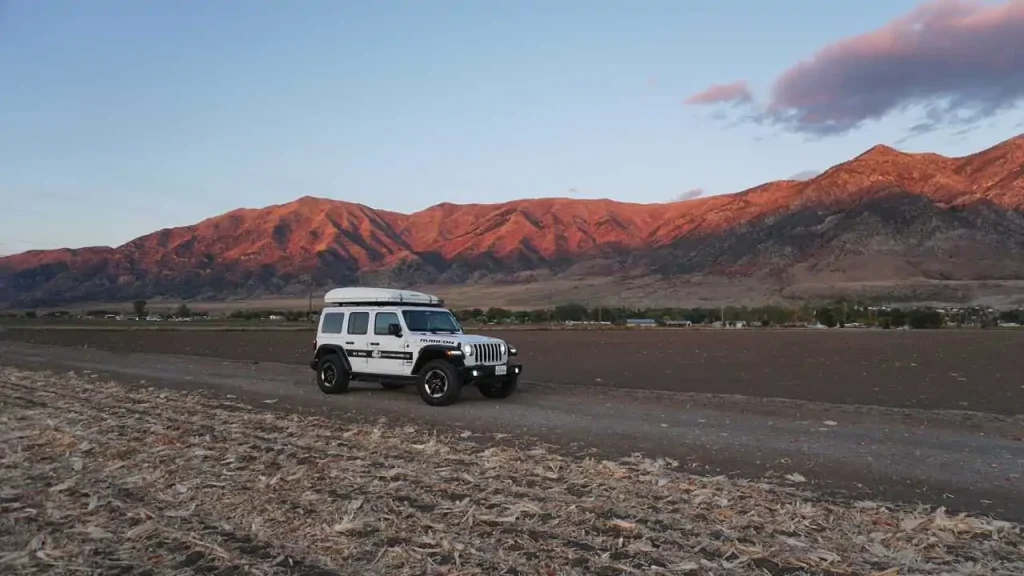
Ruby and I continued through the dramatic Virgin River Gorge, where the Jeep’s ride was surprisingly smooth and quiet. For a moment, it was easy to forget that I was sitting behind the wheel of a vehicle wearing chunky Toyo all-terrain tires, heavy solid axles, and carrying a relatively high center of gravity. Away from the main road, small pockets of activity appeared beneath the yellow glow of streetlights: people climbing into cars, an RV parked along the roadside, modest motels, and a restaurant seemingly preparing to close for the night.
Utah arrived almost without warning, and traffic gradually picked up. After passing St. George and approaching Cedar City, I pulled into a rest area and checked my phone for potential places to camp. Online forums suggested that reaching some of the nearest BLM sites involved navigating unfamiliar dirt roads in complete darkness. By this point, fatigue was beginning to take over, and the simplest option was to find somewhere safe to sleep and continue the journey in the morning.
The ride is so smooth and quiet that, for a moment, you could forget you’re piloting a Jeep riding on chunky, specially compounded Toyos, heavy solid axles, and a high center of gravity.
I move the Jeep to a quieter corner of the rest area, where a few other travelers are already asleep. In a separate section farther back, the truckers are doing the same. Keeping things quiet, I pop up the front half of the Airtop tent, pull out and extend the ladder, then climb in with my sleeping bag and pillow. Before settling down, I take a moment to look up at the seemingly endless field of stars overhead.
From sometime after one until dawn, I sleep like a rock, with only vague memories of the occasional gust of wind, distant voices, or a passing vehicle. I actually get more sleep than I did the night before leaving, when the endless list of last-minute chores seemed to multiply and every little task took longer than expected. By first light, the rest area is coming back to life. I stretch, breathe in some crisp morning air, pack up, and get back on the road.
Into The Tetons
On the highway, the 80-mph speed limit is a welcome change of pace. Cattle graze in the fields, horses wander nearby, and there’s no shortage of open pasture across Utah. It’s Sunday, so many restaurants in Salt Lake City are closed, but I manage to find a spot serving noodles. Back on the road, the snow-capped peaks of the Wasatch Range come into view once again, followed later by the red rock country around Logan near the Idaho border. I turn onto a few dirt roads to get closer to the mountains, stopping in time to watch the last light fade across the landscape.
That’s one of the great things about a road trip: the scenery changes gradually enough that you have time to absorb it. With every new vista, shift in weather, and change in elevation, you gain a better sense of the land around you—and of just how varied the country’s terrain can be.
As Ruby and I cross into Idaho, I stop for gas in Soda Springs. Despite temperatures hovering just above freezing, three cats are roaming around the station, occasionally wandering off, then stopping to groom themselves or watch the late-weekend traffic coming and going. They seem to be quietly deciding what to make of the whole scene.
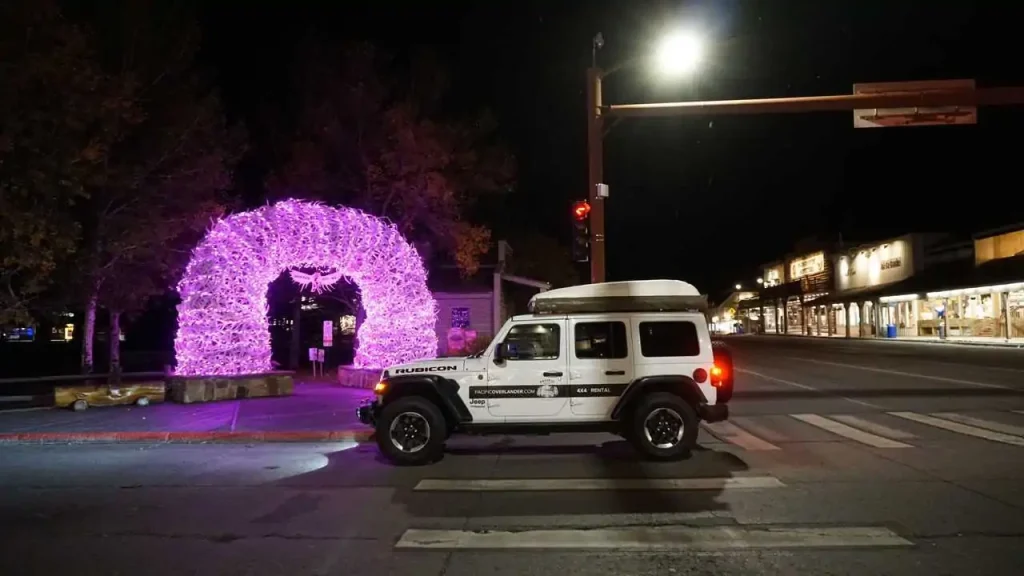
Farther along Idaho’s roller-coaster roads, near the Wyoming border, I spot three bears poking around a yard filled with trucks of questionable running condition. By the time I roll into Jackson around 2 a.m., one of the town’s famous antler arches is illuminated, so I stop for a quick photo with Ruby.
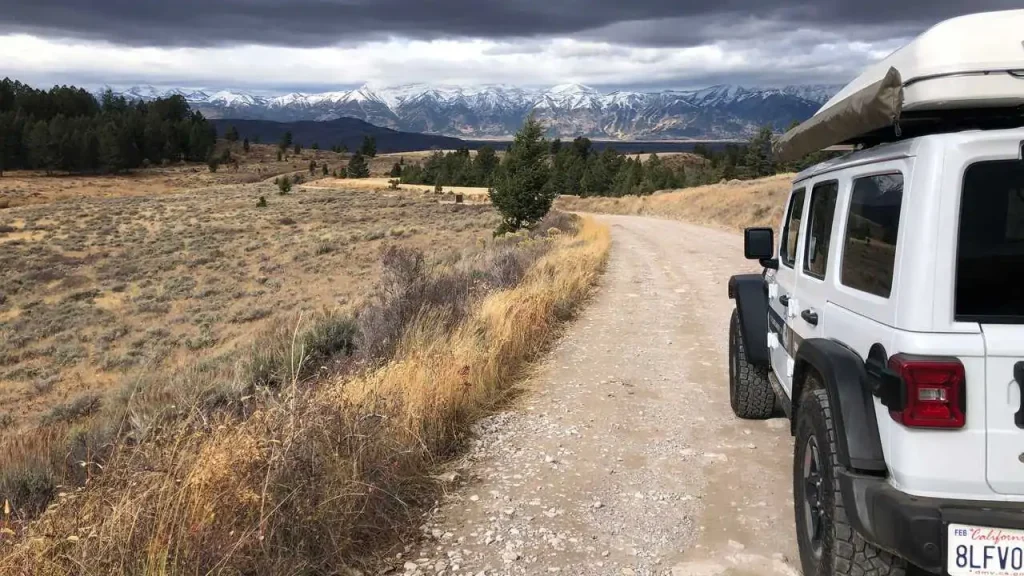
From there, I head down the gravel and dirt roads of the National Elk Refuge. The rough ride does little to diminish Ruby’s ability to handle challenging terrain. Eventually, we climb toward the Curtis Canyon area, where limited dispersed camping is permitted. There are no facilities here—you simply find a suitable spot and set up camp for the night. I engage the four-wheel-drive system, starting in 4-High before switching to 4-Low on the steeper, rockier sections as we climb higher into the mountains. In hindsight, 4-High probably would have been enough.
There are no facilities here, so you simply find a suitable spot and set up camp for the night.
Maybe it’s the light snow and fierce wind, or perhaps seeing those bears earlier has gotten into my head, but once I’m inside the tent, I’m far more on edge than I was the night before. Every unfamiliar sound makes me wonder what’s happening outside. Is that a bear sniffing around the tent? Probably not, but at this hour, rational thinking isn’t exactly winning. At 3:30 a.m., I decide the best way to quiet my nerves is to stop listening for every rustle and try to get some sleep. I manage another hour and a half, though it’s hardly restful.
I’m shivering inside my sleeping bag, dressed head to toe in most of my snowboarding gear, with even my wool-socked feet freezing. Outside, the wind howls through the valley, sudden gusts creating a thunderous roar as the tent snaps and flaps, tree branches sway, and even the Jeep rocks. I’m parked at a slight angle just above the trail, with the gravel road below and a dark hillside dropping into the valley beyond, where only the tops of the sloping trees are visible. Around 4:30 a.m., I decide I’ve had enough and move into the car, hoping for a little more peace and warmth.
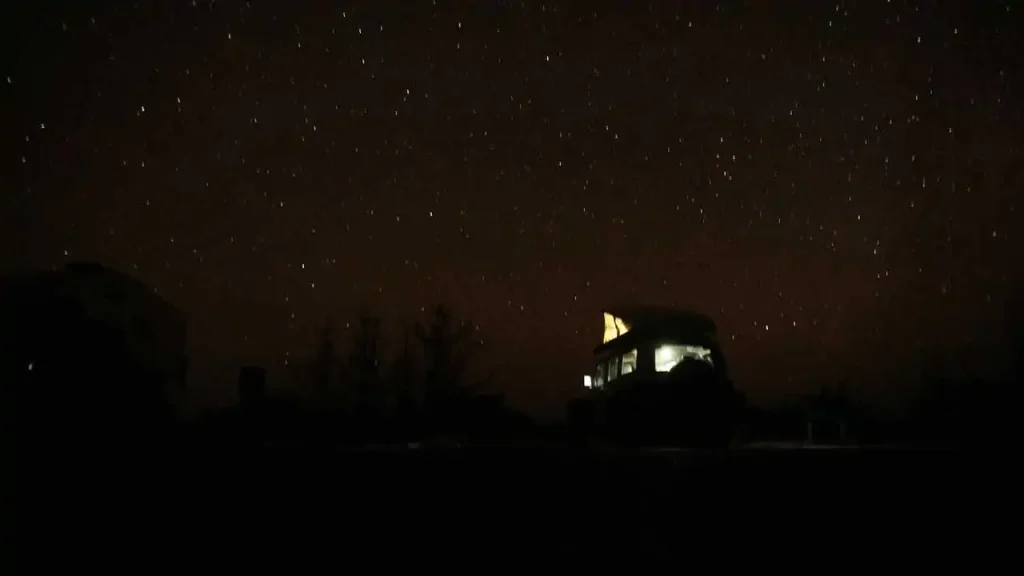
I climb down, only to discover that closing the tent is suddenly a challenge. In my haste, I hadn’t properly stowed the ladder, leaving the latches unable to close. My hands are so cold they might as well be frozen stumps as I wrestle with it. Apparently, Wyoming has its own way of saying, “Welcome to the Tetons, friend.”
Eventually, I get everything secured, jump into the Jeep, and aim the heat at my feet to bring some feeling back to my toes. Once inside, the bear anxiety fades and the warmth starts to take over, allowing me to finally get some sleep. Exhaustion probably helps, too, after covering nearly 1,000 miles in roughly 33 hours. When I open my eyes the next morning, the Teton peaks are glowing beneath a fiery pink-orange sky, freshly dusted with snow from the night before. I step outside to take it all in. The wind is still howling, but I linger for a few minutes, transfixed by the towering mountains across the valley. A sunrise like this is exactly the kind of moment that stays with you.
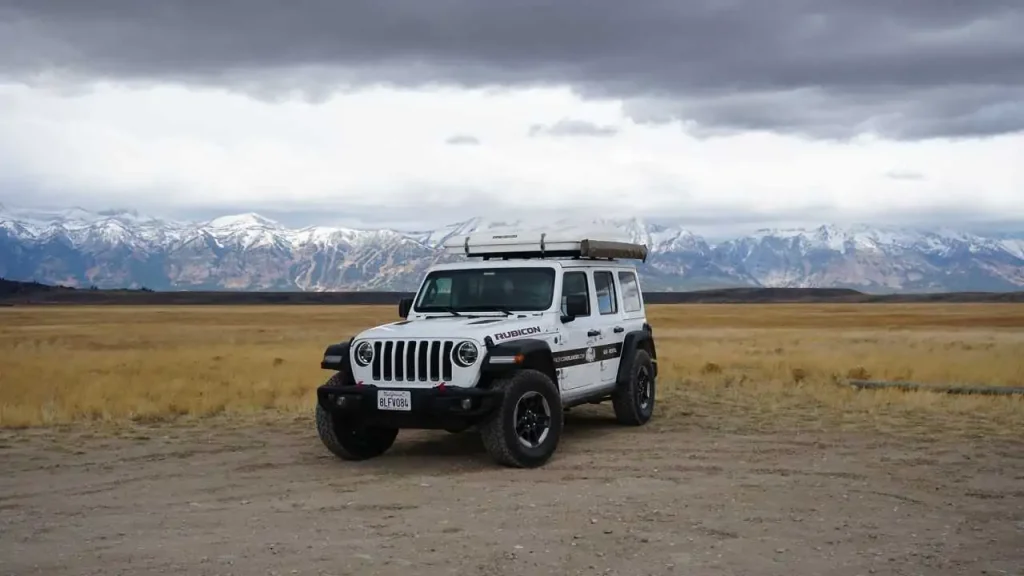
Westward Bound
Jackson feels like a blend of Aspen and old-school Vegas, with a little luxury, a little cowboy character, and plenty of charm. After breakfast, I take the Jeep out for some mud and creek crawling. Ruby’s Toyo tires were designed with wet-weather performance in mind, so this seems like a good chance to put them to work. The 285/70/17s measure roughly 33 inches in diameter, and on shallow crossings and rocky trails, they barely break a sweat. With their aggressive tread and the Jeep’s generous ground clearance, I don’t even need to engage four-wheel drive.
The creek is cold and crystal clear, so once I’m across, I shut off the engine and listen to the water rushing past. A few hours later, I’m back on the road, chasing the final light of the day. The views across Teton Pass, appropriately enough on the way toward Big Sky Country, are spectacular, with enormous clouds hanging overhead like mountains in the sky. I wind my way up the pass as fresh snow blankets the landscape, then drop back into Idaho and its familiar roller-coaster roads. A roadside sign reads:
“Wildlife crossing next 6 miles. Give them a brake.”
Passing just outside West Yellowstone, the navigation announces that I’m entering Wyoming again, followed shortly by Montana. The temperature drops below freezing, and as the mercury falls, the stars overhead seem to multiply. I spot a massive elk standing near the road, seemingly contemplating a crossing, and its size and majesty stay with me for miles.
Eventually, I pull into a turnout, shut off the engine, and step outside. Looking up, I’m suddenly overwhelmed by the sheer scale of the night sky. A billion stars seem to sparkle overhead, so bright and numerous that I instinctively look away before glancing back up to make sure I’m really seeing it. The fact that this spectacle is always there, waiting for us to look up, feels like an incredible gift. All those clichés about feeling small beneath the stars suddenly make perfect sense.
I reach Bozeman in the early morning hours and check into a roadside hotel. Because of the pandemic, I’m traveling with disinfecting wipes and a can of Lysol, and I’ve started seeking out hotels with old-fashioned window-mounted air-conditioning units, which feel preferable to central air at the moment. A hot shower, a real bed, and a few simple comforts are all I need. Sleep comes quickly and deeply. Bozeman delivers, too, with good food, local beer, and the laid-back character the town is known for.
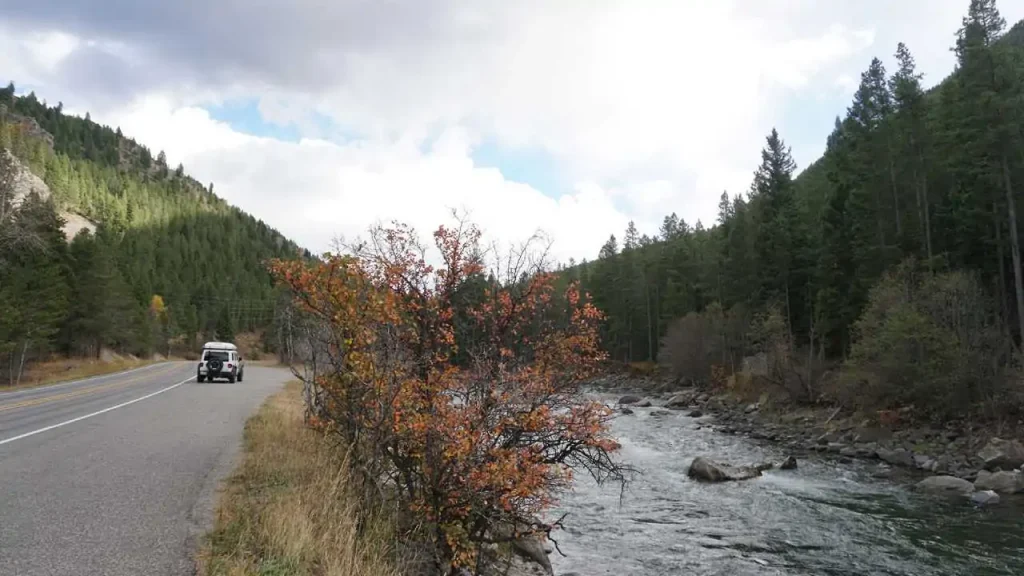
During the day, I backtrack along US 191 to take in Lone Peak and Big Sky. The cold river beside the road is surrounded by the full colors of fall, with evergreens rising above and smaller trees and shrubs along the water glowing in shades of yellow and orange. As Lone Peak comes into view, I feel an almost inexplicable surge of excitement. It’s simply one of the most majestic mountains I’ve ever seen. The Gallatin River follows much of the route to Big Sky, making it a spectacular drive in any season. My decision to head west turns out to be well timed, because before long, hail begins to fall—another small test for the Wrangler.
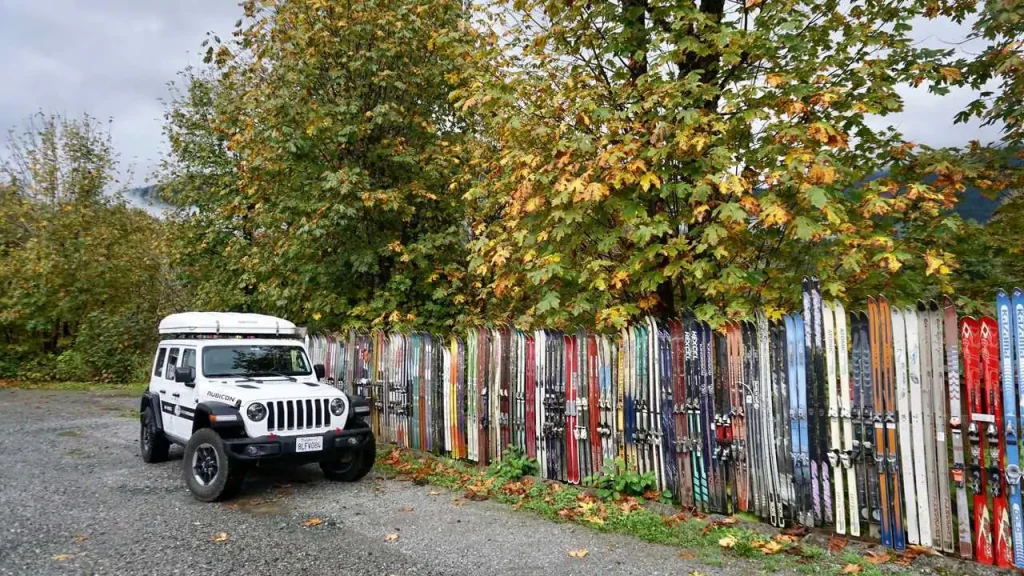
Between Bozeman and Butte, a fierce snowstorm rolls in and nearly wipes out visibility. I pull onto the shoulder, switch on the hazards, and engage 4H. With four-wheel drive and A/T III tires beneath me, I’m confident the truck can handle the conditions, but there’s no reason to push it when I can barely see ahead. Snow whips across the windshield in a Star Trek-like warp-speed vortex, so I decide to wait out the worst of it. The snow comes and goes throughout the night, and on I-90 West between Butte and Missoula, the flakes grow cartoonishly large—equal parts beautiful and intimidating.
Westward Bound
The sun comes up outside Missoula, and for a moment, it feels like New England, with brilliant fall colors lighting up the landscape. As I enter the Idaho Panhandle, both the temperature and visibility drop, this time thanks to a thick blanket of fog. I push on past beautiful Coeur d’Alene, where morning mist hangs over the lake, before pulling into a rest stop and catching a few hours of sleep.
Crossing into eastern Washington, the dry brush, warmer sunshine, and scattered lakes are a welcome change after several cold days on the road. I take Ruby north to see the mesmerizing glacier on Mount Shuksan near the Canadian border. Eventually, I’ll return her to Pacific Overlander’s headquarters in San Francisco, but there’s still one experience missing from this trip: a proper scenic camping night, where I can enjoy the outdoors without worrying about frostbite.
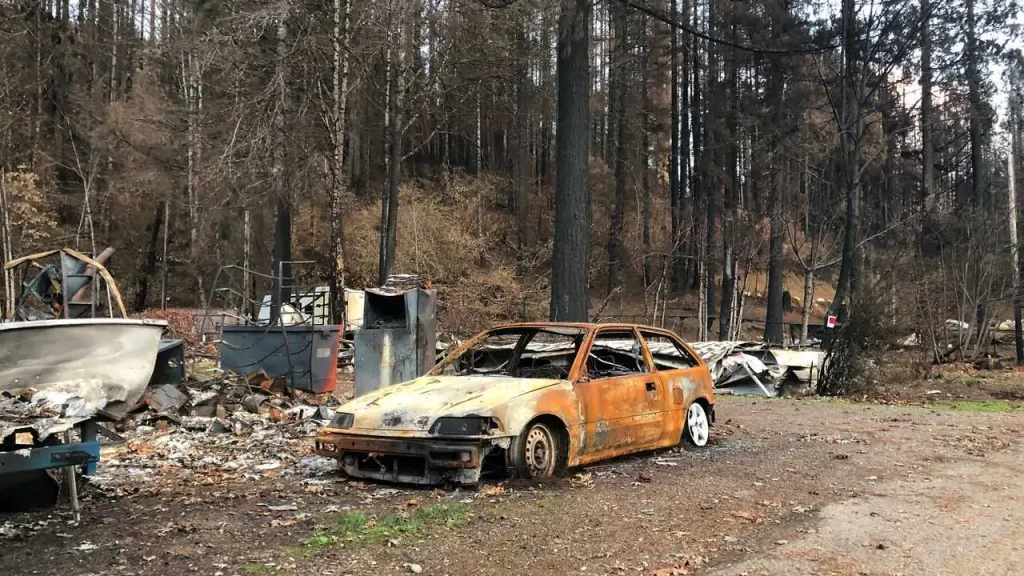
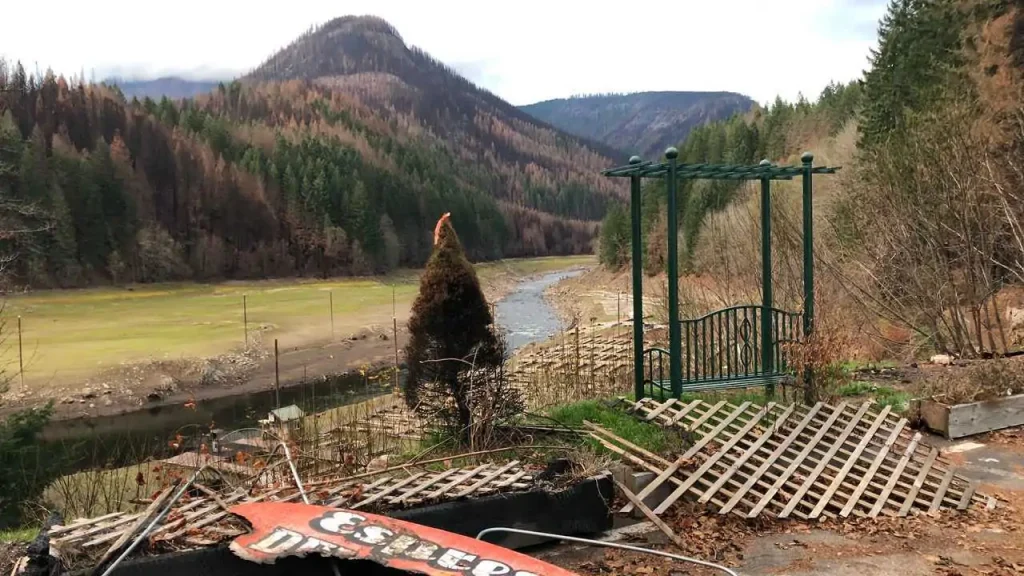
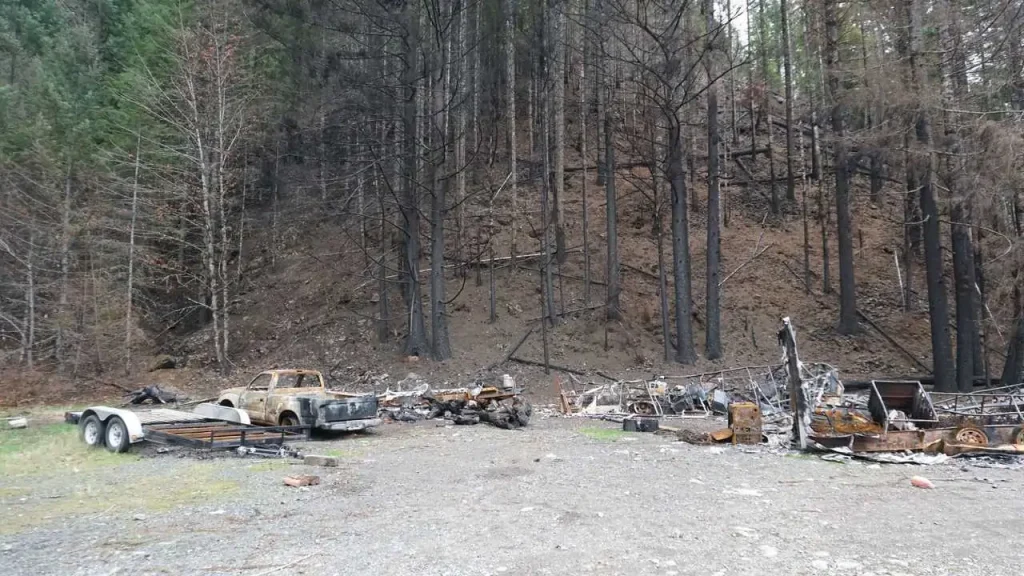
But I’ll get that opportunity. I drive through Oregon’s Willamette National Forest near Detroit Lake, passing through a landscape still scarred by fires that swept through only days and weeks earlier. Homes, businesses, and entire lives are gone. Work trucks clear the debris, removing what remains of dreams, memories, treasured possessions, and the accumulation of a thousand little decisions. Now, it’s all ash. What strikes me is how easily I can imagine building a life here—in the mountains, beside the water, somewhere in the American West. I sit with that thought for a while and continue driving in silence.
After a night in Bend, a town charming enough to make me want to return and explore it properly, I cross into Northern California. The Siskiyou National Forest looks like something pulled straight from a screensaver, with deep canyons, rushing rivers and creeks, and towering redwoods climbing the steep hillsides and mountains. This is California’s real gold, long after prospectors stopped searching these mountains for metal.
I watch work trucks clear away the remnants of lives once filled with dreams, memories, cherished possessions, and a thousand small decisions—now reduced to ash.
An eagle stretches out at full wingspan overhead, and I’m so awestruck that I blurt out, “Wow, wow, wow!” I pass trees so enormous, tall, and wide that the Jeep’s instruments automatically switch into night mode beneath their canopy. Then a deer suddenly appears and darts across the road. Thankfully, I’m traveling slowly enough that there’s never any real danger. After a tense nighttime drive through the winding redwood forests, I finally reach the coast. Once again, a billion stars fill the sky, this time joined by a glowing orange half-moon hanging low over the water and casting a bright reflection across the surface. It’s pure magic.
Finding My Escape
A few miles farther down the coast, I decide to make camp. Temperatures are in the 40s, with a steady breeze blowing in from the ocean, but I know this is about as good as the weather is going to get. Mason, the founder of Pacific Overlander, had pointed me toward several spots that matched what I was looking for. He regularly leads overlanding trips throughout the West, so he knows the terrain well and where to find those off-the-grid places that offer a little solitude along with great scenery. “We get the whole spectrum,” he’ll tell me later.
Take The Long Way
This, however, is exactly what I want. Long days covering ever-changing terrain with endless music, camping in crisp autumn air beneath star-filled skies, including at least one night with a very real concern about bears. Driving beside rivers and through mud, snow, hail, and rain; switching between highways and two-lane roads; feeling the wind; listening to FM radio in places where there’s only one station. Countless gas station coffees, towering trees, distant views, mountains, and long stretches without seeing another person. Passing through small towns and remote communities, soaking it all in. It’s a powerful, addictive cocktail that isn’t for everyone. But it’s when I feel most alive—out there on the road, witnessing the incredible bounty we all share.