
One winner shares what it was like to take home a brand-new Mazda pickup truck as a prize.
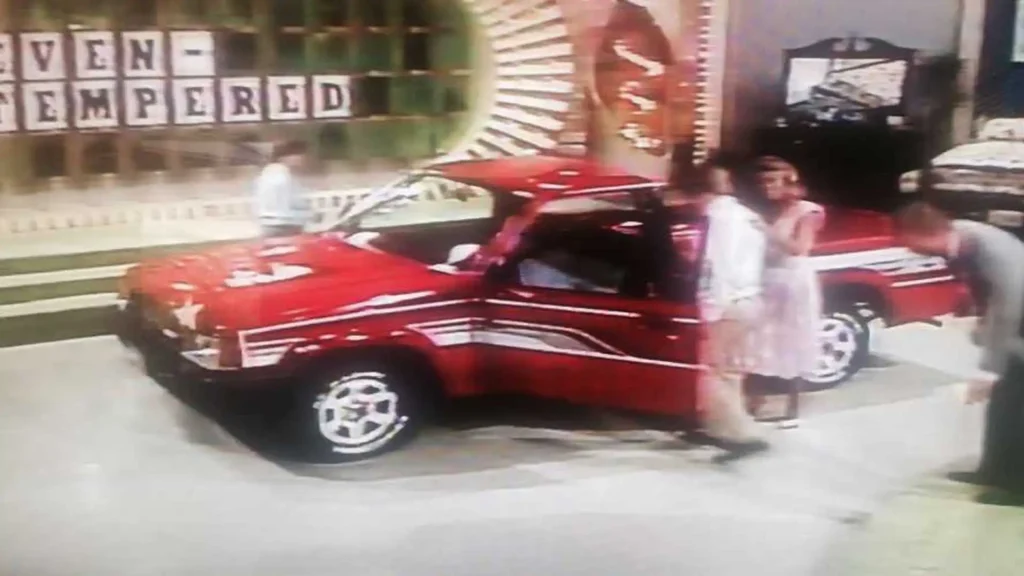
We often feature automotive giveaways offering everything from desirable cars to impressive pickup trucks. But winning is only the beginning—what happens once your name is announced? Former Wheel of Fortune contestant John Dean has the answer. He won the Mazda pickup pictured above during an appearance on the show in the 1980s, and while every contest has its own rules, taxes, paperwork, and eligibility requirements, Dean shared his firsthand experience of claiming the truck and the other prizes he won during his time on the show.
Winning a car sounds like a dream come true, but there can be a catch: taxes. Even so, for former Wheel of Fortune contestant John Dean, the experience turned out to be far easier than expected—and well worth the tax bill.
Dean appeared on Wheel of Fortune in the mid-1980s, at a time when contestants couldn’t simply take home cash winnings. Instead, they had to use their winnings to select prizes from the show’s in-studio showcase.
His run lasted three days because winners were invited back for another episode. On his second appearance, Dean had the opportunity to choose which grand prize he wanted to play for. He picked the new car, solved the phrase “Even-Tempered,” and won a brand-new 1986 Mazda SE-5 pickup.
The photo above comes from a grainy VHS recording of Dean’s appearance. Vanna White is directing him toward the driver’s seat while host Pat Sajak sets down Dean’s microphone. Standing on the opposite side of the truck is Dean’s girlfriend at the time, who would later become his wife.
Contestants were told in advance that we would be responsible for any income taxes resulting from the stated value of prizes we won. In my case, the car was assigned a value of roughly $7,800, which, believe it or not, was close to the model’s full MSRP in 1986.
So what made the experience difficult? Honestly, not much beyond figuring out the tax situation. Here’s how everything played out for me:
Merv Griffin Productions reported the stated value of my car, along with every other prize I won, to both the California Franchise Tax Board and the IRS. Altogether, the prizes I took home—including furniture, exercise equipment, a console television, and cases of Rice-a-Roni, but no cash—were valued at $23,321. Add that to the roughly $4,000 I had earned from actual W-2 employment as a recent college graduate, and the tax authorities viewed my total income for the year as nearly $28,000. The problem was that almost none of that money existed as cash, leaving me to figure out how to cover the resulting tax bill.
IRS rules allow prize winners to report the fair market value of an item rather than automatically accepting the value assigned by the game show. Since game shows have a reputation for placing high values on prizes, I spent a week or two searching stores and catalogs for comparable products. This was before the internet made that process easy, so I spent plenty of time calling retailers and speaking with salespeople and managers. I then compiled an itemized list using the prices they provided. That research brought the fair market value of all my prizes down to roughly $15,000.
When I filed my taxes in April, I used that lower figure and included my detailed list of comparable prices. The resulting tax bill came to about $2,100, which I covered by taking out a bank loan secured against my new car. The IRS later sent me a letter questioning the valuation, so I responded with another copy of my documentation and an explanation of how I arrived at the figures. They ultimately accepted it. Two years later, the loan was paid off, and everything I had won was finally mine free and clear.
What wasn’t difficult was actually getting the car.
About a month after the episode aired, I received a call from the local Mazda dealership telling me the car was ready. I jumped on my bicycle, rode the three miles to the Mazda dealer in Torrance, California, signed a few title documents, and had the keys in my hand roughly 10 minutes later. I loaded my bike into the back of the truck and drove home in my brand-new car. The whole experience felt almost too surreal to believe.
The producers had also given contestants three full days to reject any prizes they didn’t want. That meant anyone concerned about the tax consequences could simply decline certain items and reduce the value of their winnings. I decided to keep everything. For $2,100 in taxes, I ended up with beautiful handcrafted furniture, a stereo console TV—an impressive piece of technology in the ’80s—a home gym, and plenty of other things I probably wouldn’t have purchased on my own. And, of course, there was the car. When my wife and I got married in 1987, those prizes helped furnish our first apartment, and we also entered the marriage with two cars that were completely paid off. Some of those furniture pieces are still in our home today, decades later. The pickup truck itself stayed with us until 2002. I’d say that was a pretty good run.
So yes, dealing with the taxes was certainly a hassle, but in my case, the benefits of winning the car and everything else more than made up for the extra paperwork and expense.
Special thanks to John Dean for sharing his story and the VHS recording of that unforgettable day.