
These Infiniti concept cars stand among the brand’s most striking and innovative creations, blending bold styling with cutting-edge ideas that showcase the luxury automaker’s design ambition.
The debut of the Infiniti Prototype 9 caught enthusiasts by surprise. Styled as a vintage open-wheel race car, the electric concept pays tribute to the Grand Prix machines of the 1930s despite Infiniti being founded in 1989. Its blend of classic motorsport design and modern electric technology made it one of the brand’s most talked-about concepts, with its public debut taking place at the prestigious Pebble Beach Concours d’Elegance.
While the Prototype 9 stands out for its retro-inspired character, it is far from Infiniti’s only remarkable concept. Over the decades, the Japanese luxury automaker has unveiled a series of bold design studies that have explored everything from sleek sports cars and elegant sedans to futuristic SUVs. Here are six of the most memorable Infiniti concept cars ever created.
Table of Contents
2001 Infiniti FX45 Concept
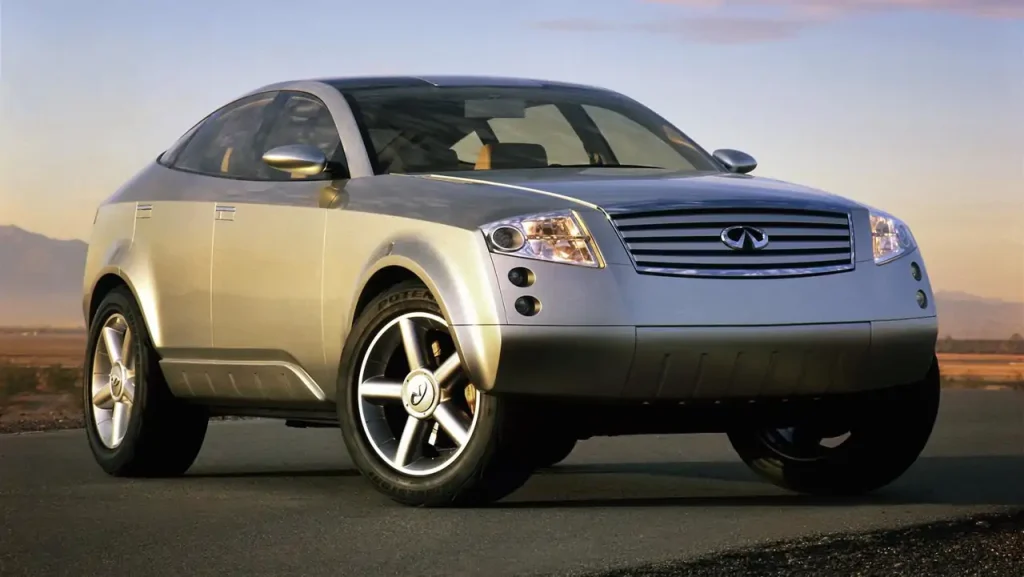
Long before coupe-style SUVs became one of the industry’s hottest trends, Infiniti was already experimenting with the idea. Unveiled in 2001, the FX45 Concept combined the elevated stance of an SUV with the sleek proportions of a sports coupe, creating a bold design that stood out from anything else on the road.
As only the second true concept car developed by Infiniti, the FX45 Concept marked an important milestone for the young luxury brand. Its aggressive styling, sculpted bodywork, and performance-inspired character previewed a new direction for Infiniti’s crossover lineup. Many of its design cues carried over almost unchanged to the production FX35 and FX45, two SUVs that helped establish the brand’s reputation for blending luxury with sporty driving dynamics. The concept also proved that SUVs could be stylish and driver-focused years before the segment became mainstream.
2003 Infiniti Triant Concept
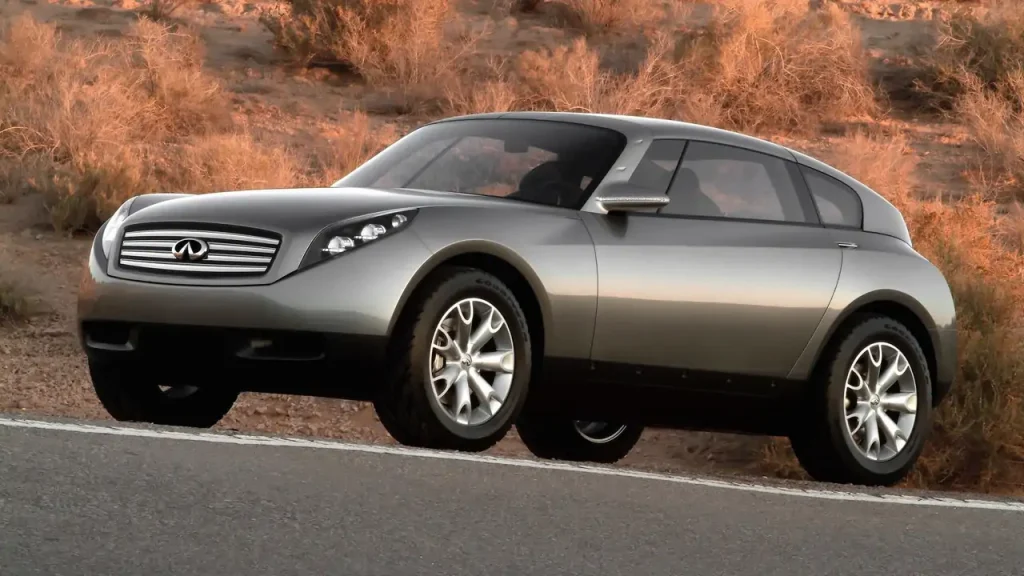
Unveiled at the 2003 Detroit Auto Show, the Infiniti Triant Concept built on the sporty crossover formula introduced by the FX45 while adding a more refined and luxurious personality. Its bold front fascia was highlighted by a large rectangular grille that previewed a styling cue later adopted across much of Infiniti’s production lineup. The concept’s most eye-catching feature, however, was its dramatic gullwing-style doors, giving the SUV an unmistakably futuristic appearance.
Infiniti described the Triant as a blend of sporty performance, premium comfort, and all-wheel-drive capability. Power came from a 3.5-liter V6 paired with a five-speed automatic transmission, delivering the kind of performance expected from the brand’s luxury vehicles. Inside, the cabin featured advanced technology for its time, including a 7.0-inch LCD infotainment display with integrated navigation, a premium surround-sound audio system, ambient door lighting, and aluminum kick plates. Although the Triant never entered production, many of its styling ideas and luxury features influenced future Infiniti crossovers and SUVs.
2009 Infiniti Essence Concept
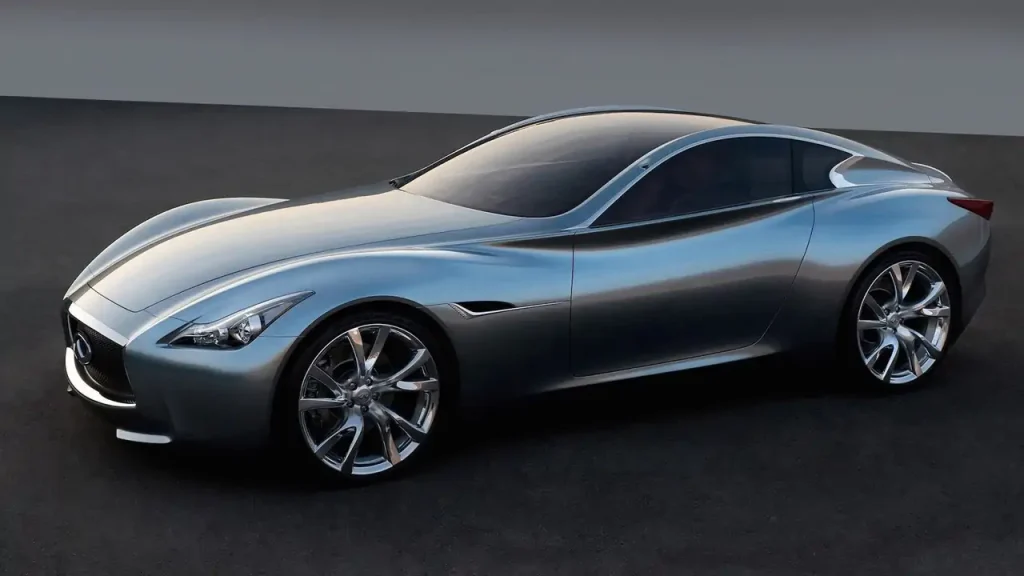
Created to celebrate Infiniti’s 20th anniversary, the Essence Concept debuted at the 2009 Geneva Motor Show and immediately became one of the brand’s most iconic show cars. The elegant rear-wheel-drive grand tourer introduced a dramatic new design language that would shape future Infiniti models, including signature elements such as the double-arch grille, sweeping character lines, and distinctive LED headlights that later appeared on production vehicles like the Q50.
Performance was just as impressive as its styling. The Essence combined a 3.7-liter twin-turbocharged V6 with an electric motor to produce 600 horsepower (447 kW), making it one of the world’s most powerful hybrid concept cars at the time. It was also Infiniti’s first hybrid concept, demonstrating the company’s vision for combining electrification with high-performance luxury. While the Essence never reached showrooms, it became a cornerstone of Infiniti’s modern design identity and offered a glimpse of the technologies and styling cues that would define the brand in the years that followed.
2012 Infiniti Emerg-E Concept
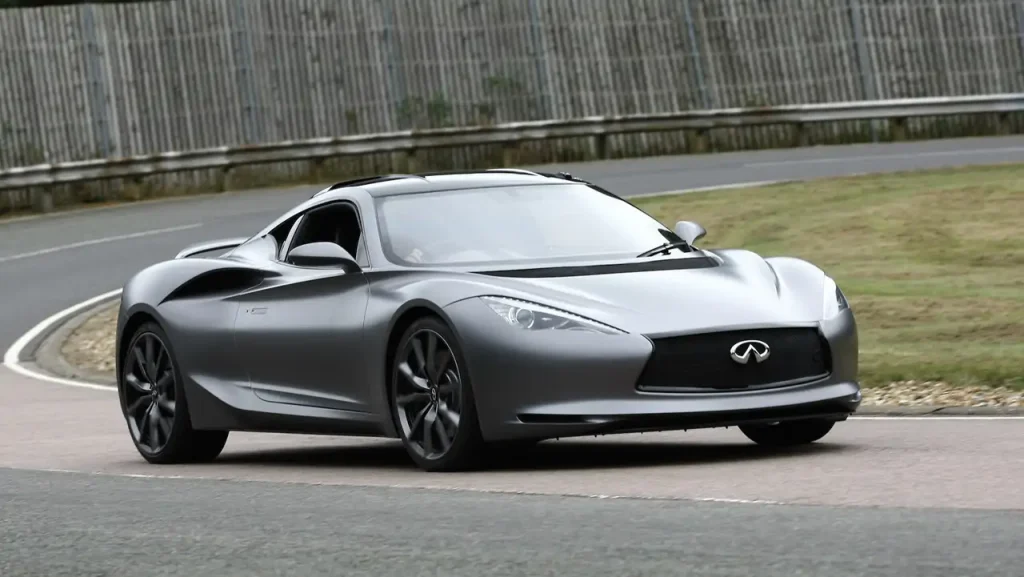
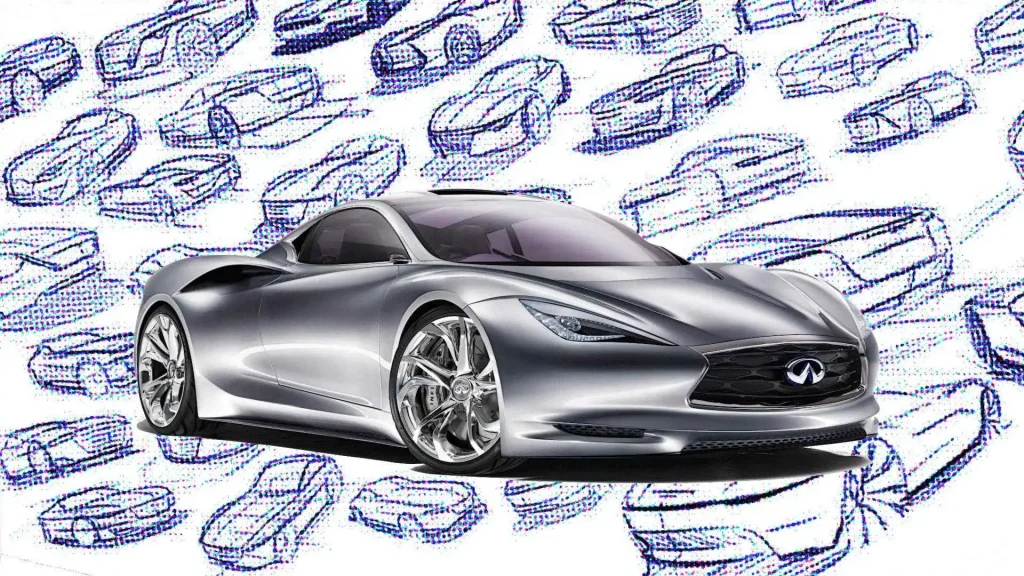
The Infiniti Emerg-E Concept made its world debut at the 2012 Geneva Motor Show, showcasing the brand’s vision for an electrified high-performance future. With its flowing, low-slung bodywork, the sports car was one of Infiniti’s most visually striking concepts. Chief Creative Officer Shiro Nakamura famously described its shape as “like silk wrapping over the wheels,” highlighting the smooth, sculpted surfaces that defined its design.
Beneath the sleek exterior was an advanced hybrid powertrain that combined a 1.2-liter three-cylinder gasoline engine with twin electric motors to deliver 402 horsepower (300 kW). The lightweight coupe accelerated from 0 to 60 mph (96 km/h) in around four seconds and could reach 130 mph (209 km/h) in just 30 seconds, demonstrating that electrified performance could be both fast and engaging.
Although the Emerg-E never entered production, it progressed beyond a static show car. A fully functional prototype appeared at the 2012 Goodwood Festival of Speed, where it demonstrated its capabilities in motion. Developed with support from the UK government’s Technology Strategy Board and engineered at Nissan Technical Centre Europe in Cranfield, England, the project highlighted Infiniti’s growing expertise in advanced hybrid technologies and influenced the brand’s future electrification strategy.
2014 Infiniti Q50 Eau Rouge Concept
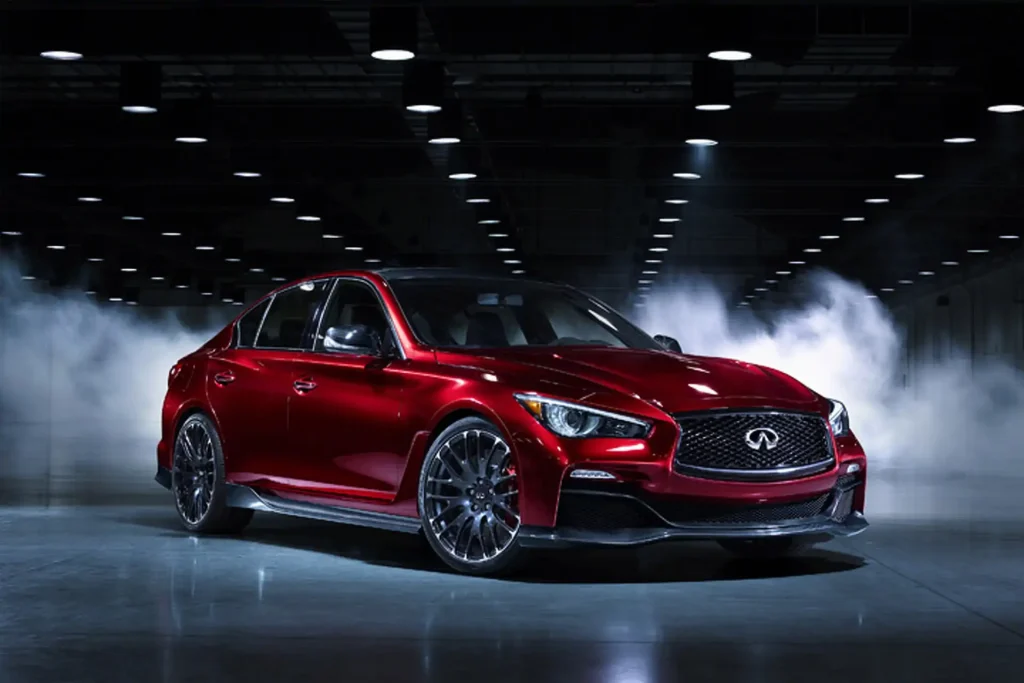
Unveiled at the 2014 Detroit Auto Show, the Infiniti Q50 Eau Rouge Concept transformed the brand’s luxury sports sedan into a genuine high-performance machine. Named after the legendary Eau Rouge corner at Belgium’s Circuit de Spa-Francorchamps, the concept featured aggressive aerodynamic bodywork, carbon-fiber components, wider fenders, and a race-inspired stance inspired by Infiniti’s involvement in Formula One.
Under the hood was the 3.8-liter twin-turbocharged V6 borrowed from the Nissan GT-R, producing an impressive 560 horsepower. The engine was paired with Nissan’s intelligent all-wheel-drive system, giving the concept supercar-level performance wrapped in a practical four-door sedan.
A working prototype debuted later that year at the Goodwood Festival of Speed, fueling hopes that the Eau Rouge would reach production. However, Infiniti ultimately shelved the project due to high development costs and limited sales potential. Even so, it remains one of the brand’s most celebrated concept cars and a reminder of what could have been one of the world’s most exciting performance sedans.
2014 Infiniti Vision Gran Turismo Concept
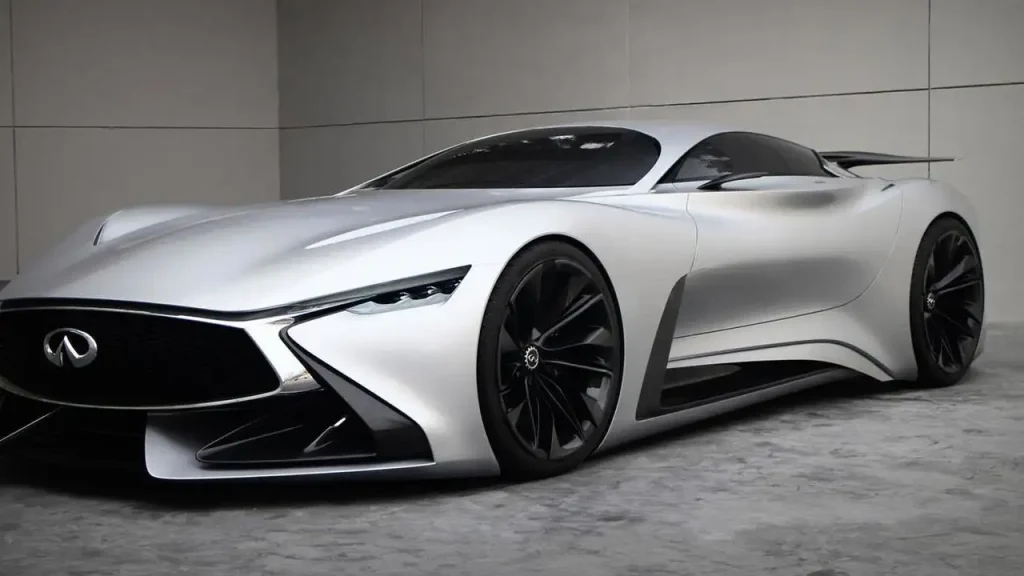
Infiniti wasn’t the only automaker to venture into the wild world of Vision GT concepts, but its entry was one of the most striking. Unveiled at the 2014 Shanghai Motor Show, the Infiniti Vision GT was created specifically for Gran Turismo 6, giving the automaker a chance to explore a level of performance and styling that would have been difficult to realize in a production car.
The concept blended dramatic proportions with design elements inspired by Infiniti’s road cars, while its virtual powertrain and supercar-level performance pushed the idea well beyond anything in the brand’s showroom. It was essentially a digital playground for Infiniti’s designers, allowing them to imagine what an extreme performance machine from the brand could look and feel like.
Infiniti’s then-chief creative officer Shiro Nakamura described the brand as being driven by progressive, emotionally engaging design. The Vision GT concept put that philosophy on full display, combining futuristic styling with the aggressive stance expected from a virtual supercar.
2017 Infiniti Prototype 9
The 2017 Infiniti Prototype 9 is the concept that inspired this list, and it earns its place among the brand’s most memorable designs. Rather than simply imagining the future, Infiniti used the sleek single-seat racer to create a fictional link to its own racing heritage, blending modern engineering with the appearance of a machine that could have been discovered in a Japanese barn decades later.
The idea came from Alfonso Albaisa, Infiniti’s senior vice president of global design. The concept was built around a simple question: What if a forgotten Japanese race car from 70 years ago were discovered today, revealing an early spark of the passion and craftsmanship that eventually led to Infiniti?
That imagined history is reflected in the Prototype 9’s design. Its long, low body, exposed wheels, narrow tires, and open cockpit evoke the minimalist race cars of the mid-20th century, while the engineering underneath is distinctly modern.
Power comes from a 148-horsepower (110-kilowatt) electric motor, enough to propel the lightweight racer from 0 to 60 mph in approximately 5.5 seconds. With a curb weight of just 1,962 pounds (889 kilograms), the Prototype 9 puts a premium on low mass rather than outright power.
Its leaf springs, solid axles, and skinny period-style tires reinforce the vintage character. The result is a fascinating combination of old-school racing aesthetics and modern electric performance—a concept that looks like a piece of forgotten automotive history but drives with technology from a very different era.