
After a 2,700-mile road trip across America, one thing became impossible to ignore: our country has a serious bad-driver problem. From congested city streets to wide-open interstates, I encountered the same frustrating behaviors over and over again—drivers glued to their phones, cars weaving through traffic without signaling, motorists camping in the left lane, and others following so closely they left no room for error. Courtesy behind the wheel often seemed like an afterthought, while patience was in remarkably short supply.
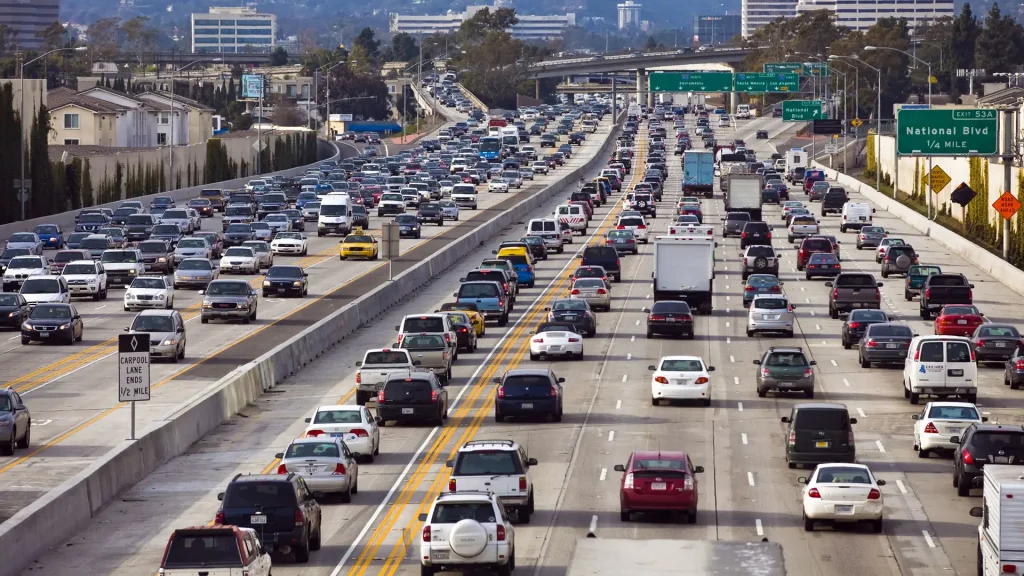
Of course, not every driver fits the stereotype. Millions of Americans navigate the roads safely and responsibly every day. But it doesn’t take many careless motorists to create dangerous situations for everyone else. During thousands of miles behind the wheel, the pattern became impossible to dismiss. Aggressive driving, poor lane discipline, distracted motorists, and a general disregard for basic road etiquette appeared with surprising consistency, regardless of the state or highway.
The experience raised an uncomfortable question: Have we simply accepted bad driving as the norm? Judging by what I saw over 2,700 miles, it’s time for America to take a hard look at its driving habits—and remember that getting from point A to point B safely should matter more than getting there a few seconds faster.
America, it’s time to relearn how to drive.
Seriously. After a 2,700-mile road trip from Detroit to Hollywood, Florida, I came away with one unavoidable conclusion: driving standards in this country have reached a new low. No, this isn’t the result of an exhaustive scientific study. It’s based on thousands of miles spent behind the wheel, watching the same dangerous habits play out again and again. The evidence was impossible to ignore.
Distracted drivers stared at their phones instead of the road. Motorists darted across multiple lanes without signaling. Tailgaters left no margin for error, while others camped in the passing lane, oblivious to the traffic stacking up behind them. Common courtesy—and common sense—seemed to be in short supply.
Not every driver was guilty, of course. But there were enough impatient, careless, and reckless motorists to make one thing abundantly clear: America has a bad-driver problem, and it’s only getting worse.
Is it any wonder there’s such a strong push to develop self-driving cars? After spending days on America’s highways, the idea of handing the steering wheel over to a computer doesn’t seem nearly as far-fetched as it once did. In fact, there were moments when trusting software felt like a safer bet than sharing the road with the drivers around me. Whether it was navigating a snow-covered interstate in West Virginia or battling the chaos of Florida traffic, the human behind the wheel often seemed like the biggest hazard.
The statistics only reinforce that impression. According to the National Safety Council, an estimated 38,300 people were killed in traffic crashes in 2015—the deadliest year on U.S. roads in nearly a decade. The trend showed little sign of slowing, with traffic fatalities climbing again during much of 2016, putting the country on pace to surpass 40,000 deaths for the year.
Those numbers aren’t just statistics—they represent thousands of preventable tragedies. They also raise an uncomfortable question: How have we reached a point where driving, something millions of Americans do every day, has become so unnecessarily dangerous?
Experts attribute part of the increase in traffic deaths to a stronger economy and relatively low fuel prices. When gas is affordable and people have more money to spend, they drive more. More vehicles on the road and more miles traveled naturally lead to more crashes—it’s simple math.
But statistics don’t tell the whole story. Another factor may be even harder to ignore: too many Americans are simply bad drivers.

Impaired driving remains one of the biggest threats on America’s roads. Mothers Against Drunk Driving estimates that nearly 300,000 people choose to drive under the influence every single day—a staggering number that highlights just how common this dangerous behavior remains.
The vast majority of my holiday road trip was spent on the interstate, where driving is about as straightforward as it gets. Hold a steady speed, keep the car centered in its lane, and pay attention to what’s happening around you. It sounds simple enough, yet an alarming number of drivers seemed incapable of doing even that.
Staying between the lines, in particular, appeared to be a challenge. Some motorists hugged the lane divider so closely they looked like they were trying to straddle it. Others drifted unpredictably from one side of the lane to the other, forcing nearby drivers to wonder where they were headed next. And then there were those who spent so much time riding the rumble strips that the constant vibration seemed to become part of the soundtrack. Those grooves aren’t there for entertainment—they’re a last-second warning that you’re about to leave your lane, hit a guardrail, or run off the road.
The real danger with drivers who can’t hold a steady line isn’t just that they’re weaving—it’s that they’re completely unpredictable. Passing them becomes a gamble because you never know when they’ll suddenly jerk the wheel and drift back into the lane you’re trying to use. Instead of driving with awareness of the traffic around them, they behave as though they’re the only ones on the highway.
That’s a dangerous mindset. At 80 mph, you’re piloting a machine that weighs two tons or more. A moment of inattention or a careless steering correction can have devastating consequences. Driving isn’t a passive activity; it demands constant focus, awareness, and respect for everyone else sharing the road.
There was a time when I assumed every driver who couldn’t stay in a lane had been drinking. After all, weaving and abrupt steering corrections have long been telltale signs of impaired driving. Unfortunately, alcohol is still a major factor in roadway fatalities. Mothers Against Drunk Driving estimates that nearly 300,000 people drive under the influence every day, a sobering reminder that drunk driving remains a serious threat.
But after thousands of miles on the road, I’m no longer convinced intoxication is the default explanation. In many cases, the culprit appears to be something else entirely: distraction. Smartphones, in-car touchscreens, fatigue, and simple inattention have created a new generation of drivers who may be sober but are every bit as unpredictable.
My next assumption was that these drivers were distracted by their phones. That seemed like the obvious explanation. After all, it’s impossible to ignore how many people are staring down at a screen instead of looking through the windshield. During my trip, I lost count of the number of drivers I saw texting at highway speeds. Every one of them was a rolling hazard.
Here’s a simple rule: if your eyes are on your phone, they aren’t on the road. That text, email, or social media notification can wait. The consequences of looking away for even a few seconds can’t. Distracted driving isn’t just inconsiderate—it’s one of the most dangerous habits behind the wheel.
But what surprised me most was how often distraction wasn’t the culprit. As I pulled alongside many of these wandering motorists, they weren’t texting, talking on the phone, or fumbling with the radio. Both hands were on the wheel, their eyes were forward, and yet they still couldn’t keep a straight line. They simply drifted from one side of the lane to the other, blissfully unaware that they were making everyone around them nervous.
Ironically, the professional drivers were often the least of my concerns. Tractor-trailers have a reputation for intimidating motorists, but over 2,700 miles they proved to be some of the most disciplined vehicles on the road. They stayed in their lanes, signaled their intentions, and drove predictably. Sure, crawling up a long grade behind a fully loaded semi isn’t anyone’s idea of fun, but at least you knew what it was going to do next.
The real unpredictability came from everyday commuters in cars, crossovers, and minivans. For reasons I still can’t explain, Chrysler Town & Country minivans seemed especially determined to test my patience. Time after time, one would dart into my lane with barely enough room to spare, only to settle in directly ahead and immediately slow down. If there was an award for the most baffling highway maneuver of the trip, the Town & Country would have been a strong contender.
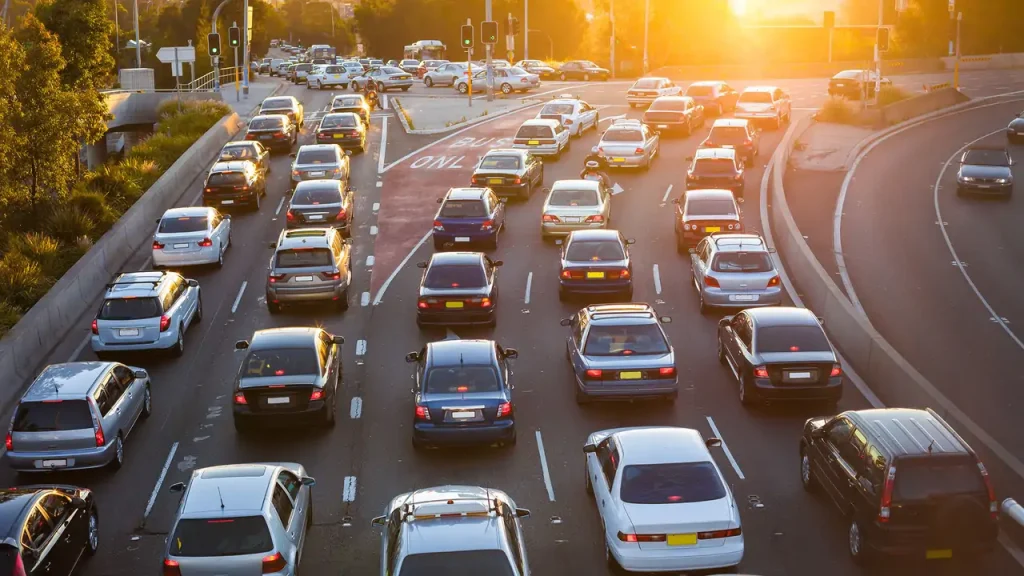
None of this is difficult. In fact, it’s the kind of basic driving etiquette that could prevent countless crashes—and save lives.
One of the biggest problems I noticed was inconsistency. Too many drivers seem incapable of maintaining a steady speed. They’ll fluctuate by 10 or 15 mph for no apparent reason, forcing everyone around them to brake, accelerate, and constantly adjust. It’s exactly the sort of situation cruise control was designed to eliminate, yet surprisingly few people seem willing to use it.
Lane discipline is just as bad. Somewhere along the way, many drivers forgot that the left lane is for passing—not for camping. If you’re not actively overtaking slower traffic, move back to the right. It doesn’t matter whether you’re traveling at the speed limit or five miles over it. If faster traffic is stacking up behind you, you’re in the wrong lane.
Why does it matter? Because every driver forced to pass on the right creates another unnecessary opportunity for a collision. Passing on the right limits visibility, increases blind-spot conflicts, and introduces unpredictability into the traffic flow. If several vehicles are overtaking you on the right, take the hint: you’re holding up traffic. Move over, let them pass, and continue on your way. Whether they’re exceeding the speed limit is a matter for law enforcement—not for you to police from the left lane.
And while we’re reviewing the basics, let’s talk about turn signals. They’re one of the simplest safety features ever invented, yet they’re treated as optional equipment by far too many motorists. A quick flick of the indicator tells everyone around you exactly what you’re about to do, giving them time to react safely. Equally important is canceling the signal after you’ve completed the maneuver. If you can’t tell that your blinker has been flashing for the last mile—or you never notice a faster vehicle approaching in your mirrors—you’re simply not paying enough attention to be behind the wheel.
Safe driving isn’t complicated. It requires awareness, predictability, and consideration for the people sharing the road. Master those three things, and America’s highways would become a much safer place overnight.
Before setting off on any long road trip, take a few minutes to make sure your vehicle is ready for the journey. Check the tire pressure, inspect the tread, top off the windshield washer fluid, and make sure the oil and other essential fluids are at the proper levels. None of these tasks takes more than a few minutes, but they can prevent hours of frustration—or something far worse.
During my trip, I passed dozens of vehicles stranded along the shoulder. Some were there because of unavoidable mechanical failures or flat tires caused by road debris. But it’s hard not to wonder how many breakdowns could have been prevented with a simple pre-trip inspection. A little preparation goes a long way when you’re about to spend hundreds of miles on the highway.
As for the drivers themselves, most of us could use a refresher course. We spend thousands of dollars buying vehicles, yet many people never invest a few hours in improving the skills needed to operate them safely. A defensive driving class can sharpen everything from hazard awareness to emergency braking techniques, and it’s a worthwhile investment whether you’ve been driving for six months or 60 years.
If you live in a region that sees snow and ice, find a safe, empty parking lot after the first snowfall and learn how your vehicle behaves when traction disappears. Experience how anti-lock brakes feel under hard braking, practice recovering from a skid, and understand how your car reacts before you’re forced to learn those lessons in traffic. The best time to discover your vehicle’s limits is during practice—not during an emergency.
Driving isn’t just a privilege—it’s a responsibility. A few minutes of preparation, a commitment to improving your skills, and a little more courtesy behind the wheel would make America’s roads safer for everyone.