
The tent fits perfectly in the truck bed. Your heart? That’s another story.
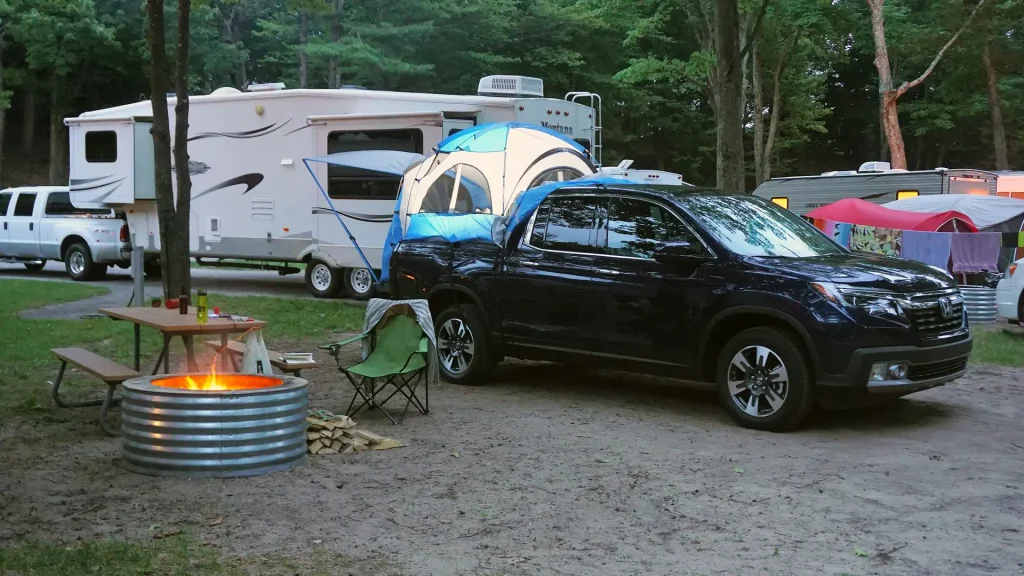
The 2017 Honda Ridgeline has collected enough praise to fill a pickup bed. It’s a capable, comfortable, and genuinely competitive option in the midsize truck segment.
Ironically, though, Honda may have needed a slightly bigger bed for another reason: sleeping in it.
Honda introduced a tent accessory designed specifically for the Ridgeline, transforming the truck bed into an elevated campsite. Priced between $250 and $300, the tent had been making appearances alongside the pickup since its debut at the Detroit Auto Show. When the opportunity came to borrow both the truck and its unusual camping accessory, there was only one reasonable response—head for the woods.
For this particular experiment, I pointed the Ridgeline toward Michigan’s Ludington State Park to find out whether Honda’s bed-mounted tent was a genuinely useful piece of camping equipment or simply an expensive accessory for devoted Ridgeline owners.
Table of Contents
The Drive to Ludington
The roughly 200-mile journey to Ludington was easy work for the Ridgeline. Its cabin is comfortable and well suited to long-distance driving, with firm seats offering just enough bolstering for hours behind the wheel.
The seating position provides a commanding view of the road without making the driver feel as though they’re perched several feet above traffic. Under the hood, Honda’s 3.5-liter V6 settles into a relaxed highway rhythm, and its 280 horsepower provides plenty of reserve when additional acceleration is needed.
But a campground isn’t exactly a destination that demands urgency.
The Ridgeline is more enjoyable when allowed to settle into an easy cruise. The ride remains smooth and composed, and the truck’s cabin makes the miles disappear with little effort. An eight-inch infotainment display handles entertainment duties, although the touch-sensitive volume control can become mildly irritating. Fortunately, the steering-wheel controls provide a much simpler solution.
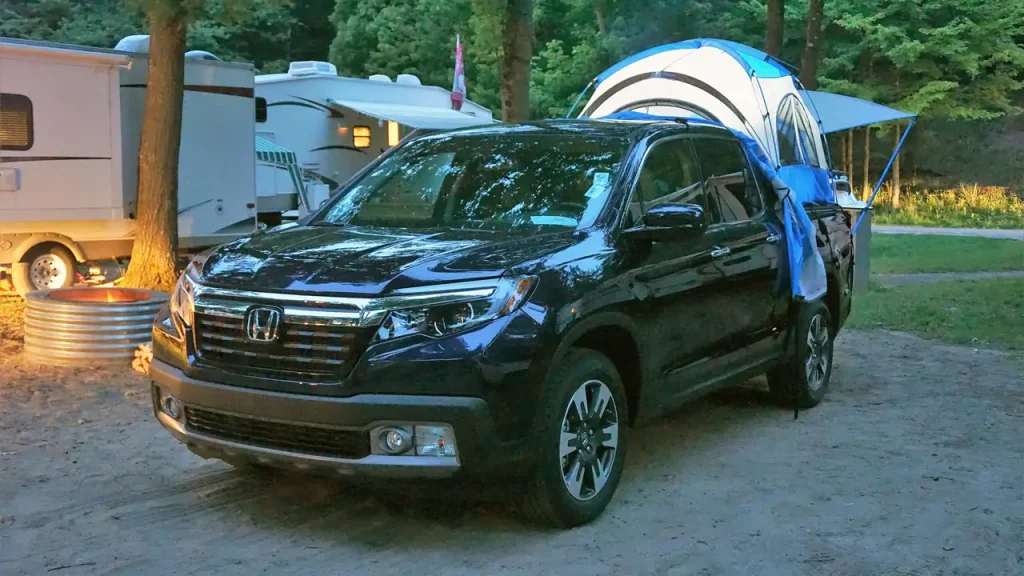
 The Ridgeline’s smooth and compliant suspension helps it feel smaller and more manageable from behind the wheel than its size might suggest.
For a deeper look at the truck’s overall driving experience, check out the full review. This trip, however, wasn’t about evaluating its handling.
I was going camping.
Exploring Ludington State Park
Ludington State Park is one of Michigan’s most popular outdoor destinations, and it’s easy to understand why.
The park features powdery white beaches, easy hiking trails shaded by beech, oak, and maple trees, and—because apparently Michigan requires one—a lighthouse waiting at the end of one of those trails.
Located along Lake Michigan, Ludington is genuinely beautiful. So it came as little surprise when I arrived early in the afternoon and found the campground almost completely full, with my reserved site being one of the few available spaces.
Car camping—or truck camping, in this case—has never been my preferred version of outdoor recreation.
Campgrounds are often crowded collections of trailers, tents, and vehicles packed into relatively small plots of land. Add screaming children, slamming car doors, barking dogs, and conversations from neighboring sites, and the peaceful sounds of nature can become surprisingly difficult to locate.
Ah, nature.
Packing for the Camping Trip
After surveying the campsite, it was time to unload.
The Ridgeline has one particularly useful advantage for camping: its lockable in-bed trunk. Accessible beneath the cargo floor and offering 7.3 cubic feet of storage, the compartment provides a convenient place to keep gear secure and out of sight.
Using the truck’s side-opening tailgate, I opened the storage compartment and began unpacking for the two-night stay.
Nearly everything I needed fit inside, including a cooler and the tent itself.
That clever storage solution leaves the rest of the bed free for cargo—or, in this particular case, a sleeping arrangement.
Setting Up the Ridgeline Bed Tent
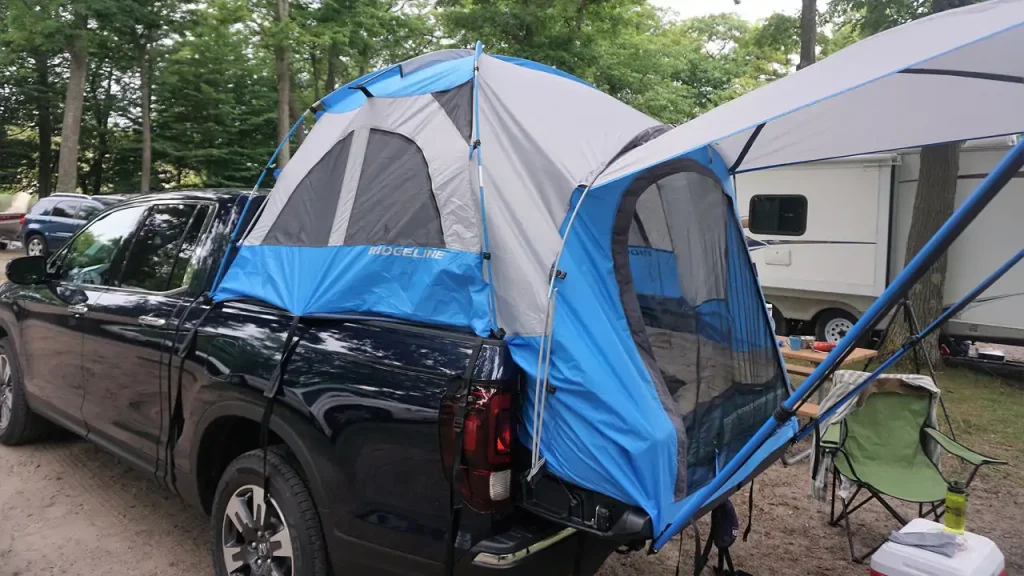
The Ridgeline tent is reasonably spacious once assembled. It offers enough room for two adults and is designed to fit inside the truck’s 83-inch-long bed with the tailgate down and its 60-inch width.
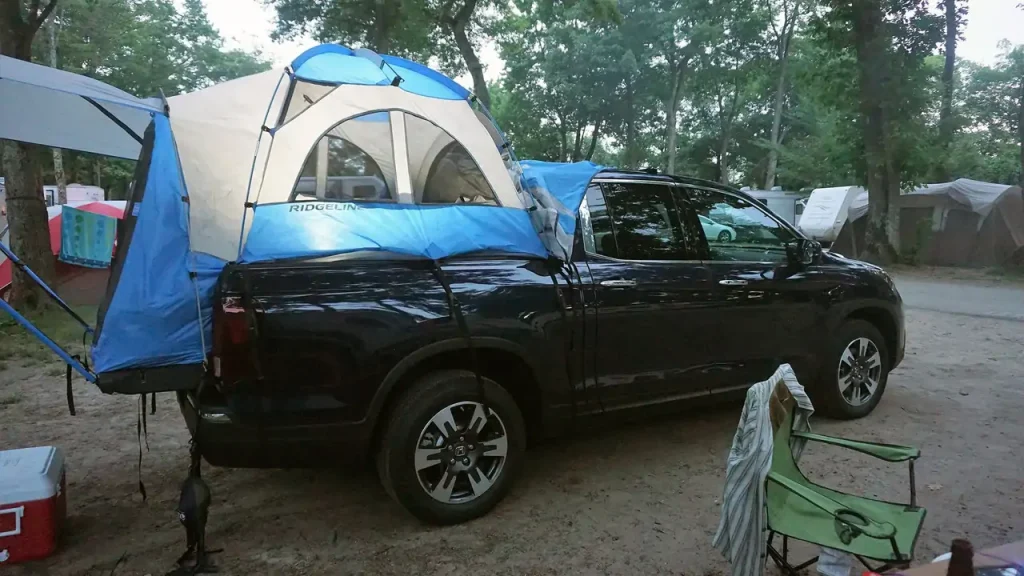
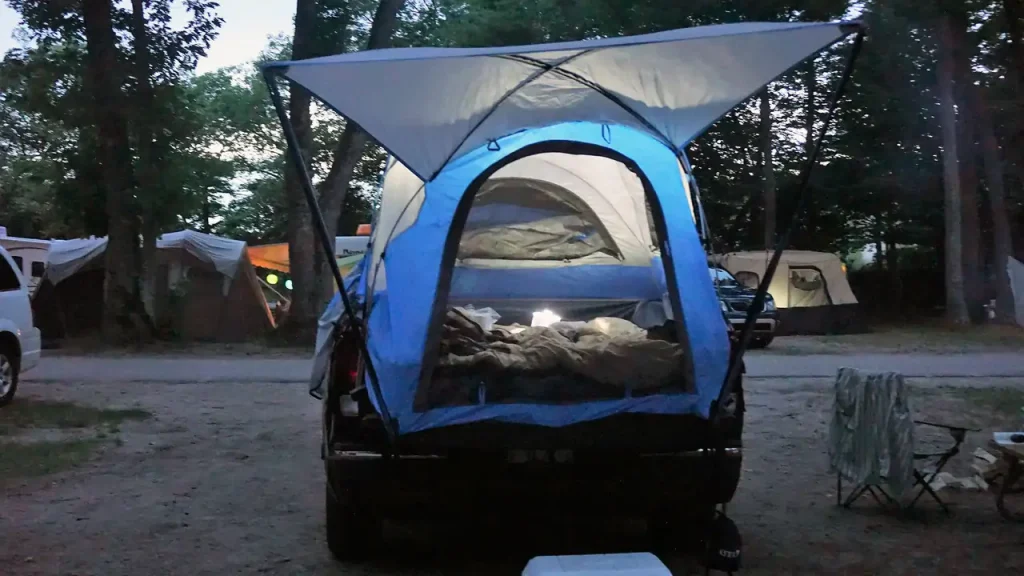
Those dimensions are conveniently close to the footprint of a queen-size air mattress, although Honda doesn’t include one.
Unfortunately, getting the tent from its storage bag to a fully functional shelter is where the experience becomes considerably less enjoyable.
Despite the use of color-coded pieces meant to simplify assembly, the tent feels unnecessarily complicated. There are a lot of components, and figuring out where everything belongs takes patience.
And time.
In my case, the setup process required a full 22-ounce beer, two cigarettes, and one strategically timed break before the tent was finally standing.
The tent provides enough room for two adults and fits within the Ridgeline’s 83-inch-long bed with the tailgate down and its 60-inch width—roughly the footprint of a queen-size mattress.
For comparison, I’ve owned a four-person Eureka Timberline, spent plenty of time using backpacking tents, and served four years in the Army, where learning to construct a shelter with minimal equipment was part of the experience.
None of those shelters required as much effort to assemble as Honda’s truck bed tent.
The Problem With Sleeping in Your Truck
The setup process isn’t the tent’s only weakness.
With a conventional ground tent, you can leave camp whenever you want. Need more firewood? Drive to the general store. Want jerky? Get in the truck and go.
With the Ridgeline tent installed, however, the pickup becomes part of the campsite itself.
Your truck is now a foundation.
That means your roughly $30,000 vehicle isn’t going anywhere until the tent comes down.
I attempted to assemble the tent once at home before leaving for Ludington, hoping a practice run would make the process easier at the campground. It didn’t.
One set of poles apparently didn’t appreciate the position I had chosen, and a fiberglass section split open. Duct tape became part of the camping equipment.
Even after carefully reviewing the instructions, I still couldn’t determine exactly what had gone wrong.
The tent’s front attachment system was equally awkward. Two straps secure the structure to the bed, requiring you to lift the tailgate, route them through an opening near the bed floor, close the gate, and then tighten everything.
Pull too hard, though, and the entire tent slides rearward.
The result is a gap between the tent and the front wall of the truck bed—not exactly the kind of fitment you’d expect from an accessory designed specifically for the vehicle.
Features That Actually Work
Thankfully, Honda did include several thoughtful touches.
Zippered openings allow access to the Ridgeline’s 120-volt outlet in the truck bed, making it easy to charge phones, power a laptop, or support more luxurious camping habits.
Yes, that includes a blender.
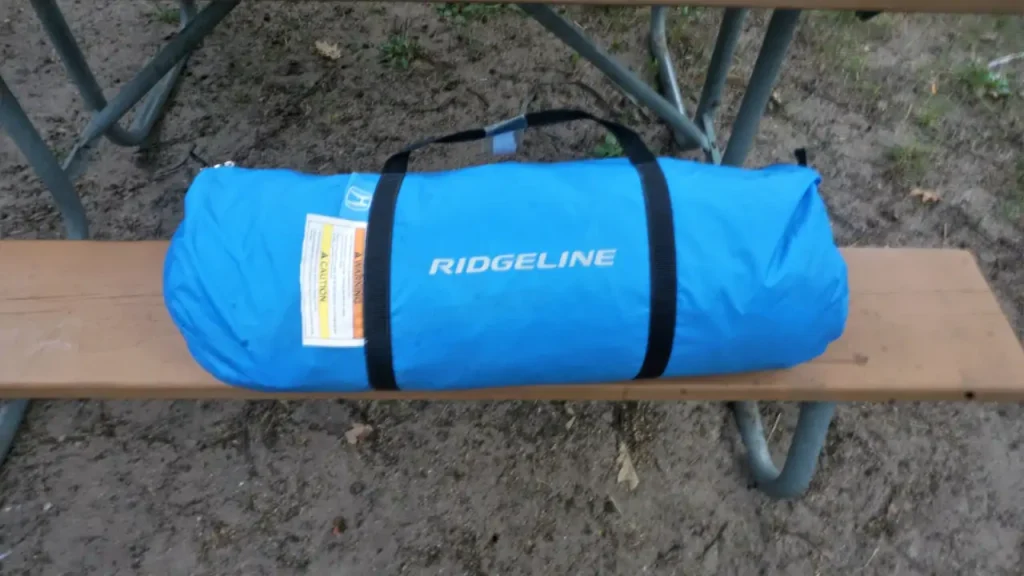
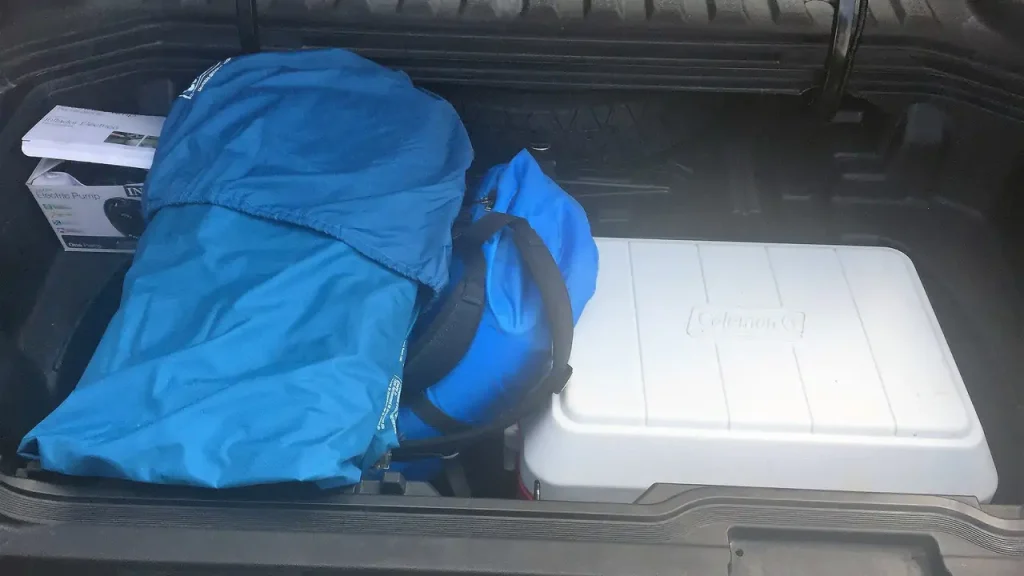 Another zipper provides access to the truck’s in-bed trunk, so you don’t have to dismantle your sleeping arrangement every time you need something stored beneath the floor.
Then there are the Ridgeline’s bed-mounted speakers.
They produce surprisingly good sound and offer another practical benefit: drowning out the drunken neighbors at the next campsite arguing passionately about sports.
Not every camping accessory can claim that kind of versatility.
Camping Comfort and Going Off the Grid
Once the tent was finally assembled, however, things improved considerably.
It provided a comfortable place to sleep and did an excellent job keeping mosquitoes outside. The second rain layer was also much easier to install than the main tent. It stretches over the structure and partially across the truck’s cab, providing additional weather protection and a welcome bit of privacy.
Then came the pinnacle of truck-camping luxury.
A hammock.
I attached one end to a nearby tree and secured the other to one of the Ridgeline’s cargo tie-downs. It was the perfect arrangement for spending a warm afternoon doing absolutely nothing.
Even better, there was no cell service.
Emails couldn’t be checked. Phone calls couldn’t interrupt the afternoon. There was no temptation to respond to messages or do anything that didn’t require actual face-to-face interaction.
For once, being disconnected was part of the experience rather than an inconvenience.
Is the Honda Ridgeline Tent Worth It?
If you absolutely need a tent to match your Ridgeline, go for it. But before spending $200 or more, visit a camping store or military surplus outlet and see what else your money can buy.
That ultimately sums up the problem with the Ridgeline tent.
The concept is considerably better than the execution.
It takes too long to assemble, and even when everything is finally in place, the structure still looks slightly awkward. The sides tend to sag, and once an air mattress is added, climbing into the tent becomes more difficult than it should be.
My solution was to use the cooler as a step.
It worked.
I’ve seen the tent professionally assembled before, and when everything is positioned correctly, it actually looks quite good. Which raises an obvious question: what exactly was I doing wrong?
Probably nothing.
The Ridgeline tent makes sense only under fairly specific circumstances. For most owners, it feels more like a novelty accessory for enthusiastic Honda fans than an essential piece of camping equipment.
There are countless tents available for the same money that can be assembled faster, packed more easily, and left behind when you need to drive somewhere.
Final Thoughts
The Honda Ridgeline itself is an excellent all-around truck. It is comfortable on long drives, refined around town, practical for everyday use, and filled with clever features that make it especially appealing for weekend adventures.
The tent doesn’t quite match that level of execution.
Once assembled, it provides a comfortable place to sleep, keeps insects out, and makes good use of the Ridgeline’s built-in power outlet, storage trunk, and bed speakers. But the complicated setup, awkward fitment, and the fact that your truck becomes temporarily immobile make it difficult to recommend as serious camping equipment.
If you really want a tent specifically designed to match your Ridgeline, by all means, buy one.
But before spending $200 to $300, take a look around a camping store or military surplus outlet. You may find something easier to set up, easier to use, and far more practical.
If I want comfortable transportation and an excellent all-around pickup, I’ll go to Honda.
If I want a good tent, I’ll drive the Ridgeline to REI.
If you absolutely want a tent that matches your Ridgeline, go for it. But before spending $200, take a trip to a camping store or military surplus shop and see what else that money can buy.
Once the tent was finally assembled, though, it did its job well. It provided a comfortable place to sleep and, perhaps more importantly, kept the mosquitoes outside where they belonged. I also installed the second layer for rain protection during setup, and thankfully, that part was far less complicated. It simply stretched over the tent and partially across the cab, adding weather protection and a welcome bit of privacy.
Then came the pinnacle of car-camping luxury: a hammock. I secured one end to a tree and the other to one of the Ridgeline’s cargo tie-downs. It was the perfect spot to spend a warm afternoon doing absolutely nothing.
Even better, there was no cell service. Emails couldn’t be checked, phone calls couldn’t come through, and there was no temptation to do anything that didn’t involve actual face-to-face interaction. For once, being disconnected was part of the appeal.
Unfortunately, the idea behind the Honda Ridgeline tent is better than its execution. It takes too long to assemble, and once it’s standing, the finished product still looks slightly unfinished. The sides tend to sag, and adding an air mattress makes climbing into the tent surprisingly difficult. My solution was to use the cooler as a makeshift step, which worked well enough.
I’ve seen the tent set up properly by professionals, and it actually looks great when everything is perfectly positioned. Which raises an obvious question: what exactly was I doing wrong?
Probably nothing.
The Ridgeline tent may make sense in a few very specific situations, but it feels more like a novelty for dedicated Honda fans than a must-have piece of camping equipment. If you really want a tent designed specifically to match your Ridgeline, by all means, buy one. But before handing over $200, visit a camping store or military surplus outlet and see how many other—and potentially better—options are available for the same money.
For excellent transportation and a capable all-around pickup, I’d happily turn to Honda. But if I need a great tent, I’ll use the Ridgeline to drive to REI.