
A company executive explains the changes needed to transform the futuristic cabin into a production-ready design.
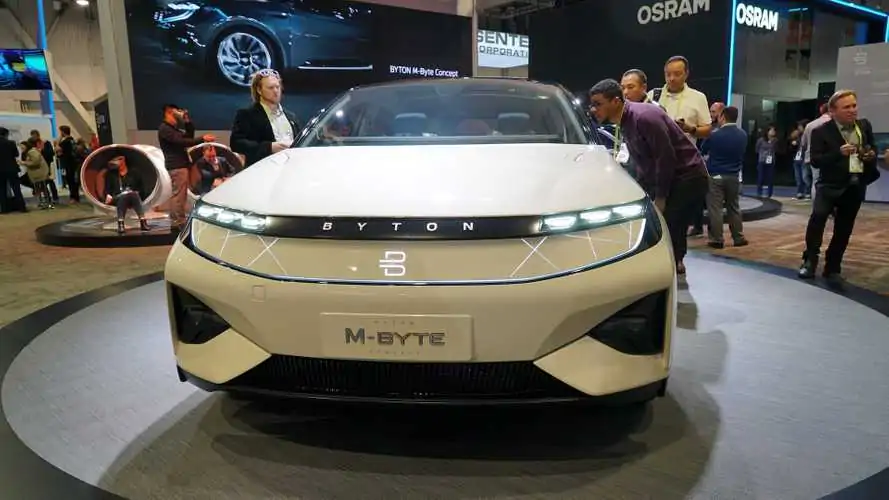
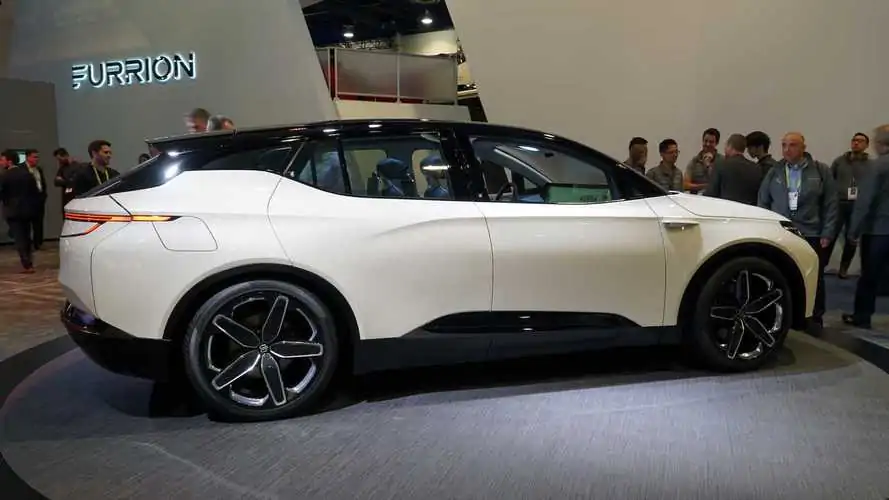
The 2019 Consumer Electronics Show marked Byton’s first major presentation of the production-ready interior for its M-Byte electric SUV. A year earlier, the startup had shown its concept interface, but details about the production cabin had been limited. With Byton targeting Chinese production later in 2019 and U.S. deliveries for 2020, the focus at CES shifted to what had changed and how the technology would work in a production vehicle. Jeff Chung, Byton’s vice president of Intelligent Car Experience, explained the updates and how they differed from the original concept.
A Cabin Full of Screens
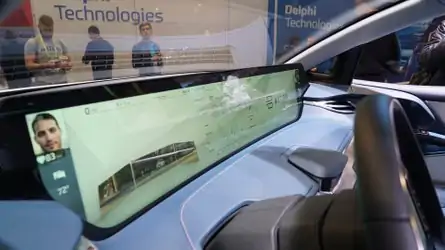
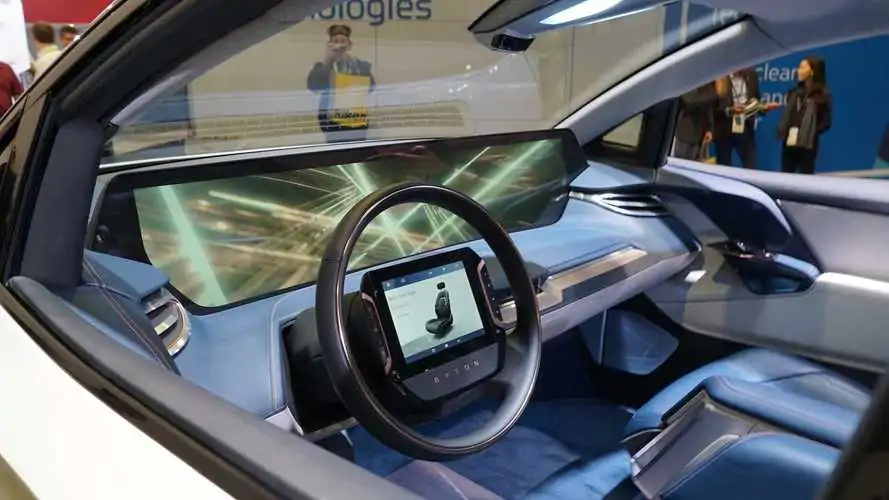
The M-Byte concept already had two displays up front: an 8.0-inch screen integrated into the steering wheel and an enormous 48-inch Shared Experience Display (SED). Apparently, that wasn’t enough. The production M-Byte was set to add a third screen in the center stack, positioned ahead of the center console. Chung explained that the new display essentially mirrors the steering-wheel unit’s functionality, while the steering-wheel screen would shrink to 7.0 inches to accommodate the driver’s airbag. The smaller screens are intended to work alongside the massive SED, giving occupants easier ways to control the main display without constantly reaching toward it.
Software Refinement
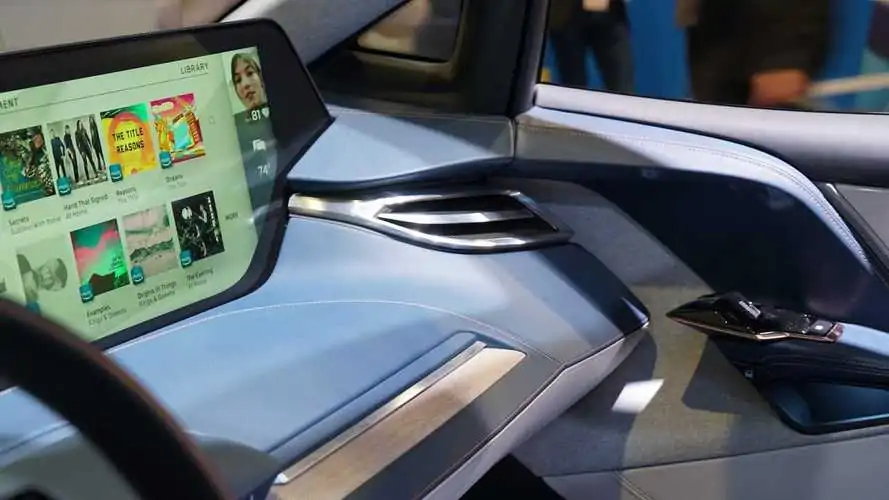
The 48-inch SED is divided into different zones, with vehicle information and driver-focused data positioned in front of the driver while the center and passenger areas handle infotainment. Byton said the production version would feature simpler, more intuitive Android-based software than the original concept system. The company also said it had no plans at the time to support Apple CarPlay. To make the giant display easier and safer to use while driving, Byton planned to offer both voice and gesture controls. Even with those features, however, the sheer size of the SED remained one of the M-Byte’s most unconventional elements, and its real-world usability would ultimately depend on how well all of the controls worked together.
Can All This Technology Stay Affordable?
The biggest question wasn’t whether the M-Byte’s technology worked, but how Byton planned to make it affordable. Chung explained that the company was taking a different approach from many EV makers, placing greater emphasis on user experience and technology than outright performance. If the M-Byte eventually offered advanced autonomous-driving capability, Byton believed acceleration and driving performance would be less important. Its Chinese production operation would also likely play a major role in keeping the price below six figures.
The Road Ahead for Byton
With its unusual interior and technology-heavy approach, the M-Byte represented a major test for Byton as the company prepared for production. The startup planned to begin deliveries in China before turning its attention to the U.S. market. After seeing the M-Byte in person at CES, one thing was clear: that enormous screen was impressive, but whether Byton could turn its ambitious concept into a successful production vehicle remained the bigger question.