
Turning an internal-combustion car into an EV is possible, but the process is far more involved than simply swapping an engine for a battery pack.
Long before battery-electric vehicles became a mainstream part of the new-car market, ambitious enthusiasts were already building their own EVs from conventional gasoline-powered cars. What began as a niche hobby has grown into a cottage industry, with conversion kits and components available for a wide variety of vehicles.
In theory, almost any internal-combustion vehicle can be converted to electric power. In practice, however, the job requires considerable mechanical and electrical expertise, along with a healthy budget. A basic conversion using new components can easily cost $8,000 or more, and that figure doesn’t include the donor vehicle or professional labor. Depending on the car, battery technology, motor, and complexity of the installation, a complete project can push beyond $20,000.
At the extreme end of the spectrum, costs can climb dramatically. Prince Harry and Meghan Markle famously used a classic 1968 Jaguar E-Type roadster converted to electric power by Jaguar for their wedding reception. The project reportedly cost more than $450,000 when the restoration and electric conversion were taken into account.
Choosing the Right Donor Car
Selecting the right donor vehicle is one of the most important decisions in an EV conversion. Enthusiasts generally favor smaller, lighter cars, particularly older models with fewer electronic systems and comfort features that add weight.
A lightweight car requires less energy to move, which can improve both acceleration and driving range. It can also be cheaper to convert because it may require a smaller electric motor and fewer batteries. The downside is that compact cars typically provide less room for installing a large battery pack.
Popular donor vehicles include inexpensive subcompacts such as the Chevrolet Aveo and Geo Metro, along with older Honda Civics and Volkswagen models. Vintage sports cars are another favorite, with the Fiat 124 Spider, Triumph Spitfire and GT6, Mazda Miata, Toyota MR2, and various Porsche models all offering interesting platforms for electrification.
Older compact pickups such as the Chevrolet S-10 and Ford Ranger can also make useful conversion candidates. Large cars, minivans, full-size pickups, and big SUVs are generally less attractive because their additional weight demands more battery capacity and a more powerful motor.
Manual-transmission cars are particularly common conversion candidates. An electric motor produces strong torque from very low speeds and doesn’t require a conventional multi-speed transmission to deliver usable performance. In many conversions, the existing transmission is retained and locked into a single gear, usually first or second, while reverse can continue to function through the transmission. Some AC motor setups can also reverse the motor electronically, eliminating the need to use the transmission for backing up.
Whatever the vehicle, condition matters. The donor should have a solid chassis and healthy brakes, steering, suspension, and other safety-critical components. A car with a failed engine can be an excellent starting point because the most expensive ICE components are already out of the equation, but the rest of the vehicle should still be inspected carefully.
What Goes Into an EV Conversion?
The conversion itself begins with removing the gasoline engine and the hardware associated with it. That typically includes the fuel tank, exhaust system, radiator, starter, and other components that are no longer needed.
In their place comes an entirely new electric powertrain, with the motor serving as the centerpiece. DC motors have traditionally been popular among DIY builders, although AC motors can offer advantages in efficiency, performance, and regenerative-braking capability. Motor selection ultimately depends on the vehicle’s weight, intended performance, available space, and budget.
The motor gets its energy from a large battery pack. Lead-acid batteries remain an inexpensive option and have been used extensively in home-built EVs, but they are heavy and generally provide limited range. Lithium-ion batteries cost more but offer substantially better energy density, making them lighter and more suitable for longer-range conversions.
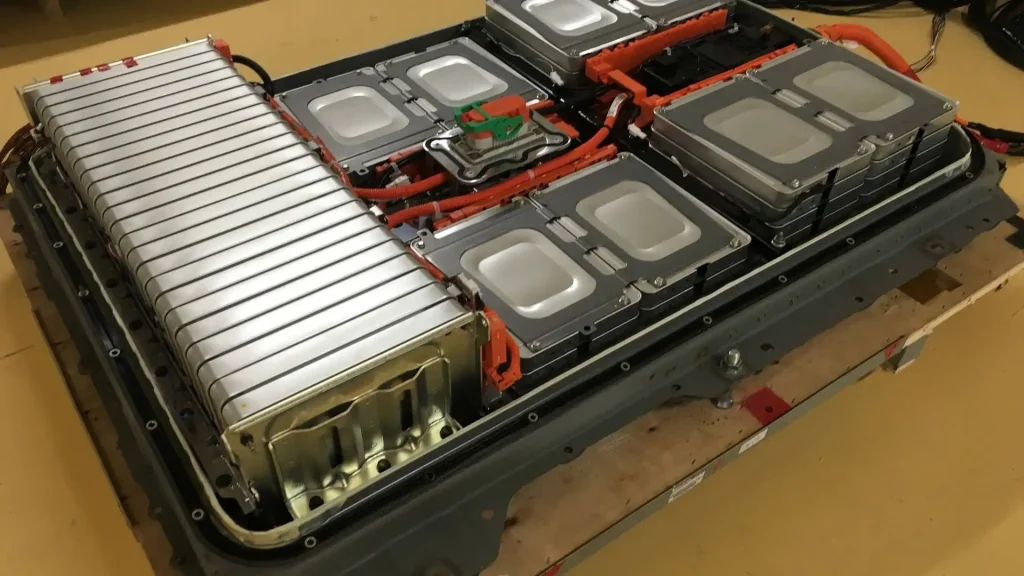
The number and size of batteries required depend on the vehicle and the space available for installation. Battery packs can be distributed throughout the car to help manage weight, with some ambitious conversions even using battery technology sourced from production EVs.
A complete system also needs a motor controller to regulate the flow of electricity between the battery pack and motor. An onboard charger replenishes the batteries from an external power source, while high-voltage cabling, safety equipment, contactors, fuses, and monitoring electronics tie the system together.
Additional components may be required to retain features that originally depended on the combustion engine. Depending on the vehicle, that can include electric systems for heating, air conditioning, power steering, braking assistance, and other accessories.
Safety and Registration Considerations
An EV conversion isn’t simply a matter of swapping an engine for a motor. The added weight of the battery pack, high-voltage electrical systems, changes to the vehicle’s weight distribution, and integration of the new powertrain all need to be carefully considered.
Registration requirements also vary by state. Some jurisdictions require converted vehicles to undergo inspections or meet specific equipment requirements before they can be legally registered.
Because a converted EV produces no tailpipe emissions, it generally doesn’t face the same emissions-certification requirements as a gasoline-powered vehicle. However, local registration, inspection, insurance, and safety rules still apply, so builders should research the regulations where the vehicle will be registered before starting the project.
Table of Contents
Is Converting a Car to Electric Worth It?
For enthusiasts, an EV conversion can be an exciting way to combine classic-car character with modern electric propulsion. It can also give an otherwise unusable vehicle a second life. But for anyone simply looking for inexpensive electric transportation, converting a gasoline car is rarely the easiest or cheapest route.
The cost of the batteries, motor, controller, charger, wiring, fabrication, and labor can quickly exceed the value of the donor car. A professionally completed conversion can cost even more, particularly when extensive restoration work is involved.
For DIY builders with the skills, tools, and patience to take on the challenge, however, the appeal is obvious. Converting a conventional car into an EV offers a hands-on introduction to electric powertrains and the opportunity to create something genuinely unique. For everyone else, buying a used factory-built EV is likely to be the simpler and more economical solution.