
HydroDiesel+ combines diesel and water in an effort to reduce emissions and air pollution without requiring drivers to abandon diesel engines.
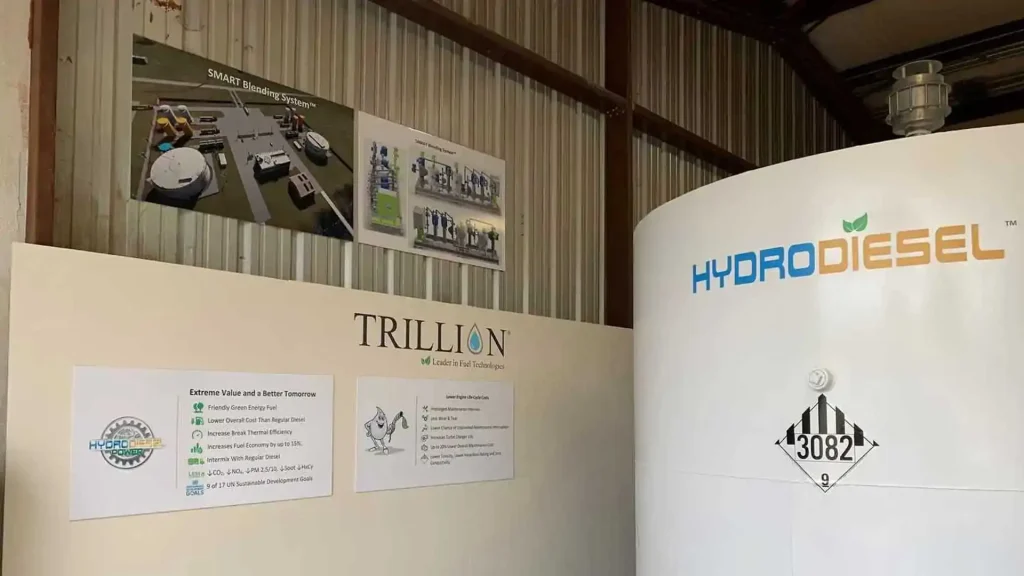
Climate change and air pollution are advancing faster than our ability to address them, making the need for practical, near-term solutions more urgent than ever. While the transition to a carbon-neutral future will take decades, meaningful improvements within today’s transportation and energy systems can still make a difference. That’s where Trillion comes in. The company has developed HydroDiesel+®, a new fuel technology, and is currently working to scale it commercially through a Reg-CF crowdfunding campaign.
Mixing water with combustible fuel may sound counterintuitive, but Trillion has developed a water-in-diesel nanoemulsion technology that incorporates nanoscale water droplets into diesel fuel. The company says the technology can deliver several potential benefits, including lower operating costs, reduced emissions, improved engine output, greater fuel efficiency, and fewer health impacts associated with air pollution.
According to Trillion, the technology can displace approximately 20 percent of the diesel fuel used in an engine while increasing the overall volume of the resulting fuel mixture. The company says that can translate into lower fuel consumption and reduced emissions without requiring major changes to existing diesel-powered equipment.
The potential environmental benefits are a major part of HydroDiesel+’s pitch. Trillion says third-party testing has demonstrated substantial reductions in pollutants, including CO2, NOx, SO2, particulate matter, and black carbon soot. The company cites lifecycle reductions ranging from roughly 40 to 90 percent, although actual results can vary depending on the engine, operating conditions, and other factors.
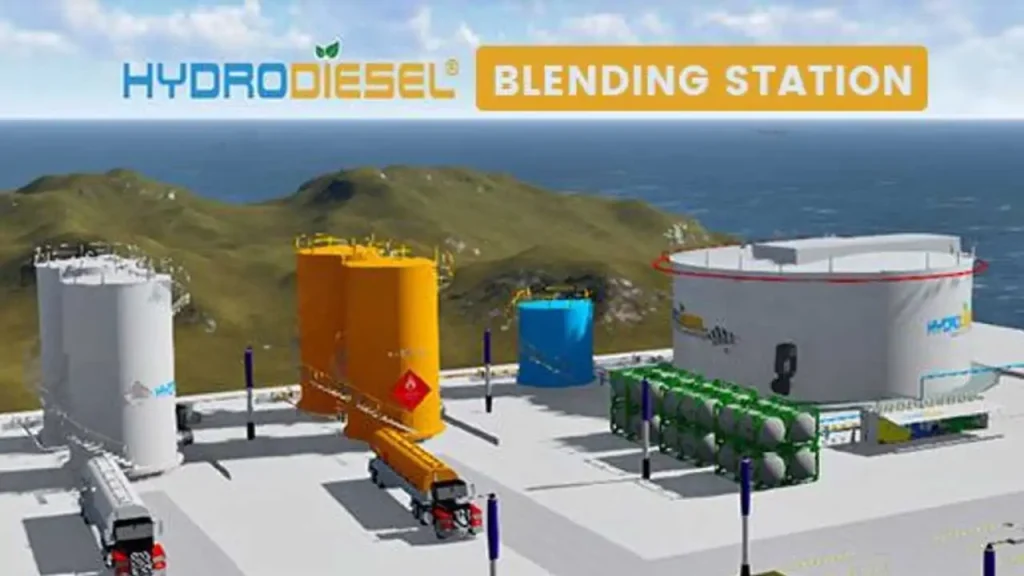
The concept is also designed around existing fuel infrastructure. Rather than requiring an entirely new distribution network, Trillion has developed SMART Blending Systems™, which the company says can be deployed at fuel-storage and distribution locations to process diesel before it reaches the end user. The systems are designed to be mobile and scalable, and Trillion says the technology can even be deployed aboard ships.

That compatibility could be one of HydroDiesel+’s most important advantages. Millions of diesel-powered vehicles, ships, generators, mining machines, agricultural equipment, and industrial engines are already operating around the world. Replacing all of them with zero-emission alternatives won’t happen overnight, particularly in applications where battery-electric technology isn’t yet practical.
A technology capable of reducing emissions from those existing engines could therefore serve as a bridge while cleaner propulsion systems continue to develop.
HydroDiesel+ isn’t intended to make diesel engines carbon-free, and it doesn’t eliminate the environmental impact associated with burning hydrocarbons. Instead, the idea is to reduce the amount of conventional fuel required and lower certain pollutants produced during combustion.
That distinction is important as the transportation and energy industries navigate the transition away from fossil fuels. Electrification, renewable fuels, hybrids, improved combustion technology, and emissions-control systems will all have different roles to play. A solution that can work with infrastructure already in place could potentially provide near-term benefits while those longer-term technologies mature.
Trillion is also pursuing additional research into the technology. The company has partnered with the University of Houston to study and advance HydroDiesel-related fuels for industrial applications, potentially expanding the technology’s reach beyond conventional road vehicles.
For investors interested in the company, Trillion has also used Regulation crowdfunding to raise capital for expanding its HydroDiesel+ technology. Anyone considering such an investment should carefully review the offering documents, understand the risks associated with early-stage companies and crowdfunding investments, and evaluate the company’s technical and commercial claims independently.
The larger question is whether water-enhanced diesel can deliver meaningful emissions reductions at scale without sacrificing performance, reliability, or cost advantages. If it can, the technology could provide a way to make today’s diesel-powered equipment cleaner while the world works toward a longer-term low-carbon future.For more information about HydroDiesel+® and Trillion’s plans for the future, visit the company’s website.