
Same name, same racing DNA, but separated by decades of innovation and engineering evolution.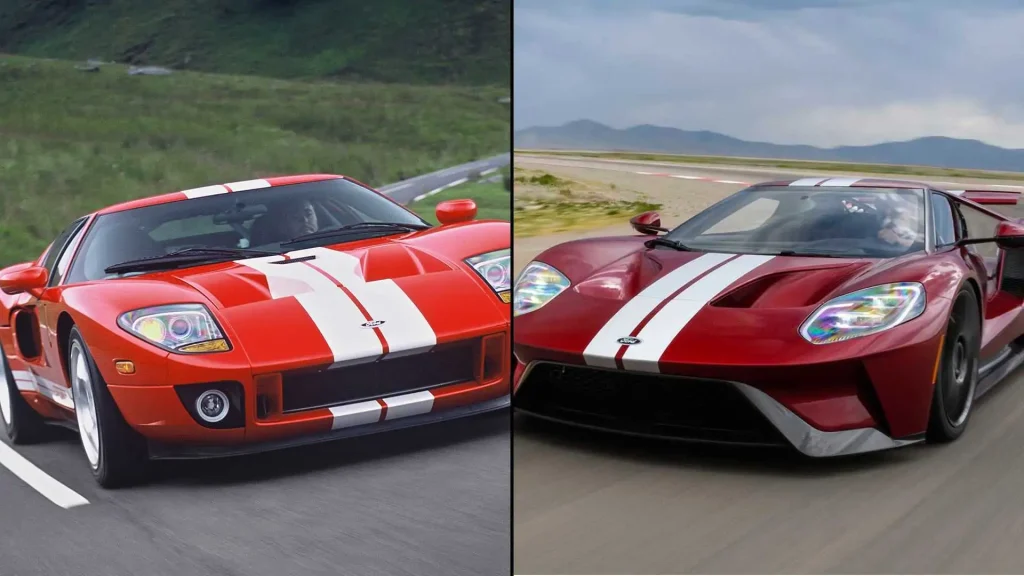
On February 1, 2004, Ford stunned the automotive world by unveiling its reborn GT during a Super Bowl commercial. Thirteen years later, a completely new Ford GT arrived, bringing the legendary nameplate back to the road and the racetrack.
While separated by more than a decade of technological progress, both generations were created with the same mission: to showcase the absolute peak of Ford’s engineering ability while paying tribute to the legendary GT40 that dominated Le Mans. However, the way each car achieves that goal couldn’t be more different. The original relied on classic supercar ingredients — a big engine, lightweight construction, and a manual gearbox — while the latest model embraces cutting-edge aerodynamics, advanced materials, and modern racing technology.
Here’s how the two Ford GT generations compare.
Table of Contents
Design: Retro-Inspired Legend vs. Modern Race Machine
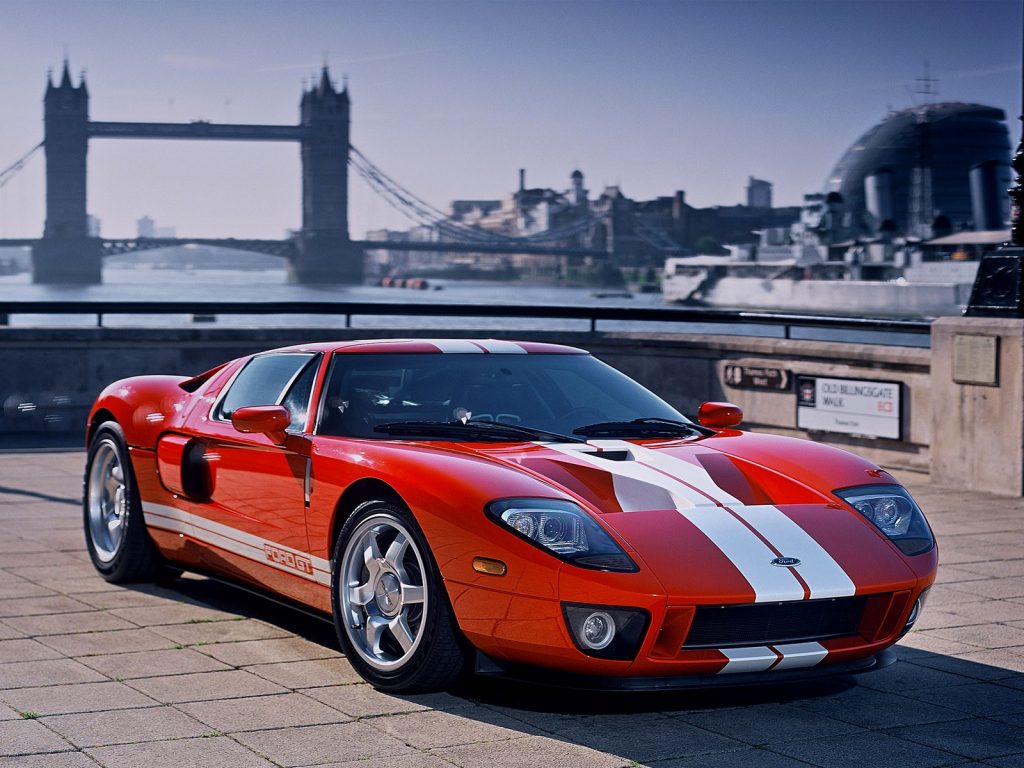
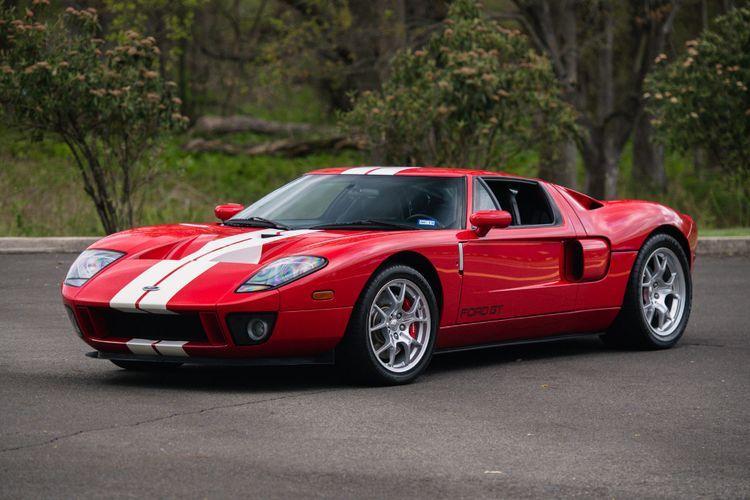
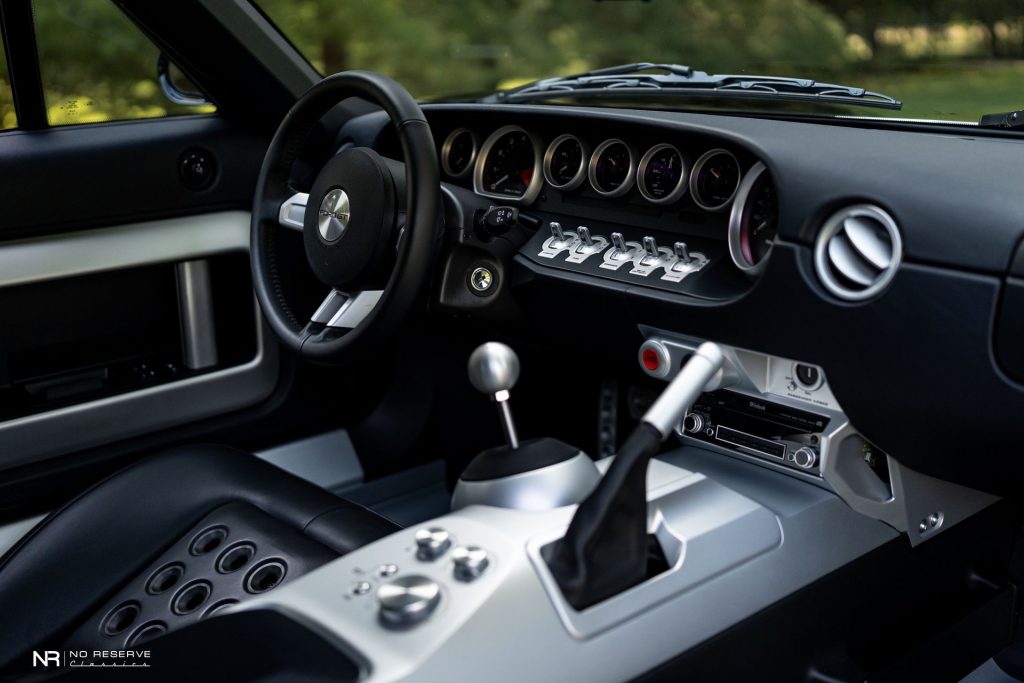
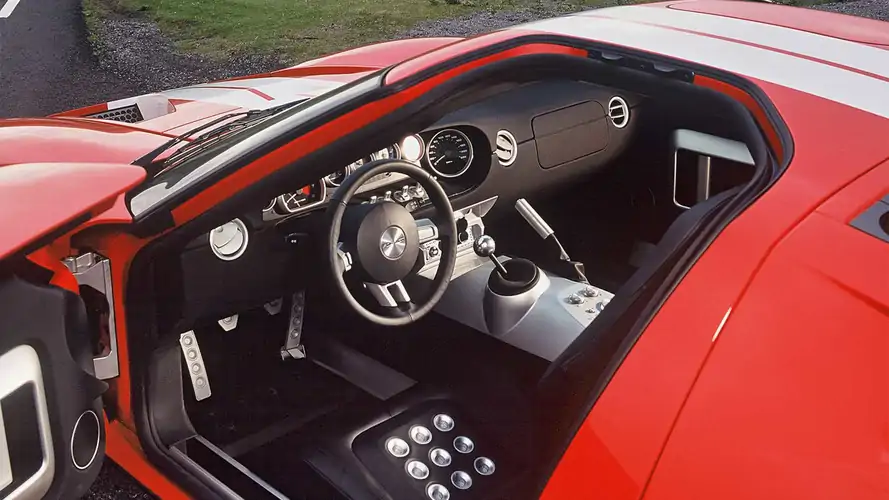
The 2005-2006 Ford GT stayed much closer to the look of the original GT40. Its low-slung body, wide stance, rounded nose, and signature roof-cutting doors gave it an unmistakable connection to Ford’s Le Mans-winning icon. Inside, the cabin followed the same retro racing theme, featuring a centrally positioned 220-mph speedometer, simple controls, and a large exposed shifter for its six-speed manual transmission.
The modern Ford GT, however, takes the same design inspiration and transforms it into a futuristic aerodynamic weapon. Every surface was shaped around airflow, from its massive flying buttresses to its narrow cockpit and enormous cooling vents. The adjustable rear wing and active aerodynamic systems make it look more like a road-going race car than a traditional supercar.
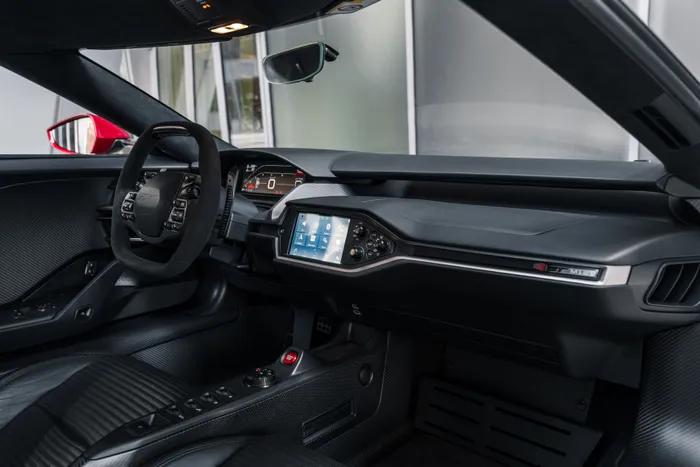
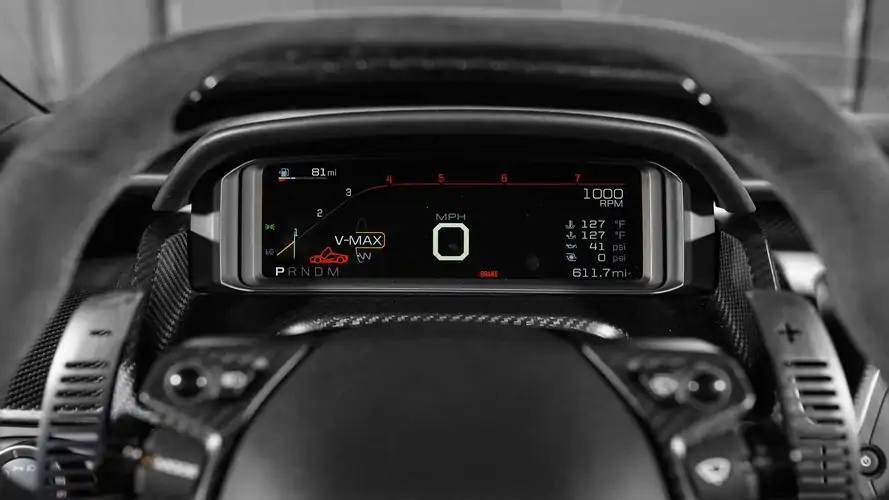
Inside, the new GT is far more advanced but equally focused. A digital instrument display replaces traditional gauges, while the steering wheel is packed with controls inspired by Formula One cars. The cabin is minimal by design, keeping the driver focused on performance rather than luxury.
Construction: Aluminum Muscle vs. Carbon-Fiber Technology
Both Ford GT generations use exotic materials, but the newer model takes lightweight engineering to another level.
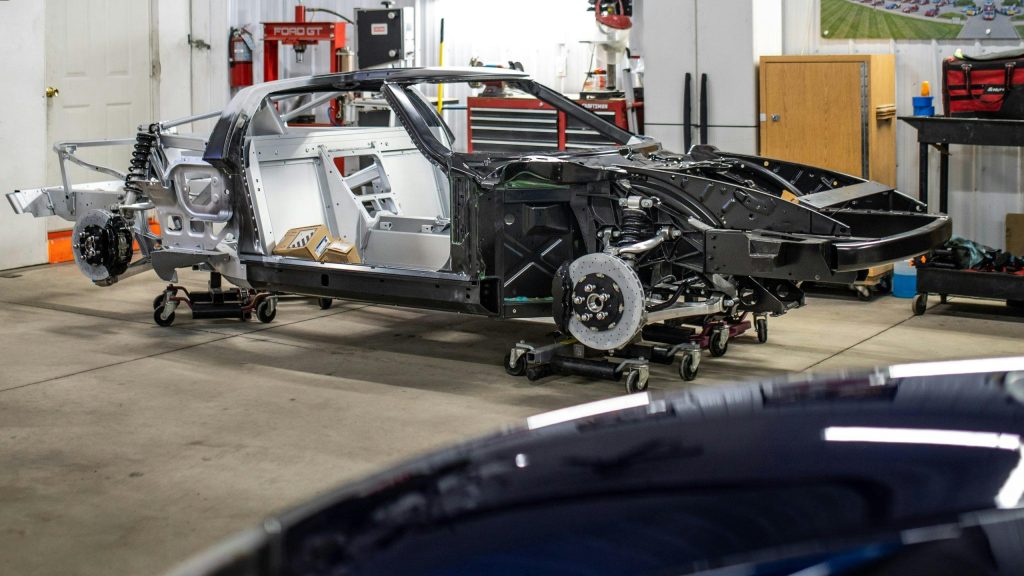
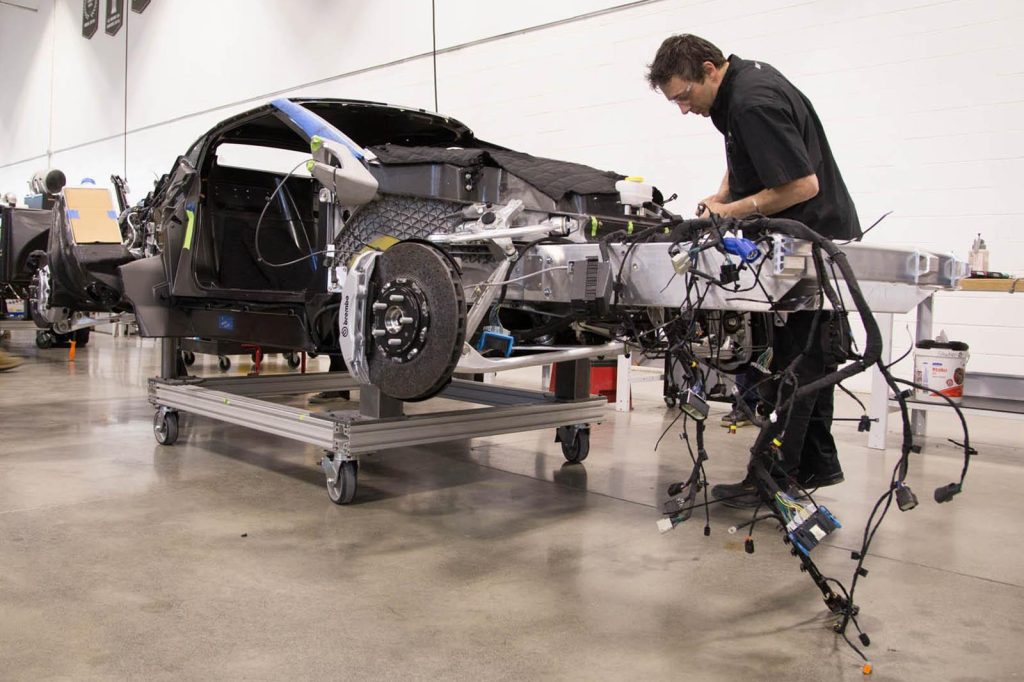
The 2017 Ford GT features a carbon-fiber monocoque chassis, carbon-fiber body panels, aluminum front and rear subframes, and even a lightweight Gorilla Glass windshield. Every component was designed to reduce weight while improving rigidity.
The earlier GT was also technologically impressive for its time, using aluminum body panels, magnesium components, and carbon fiber in key areas. However, it came from an era before carbon-fiber construction became common among high-performance cars.
Despite their differences, both cars remain surprisingly light. The modern GT weighs approximately 3,054 pounds, while the 2005-2006 model comes in slightly heavier at around 3,351 pounds.
Engines: Supercharged V8 vs. Twin-Turbo EcoBoost
Under the hood, the two Ford GTs represent completely different philosophies.
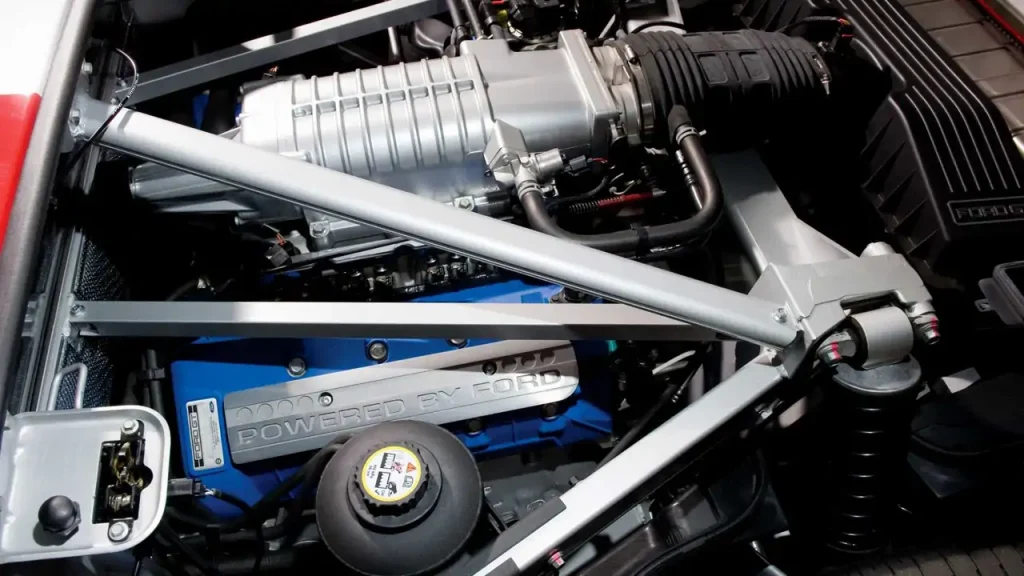
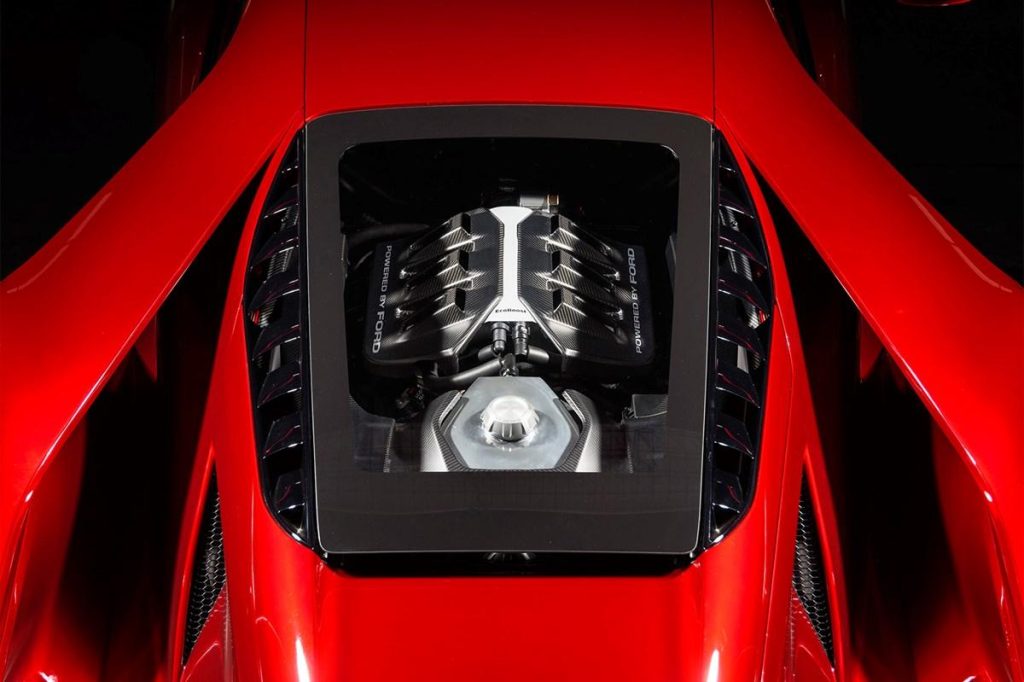
The original GT used a supercharged 5.4-liter V8, producing 550 horsepower and 500 lb-ft of torque. Power was sent exclusively to the rear wheels through a six-speed manual transmission, giving drivers a direct connection that remains highly prized today.
The latest GT moved away from the traditional V8 formula and adopted Ford’s 3.5-liter twin-turbocharged EcoBoost V6. Despite having fewer cylinders, it produces a massive 647 horsepower and 550 lb-ft of torque. Instead of a manual gearbox, power is managed by a lightning-fast seven-speed dual-clutch transmission.
The result is a modern supercar approach: more power, faster shifts, and greater efficiency from a smaller engine.
Chassis and Technology: Old-School Feel vs. Advanced Engineering
The 2017 Ford GT is packed with technology designed to maximize performance. It features Multimatic DSSV adaptive dampers, adjustable ride height, carbon-ceramic brakes, carbon-fiber wheels, and Michelin Pilot Sport Cup 2 tires.
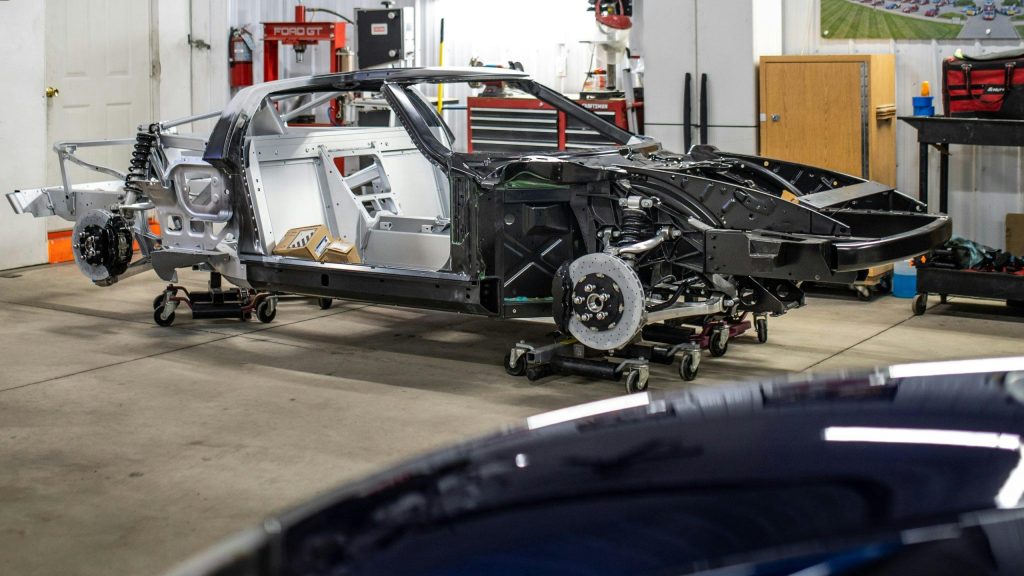
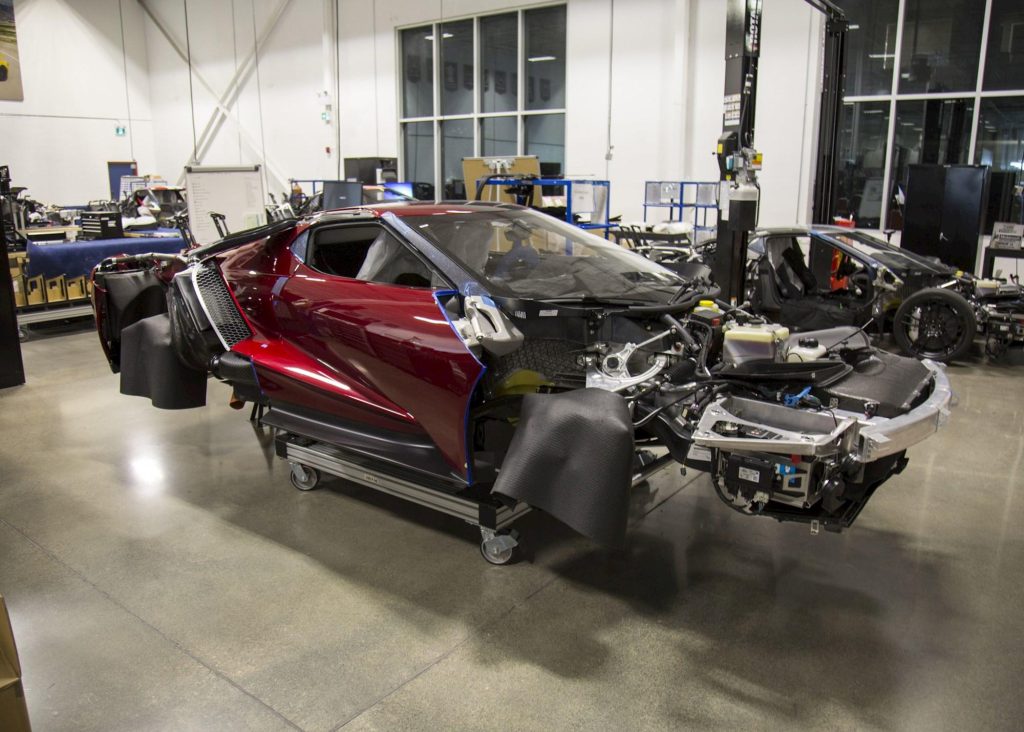
In Track mode, the suspension lowers by two inches, while the active rear wing automatically adjusts to improve stability and downforce at high speeds. Buyers could also choose the Competition Series package, which reduced weight even further.
The original Ford GT was much simpler but still extremely capable. It featured independent coil-over suspension, massive brakes, staggered 18-inch front and 19-inch rear wheels, and Goodyear Eagle F1 tires. It also had ABS and electronic brake-force distribution but lacked modern traction and stability control systems, making it a more demanding car for enthusiastic drivers.
Performance: Both Are Monsters
Neither Ford GT generation is lacking in speed.
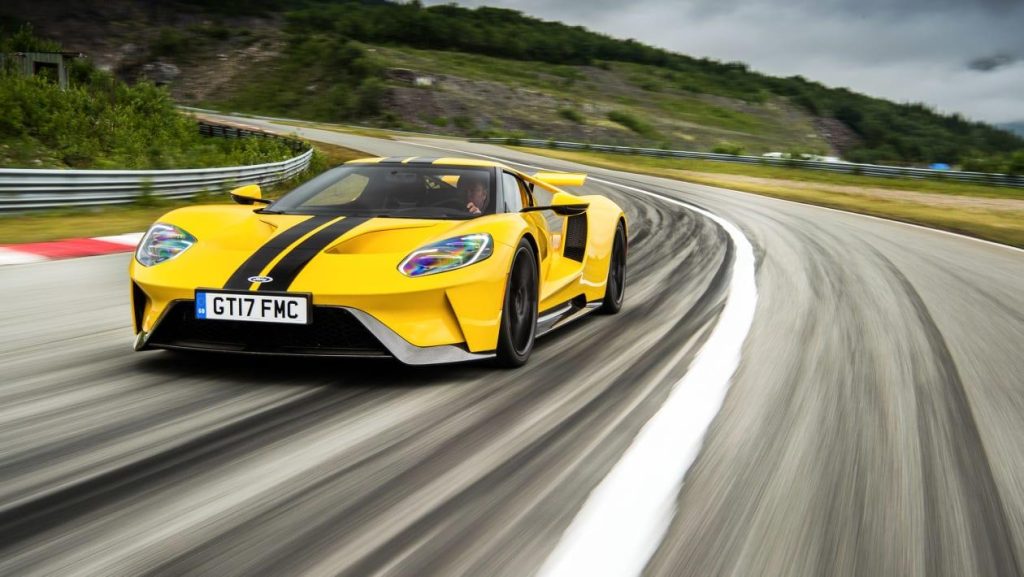
The latest GT reaches a top speed of 216 mph, and Ford has shown that it can compete with some of the world’s best supercars, posting quicker lap times at Calabogie Motorsports Park than cars such as the McLaren 675LT and Ferrari 458 Speciale.
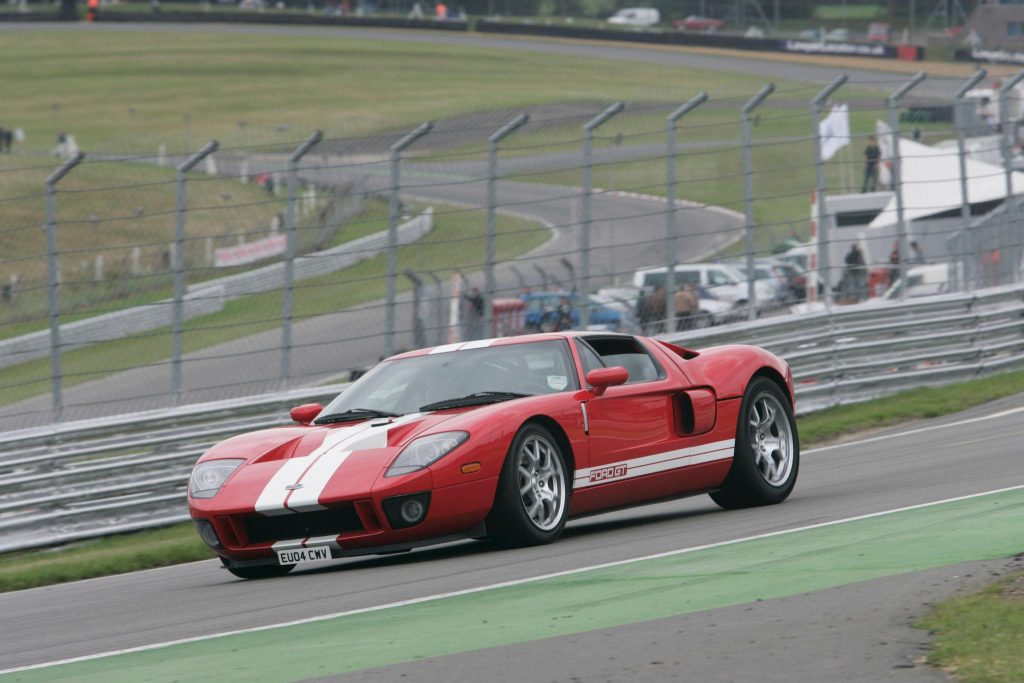
The original GT was no less impressive. With a top speed of 205 mph, it was one of the fastest production cars of its era. Independent tests recorded 0-60 mph times between 3.5 and 3.7 seconds, making it a genuine supercar even by today’s standards.
Fuel Economy: Performance Comes First
Neither Ford GT was designed with fuel savings as a priority.
The newer EcoBoost-powered GT returns approximately 11 mpg city, 18 mpg highway, and 14 mpg combined according to EPA estimates. Despite the engine’s EcoBoost branding, this is a machine built for speed.
Interestingly, the older GT isn’t far behind. Originally rated at 13/21/16 mpg, the 2005 model would score around 12/19/14 mpg under modern EPA testing.
Considering the new GT delivers dramatically more power, grip, and aerodynamic performance, the small difference in fuel economy is impressive — although owners of either car are unlikely to worry about fuel costs.
Availability and Price: Rare Then, Even Rarer Now
Getting your hands on a second-generation Ford GT was never as simple as walking into a dealership. Ford planned to build only 250 examples per year for four years, with the first two years of production allocated through an application process that attracted 6,506 submissions. Ford planned to reopen applications in 2018, but even then, the $450,000 starting price put the GT firmly into ultra-exclusive supercar territory.
The first-generation GT is considerably easier to find, although it is hardly affordable. Ford produced just over 4,000 examples, meaning buyers can still find cars through specialist dealers and auctions. A 2005 GT originally carried a $139,995 price tag, rising to $149,995 by mid-2005. Today, values are far higher, with Hagerty estimating roughly $215,000 to $340,000 for a 2005 model depending on its condition.
If neither option fits the budget, there is always the virtual route. The newer Ford GT can be driven in Forza Motorsport 6—but no simulator can quite replicate the experience of sitting behind the wheel of the real thing.
The GT Is Still the Dream
It’s hard not to. The 2005-2006 Ford GT and its successor represent two very different eras of Ford performance, yet both deliver the same unmistakable sense of occasion. Each pays tribute to the legendary GT40 while proving Ford could build a supercar capable of standing alongside the best from Europe.
The original has the raw appeal of a supercharged V8 and manual transmission, while the newer GT brings race-bred aerodynamics, carbon-fiber construction, and cutting-edge technology. Neither is practical, cheap, or easy to own—but that’s hardly the point.
For most of us, the dream starts with finding one. Then comes the difficult part: figuring out how to pay for it.