
These memorable Indianapolis 500 pace cars from Chevrolet, Oldsmobile, and Pontiac prove the Corvette isn’t the only Indy icon.
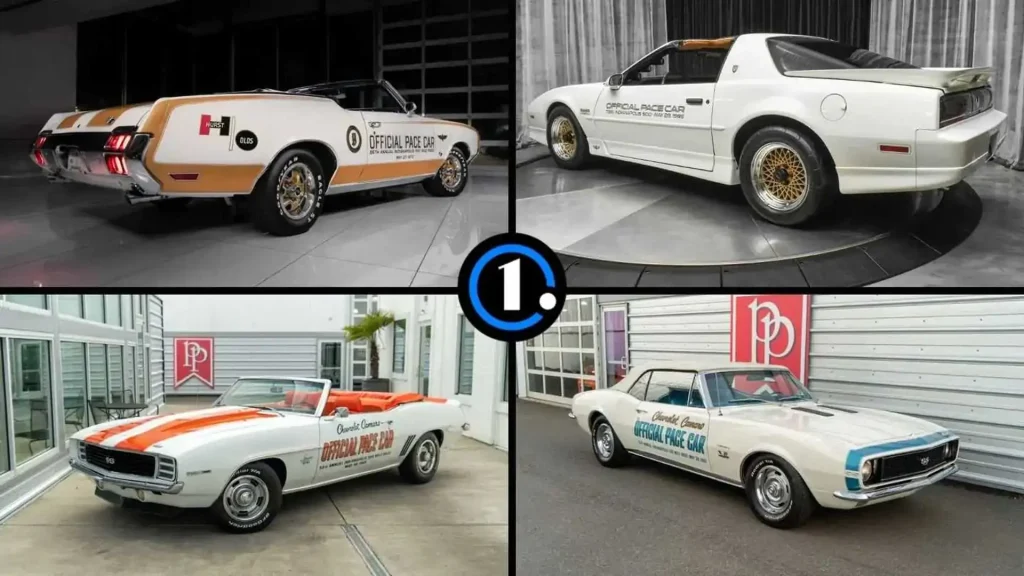
The Indianapolis 500 returns this weekend for another chapter in its storied history one of the oldest and most celebrated events in motorsports. The race dates back to 1911, when the Indianapolis Motor Speedway was still covered largely by its famous brick surface. More than a century later, The Greatest Spectacle in Racing remains one of America’s biggest automotive traditions.
The cars competing for victory naturally get most of the attention, but there is another vehicle that plays an important role in the spectacle: the pace car.
Over the decades, numerous production cars have earned the honor of leading the field around Indianapolis. None has done it more often than the Chevrolet Corvette,, which has become almost inseparable from Indy 500 history. In 2022, the Corvette returned for its 19th appearance as the official pace car, this time with the new Z06.
There is a reason Corvettes are so common in the role. General Motors became the exclusive supplier of Indy 500 pace cars in 1997, and since 2001, the responsibility has belonged exclusively to Chevrolet. The 2000 Oldsmobile Aurora was the final non-Chevrolet GM pace car, while the 1996 Dodge Viper GTS was the last car from a completely different manufacturer.
That history means finding a non-Corvette Indy pace car for sale can be considerably more challenging. But they are out there. With some help from duPont Registry, we found four particularly interesting examples that prove the Corvette isn’t the only production car worth remembering from the Brickyard.
Table of Contents
1967 Chevrolet Camaro
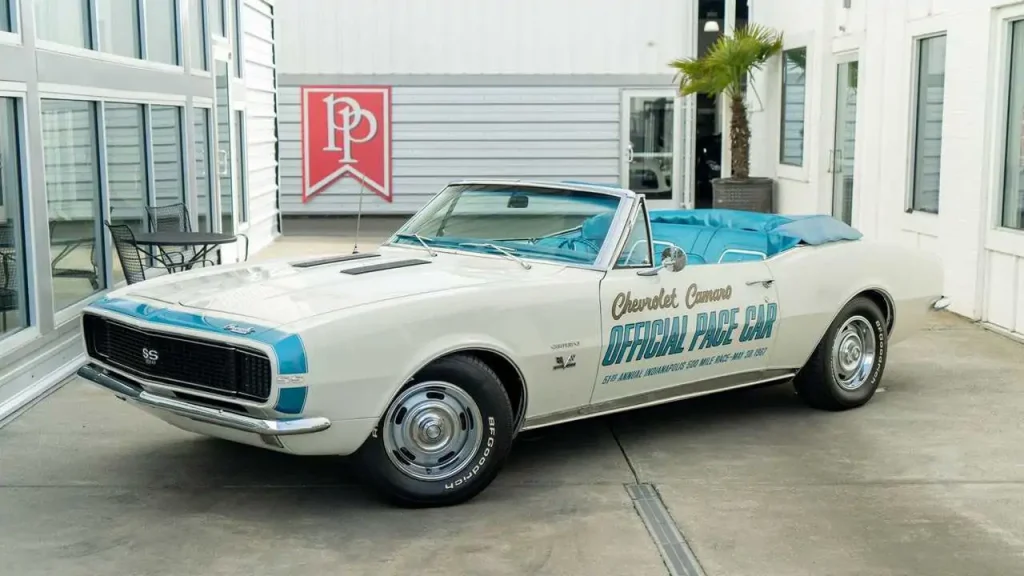
The 1967 Chevrolet Camaro made an immediate impression at Indianapolis, serving as the pace car just as Chevrolet’s new muscle car was arriving in showrooms. It featured a distinctive white exterior with blue stripes and a blue interior, with Chevrolet reportedly building just four cars specifically for pacing duties and another 100 replicas for race officials, VIPs, and others associated with the event. Original examples are exceptionally difficult to find today, making the tribute car we found an appealing alternative. Built to replicate the specifications of the original 104 cars, it offers enthusiasts a more accessible way to experience the history of Chevrolet’s first Camaro pace car.
1969 Chevrolet Camaro
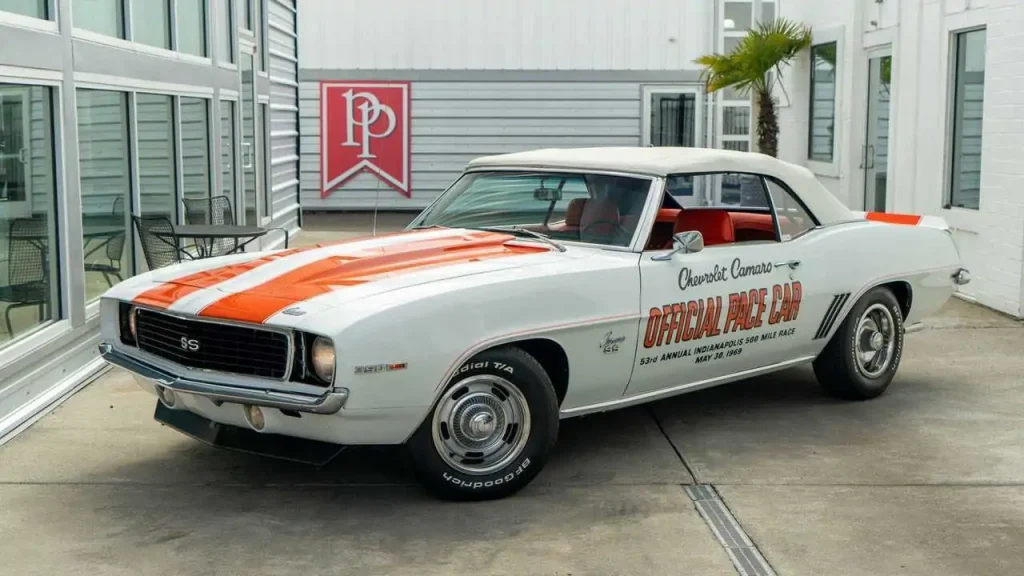
Chevrolet returned to Indianapolis in 1969 with a redesigned Camaro featuring sharper styling and a more muscular appearance than the original model. The pace car traded the earlier blue accents for orange graphics, creating one of the most recognizable special editions of the first-generation Camaro. Chevrolet produced 80 cars for actual track-related duties and 3,675 pace-car replicas for public sale. One example on the market stood out with its combination of RS/SS trim, the optional Z/28 package, and a 300-horsepower 350-cubic-inch (5.7-liter) V8, along with just 41,500 miles on the odometer. That combination makes it more than an Indianapolis 500 tribute, representing a particularly desirable version of Chevrolet’s first-generation muscle car.
1972 Hurst/Olds Convertible
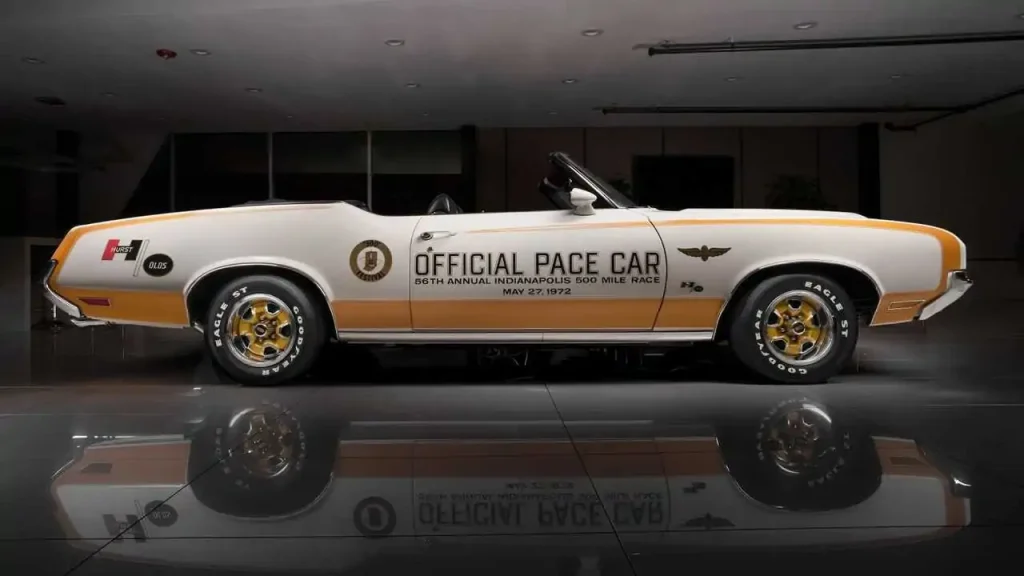
The 1972 Hurst/Olds highlights Oldsmobile’s contribution to Indianapolis 500 history and its partnership with aftermarket performance specialist Hurst. Based on the Cutlass, it featured a formidable 455-cubic-inch (7.5-liter) V8, rated at 300 horsepower in cars used for official Indy duties and 270 hp in production versions. Only 130 convertible examples were built for public sale, with fewer than 50 believed to survive. However, the car we found was not one of those production convertibles but one of 54 Festival Parade Cars associated with the 1972 Indianapolis 500. That distinction gives it a special place in racing history, as it was part of the fleet used around the event rather than simply a replica dressed up with commemorative graphics.
1989 Pontiac Firebird Trans Am Turbo 20th Anniversary
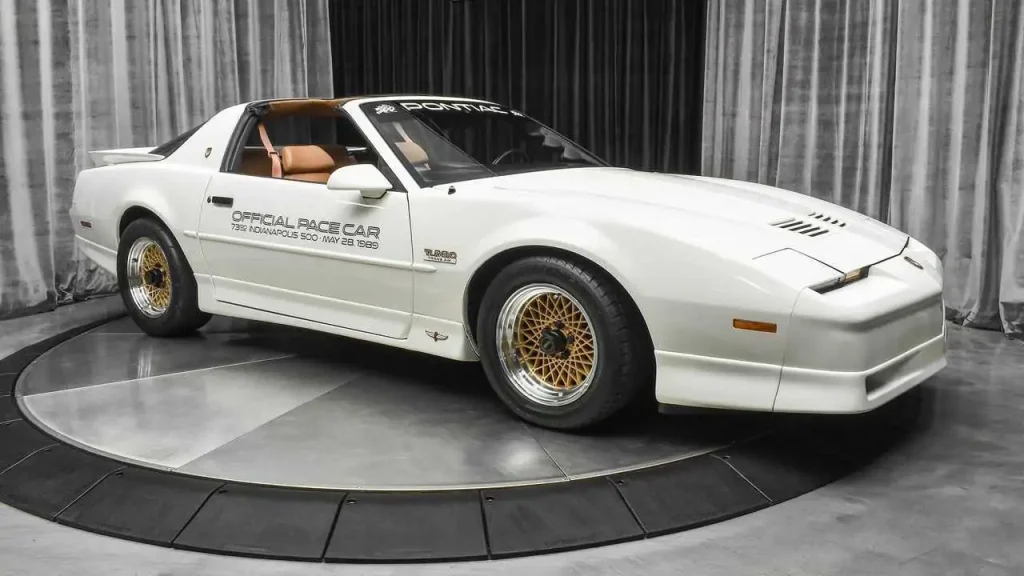
The 1989 Pontiac Firebird Trans Am Turbo 20th Anniversary stands out as one of the most compelling performance cars on this list. Unlike the 1980 Turbo Trans Am, which struggled to match its aggressive styling with outright speed, the 1989 model delivered genuine performance thanks to a turbocharged 3.8-liter V6 derived from the Buick Grand National’s engine. Pontiac built 1,555 pace-car replicas for public sale, giving enthusiasts the opportunity to own one of the most distinctive factory-built Trans Ams of the 1980s. The example we found had just 37,791 original miles, adding to its collector appeal. More than a commemorative model with special graphics, the 20th Anniversary Turbo Trans Am was a genuinely quick performance car with a direct connection to Indianapolis 500 pace-car history.
The Corvette may be the undisputed king of Indy 500 pace cars, but looking beyond Chevrolet’s famous sports car reveals some fascinating alternatives.
The 1967 Camaro represents the beginning of Chevrolet’s pony-car era. The 1969 Camaro captures the muscle-car boom at its height. The 1972 Hurst/Olds combines Oldsmobile’s big-block muscle with Hurst’s performance expertise, while the 1989 Turbo Trans Am shows just how sophisticated American performance cars had become by the end of the 1980s.
None of them needs a Corvette badge to be an important part of Indianapolis 500 history.
And perhaps that’s what makes these cars even more interesting. They aren’t the obvious choices. They represent different eras, different manufacturers, and very different interpretations of what a pace car could be.
They may never have competed for the checkered flag, but each one earned its place in the history of the Greatest Spectacle in Racing.