
Inside Honda’s Northern Italian racing facility, where a road-going Civic Type R is transformed into a serious competition machine.
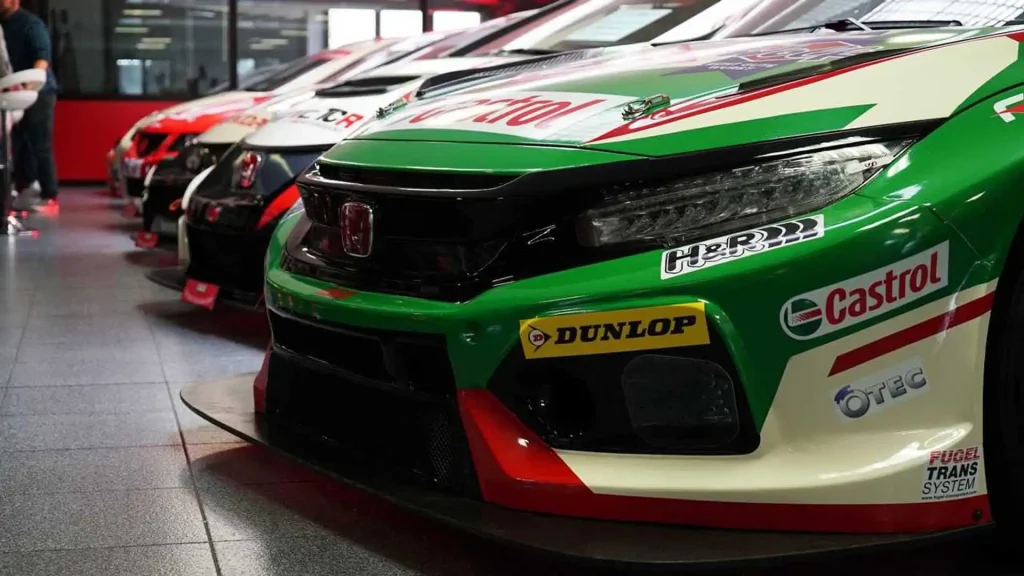
Honda is best known for reliable, practical cars and family-friendly crossovers, but the company’s roots run deep in motorsports. Honda Performance Development (HPD) serves as the center of Honda and Acura racing, with a mission to introduce drivers to the sport early and support them as they progress through their careers. A key part of that effort is the Civic racing program, led by the Type R TCR—a turn-key race car built to compete in racing series around the world.
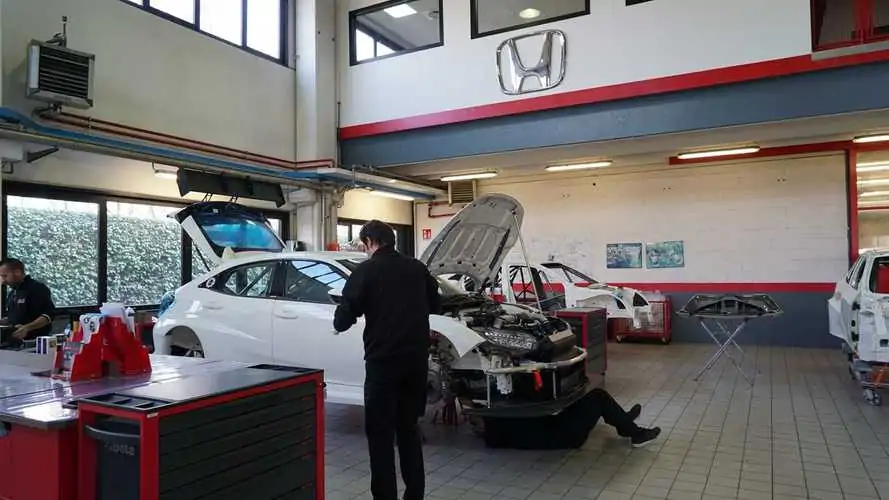
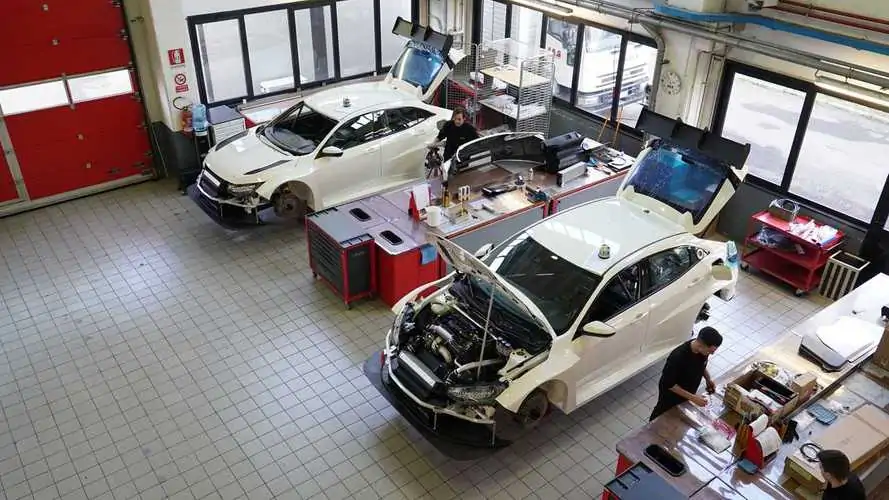
Interestingly, Honda doesn’t build its Civic race cars at its California racing headquarters. They aren’t assembled in Japan, Ohio, or even England, where the road-going Type R is produced. Instead, the race cars are built in a small town roughly 30 minutes outside Milan, Italy. That’s where J.A.S. Motorsports, Honda’s longtime partner for racing programs, hand-builds each Civic through an intricate process. After watching the Type R TCR compete at Daytona, we visited the company’s compact Italian facility to see firsthand how a Civic is transformed into a roughly $170,000 racing machine.
A Civic In Name, A Race Car In Everything Else
The Civic TCR begins its life alongside the road-going model in the United Kingdom, but that’s about where the similarities end. Honda builds the basic body structure and applies the initial primer before shipping a limited number of shells to Italy, where J.A.S. Motorsports begins the transformation into a full-fledged race car. While the TCR retains a handful of components from the street model—including the frame, engine block, exterior lights, and some body panels—most of the car is purpose-built for competition. J.A.S. completely reworks the Civic with race-specific hardware, a process that typically takes around 12 days. The factory has the capacity to produce as many as eight TCRs in a month, although J.A.S. prefers to build three to six to maintain its quality standards. From the first stages of assembly through the final shakedown, each car receives more than 300 hours of engineering work, with the final specification tailored to the individual customer’s requirements.
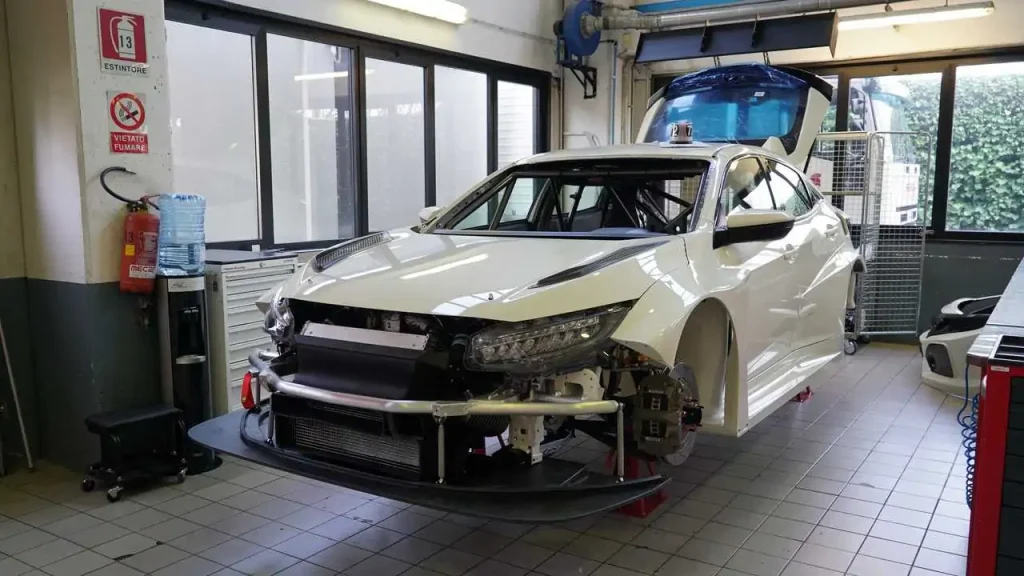
Park the street-legal Civic Type R beside the TCR, and the differences are immediately obvious. The race car wears a dramatically wider composite body kit, topped off by a huge adjustable front splitter designed for serious aerodynamic performance. The changes underneath are just as extensive. J.A.S. receives the Type R’s 2.0-liter four-cylinder engine separately from the body shell and modifies it for competition duty, increasing output to 340 horsepower compared with 306 hp in the road car. The engine also gets a dedicated calibration for 100-octane racing fuel, a larger intercooler, and a custom stainless-steel exhaust. Power reaches the front wheels through a six-speed sequential paddle-shift transmission in place of the road car’s manual gearbox. J.A.S. also fits lightweight 18-inch O.Z. wheels, adjustable coilover suspension, and adjustable anti-roll bars, while the braking system is upgraded with six-piston front and two-piston rear calipers paired with steel discs at all four corners.
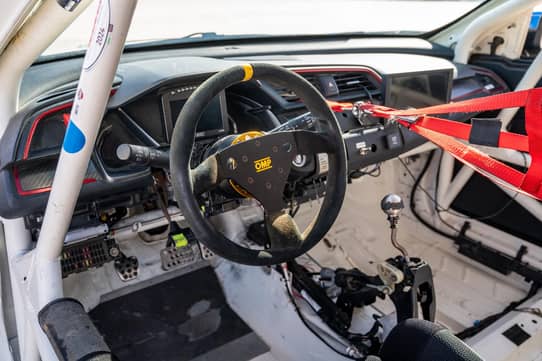
The TCR’s cabin is stripped down with one goal in mind: saving weight. Most of the road car’s sound-deadening material is removed, making room for a large roll cage, a single composite racing seat, and a quick-release competition steering wheel. The standard instrument cluster is replaced by a multifunction display mounted directly above the steering column, putting essential information within easy view of the driver. J.A.S. can also tailor each car to its owner’s requirements, adding options such as a built-in drinking system or custom paintwork.
Bringing The Build To Life
The most important part of the process comes after the Civic TCR has technically been completed. J.A.S. invites customers from around the world to Italy to drive their newly finished cars on a race track, sometimes completing only a handful of laps. This final shakedown gives the engineers an opportunity to make sure the car is functioning as intended while allowing any necessary adjustments based on the customer’s preferences and the requirements of the racing series where it will compete.
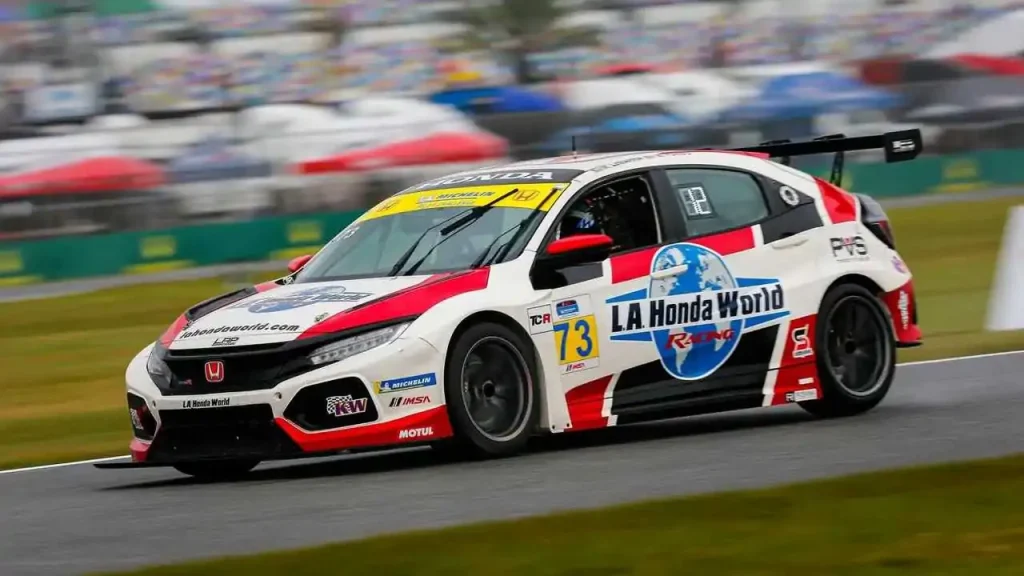
Once the TCR leaves the factory, however, its relationship with J.A.S. and Honda Performance Development doesn’t necessarily end. Every race provides valuable data that can be analyzed by both companies, potentially helping engineers identify improvements for future competition cars and even Honda’s road-going models. It’s another reminder that while motorsports may not be the first thing that comes to mind when thinking about Honda, racing has been an important part of the company’s identity for decades.