
The mission was clear: break the seven-minute barrier at the Nordschleife. Then the weather changed everything.
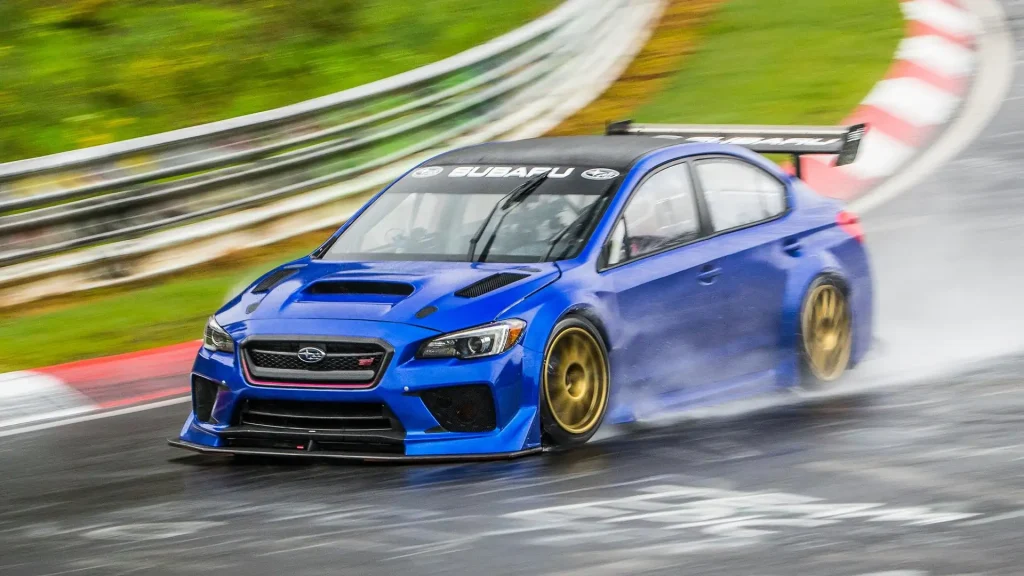
A dry Nürburgring was the one thing Subaru needed and the one thing it didn’t get. The company had brought a heavily modified WRX STI to Germany with a straightforward objective: break seven minutes around the Nordschleife and establish a new benchmark for four-door cars. Instead, persistent rain turned the record attempt into a wet-weather exercise that was never going to produce the time Subaru wanted.
I got a firsthand taste of just how difficult the conditions were after spending three laps inside a WRX STI on the drenched circuit. It was terrifying, exhilarating, and, most importantly, survivable. By the time I climbed out, Subaru communications director Michael McHale was standing nearby in a rain-soaked coat. Despite the failed attempt, he wasn’t talking as though the project was finished. His message was simple: “We will be back.”
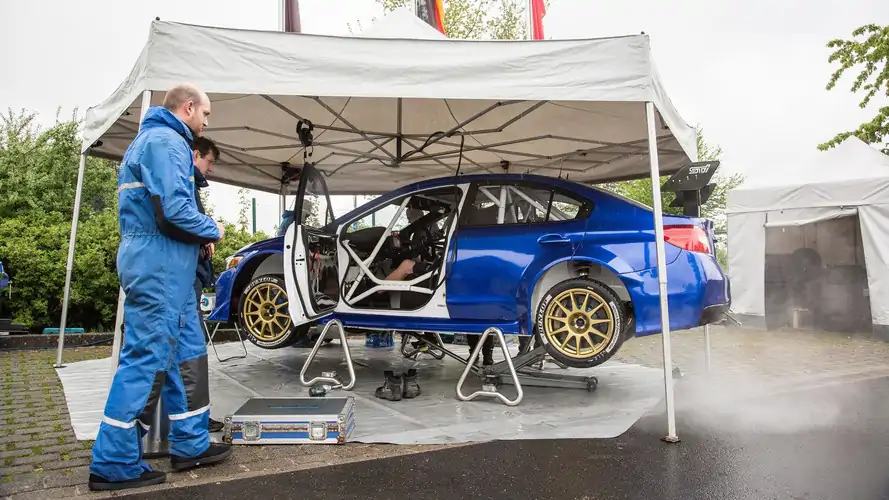
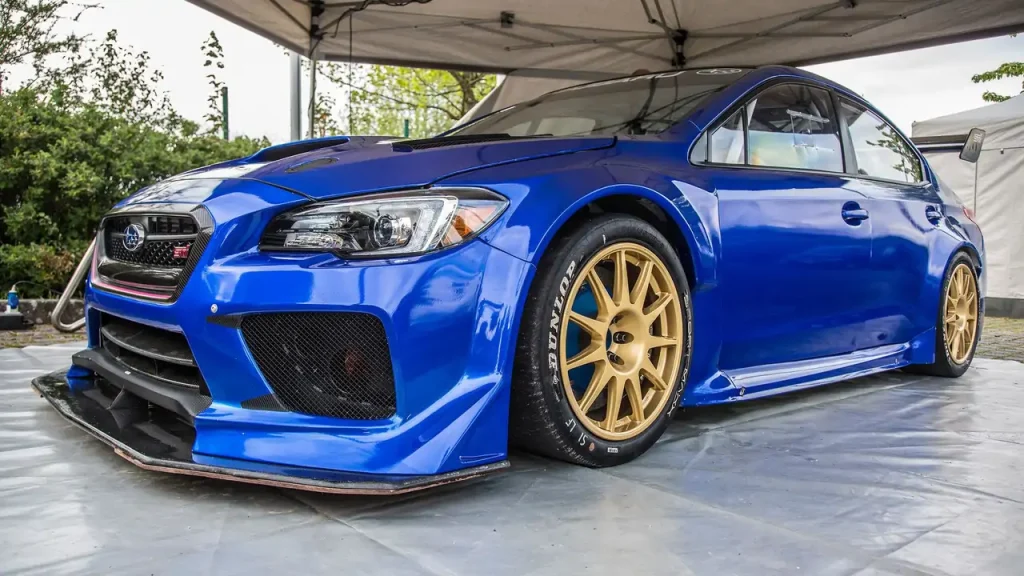
The machine Subaru had brought to Germany was the STI Type RA, short for “Record Attempt.” It started life as a production 2017 WRX STI before Prodrive transformed it into a purpose-built track weapon. The car already had some serious history behind it, having previously been used by professional driver Mark Higgins to set the Isle of Man lap record. Now, after receiving another round of upgrades, it was being prepared for a completely different challenge at the Nürburgring.
Much of the work went into the powertrain. The Type RA uses Subaru’s turbocharged 2.0-liter boxer engine from the WRX rather than the STI’s standard 2.5-liter unit. Prodrive extensively modified the engine, raising output to roughly 600 horsepower and giving it an 8,500-rpm operating range. One engineer revealed that testing had actually taken the engine to 9,000 rpm. A Prodrive sequential transmission sends that power to the wheels, with gear changes taking only 20 to 25 milliseconds. The STI’s active center differential remained, allowing the all-wheel-drive system to continually vary torque distribution between the four wheels.
The chassis was just as serious. Prodrive installed rally-style springs, dampers, links, and struts, while 15-inch ventilated brake discs and eight-piston calipers handled braking duties at all four corners. Nine-inch-wide racing slicks were mounted on Subaru’s signature gold wheels, and the car received an additional 0.6 degrees of negative camber compared with its Isle of Man setup. The goal was maximum stability and traction on a circuit famous for its unpredictable corners, elevation changes, and unforgiving barriers.
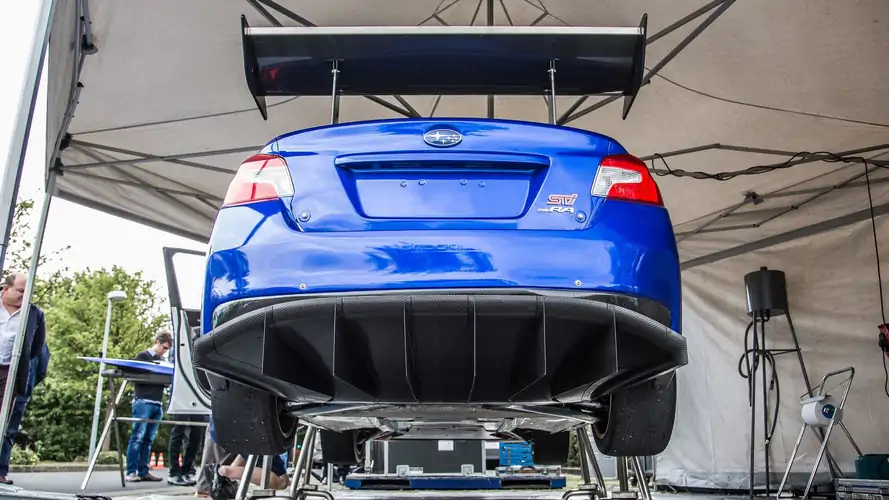
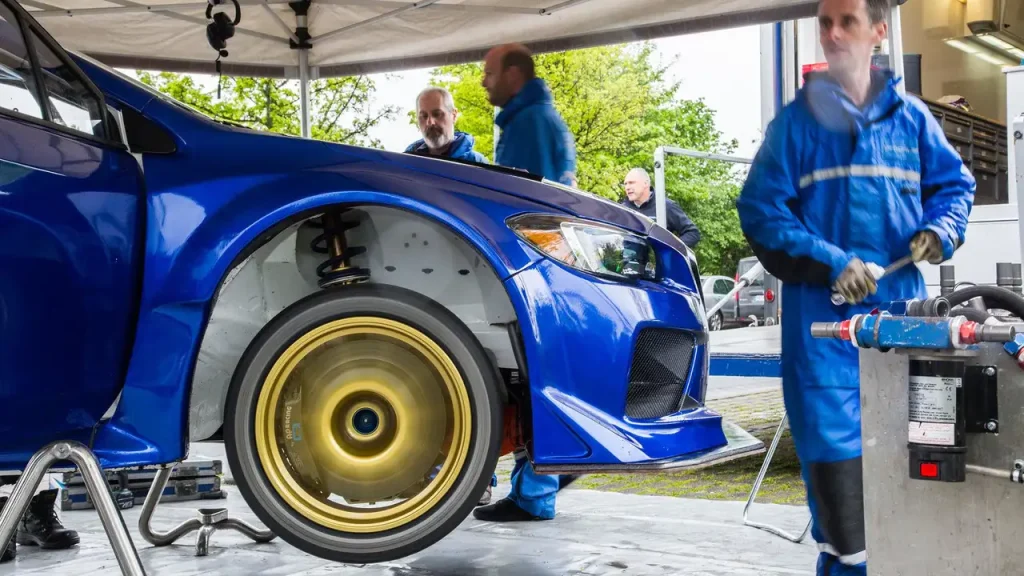
The Type RA also had an impressive aerodynamic trick. Its enormous rear wing could be adjusted electronically from a steering-wheel button, allowing the driver to change the amount of downforce. Activating the mechanism produced a loud hydraulic chunk as the upper section moved. It was the kind of detail that made the car feel much closer to a racing prototype than a modified road-going STI.
Behind the wheel was Richie Stanaway, a 25-year-old New Zealand racer whose résumé already included the 24 Hours of Le Mans, Bathurst 1000, and FIA World Endurance Championship. He had been confident about the record attempt when the weather was cooperating, but the worsening forecast changed the mood. The Nürburgring is difficult enough in the dry; chasing a sub-seven-minute lap on a wet surface was simply too dangerous and too slow.
Stanaway eventually fired up the STI and headed toward the Nordschleife. The engine’s aggressive boxer growl disappeared as the car reached the circuit, leaving everyone else to wait. Then the headlights appeared in the distance. Stanaway came onto the long straight at speed, throwing a huge cloud of water behind the car as a helicopter followed overhead. The official run was underway, but the conditions made it obvious that a record wasn’t coming.
Around eight minutes later, Stanaway returned. There was no sub-seven-minute time and no new four-door record, but he climbed out smiling after completing the lap. Prodrive’s engineers immediately began working on the car, making adjustments and tuning the STI before sending Stanaway back out later that afternoon. That second outing was mainly for photographs and video rather than another genuine record attempt.
Still, Subaru wasn’t ready to call the project a failure. The team believed the Type RA had the necessary performance, and Stanaway had demonstrated that he could handle the car. The problem was the weather. Give the STI a dry Nordschleife, and Subaru believed it could make a serious run at the seven-minute barrier.
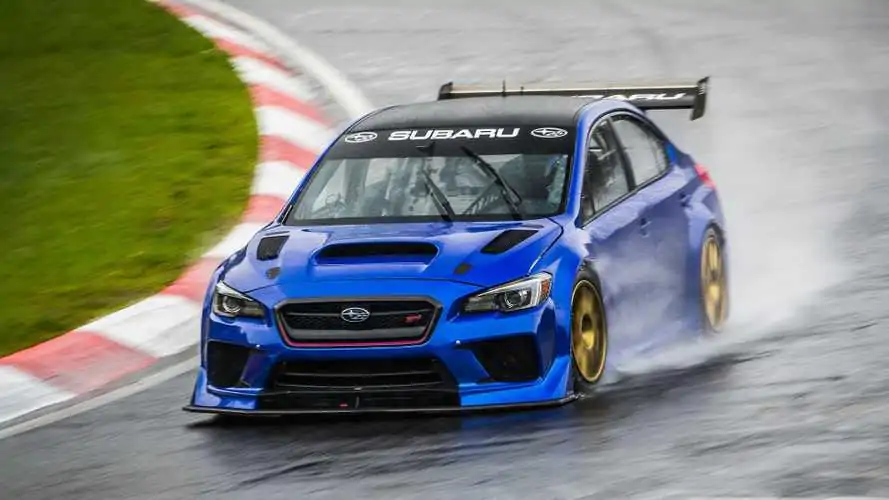
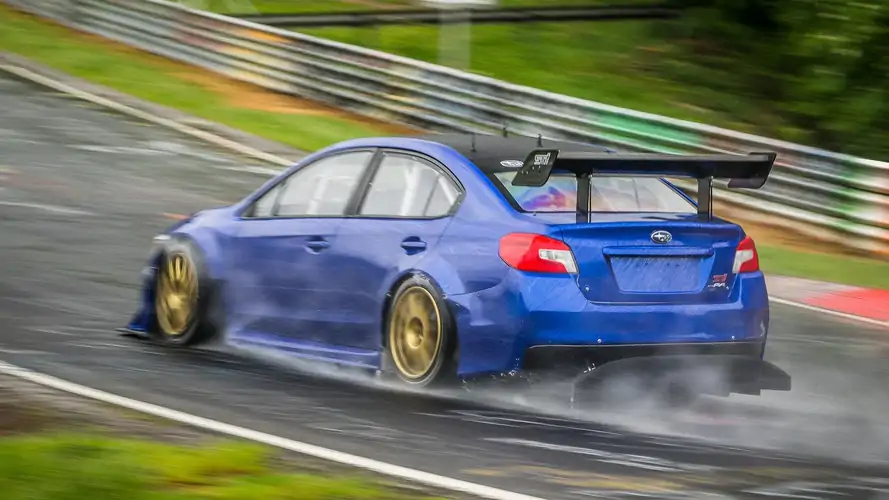
The Type RA story also extended beyond the record car. Subaru confirmed plans for a road-going WRX STI Type RA, bringing some of the development work to a production model. The street version would receive a carbon-fiber roof, upgraded suspension, Recaro seats, powertrain improvements, and a suitably outrageous rear wing.
The Nürburgring record would have to wait, but the attempt proved that Subaru and Prodrive had built something far more extreme than an ordinary WRX STI. The car had the hardware, Stanaway had the talent, and the team had the determination. All Subaru needed was another opportunity—and, this time, a dry track.