
That small crack could pose a bigger safety risk than you think.
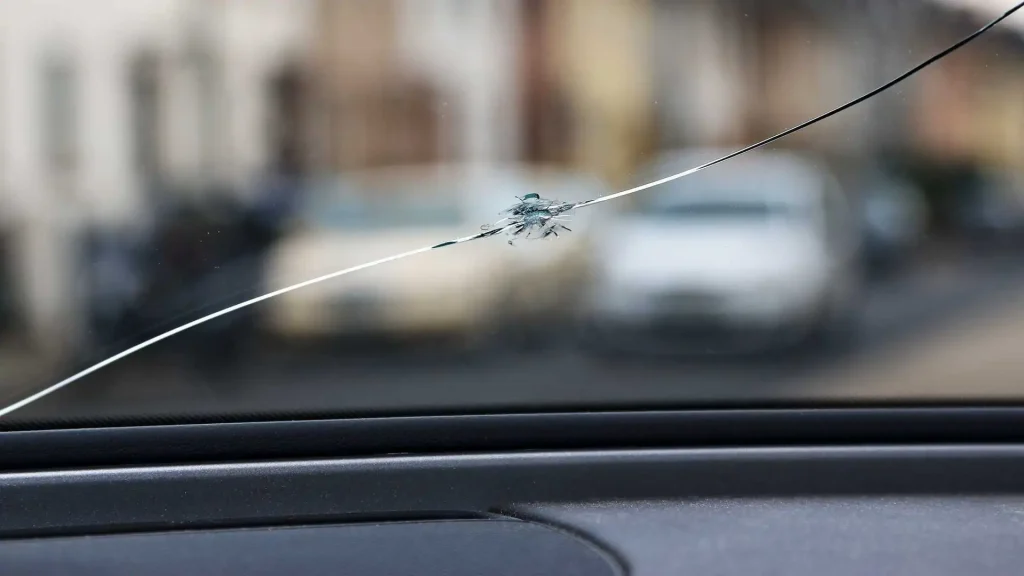
A stone thrown up by a truck or another vehicle can leave you with a chipped or cracked windshield before you know it. Although the damage may seem minor at first, temperature changes, road vibrations, and everyday driving can cause it to spread, potentially turning a simple repair into a full windshield replacement. Depending on local regulations, the damage could also cause your vehicle to fail an inspection or violate windshield safety requirements. And if the chip or crack affects the area used by your car’s driver-assistance technology, it may compromise the performance of certain safety features. To explain the risks of driving with damaged glass and the options available for fixing it, we consulted the experts at Safelite Auto Glass®.
Putting off a repair can allow a small blemish to develop into a more serious problem, increasing both the cost and the time needed to fix it. Prompt attention is especially important in newer vehicles with a forward-facing camera, typically positioned near the rearview mirror. Damage in front of that camera may interfere with systems such as adaptive cruise control, collision avoidance, and lane-departure warning. Having the windshield assessed early can help determine the right repair and reduce the risk of further complications.
Windshield damage in certain areas can interfere with your vehicle’s advanced safety features.
Safelite estimates that forward-facing cameras are now fitted to around 80 percent of new vehicles, with the company predicting that the technology will be standard across all new models by next year. For vehicles equipped with these systems, replacing the windshield involves more than installing new glass: the camera must also be recalibrated. The exact procedure depends on the vehicle’s make and model.
There are two main methods of camera recalibration. Static recalibration is performed inside a service facility using specialized equipment, including lasers and target boards. Dynamic recalibration, on the other hand, involves driving the vehicle so the system can be adjusted under real-world conditions. Certain vehicles need both procedures. Safelite says it can carry out either type of recalibration at its repair centers.
A few simple precautions can help keep the crack from spreading.
If your windshield gets chipped or cracked and you can’t arrange a professional repair immediately, a few precautions may help prevent the damage from getting worse. Avoid trying internet remedies such as filling the affected area with super glue, as this could complicate the repair process and potentially leave you needing a replacement instead. It’s also best to park in the shade whenever possible, since prolonged exposure to direct sunlight can heat the glass and cause existing damage to spread. Sudden temperature changes are another risk, so don’t splash cold water onto a hot windshield.
Depending on the size, location, and extent of the damage, a chip or crack may be repairable without replacing the entire windshield. Small areas of damage can often be treated by injecting a special resin into the affected section and curing it with ultraviolet light. This helps restore the glass’s strength and can make the blemish far less noticeable. If the damage is too extensive or falls in a critical area, however, replacing the windshield may be the only suitable option. In that case, choose a reputable provider with trained technicians and quality materials, such as Safelite.
A damaged windshield can compromise your safety, and delaying repairs may allow the problem to worsen, potentially leading to higher costs down the road. The price of fixing or replacing the glass depends on factors such as your vehicle’s make and model, the extent of the damage, and the service provider you choose. To help manage the expense, consider a company that works directly with your insurer and can help you determine whether your policy covers some or all of the cost. You can also request a free estimate online through Safelite.