
Our Legends series shines a spotlight on the most iconic, influential, and unforgettable cars ever to hit the road or racetrack.
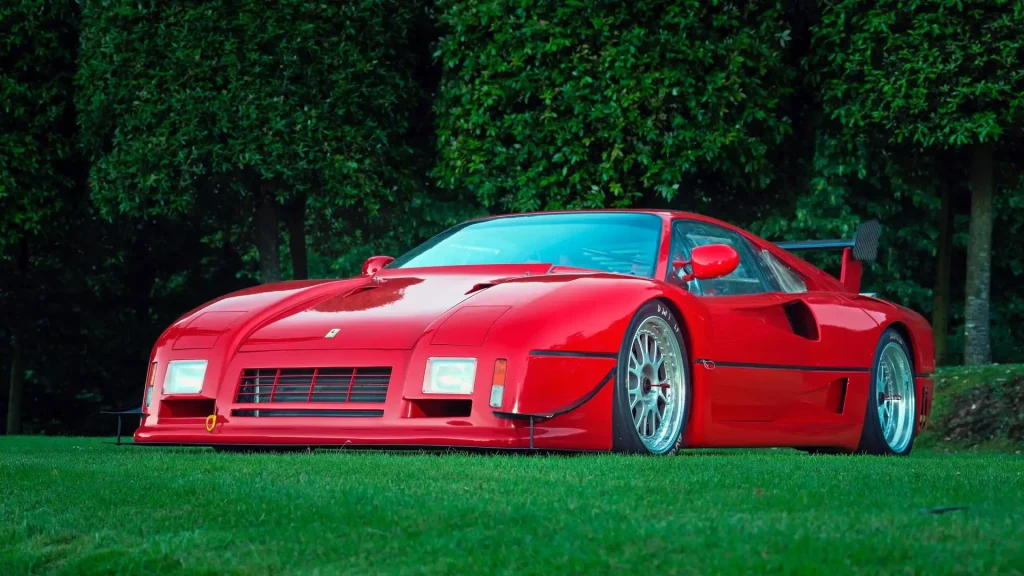
Ferrari has long been synonymous with motorsport excellence, and during the golden era of Group B rallying, the Italian marque set out to build one of its most extreme machines yet—the Ferrari 288 GTO Evoluzione. Conceived as the ultimate evolution of the already formidable 288 GTO, the Evoluzione was engineered to meet the demands of Group B competition, pushing Ferrari’s performance and technology to unprecedented levels.
The 1980s marked one of the most thrilling chapters in motorsport history. Group B regulations gave manufacturers remarkable freedom, encouraging the development of lightweight, immensely powerful cars that delivered breathtaking speed and spectacular performance. The result was an unforgettable era filled with engineering innovation and legendary machines that captivated fans around the world.
However, the very qualities that made Group B so exciting also made it incredibly dangerous. As horsepower continued to climb and safety struggled to keep pace, a series of catastrophic accidents claimed the lives of drivers, co-drivers, and spectators alike. In response to the growing safety concerns, the Fédération Internationale de l’Automobile (FIA) abolished the Group B category after the 1986 season, bringing an abrupt end to one of motorsport’s most iconic and controversial eras. Although the Ferrari 288 GTO Evoluzione never had the opportunity to compete, it became an important milestone in Ferrari’s history, laying much of the technological groundwork for the legendary F40 that followed.
With Group B regulations opening the door to unprecedented engineering freedom, Ferrari’s engineers began developing a purpose-built competition car unlike anything the company had created before. The project centered on a lightweight tubular steel chassis wrapped in advanced composite bodywork and powered by a heavily turbocharged V8 engine. Designed to exploit every advantage the regulations allowed, the car promised to be Ferrari’s ultimate Group B contender.
Just as development neared completion, however, the FIA announced the cancellation of the Group B category following a series of fatal accidents during the 1986 season. Overnight, Ferrari’s ambitious racing project lost its reason for existing. With no championship capable of accommodating such an extreme machine, the 288 GTO Evoluzione never had the chance to prove itself on the track.
Even without a racing career, the Ferrari 288 GTO Evoluzione remains one of the most remarkable performance cars Ferrari has ever built. Its tubular steel spaceframe, combined with lightweight carbon-fiber and Kevlar body panels, kept curb weight to roughly 2,200 pounds (1,000 kilograms). Mounted behind the driver was a twin-turbocharged 2.9-liter V8 producing more than 650 horsepower—an astonishing figure for the mid-1980s and enough to deliver race-car levels of performance.
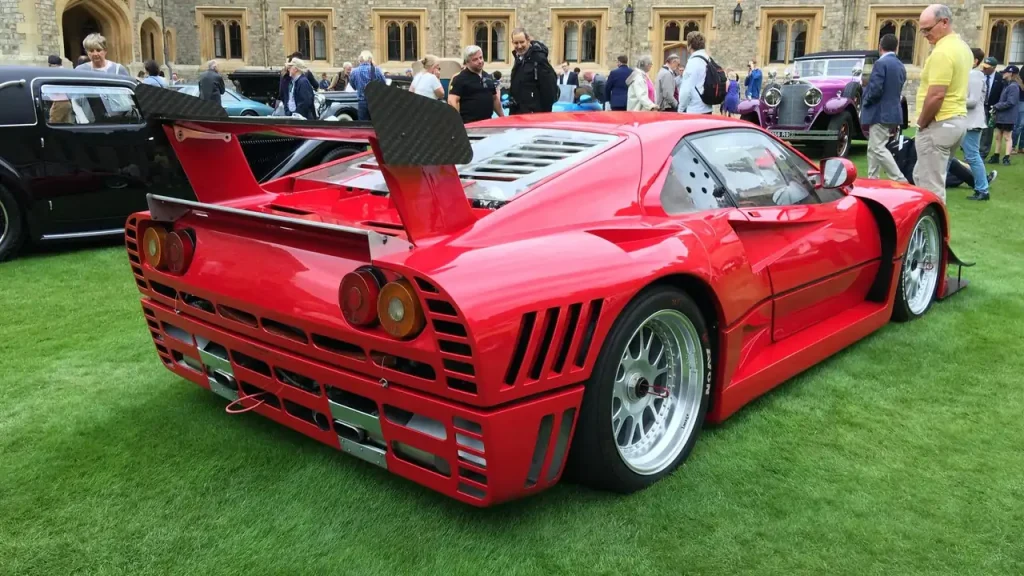
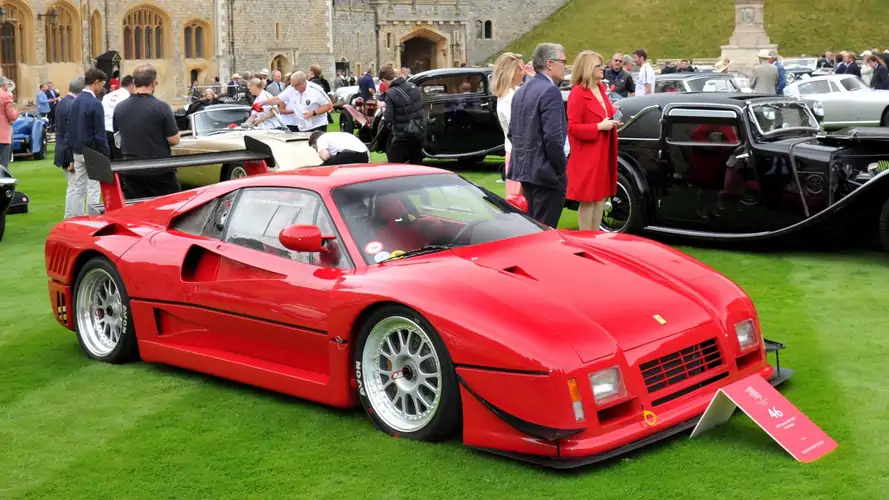
Aerodynamics played an equally important role in the Evoluzione’s design. Aggressive front splitters, large cooling ducts, functional air vents, sculpted side channels, and an oversized rear wing worked together to maximize downforce and high-speed stability. Every surface served a purpose, giving the car an appearance that was years ahead of its time and foreshadowing the aerodynamic philosophy of future Ferrari supercars.
Although the Evoluzione never competed in a single Group B event, the project was far from a failure. Ferrari recognized that the technology, engineering, and performance developed for the prototype deserved a second life. Enzo Ferrari personally approved transforming many of its innovations into a road-going halo car that would commemorate the company’s 40th anniversary. The result was the Ferrari F40—one of the greatest supercars ever built and a fitting legacy for the remarkable 288 GTO Evoluzione.
Following years of highly confidential development, Ferrari unveiled the F40 in 1987 to celebrate the company’s 40th anniversary. While designed as a road car, the F40 carried much of the DNA of the 288 GTO Evoluzione. It inherited a twin-turbocharged 2.9-liter V8, utilized lightweight composite materials such as carbon fiber and Kevlar, and incorporated many of the aerodynamic lessons learned from its racing predecessor. Its sculpted body featured deep air channels, prominent side intakes, aggressive front-end aerodynamics, and the now-iconic fixed rear wing—all design elements inspired by the Evoluzione prototype.
Although the Ferrari F40 went on to become one of the most celebrated supercars in automotive history, the 288 GTO Evoluzione remained an exceptionally rare creation. Only six examples were ever produced, making it one of Ferrari’s most exclusive models. One chassis was reportedly used during the F40’s development program, while the remaining cars are believed to reside in private collections, rarely appearing in public. Their exact locations remain something of a mystery, adding to the mystique surrounding a machine that never fulfilled its original racing mission.
The Ferrari 288 GTO Evoluzione may never have competed in Group B, but its influence lives on through the F40 and every high-performance Ferrari that followed. What began as a canceled race car ultimately became one of the most important stepping stones in Ferrari’s history, securing the Evoluzione’s place as one of the marque’s greatest automotive legends.