
We’ve got a fast car—but our newest long-term resident may have a challenging road ahead.
There’s a new four-wheeled member of the Motor1.com family, and it brings three rows of seats, plenty of versatility, and a whole lot of space with it. That’s exactly what we need. Based in Miami, Florida, our team needs a vehicle capable of surviving the area’s notorious traffic, hauling equipment to video shoots across South Florida, and handling the occasional road trip north to Disney World. Yes, we have a soft spot for Epcot.
Meeting those demands requires more than just passenger space. We needed something comfortable, well-equipped, and blessed with powerful air conditioning, useful technology, generous cargo capacity, and—perhaps most importantly for our line of work—a rear hatch that can double as a convenient filming platform.
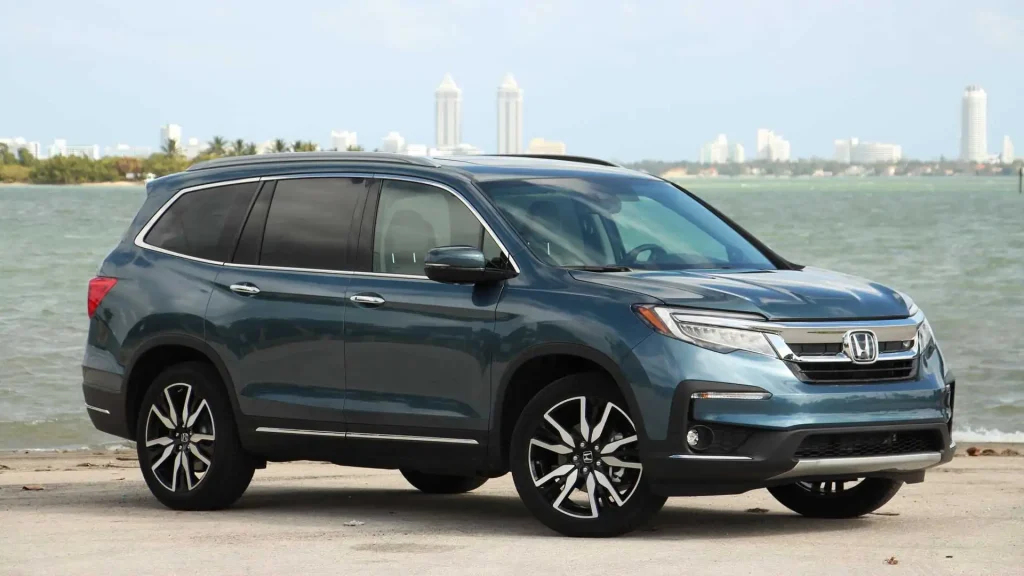
With that checklist in mind, we brought a refreshed 2019 Honda Pilot into the fleet. The Pilot has long been considered one of the more capable choices for families looking for three rows of seating without stepping up to a massive SUV. There’s enough room for passengers to spread out, which means fewer opportunities for siblings—or, in our case, associate editors—to annoy one another.
After some discussion with Honda, the company provided us with a Pilot Touring Elite carrying an MSRP of $49,065, including destination. Better yet, we would have the opportunity to live with it for six months and put its family-friendly credentials to the test.
Our first drive offered a quick preview of what the Pilot could handle, from daily commuting to hauling people and gear. It also gave us the perfect opportunity to christen our newest long-term vehicle with its official nickname.
From The Factory Floor To Our Fleet
Instead of having our new long-term Pilot delivered directly to our Miami office, Honda offered us a much more memorable alternative. Associate Editor Greg Fink and I were invited to Honda’s manufacturing facility in Lincoln, Alabama, where we’d take delivery of the Pilot before driving it all the way back to Miami.
Honda Manufacturing of Alabama is where the company builds several of its key vehicles, including the Odyssey, Ridgeline, Pilot, and the then-new Passport. The facility gave us a behind-the-scenes look at how these vehicles come together before we got the chance to experience the best part: taking our brand-new Pilot straight from the factory floor.
Honda gave us a tour of the plant, but the highlight was undoubtedly getting behind the wheel of our freshly built Pilot and driving it away from the facility. There’s something particularly satisfying about knowing you’re among the first people to put miles on a vehicle immediately after it leaves the assembly line. Honda was quick to point out, however, that this isn’t a factory-delivery experience available to regular customers.
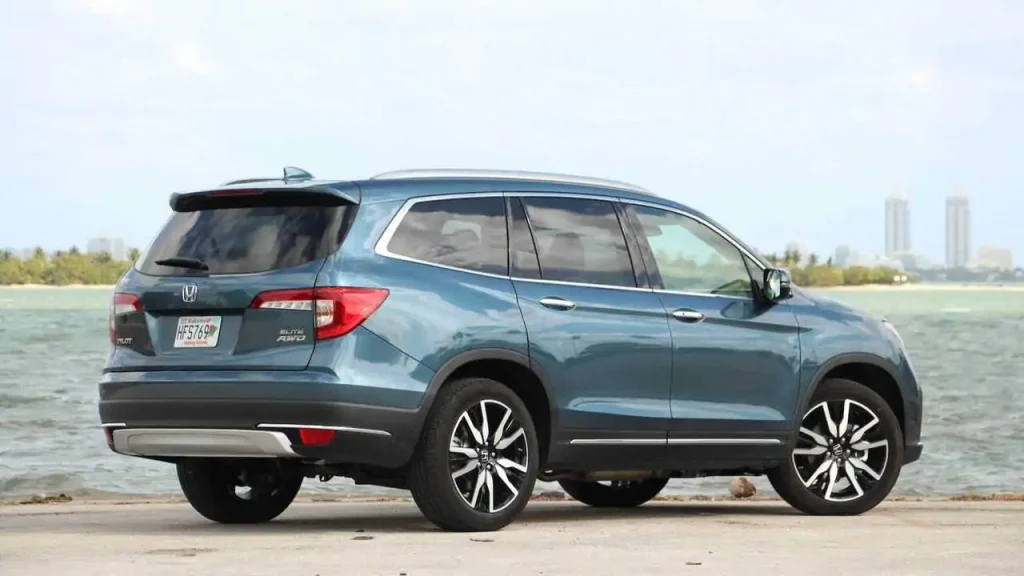
For our long-term fleet, we settled on a 2019 Honda Pilot Touring Elite finished in Steel Sapphire Metallic with a gray interior. The subdued blue-gray paint can look relatively understated beneath overcast skies, but sunlight brings out its pearlescent finish and gives the Pilot considerably more visual flair.
The Touring Elite also arrived with a healthy list of standard equipment. All-wheel drive comes standard, along with 20-inch wheels, Honda’s Sensing suite of active safety technologies, and a 3.5-liter V6 paired with a nine-speed automatic transmission.
With the Pilot officially in our hands, there was only one thing left to do: point it toward Miami and begin our six-month adventure.
After getting our first look at the Pilot in person—and parking it alongside its brand-new Passport sibling—we programmed the navigation system for Miami and headed south. The roughly 12-hour drive from Lincoln, Alabama, to our Florida home gave us an early opportunity to evaluate the Pilot as a road-trip companion, family SUV, and everyday long-haul cruiser. It also happened to be the journey during which our long-term tester officially earned its nickname.
The Pilot’s First Road Trip
For the first couple of hours, Greg and I approached the Pilot like kids with a brand-new toy. We took turns behind the wheel, explored the cabin, opened virtually every storage compartment, and pushed just about every button we could find. With Alabama’s wide-open highways stretching ahead of us, the drive also provided an ideal environment for putting Honda’s Sensing suite of driver-assistance technologies through their paces.
The package includes features such as Road Departure Mitigation, Lane Keeping Assist, Collision Mitigation Braking, and Adaptive Cruise Control. On the highway, these systems quickly became some of the Pilot’s most useful features.
Adaptive Cruise Control is activated using a steering-wheel-mounted button and automatically adjusts the Pilot’s speed to maintain a set following distance from traffic ahead. It works in conjunction with the Lane Keeping Assist system, which helps keep the SUV centered in its lane.
On long stretches of highway, the combination significantly reduced the workload behind the wheel. The Pilot handled much of the routine accelerating, braking, and steering assistance, making the long trip noticeably less tiring. There were a few especially winding sections outside Atlanta where the systems required more driver involvement, but that’s exactly what they’re designed for: assistance rather than autonomous driving.
For the majority of our journey, however, Honda’s driver-assistance technology performed as expected and made the 12-hour trek considerably more relaxing. It was an encouraging first impression of the Pilot—and a promising start to our long-term relationship with Honda’s three-row SUV.
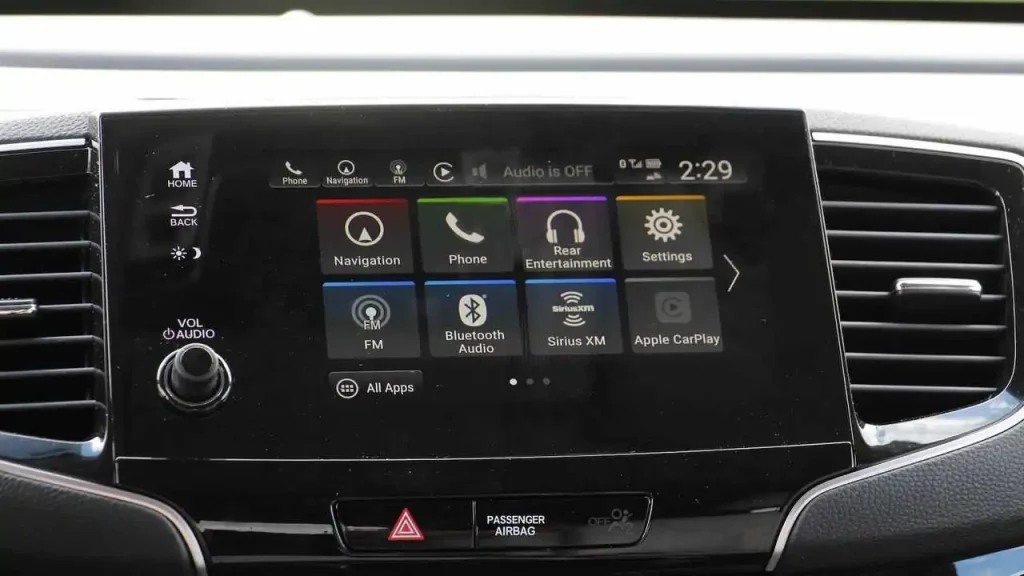
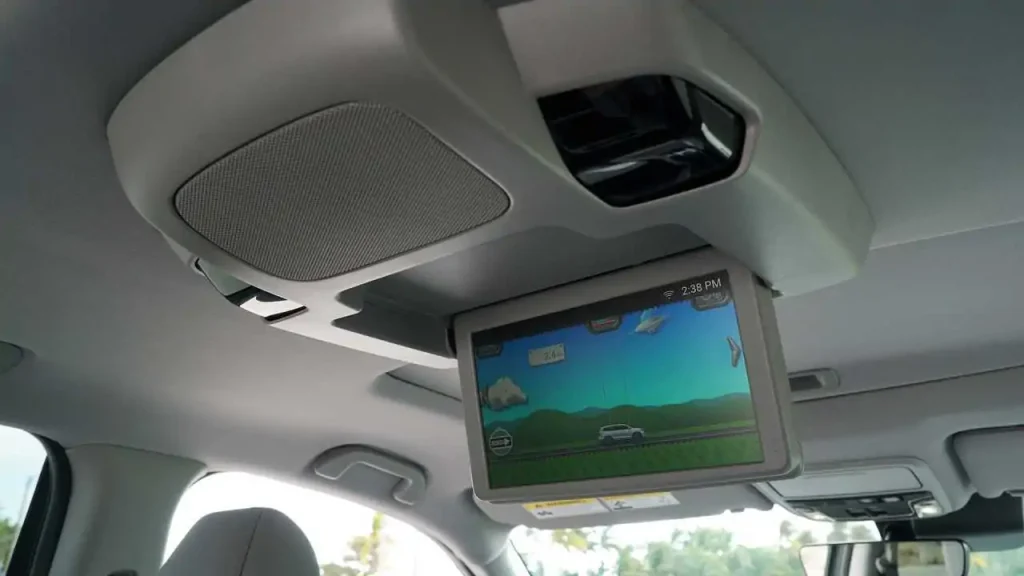
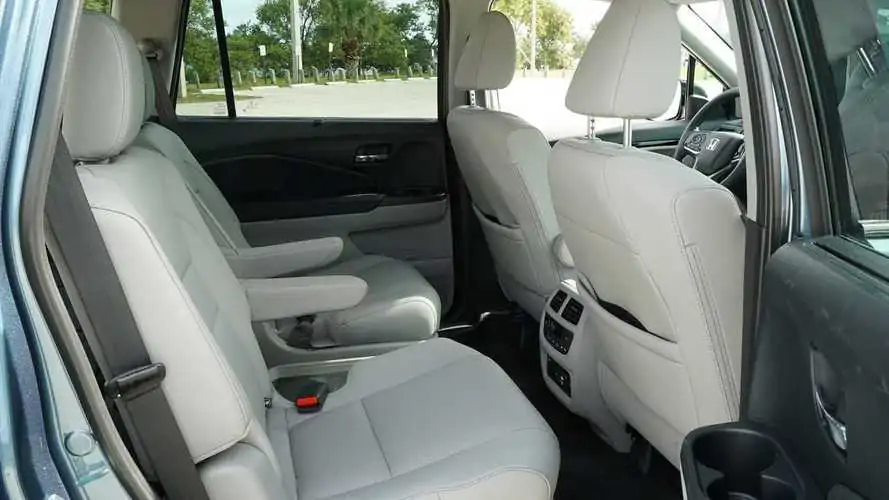
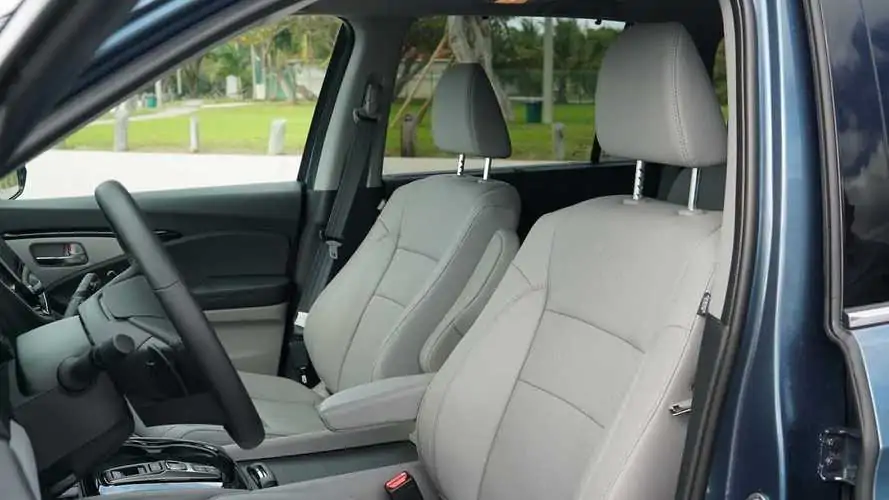
Speaking of comfort, the Pilot Touring Elite came loaded with features designed to make long journeys easier. Heated and ventilated leather seats, second-row captain’s chairs, a rear-seat entertainment system, and a panoramic glass roof all came standard. After several hours on the road, Greg eventually nodded off in the second row, giving me the perfect opportunity to put one of the Pilot’s more unusual features to work: CabinTalk.
CabinTalk uses microphones to pick up the driver’s voice and broadcast it through speakers in the rear of the cabin. It’s clearly intended to help parents communicate with children in the second and third rows without having to shout over road noise. The system works in only one direction, however, so rear passengers can’t use it to send their own messages back to the front.
On this particular trip, Greg was my captive audience, and CabinTalk performed brilliantly. Let’s just say he got a very practical demonstration of the feature while trying to sleep.
The Pilot’s audio system also helped make the long journey more enjoyable. Our range-topping model came equipped with a 10-speaker, 590-watt system complete with a subwoofer, providing plenty of sound for everyone in the cabin.
As we cruised through southern Georgia, we began tossing around ideas for a nickname for our new long-termer. Then, fittingly, Tracy Chapman’s 1988 hit “Fast Car” came through the speakers. The decision was practically made for us. From that moment on, our 2019 Honda Pilot officially became Tracy Chapman.
Before reaching Florida, however, we had a more pressing concern: food. After several hours on the road, Waffle House sounded like exactly what we needed. We stopped for breakfast combo platters and probably more coffee than necessary before continuing toward our overnight stop in Clearwater, Florida.
The Pilot had already covered hundreds of miles on its first day with us, and there was still plenty more road ahead.
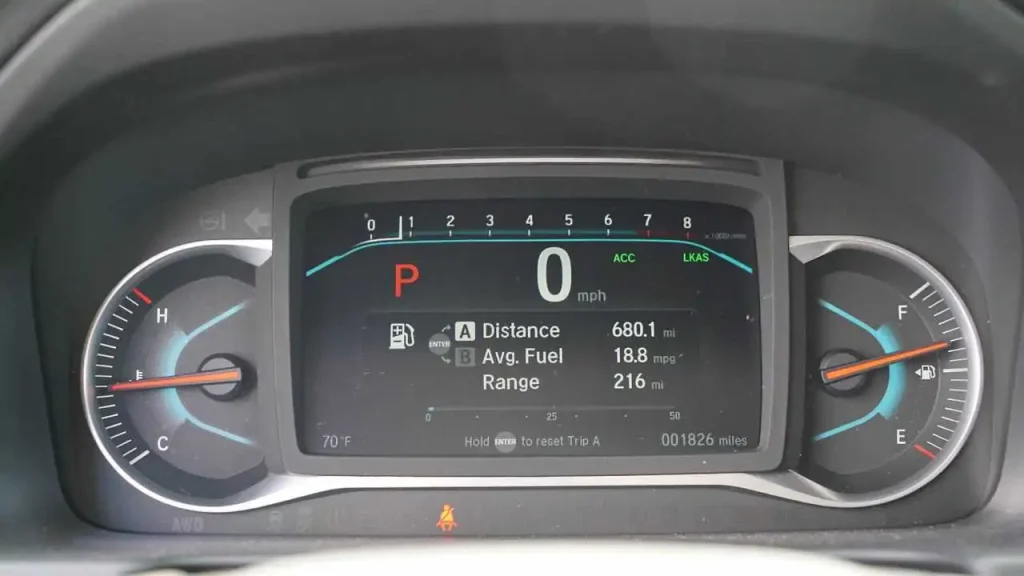
For the second leg of our journey, we needed to get from Clearwater to Miami. Cruising at steady highway speeds, the Pilot’s trip computer showed that we weren’t quite able to match Honda’s official 27-mpg highway rating, although we did manage to beat the 19-mpg city estimate. Across the 272-mile drive, Tracy returned a respectable 23 mpg combined.
That’s only a snapshot of the Pilot’s real-world fuel economy, of course. We’ll spend considerably more time evaluating its efficiency, driving dynamics, comfort, and overall performance throughout our long-term test. For now, though, one thing is already clear: the Pilot makes an excellent road-trip companion—even when the passengers consist of two adults and absolutely no children.
What’s In Store
Our journey from Alabama to South Florida was an ideal introduction to our new long-term Honda Pilot, Tracy Chapman. In just a couple of days, we had already put hundreds of miles on the odometer and gotten a taste of the Pilot’s comfort, technology, space, and highway manners.
But the real test is only beginning.
Over the next six months, Tracy will face everything we can throw at it. We’ll put its three-row practicality to work, evaluate its fuel economy in everyday driving, explore its capabilities on longer road trips, and see how it handles the demands of our production and adventure work at Motor1.com.
First on the agenda is a comparison test against one of the Pilot’s closest competitors. After that, expect plenty more highway miles, road trips, and even some off-road adventures. We’ll also give Tracy a few visual upgrades along the way with some of our favorite accessories.
Keep checking Motor1.com for regular updates on our long-term Pilot, and follow the #Motor1Pilot hashtag on social media to see where Tracy goes next.