
Both make capable family haulers, but each has its own drawbacks depending on your needs.
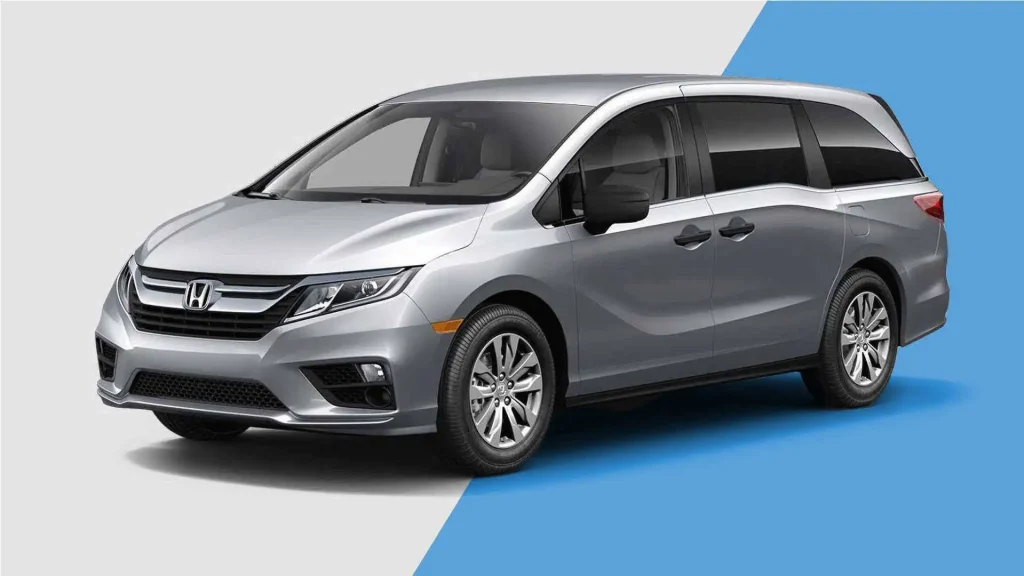
The definition of a family car has changed over the years. Large sedans and station wagons once dominated the category, but today families are more likely to choose a car-based crossover SUV (CUV), a traditional truck-based SUV, or a minivan. Many of these vehicles offer three rows of seating for seven or eight passengers, along with generous cargo space and family-focused technology, including modern driver-assistance systems.
Crossovers have become especially popular because they appeal to more than just families. Compact and subcompact CUVs are also popular with singles, couples, and empty nesters who want a higher seating position and practical cargo space without the size of a full-size SUV. Traditional SUVs remain attractive for buyers who need greater towing or off-road capability, while minivans continue to offer exceptional passenger and cargo flexibility despite their less rugged image. The best choice ultimately depends on how you plan to use your vehicle.
Table of Contents
Minivan Essentials
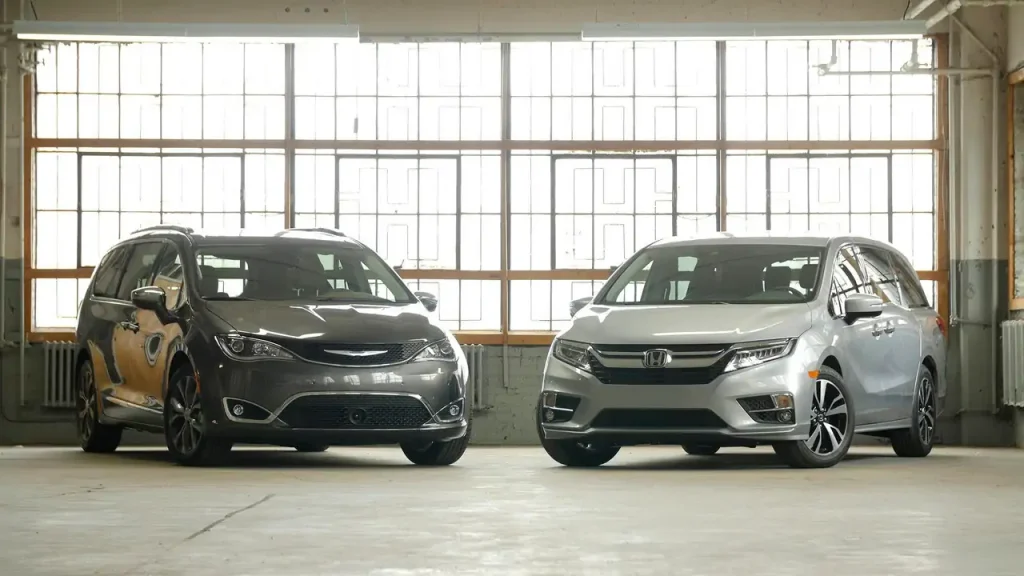
Minivans once dominated the family-vehicle market before many buyers shifted toward SUVs. Today, the segment is smaller, but models such as the Chrysler Pacifica, Dodge Grand Caravan, Honda Odyssey, Kia Sedona, and Toyota Sienna continue to focus heavily on passenger comfort, cargo space, and family convenience. For 2018, pricing generally started around $30,000 and could climb beyond $45,000 with higher trims and options.
Here are the features that define the segment:
- Front- or all-wheel drive. Most minivans use front-wheel drive, while the Toyota Sienna is notable for offering all-wheel drive for additional traction in rain, snow, and other slippery conditions.
- V6 engines and automatic transmissions. V6 power is common in the segment, with output generally ranging from the mid-200-horsepower range to nearly 300 hp. Automatic transmissions are standard, with the number of gears varying by model.
- Power sliding doors. Sliding rear doors make it easier to load passengers in crowded parking spaces and are particularly useful when securing children in car seats. Power operation adds another layer of convenience.
- Power liftgates. A powered rear hatch makes loading groceries, luggage, strollers, and other bulky items easier.
- Three rows of seating. Depending on the configuration, minivans can carry seven or eight passengers. Second-row captain’s chairs can provide additional comfort and easier access to the third row.
- Flexible seating. Folding, sliding, or stowing the second- and third-row seats allows minivans to switch easily between passenger and cargo duty. Chrysler’s Stow ‘n Go system is one of the better-known examples of this flexibility.
- Family-friendly features. Available equipment can include smartphone connectivity, multiple USB ports, rear-seat entertainment systems, built-in vacuum cleaners, and communication systems that allow passengers in different rows to talk without shouting.
SUV/CUV Essentials
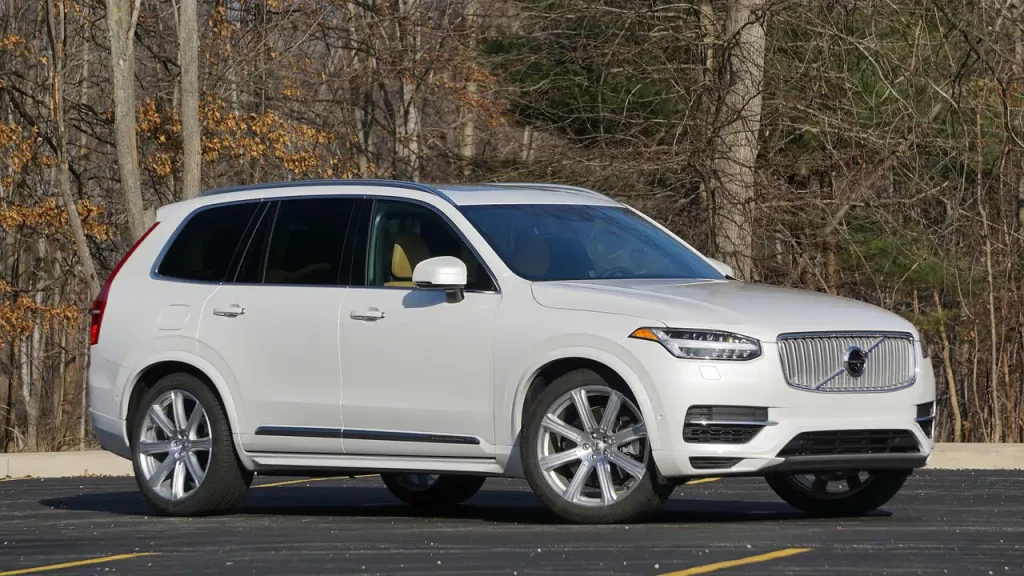
CUVs and SUVs share a tall, practical shape, but their underlying construction can be quite different. Crossovers generally use car-based unibody platforms, while traditional SUVs are typically built on truck-based body-on-frame architectures. That distinction can have a major effect on ride comfort, towing ability, and off-road performance.
Here are the key characteristics:
- Rear- or four-wheel drive. Traditional truck-based SUVs generally use rear-wheel drive and can be equipped with four-wheel-drive systems. Their rugged construction and available low-range gearing make them well suited to heavy towing and demanding off-road conditions.
- Front- or all-wheel drive. Most CUVs use car-based platforms with front-wheel drive, while all-wheel drive is available on many models. AWD can improve traction on wet, snowy, or loose surfaces, although it generally isn’t intended for the most demanding off-road conditions.
- A choice of engines. Midsize CUVs and SUVs can be equipped with four-cylinder or V6 engines, while larger SUVs may offer V8 power. Hybrid powertrains are also available in some family-sized models, giving buyers another way to reduce fuel consumption.
- Conventional side doors and rear hatch. Unlike minivans, CUVs and SUVs use conventional rear doors. Their rear liftgates provide straightforward access to the cargo area.
- Three rows of seats. Many midsize and full-size CUVs and SUVs offer seating for seven or eight passengers. Third-row space varies widely, however, and some models prioritize cargo room or second-row comfort over rear-seat legroom.
- Family-friendly technology. Available features include smartphone connectivity, multiple USB ports, rear-seat entertainment, adaptive cruise control, forward collision warning, automatic emergency braking, blind-spot monitoring, and lane-keeping assistance.
Comparing Minivans and CUV/SUVs
Minivans remain highly practical family vehicles thanks to their sliding doors, spacious three-row cabins, flexible seating, and abundance of convenience features. CUVs have become more popular because they offer a more SUV-like appearance while retaining many of the comfort and driving characteristics associated with passenger cars.
Traditional truck-based SUVs serve a different purpose. Their body-on-frame construction, four-wheel-drive systems, and higher towing capacities make them particularly useful for families that tow boats, trailers, or other heavy loads or regularly venture off pavement.
Here’s how several popular minivans and midsize CUVs/SUVs compare on important specifications. The figures below reflect the 2018 model-year vehicles and original pricing data.
Minivans
Chrysler Pacifica
- Price: $28,340–$46,340
- Drivetrain: FWD
- Engine: 3.6-liter V6 or plug-in hybrid V6
- Horsepower: 287 hp / 260 hp
- Transmission: 9-speed automatic or CVT
- Max Towing: 3,600 lbs.
- Fuel Economy: Up to 19/28 mpg city/highway; plug-in hybrid offers 84 e-mpg with a 33-mile electric range
- Seating: 7 or 8 passengers
- Cargo: 32.3 / 87.5 / 140.5 cu. ft. behind the third, second, and first rows
- Safety: Adaptive cruise control, forward collision warning with automatic braking, lane departure/lane keeping, and blind-spot/cross-path monitoring
- Standout Features: Stow ’n Go seating, built-in vacuum, hands-free sliding doors, active noise cancellation, and park assist
Honda Odyssey
- Price: $34,935–$47,745
- Drivetrain: FWD
- Engine: 3.5-liter V6
- Horsepower: 280 hp
- Transmission: 9- or 10-speed automatic
- Max Towing: 3,500 lbs.
- Fuel Economy: 19/28 mpg city/highway
- Seating: 7 or 8 passengers
- Cargo: 32.8 / 88.8 / 144.9 cu. ft. behind the third, second, and first rows
- Safety: Adaptive cruise control, forward collision warning with automatic braking, lane departure/lane keeping, and blind-spot monitoring
- Standout Features: CabinWatch and CabinTalk, built-in vacuum, and Magic Slide second-row seating
Toyota Sienna
- Price: $31,745–$43,200
- Drivetrain: FWD or AWD
- Engine: 3.5-liter V6
- Horsepower: 296 hp
- Transmission: 8-speed automatic
- Max Towing: 3,500 lbs.
- Fuel Economy: 19/27 mpg city/highway
- Seating: 7 or 8 passengers
- Cargo: 39.1 / 87.1 / 150.0 cu. ft. behind the third, second, and first rows
- Safety: Adaptive cruise control, forward collision warning with automatic braking, lane departure/lane keeping, and blind-spot/cross-path monitoring
- Standout Features: Power-extending Mobility Access seat, Driver Easy Speak, and available AWD
Midsize CUVs/SUVs
Ford Explorer
- Price: $33,135–$54,935
- Drivetrain: FWD or AWD
- Engine: 3.5-liter V6, 2.3-liter turbo-four, or 3.5-liter turbo V6
- Horsepower: 290 hp / 280 hp / 365 hp
- Transmission: 6-speed automatic
- Max Towing: 5,000 lbs.
- Fuel Economy: Up to 19/27 mpg city/highway
- Seating: 6 or 7 passengers
- Cargo: 21.0 / 43.9 / 81.7 cu. ft. behind the third, second, and first rows
- Safety: Adaptive cruise control, forward collision warning with automatic braking, and lane-keeping assistance
- Standout Features: MyKey teen-driver system, trailer sway control, Terrain Management System, Enhanced Active Park Assist, and Wi-Fi hotspot
Toyota Highlander
- Price: $32,025–$49,275
- Drivetrain: FWD or AWD
- Engine: 2.7-liter four-cylinder, 3.5-liter V6, or hybrid V6
- Horsepower: 185 hp / 295 hp / 306 hp
- Transmission: 6- or 8-speed automatic or CVT
- Max Towing: 5,000 lbs.
- Fuel Economy: Up to 30/28 mpg city/highway
- Seating: 7 or 8 passengers
- Cargo: 13.8 / 42.3 / 83.7 cu. ft. behind the third, second, and first rows
- Safety: Adaptive cruise control, forward collision warning with automatic braking, lane departure/lane keeping, and blind-spot/cross-path monitoring
- Standout Features: 360-degree camera and Safety Connect telematics
Jeep Grand Cherokee
- Price: $32,340–$87,645
- Drivetrain: FWD or AWD
- Engine: 3.6-liter V6, 5.7-liter V8, or 3.0-liter turbodiesel V6
- Horsepower: 295 hp / 360 hp / 240 hp
- Transmission: 8-speed automatic
- Max Towing: 7,400 lbs.
- Fuel Economy: Up to 22/30 mpg city/highway
- Seating: 5 passengers
- Cargo: 36.3 / 68.3 cu. ft. behind the second and first rows
- Safety: Adaptive cruise control, blind-spot/cross-path monitoring, lane departure/lane keeping, and forward collision warning with automatic braking
- Standout Features: Park Assist, Selec-Terrain, Quadra-Lift air suspension, and hill-ascent/descent control
Overall, minivans prioritize interior flexibility and family convenience, CUVs emphasize everyday versatility and car-like driving, and traditional SUVs add towing and off-road capability. The right category depends largely on which of those strengths matters most to your family.