
Massive tires, thunderous engines, and enough suspension travel to turn anything into an obstacle course.
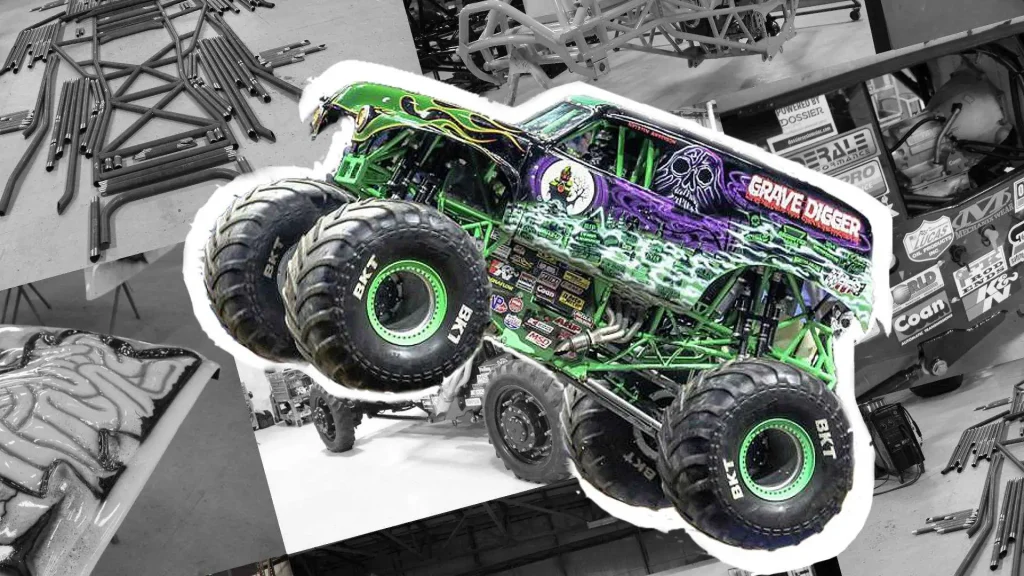
Few vehicles are as unapologetically excessive as a monster truck. Towering on enormous tires, powered by massive V8 engines, and equipped with suspension systems built to absorb spectacular impacts, these nearly six-ton machines take the basic idea of a pickup truck and transform it into something far more extreme.
If motorsports has its own version of WWE, Monster Jam makes a pretty convincing case for the title. It’s less about traditional racing and more about spectacle, with drivers launching massive trucks into the air, performing wheelies and other stunts, crushing cars, and pushing their machines to the limits in stadiums and arenas around the world. The result is a form of motorsport where horsepower, mechanical strength, and driver skill all combine with a healthy dose of controlled chaos.
It’s easy to look at a monster truck and see nothing more than a giant pickup with absurdly large tires. In reality, there’s a tremendous amount of engineering hidden beneath those wild fiberglass bodies. These trucks use purpose-built chassis, sophisticated suspension systems, specialized drivetrains, enormous tires, and engines capable of producing staggering amounts of power.
That’s exactly why a behind-the-scenes look at Monster Jam is so fascinating. A visit to the organization’s facilities in Palmetto, Florida, offers a rare opportunity to see how these seemingly indestructible machines are built, prepared, and maintained. From the components that keep nearly six tons of truck under control to the hardware that allows them to survive huge jumps and brutal landings, here’s a closer look at what really makes a monster truck tick.
Chassis In A Box
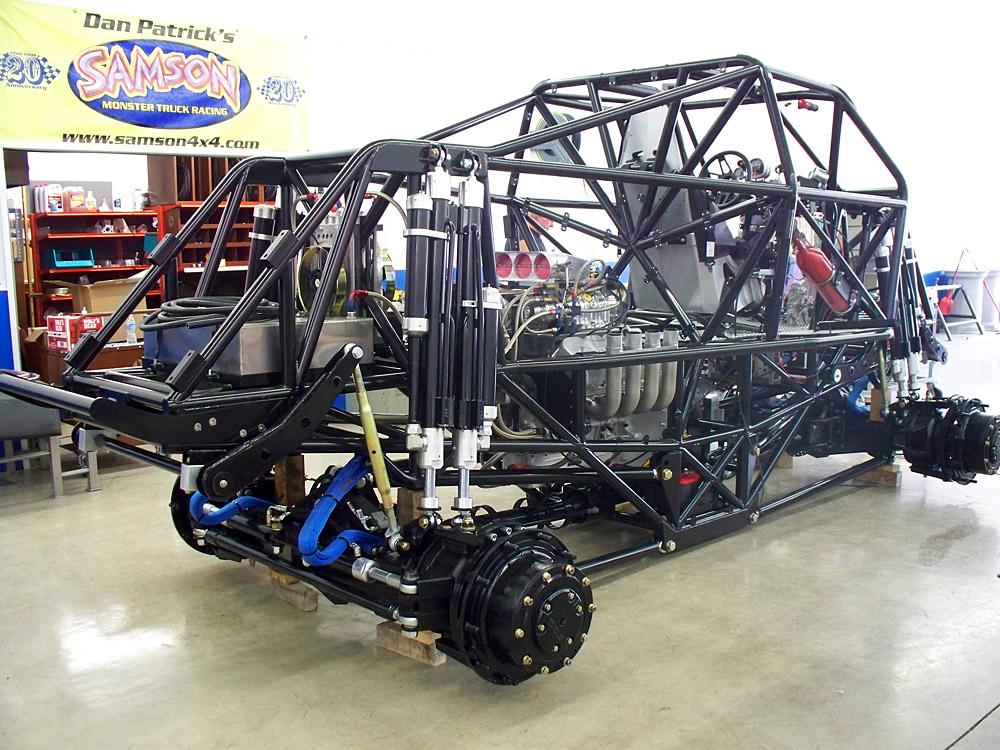
A professional monster truck starts with a completely different foundation than a conventional pickup. A “chassis in a box” knock-down tube kit provides the basic framework from which the race truck is assembled. Rather than modifying a production-frame pickup, teams build around a purpose-designed tubular structure engineered for strength, weight control, suspension travel, and driver protection. Once assembled, this becomes the backbone of the entire truck.
Grave Digger Monster Truck Chassis
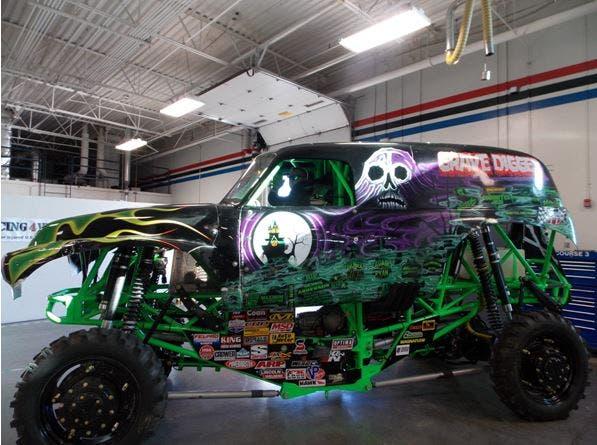
The finished chassis is a far cry from anything underneath a road-going pickup. A network of welded steel tubes creates an exceptionally strong structure while also forming the protective cage around the driver. Suspension mounting points, engine supports, steering components, and other major systems all attach to this central structure. With a monster truck regularly leaving the ground, the chassis has to withstand enormous loads when all four tires come back down.
Inside The Cockpit
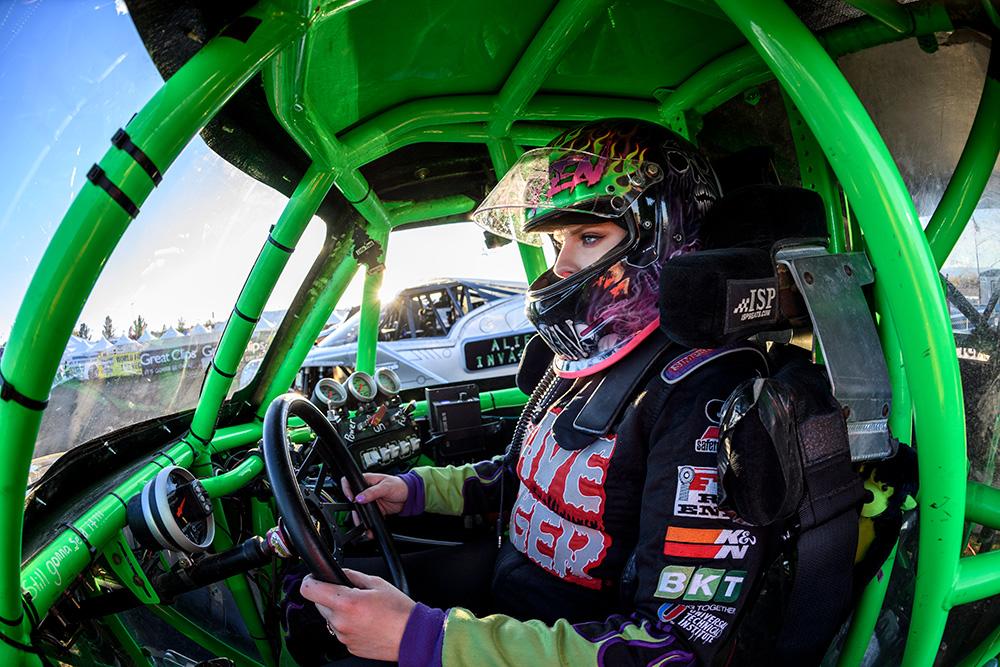
The cockpit is compact, highly functional, and built around the driver rather than passenger-car comfort. A racing seat, multi-point harness, steering controls, gauges, fire-suppression equipment, and protective cage surround the driver. Visibility is also crucial because the driver has to position a massive truck precisely for jumps and obstacles while sitting high above the ground.
Supercharged Big-Block V8 Racing Engine
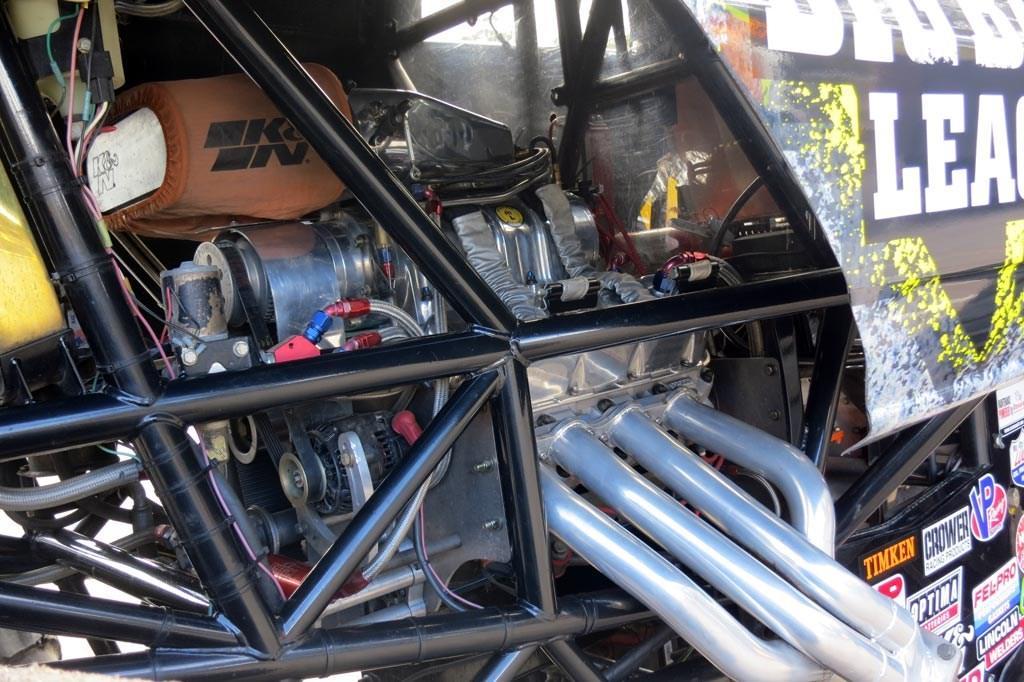
The engine provides the muscle behind the spectacle. Professional monster trucks commonly use supercharged big-block V8s producing well over 1,000 horsepower. That kind of output is necessary to accelerate a machine weighing several tons and launch it over ramps. The engine’s enormous torque also helps drivers climb obstacles, perform wheelies, and recover quickly after landing.
Drivetrain Safety Containment And Axle Interface
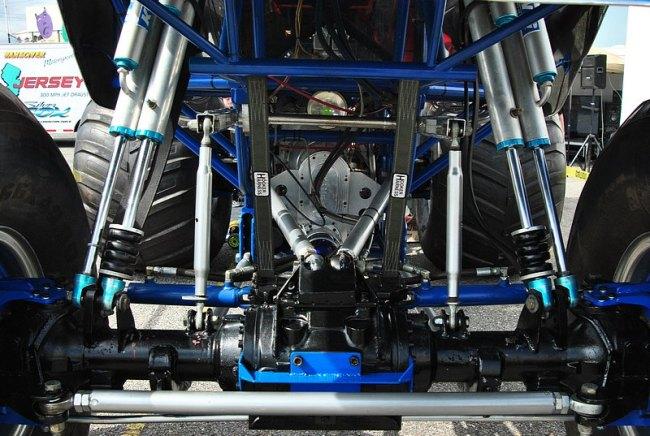
Getting all that power to the ground requires a drivetrain built to handle extreme loads. The drivetrain is protected and contained within the truck’s structure, while the axle interface connects the powertrain to the massive wheels. Unlike a conventional pickup drivetrain, these components have to tolerate huge torque spikes and the shock loads generated when the truck lands after a jump.
Steering Planetary Axle
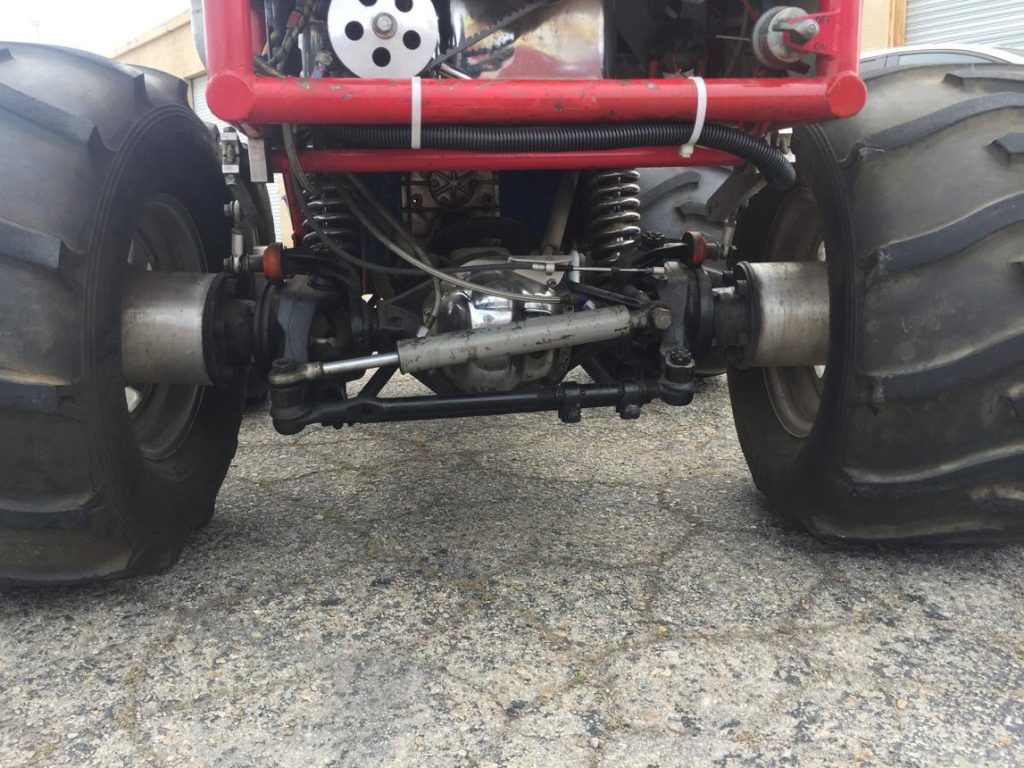
Monster-truck axles are engineering pieces in their own right. Planetary gear systems provide the reduction necessary to turn the enormous tires while multiplying torque at the wheels. The trucks also use four-wheel steering, allowing the rear wheels to steer and giving drivers the maneuverability needed to navigate tight stadium courses despite the vehicle’s enormous size.
Long-Travel Nitrogen-Charged Racing Shocks
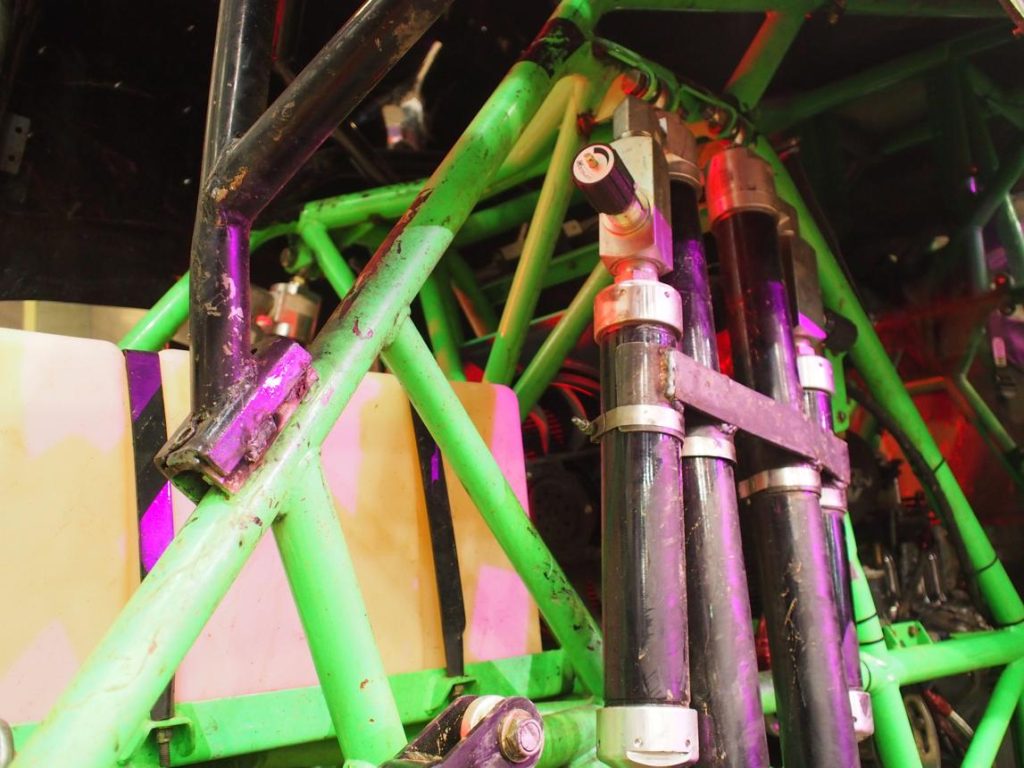
The suspension is arguably one of the most important systems on the truck. Long-travel racing shocks allow the wheels to move through huge amounts of suspension travel, while nitrogen charging helps the dampers control the rapid compression and rebound associated with jumps and hard landings. Without this sophisticated suspension system, the truck couldn’t repeatedly absorb the punishment of competition.
Fiberglass Body Shell Paneling
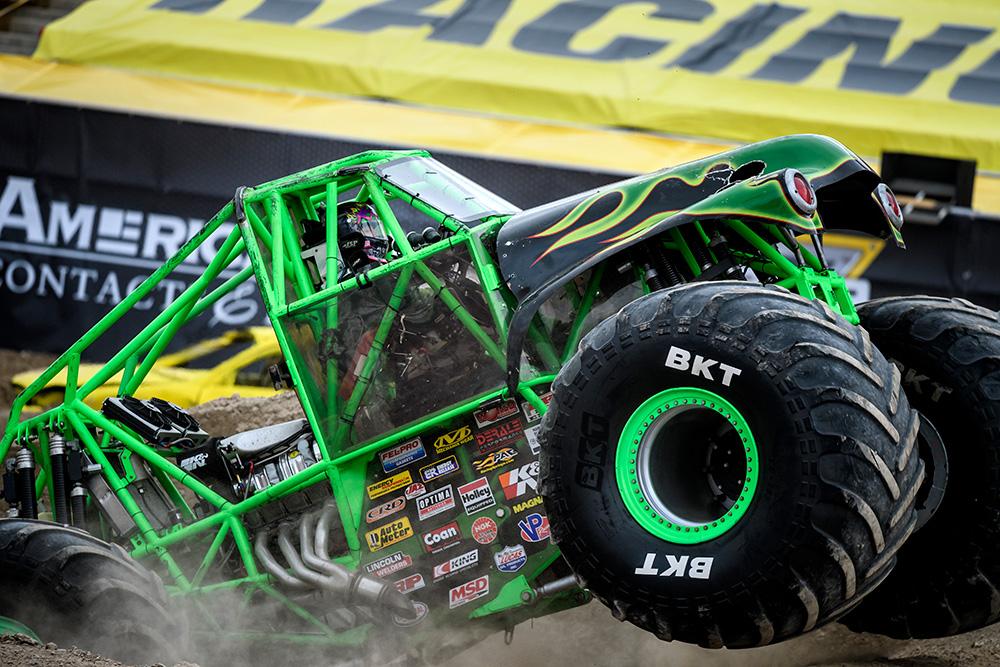
The familiar pickup-truck appearance comes from lightweight fiberglass body panels rather than heavy steel production bodywork. The panels give each truck its distinctive identity while keeping weight down. They can also be removed and replaced when the inevitable contact with ramps, cars, dirt, and other obstacles takes its toll.
Grave Digger Monster Truck
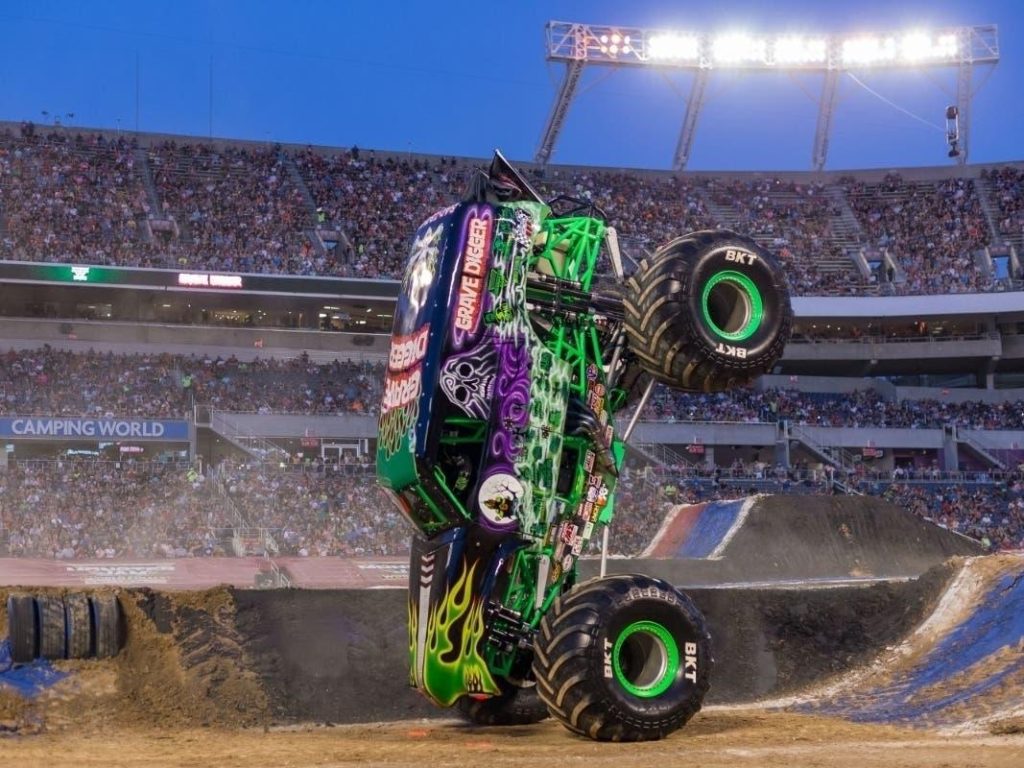
Put all those components together and you get the machine fans recognize instantly: Grave Digger. The black-and-green truck may look like an oversized hot rod pickup, but underneath its iconic body is a sophisticated competition vehicle combining a tubular chassis, huge V8 power, specialized axles, four-wheel steering, massive suspension travel, and extensive safety equipment. The finished product is built for one purpose—putting on an unforgettable show while surviving the punishment that comes with it.
The Monster Truck Team’s Transport Hauler
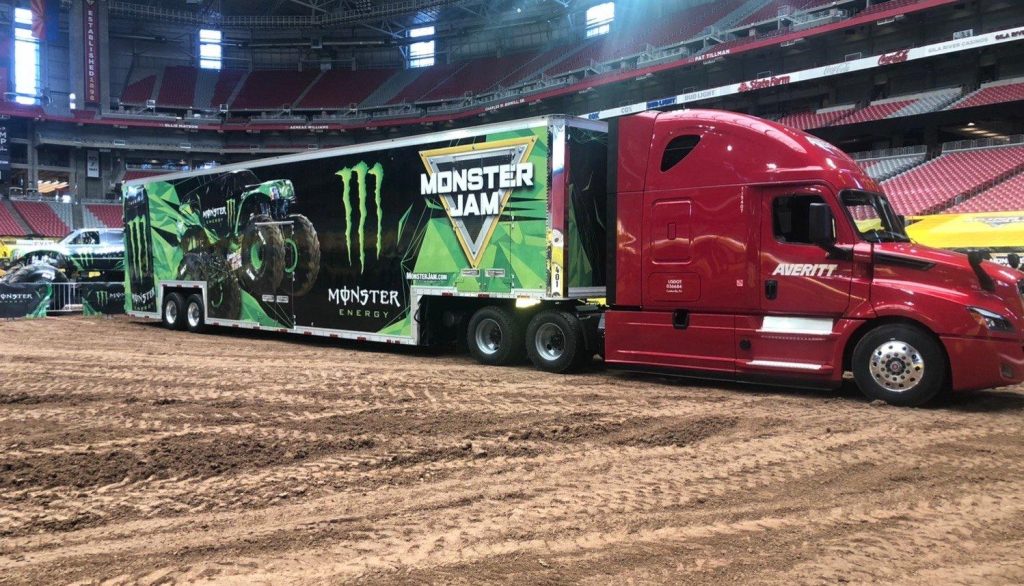
The work doesn’t end when the truck leaves the arena. A professional monster-truck team travels with a dedicated hauler carrying the equipment, spare parts, tools, tires, and other necessities required to keep the truck running. Considering how much abuse the machines endure during a weekend of competition, having a mobile workshop on hand is essential. The hauler is effectively the team’s garage on the road, allowing mechanics to repair and prepare the truck wherever the next show takes them.