
The McLaren That Changed Everything
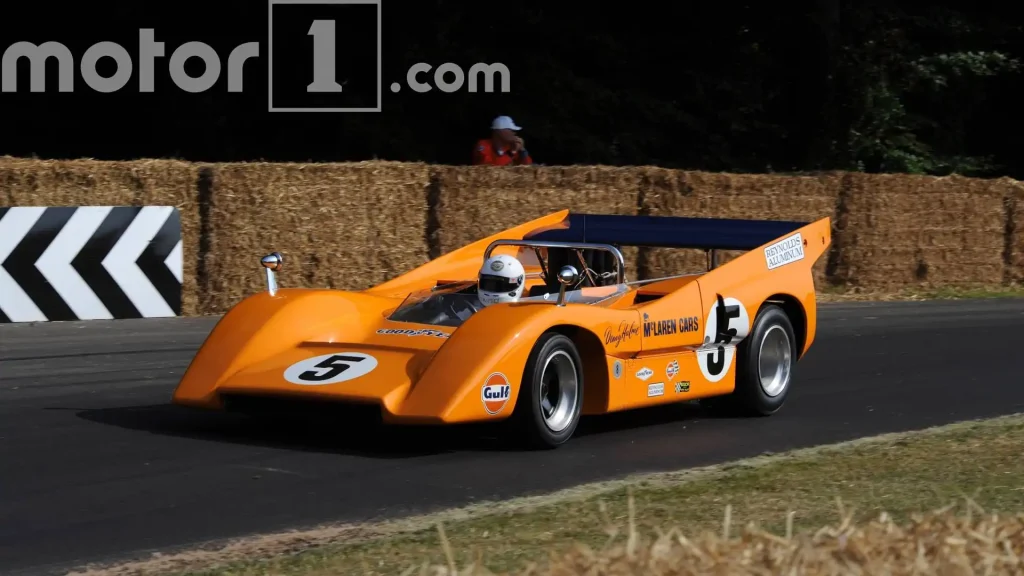
Long before McLaren Automotive became recognized for creating some of the world’s most advanced supercars and establishing itself as a powerhouse in Formula 1, the company built its reputation through groundbreaking racing technology and an obsession with performance. Few cars played a more significant role in that journey than the 1970 McLaren M8D, a legendary Can-Am racer that represented both the height of McLaren’s engineering brilliance and one of the darkest chapters in its history.
McLaren’s racing heritage extends far beyond Formula 1, with victories and competition in events such as the 24 Hours of Le Mans, the Indianapolis 500, and the brutal Can-Am Championship. The Canadian-American Challenge Cup was one of the most extreme racing series of its era, allowing manufacturers to push the limits of power, aerodynamics, and innovation. For the 1970 season, McLaren entered the M8D as its latest weapon in the series.
The M8D was an evolution of the highly successful M8B, but new regulations forced McLaren to rethink its aerodynamic approach. Rules banning tall, strut-mounted wings meant the team had to develop a new solution to maintain downforce. Using its trademark creativity, McLaren designed twin vertical tail fins that supported a lower-mounted rear wing, creating a dramatic wedge-shaped silhouette that looked like something from a science-fiction movie. Its aggressive appearance quickly earned it the nickname “the Batmobile.”
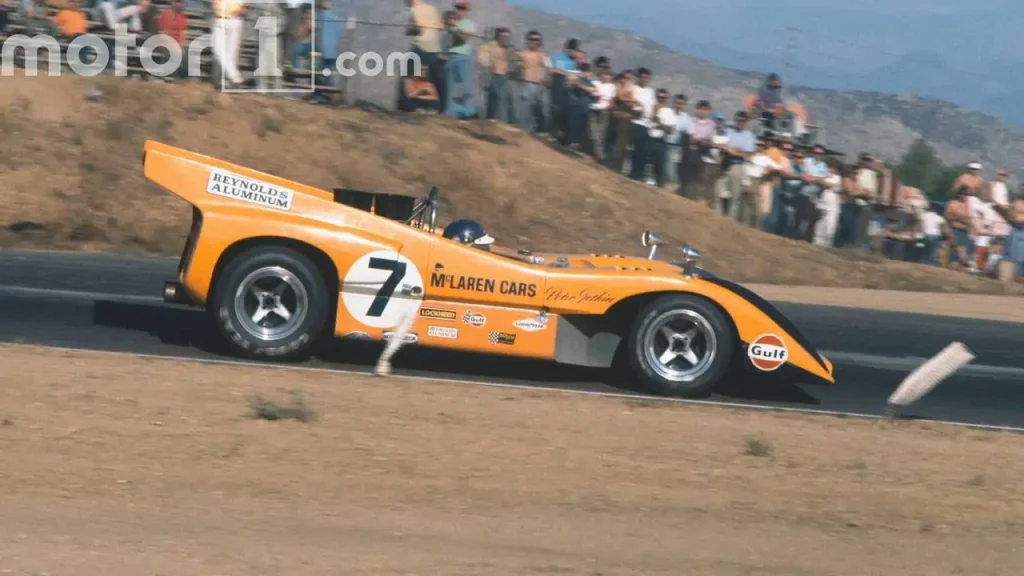
Power came from a massive 7.6-liter Chevrolet V8 engine producing around 670 horsepower (500 kW). Although the new aerodynamic rules reduced the car’s available downforce, the enormous power output helped the M8D remain one of the fastest machines on the track. Its lightweight construction, advanced aerodynamics, and huge engine made it a dominant force in Can-Am racing.
However, the M8D became famous for reasons far beyond its speed. The car arrived during one of the most difficult moments in McLaren’s history following the tragic death of team founder Bruce McLaren.
Bruce McLaren was far more than a company founder—he was an engineer, driver, and hands-on innovator who personally helped develop the cars that carried his name. While testing the M8D at the Goodwood Circuit on June 2, 1970, tragedy struck. The car suffered a failure when its rear bodywork detached at high speed, causing it to lose aerodynamic stability and crash into an embankment. Traveling at more than 170 mph (274 km/h), the accident claimed Bruce McLaren’s life instantly.
For a moment, it appeared that the McLaren team might not survive without its leader. The workshop was closed, the lights were turned off, and the future of the organization was uncertain. But instead of ending Bruce’s dream, the tragedy united the team. The following morning, McLaren’s engineers and mechanics returned to work with renewed determination, determined to continue the legacy he had created.
That determination produced one of the greatest seasons in Can-Am history. The McLaren M8D won nine of the ten races in the 1970 championship, securing the Can-Am drivers’ title for Denny Hulme and helping establish McLaren as a dominant force in motorsport.
The story of the M8D is both heartbreaking and inspiring—a reminder of the passion, innovation, and resilience that defined Bruce McLaren’s vision. His belief in pushing boundaries was captured perfectly in his famous words:
“To do something well is so worthwhile that to die trying to do it better cannot be foolhardy.”
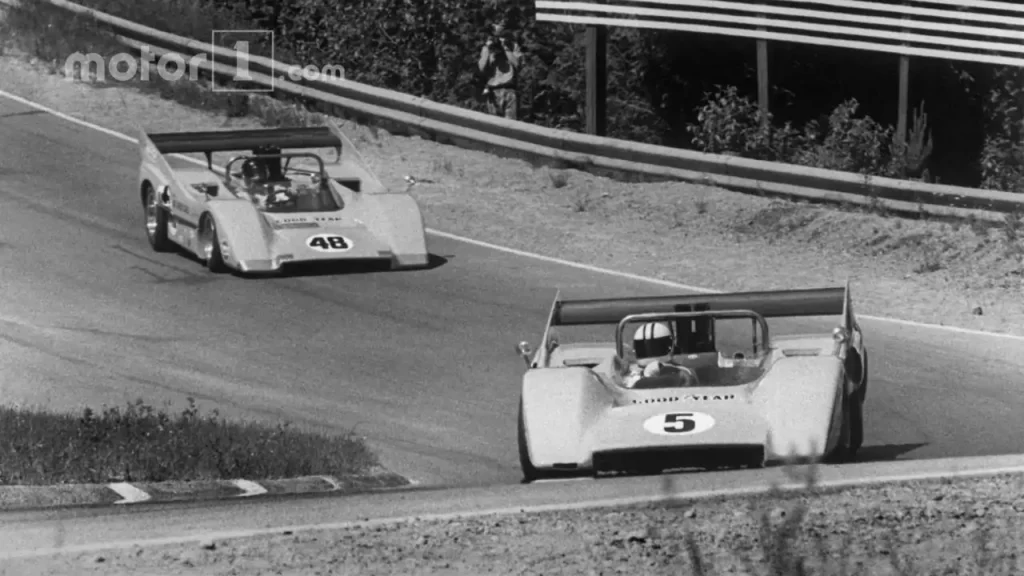
With its revolutionary design, incredible performance, and emotional significance, the 1970 McLaren M8D remains one of the most important racing cars ever created. It was not just a Can-Am champion; it was the machine that proved McLaren could survive adversity and continue on the path toward becoming a global automotive legend.