
The Car That Made 007 Leave His Aston Martin Behind
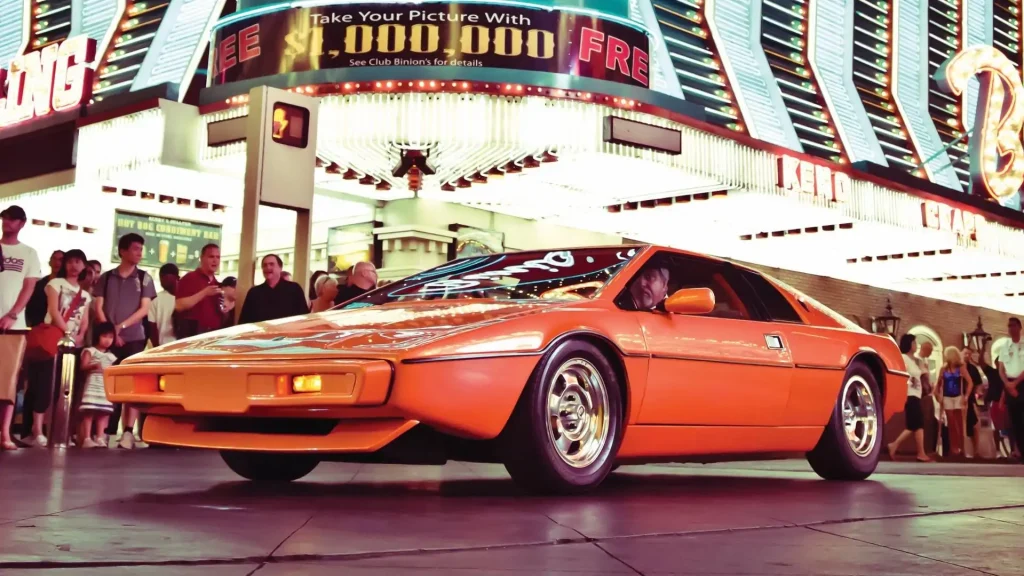
When the 1976 Lotus Esprit arrived at the Paris Motor Show, it marked the beginning of a new chapter for the British automaker. Lotus had already built a reputation for creating lightweight, razor-sharp sports cars focused on handling and driver involvement, but the Esprit was something different. It was a genuine exotic, designed to take on the world’s most desirable performance cars while bringing Lotus engineering to a much wider audience.
A British automotive icon, the Esprit was a masterpiece of lightweight design and a car so visually striking that it even convinced James Bond to leave his famous Aston Martin behind. With its dramatic wedge profile and unmistakable presence, the Lotus had the kind of road presence normally associated with supercars from Maranello.
The story of the Esprit began with Project M70, a proposal from Lotus engineer Tony Rudd for a new flagship model that would replace the Elite. The company needed a car that would make an immediate impression, so Lotus turned to legendary Italian design house Italdesign and its founder, Giorgetto Giugiaro. The result was one of the earliest examples of the now-famous “folded paper” design style, with sharp creases, a low nose, and an angular silhouette that looked like it had arrived from the future.
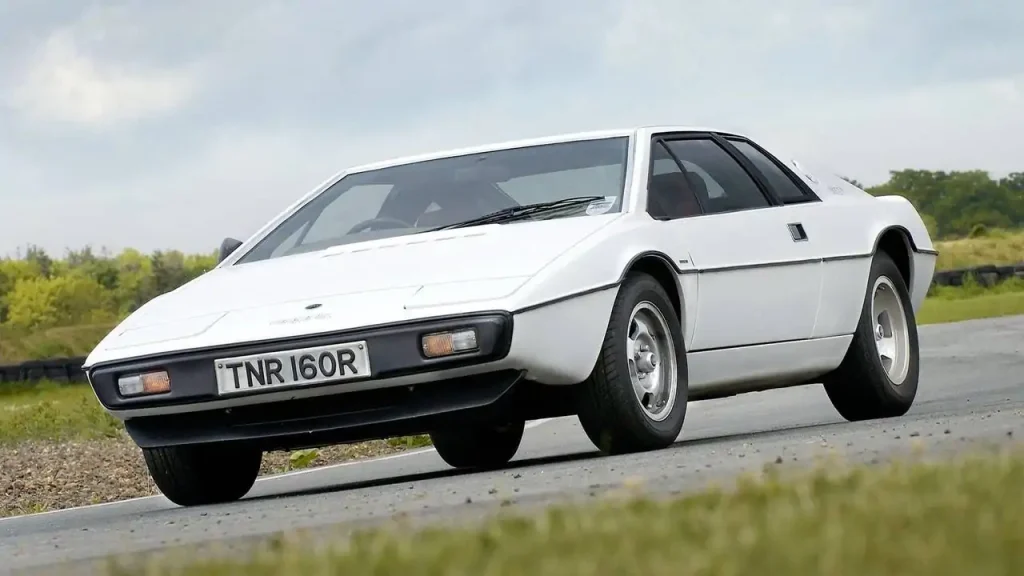
However, the Esprit’s journey to production was not without challenges. Lotus founder Colin Chapman was initially unhappy with some aspects of the car’s aerodynamic performance and temporarily stopped development. It took seeing a full-size clay model before Chapman was convinced that Giugiaro’s design had the potential to become something special.
Even the name created some debate. Giugiaro reportedly preferred the name “Kiwi,” but Chapman wanted to follow Lotus tradition, with most of the company’s models beginning with the letter “E.” The name Esprit was ultimately chosen, and the finished production car was officially unveiled in 1975 before entering production as a 1976 model.
The fiberglass-bodied sports car immediately attracted attention thanks to its futuristic styling and advanced engineering. Beneath the exotic bodywork was Lotus’ trademark steel backbone chassis, providing impressive strength while keeping weight low. As expected from Lotus, the Esprit delivered excellent balance, agility, and handling, allowing drivers to enjoy its cornering ability even if its straight-line performance was not class-leading.
Power came from Lotus’ own 2.0-liter four-cylinder engine, producing around 160 horsepower. While the chassis impressed critics, the engine was often considered the car’s weakest point. Lotus claimed a 0-60 mph sprint of 6.8 seconds, although real-world testing often placed the figure closer to eight seconds. Compared with faster rivals, the Esprit lacked outright power, but few cars could match its style and driving character.
Performance numbers, however, did not stop the Esprit from becoming a global superstar. The car’s biggest breakthrough came when it appeared alongside Roger Moore as James Bond’s high-tech vehicle in The Spy Who Loved Me. The story of how Lotus landed the role has become automotive folklore. A Lotus engineer reportedly parked a disguised Esprit prototype near the offices of the film’s writers and left it there. When he returned, the filmmakers were eager to learn more about the mysterious car. After the Esprit was officially revealed, the production team contacted Lotus, and the rest became movie history.
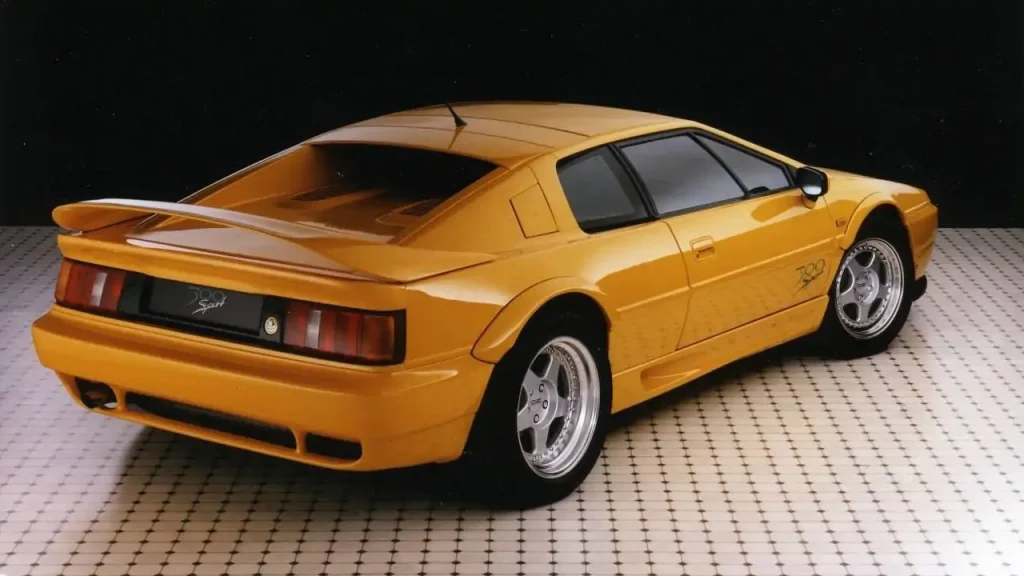
Over the years, the Esprit continued to evolve. The 1978 Series 2 introduced improvements and more refined styling, while the Essex Turbo special edition brought turbocharged performance to the lineup. In 1981, the Series 3 added a full-time turbocharged model alongside the naturally aspirated version, giving buyers the performance they had been waiting for.
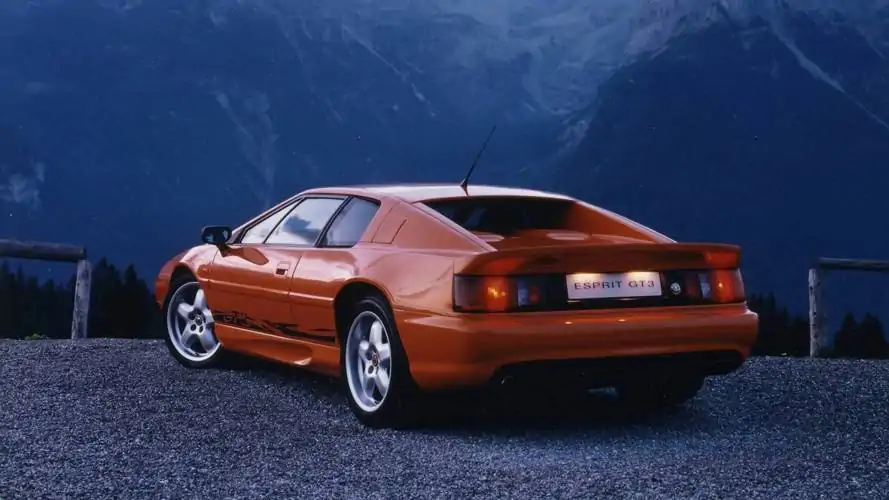
A major redesign arrived in 1987, once again featuring styling from Giugiaro while improving performance and refinement. The later Esprits remained faithful to the original formula: lightweight construction, exceptional handling, and exotic looks without the price tag of traditional supercars.
By the time the Series 4 arrived in 1993, the Esprit was showing its age against newer rivals. Faster and more modern competitors had entered the market, but Lotus continued improving the car. The addition of the Esprit V8 transformed the model, giving it the performance needed to compete with serious supercars. With a twin-turbocharged V8 engine, the Esprit could accelerate from 0-60 mph in approximately 4.4 seconds.
Despite its aging platform, the Esprit remained in production until 2004, when the final example rolled off the line after an impressive 28-year run. Few sports cars have enjoyed such a long lifespan while maintaining such a strong identity.
Today, the Lotus Esprit is increasingly appreciated by collectors and enthusiasts. Early Series 1 examples have become highly desirable, with pristine cars commanding six-figure prices, while later versions remain relatively affordable compared with many other classic exotics.A pristine Series 1 Esprit can command prices of around $115,000, while later versions are still available for significantly less, with some examples changing hands for closer to $31,000. More than just a stylish coupe, the 1976 Lotus Esprit represents everything Lotus stood for: innovation, lightweight engineering, and a relentless focus on the driving experience.
For enthusiasts looking to own a piece of automotive history, the Esprit represents a rare opportunity. Few cars combine such dramatic styling, motorsport-inspired engineering, and pop-culture fame at this price point. More than just the car that made James Bond trade his Aston Martin, the Lotus Esprit remains a symbol of innovation, ambition, and the belief that a small British manufacturer could build a true global icon.