
One of the Most Successful and Dominant Formula 1 Cars Ever Built.
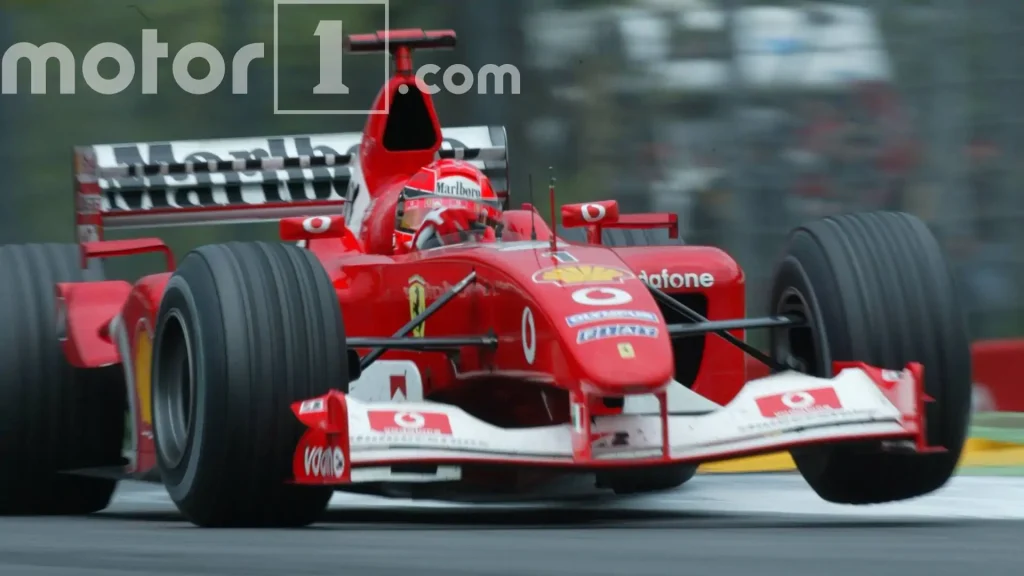
They say perfection cannot be rushed, and the Ferrari F2002 came remarkably close to achieving it. Although the legendary Formula 1 machine did not appear until the third race of the 2002 season, its arrival immediately changed the competitive landscape. Once Ferrari unleashed the F2002, its combination of speed, reliability, and technical brilliance made it virtually untouchable. To this day, it remains one of the most successful and dominant F1 cars ever built.
At the start of the 2000s, Ferrari had assembled the ideal Formula 1 package. The team featured an exceptional lead driver in Michael Schumacher, a highly capable teammate in Rubens Barrichello, a championship-winning technical operation, and a run of some of the fastest cars on the grid. The previous year’s Scuderia Ferrari F2001 had already secured another world championship, but the F2002 represented a major step forward with a completely new design philosophy and a series of innovative engineering solutions.
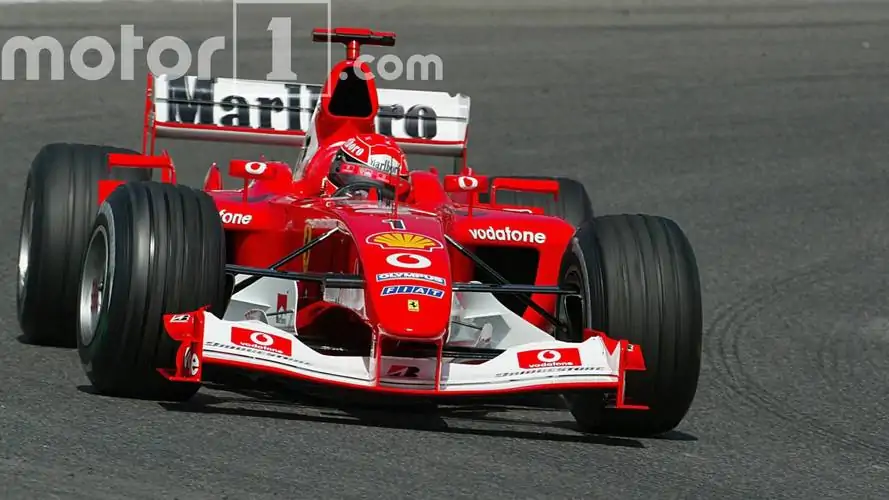
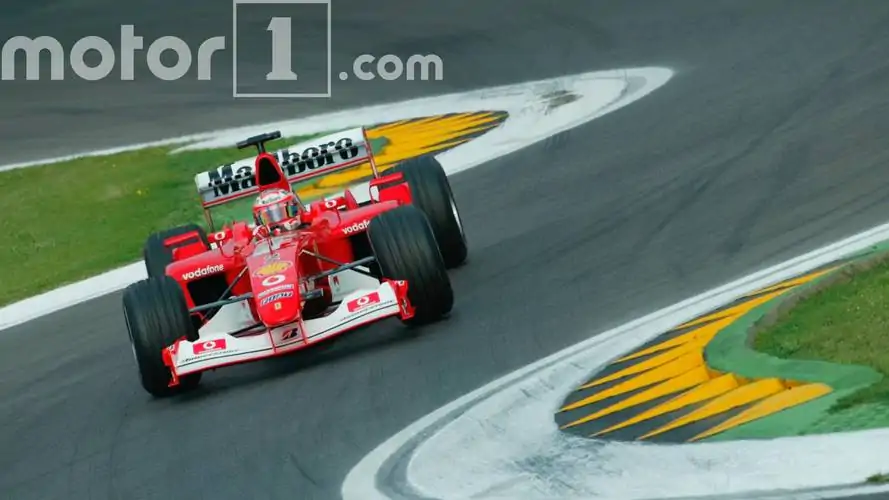
One of the car’s biggest breakthroughs was its compact, lightweight gearbox casing, which allowed Ferrari’s engineers greater freedom when designing the rear aerodynamic package. The smaller transmission created more room for improved airflow management, helping the F2002 generate greater aerodynamic efficiency and overall performance.
That focus on refinement was also the reason behind the car’s delayed debut. Ferrari’s aerodynamic engineers believed additional development time could unlock even more performance, so the team chose to begin the 2002 season with a heavily revised version of the F2001 rather than rush the new car onto the track. The decision proved to be a masterstroke — once the F2002 finally arrived, it quickly demonstrated why patience and precision had paid off.
The Ferrari F2002 gained even more of an edge over its competitors thanks to a host of advanced technologies. A clutchless direct-shift gearbox delivered faster and smoother gear changes, while a sophisticated fluid traction control system helped maximize acceleration and improve rear-wheel grip. Ferrari engineers also used periscope-style exhaust exits to influence airflow around the rear of the car, enhancing aerodynamic performance.
Powering the machine was Ferrari’s magnificent 3.0-liter V10 engine, one of the strongest and most refined power units on the grid at the time. While there was speculation that BMW’s engine in the Williams chassis may have held a slight horsepower advantage, Williams was unable to consistently turn that potential into results. Ferrari’s complete package — combining power, aerodynamics, reliability, and race strategy — allowed the F2002 to remain the benchmark throughout the season.
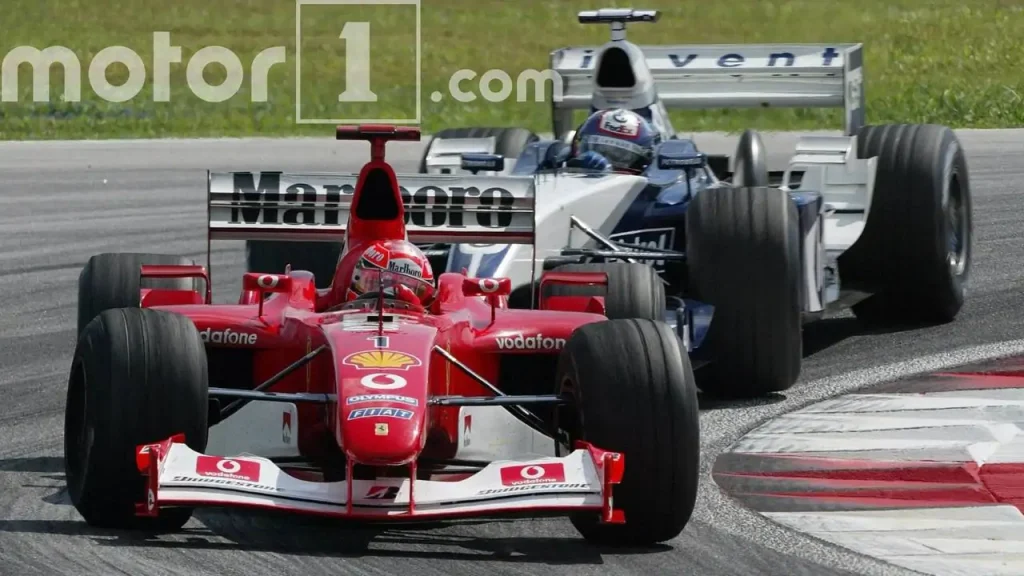
The Ferrari F2002 was the result of a brilliant collaboration between some of Formula 1’s greatest technical minds: chassis designer Rory Byrne, engine specialist Paolo Martinelli, and technical director Ross Brawn. Together, these three figures played a crucial role in creating the era of Ferrari dominance that defined the early 2000s.
Their meticulous engineering and relentless pursuit of performance produced one of the most successful racing machines in F1 history. The results were immediate — on its very first appearance, the F2002 carried Michael Schumacher to victory at the 2002 Brazilian Grand Prix, announcing itself as the car to beat.
That win marked the beginning of an extraordinary run. The F2002 went on to claim victory in every remaining race of the season, with the only interruption coming at the Monaco Grand Prix, where Ferrari still secured a podium finish. Its dominance was so complete that Ferrari accumulated as many championship points in 2002 as all of its rivals combined.
The F2002 wasn’t simply a fast Formula 1 car; it was a near-perfect combination of engineering excellence, reliability, and race-winning execution.
Like its predecessor, the Ferrari F2002 carried Ferrari’s momentum into the following season, beginning the 2003 campaign before eventually being replaced by its successor. Even after a full year of dominance, the car remained competitive, taking its final victory at the 2003 San Marino Grand Prix.
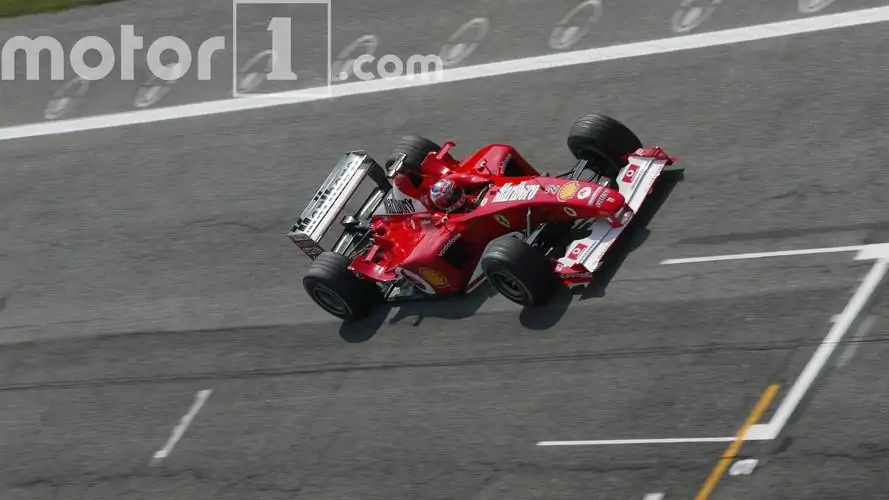
Across its career, the F2002 achieved an incredible record, winning 15 of the 19 Grands Prix in which it competed. Its unmatched combination of speed, reliability, and technical innovation cemented its place among the greatest Formula 1 cars ever created.
The Ferrari F2002 was more than just a championship-winning machine — it was a true racing legend.