
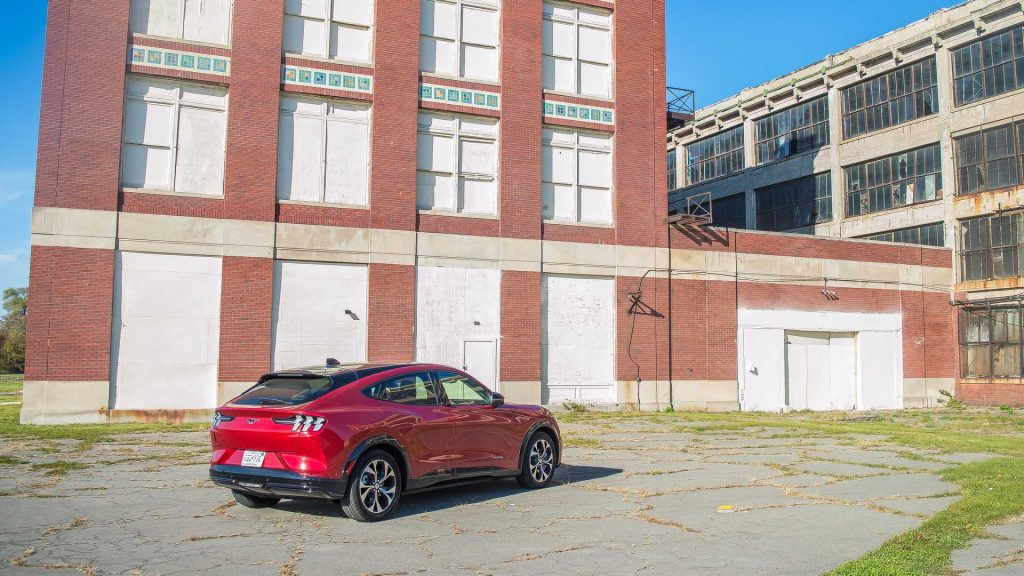
A drive past Ford’s historic Model T plant offered a new perspective on what the Mustang name means in the electric era.
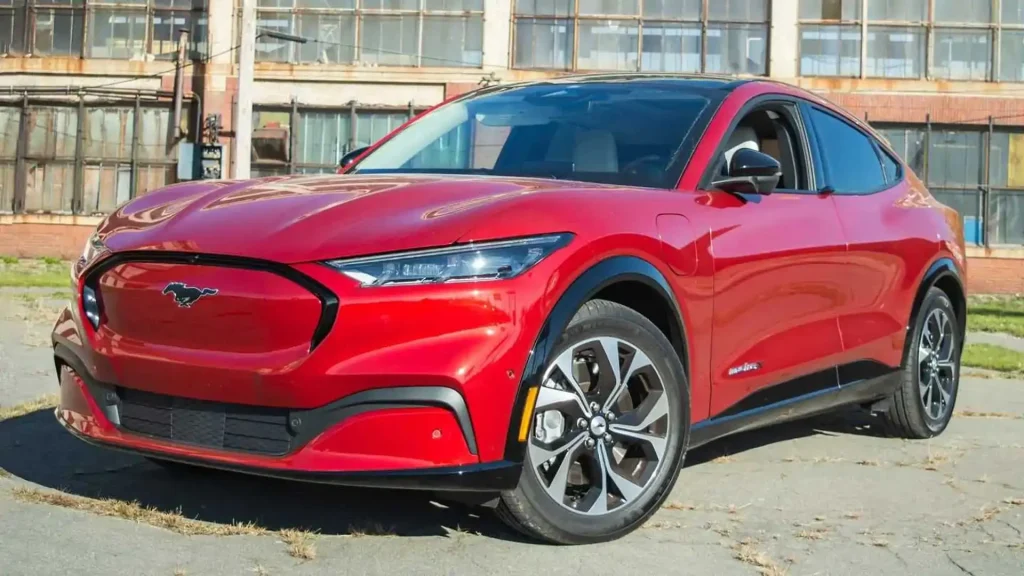
I probably shouldn’t like this car. For a lifelong Mustang enthusiast like me, the 2021 Ford Mustang Mach-E is practically automotive heresy. Yet as I cruise along Detroit’s notorious Woodward Avenue toward the historic Ford Model T factory, I realize I’m having a genuinely good time. The little devil on my shoulder might have something to do with it.
By now, you’ve probably heard plenty about the Mach-E. The stylish electric crossover has earned widespread praise from automotive journalists, while drawing almost equally widespread criticism from die-hard Mustang fans. That puts me in an awkward position: I’m both an automotive journalist and a Mustang loyalist. I’ve owned three Mustangs over the past decade, including the red 1995 GT convertible pictured below on the left, which currently resides in my garage. Over the years, I’ve joined Mustang clubs, attended plenty of Mustang-only events, and accumulated more than a few Mustang shirts and hats. I even have framed photos of my cars displayed in the living room. Yes, I’m that guy.
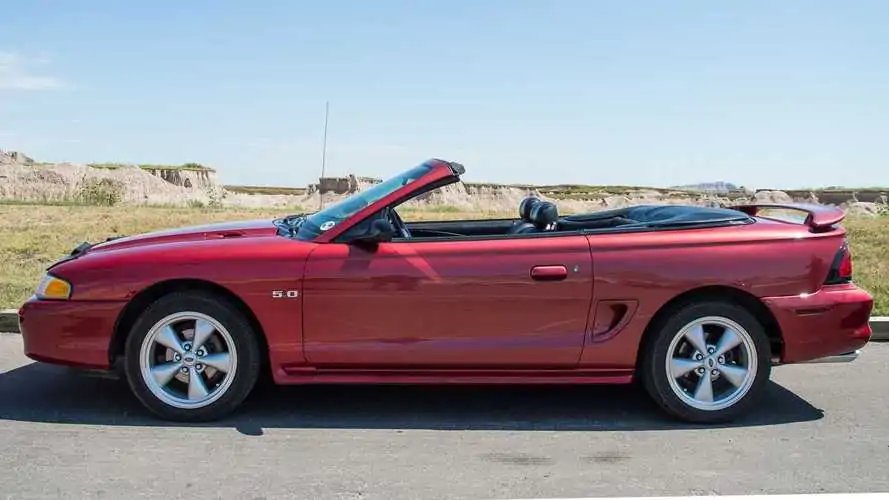
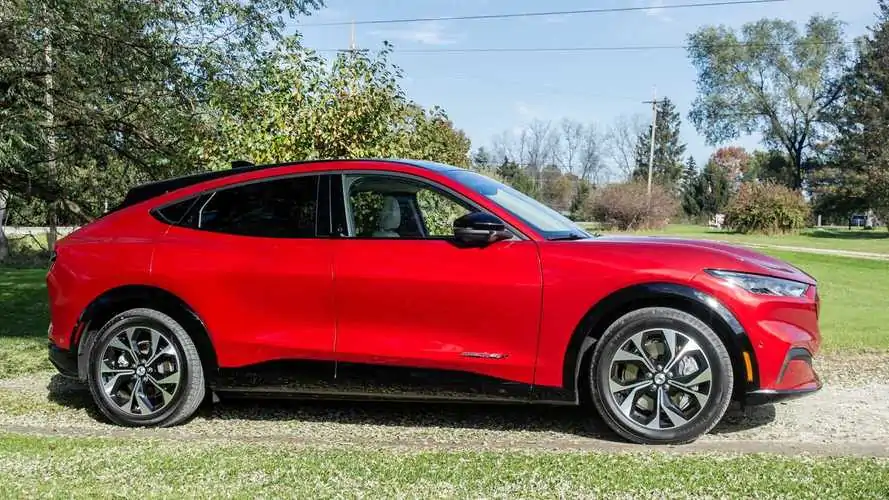
I’ve also driven every generation of the Mustang, sampling just about every engine configuration imaginable, from an emissions-strangled 1977 Mustang II to a 700-horsepower Shelby Super Snake. I know these cars pretty well, but I’d never experienced a Mustang quite like the Mach-E. Its relatively roomy cabin, four doors, all-wheel drive, and near-silent operation make for a very different kind of driving experience. Still, after two days and 200 miles navigating the winding roads and congested highways of southeast Michigan, this longtime Ford fan is beginning to rethink what it means to be a Mustang.
The Devil On Your Shoulder
Plenty has been written about what technically qualifies as a Mustang, so there’s little point in revisiting that debate here. These cars have taken many forms over the years, including coupes, fastbacks, hatchbacks, convertibles, and even two-door sedans, all offered with a broad range of powertrains. Given that history, why should a five-door, dual-motor electric crossover be off the table?
Rather than dwell on body styles and specifications, I’m more interested in two less tangible qualities often associated with smaller, high-performance cars and especially cherished by Mustang fans. The one I want to explore first is what I call The Devil On Your Shoulder Effect.
Put simply, it’s that little voice in your head that keeps egging you on until you’re acting like a 16-year-old behind the wheel of Dad’s car. Come on, floor it. Come on, kick the tail out at the next corner. Come on, do a burnout. Everyone’s watching. Mustang enthusiasts are particularly vulnerable to this temptation. Don’t believe me? Just Google videos of Mustangs leaving Cars & Coffee events.
And damn it, that little devil was right there in the Mach-E, urging me to misbehave.
Even without a V8 soundtrack and with all four wheels putting power to the pavement, that little devil kept urging me to misbehave in the Mach-E. Come on, mash the throttle. Come on, blow past that Camaro. Come on, do some AWD donuts. Everyone’s watching. I’ll admit I resisted the urge to spin donuts, but boy, was it tempting. As for everything else, I’m not ashamed to say the devil won. That’s the effect of 428 pound-feet of instant electric torque, and this Mach-E wasn’t even the range-topping GT.
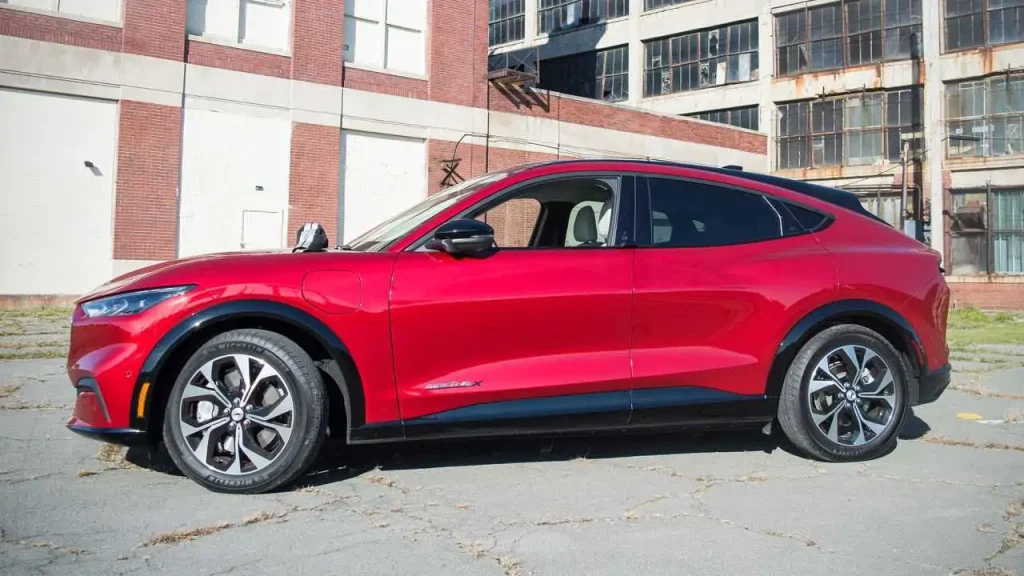
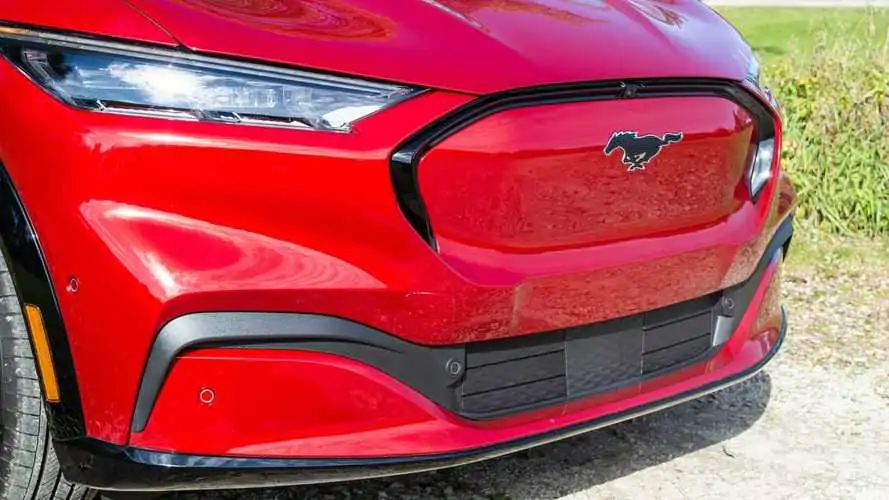
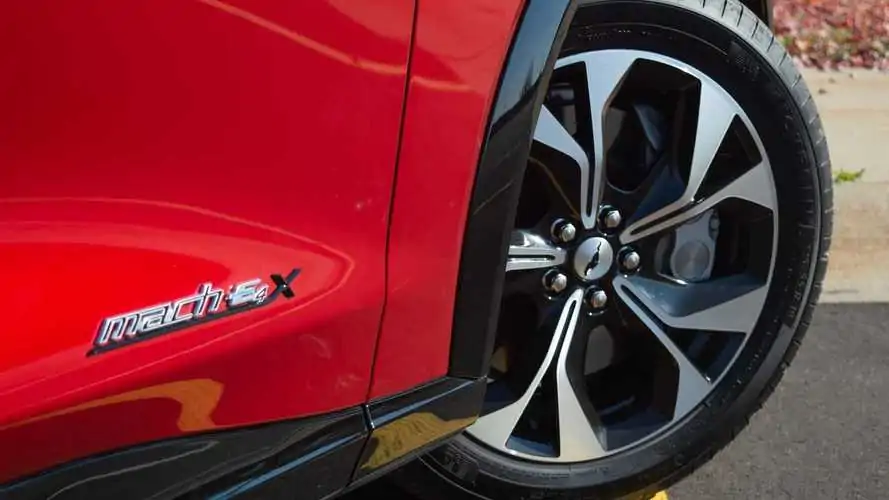
Electric torque delivers a completely different sensation from a wild V8, and by different, I mean better. A combustion engine needs time for the air and fuel to mix, the spark to ignite, and power to build before it eventually falls off and waits for the next gear to bring it back. The Mach-E, on the other hand, feels like a switch that unleashes an endless wave of thrust the instant you ask for it. This was my first experience with an EV, and I honestly can’t understand how anyone who loves horsepower could call it soulless or boring. V8s certainly sound fantastic, but if engine noise is all that matters to you, I feel sorry for you. You’re missing out on an entirely new kind of performance excitement.
Size Counts, But Not in the Way You Think
I mentioned that two intangible qualities would shape my evaluation, and the second is size. I don’t mean the Mach-E’s actual dimensions, which make it shorter and narrower than a traditional Mustang, though slightly taller. I’m talking about the way a Mustang makes its occupants feel. Every one I’ve driven has seemed to wrap itself around the driver, placing you deep inside the cabin with a long hood stretching ahead and the rear deck seemingly disappearing behind you. Even the nearly 16-foot-long 1973 Mustang delivers that sensation. From the outside, the Mach-E certainly looks the part.
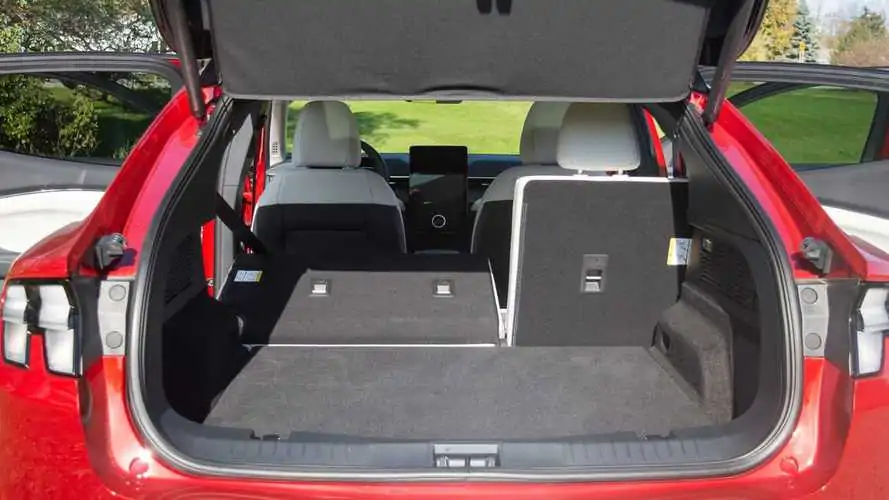
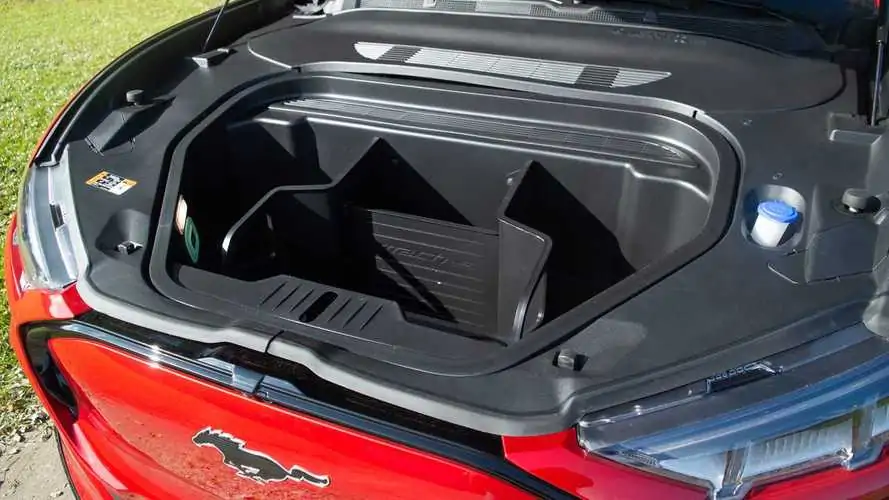
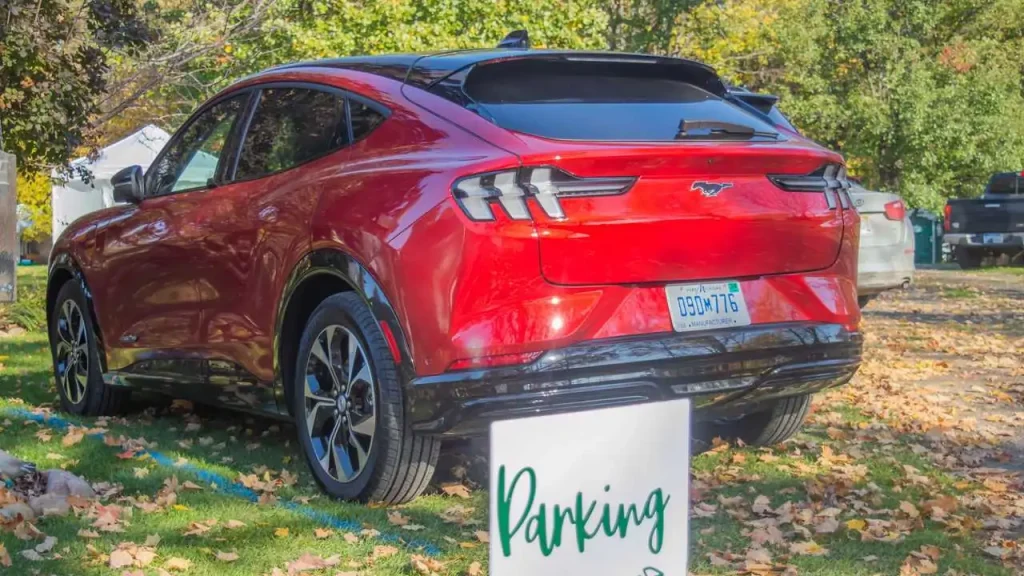
Without a massive engine under the hood, many EVs end up with short, uninspiring front ends. The Mach-E bucks that trend. From behind its digital instrument panel, a broad stretch of red-painted aluminum extends toward the windshield, delivering a familiar Mustang-like view over the hood. The rearview mirror offers a similarly reassuring sight, with the hatchback design creating the short rear deck you’d expect from a Mustang. The seats provide plenty of support without feeling restrictive, while the cabin strikes a comfortable balance between snug and spacious. And although the digital displays leave the dashboard looking a little bare at first, everything comes to life when you press the start button.
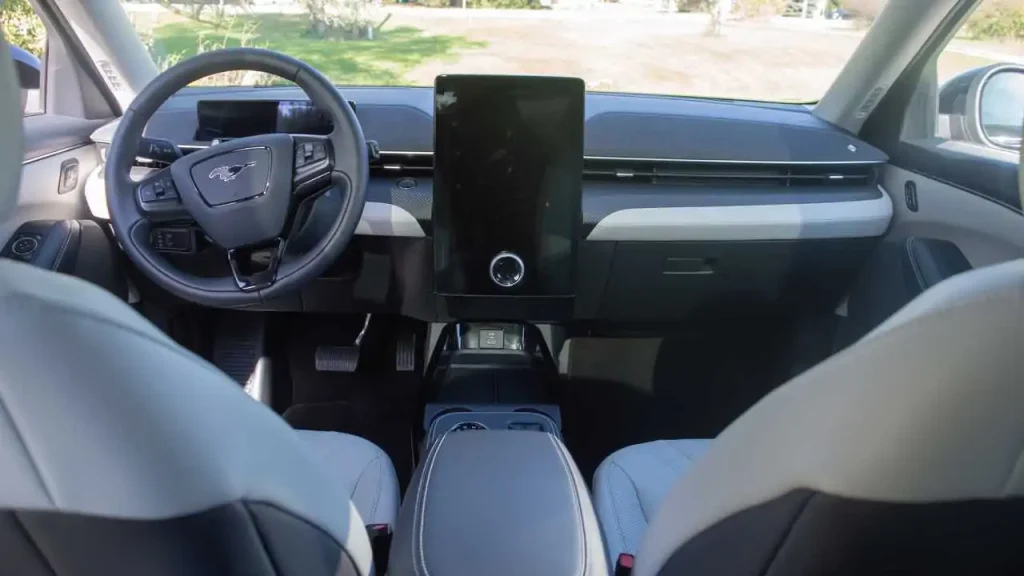
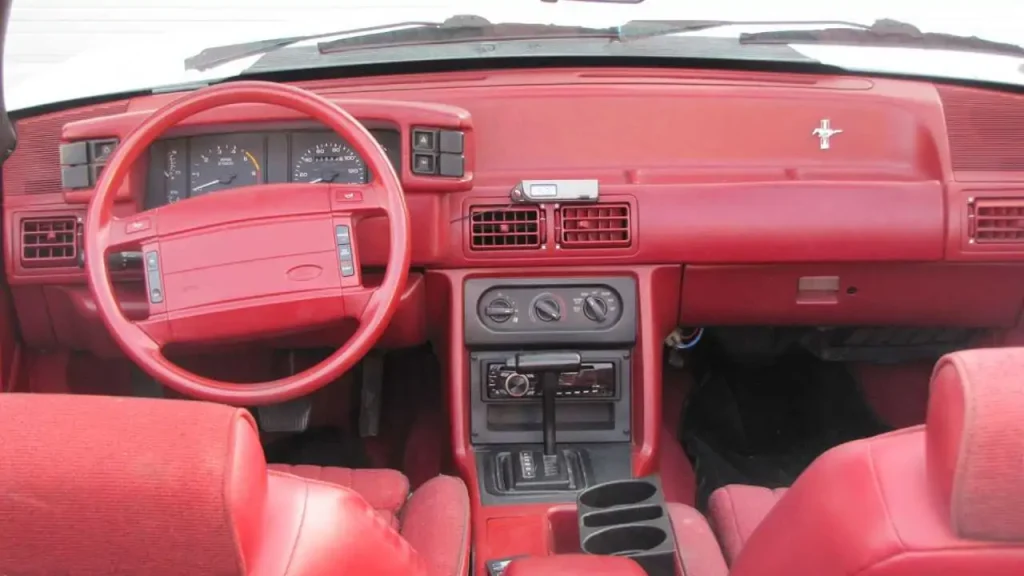
Some people find the Mach-E’s cabin a little bland. To put that criticism in perspective, feast your eyes on the porn-red interior of my 1992 LX 5.0 convertible.
Still, I immediately notice that I’m sitting higher than I’m used to, and it has nothing to do with the Mach-E’s ground clearance. At 5.7 inches, it actually sits slightly lower than my SN95 convertible on its stock suspension. The difference comes from the seating position, which is elevated to suit the crossover layout and leaves me feeling perched above the car rather than settled into it.
I also don’t get that familiar sensation of sitting right in the middle of the machine. Traditional Mustangs have rear seats, but they’re mostly an afterthought. The Mach-E’s back seats are genuinely usable for adults, provided they’re on the smaller side, and there’s a respectable amount of cargo space behind them.
It just doesn’t feel like a Mustang.
Consequently, I never feel fully integrated with the Mach-E, cocooned by the car as though I’m part of the machine itself. Instead, I’m positioned too high and too far forward, making the vehicle feel larger than its actual dimensions suggest. For a practical crossover, that’s an advantage. For something wearing the Mustang name, it’s a letdown.
I genuinely wanted the Mach-E to pass both of my tests because, at the end of the day, I have no problem with a four-door, all-wheel-drive pony car that’s genuinely fun to drive. You can even get it with rear-wheel drive, and when it comes to powertrains, the overwhelming majority of the 10 million Mustangs built since 1964 haven’t had V8 engines. Electric motors are simply another step in the Mustang’s evolution. That leaves the four-door body style as the main sticking point in the debate, at least when it comes to the car’s tangible characteristics. My more subjective road test gave it a passing grade on only one of two counts. As entertaining as that instant torque is, there’s more to being a Mustang than raw speed and power.
Table of Contents
It Isn’t a Mustang, But It Could Be
I’ll be honest: cruising down Woodward Avenue in the Mach-E didn’t make me feel nearly as special as I did behind the wheel of my 2003 SVT Cobra convertible years ago. My wife reached the same conclusion from the passenger seat, and I doubt even the most dedicated Mustang loyalists will embrace the Mach-E, no matter how impressive it becomes.
But forgive me if that opinion costs me a few friends: the purists aren’t the audience that matters most here. The Mach-E will turn heads with its styling and performance, and drivers will still find themselves grinning every time they press the accelerator. It’s also likely to sell in huge numbers. No amount of criticism from traditional Mustang fans is going to change that.
Ford didn’t design the Mach-E to win over Mustang purists, and many will want nothing to do with it. But it could win over enthusiasts like me who are more open to change.
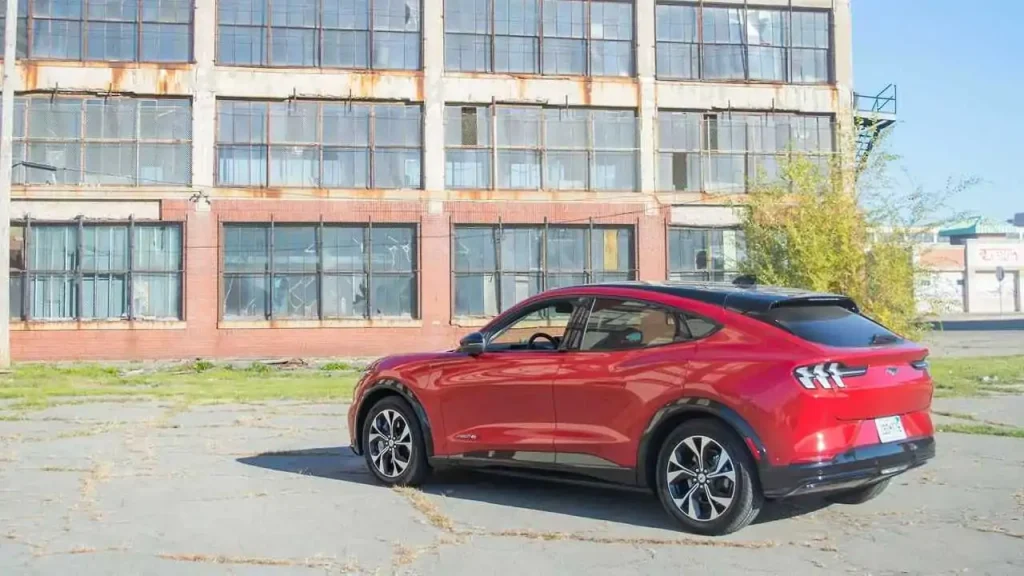
Cruising down Woodward Avenue toward the old Ford Model T factory on a sunny Sunday in November, my Rapid Red test car attracted plenty of attention. Whether Mustang purists want to admit it or not, the Mach-E gets noticed, and I’ll count that as another win. It also had more than enough power to keep that little devil on my shoulder happy at stoplights. With enough charge for 200 miles of motoring mischief, I had plenty of opportunities to enjoy myself. When the battery ran low, I topped it up at public charging stations for a grand total of $1.75. Skipping a $60 gas station visit was certainly satisfying, but not nearly as rewarding as the time I spent behind the wheel.
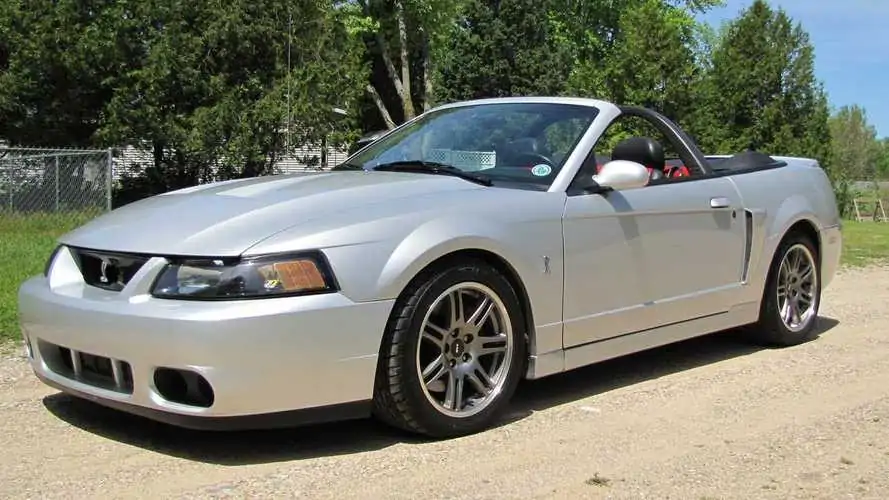
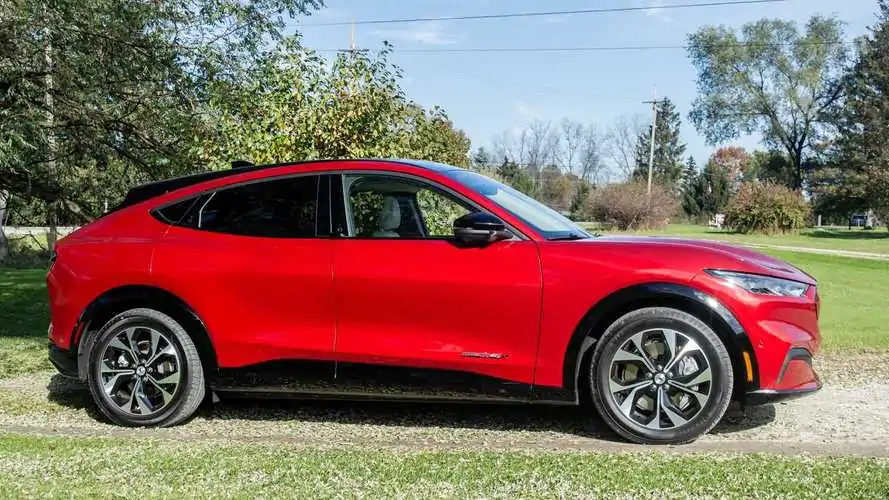
My 2003 Cobra could lay down a killer burnout, but the Mach-E supposedly makes donuts even better.
I’m not the only one enjoying the Mach-E. Ford told me demand remained strong, with buyers gravitating toward higher trims like the Premium and GT, which offer more power and range. Through October 2021, Ford had sold 21,703 Mach-Es, making it the second-best-selling electric SUV behind the Tesla Model Y. Even more surprising, the electric crossover was keeping pace with the gas-powered Mustang in monthly sales. It wasn’t going to outsell its traditional stablemate for the full year, but 2022 could be a different story.
And if Mach-E profits help keep raucous GTs and Shelby GT500s in production, I’m all for it. After all, four-cylinder and V6 Mustangs that hardcore enthusiasts often dismissed have helped sustain the pony car for decades. With that in mind, I’m willing to broaden my definition of a Mustang to make room for the Mach-E.
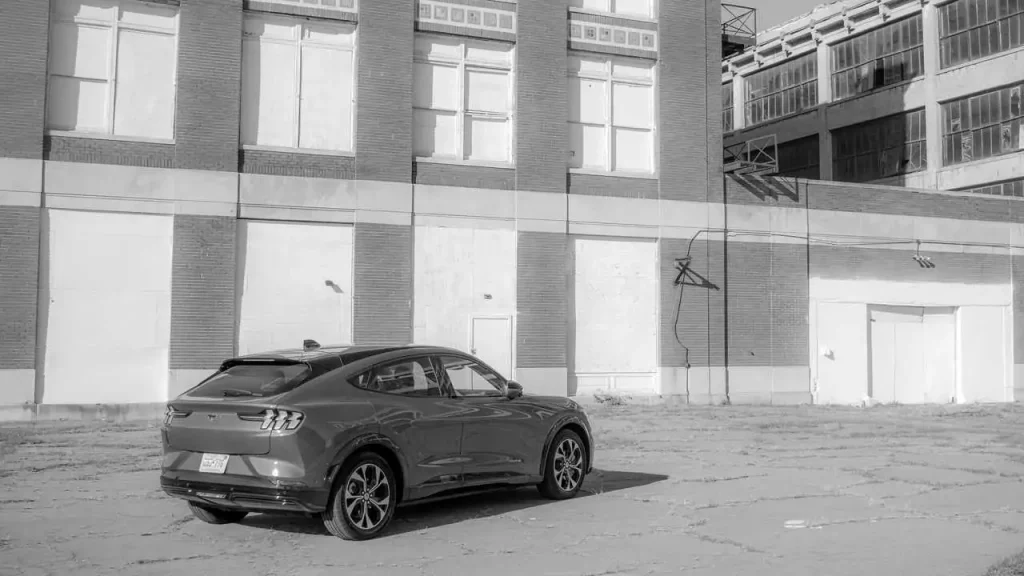
Parked outside Ford’s historic Model T factory in Highland Park, just off Woodward Avenue, I realized I’d already made peace with the Mach-E’s place in the Mustang family. As I maneuvered the car around the landmark for photos, I wasn’t thinking of it as the Mach-E. I was calling it the Mustang, and the thought came naturally.
For a Ford guy like me, I can’t imagine a more fitting place to have that realization.