
Confused by terms like bead-lock wheels, locking differentials, and suspension travel? This guide explains the essential off-road terminology.
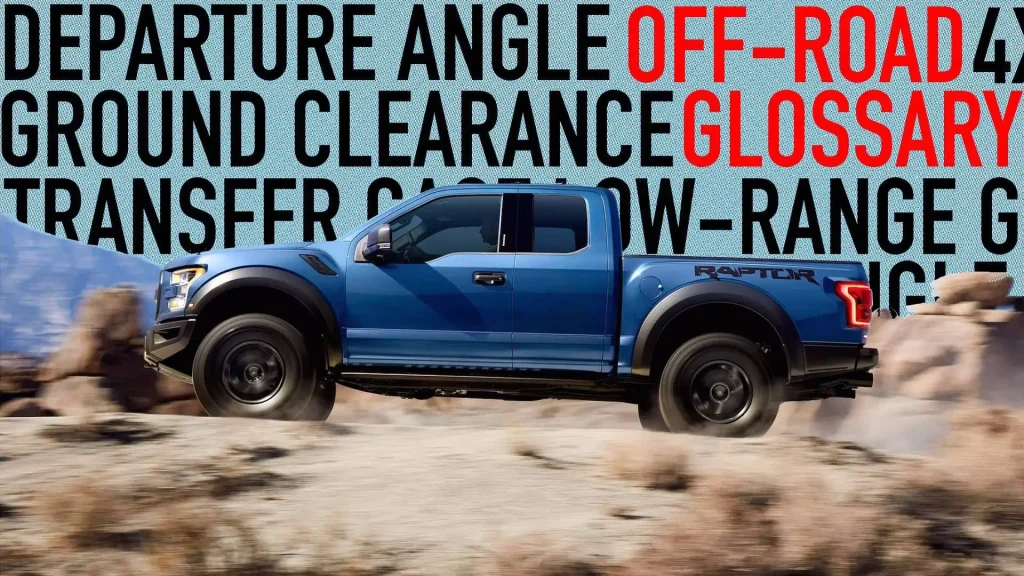
Off-roading can be intimidating for newcomers, especially when manufacturers and enthusiasts start using technical terms like crawl ratio, articulation, bead-lock wheels, and locking differentials. Understanding the language of off-road vehicles is an important first step toward becoming a better and safer trail driver.
This guide breaks down some of the most common off-road terms and explains them in simple language. Whether you are preparing for your first adventure, upgrading your current 4×4, or shopping for a new off-road truck or SUV, this glossary will help you better understand the equipment, technology, and specifications that determine a vehicle’s capability.
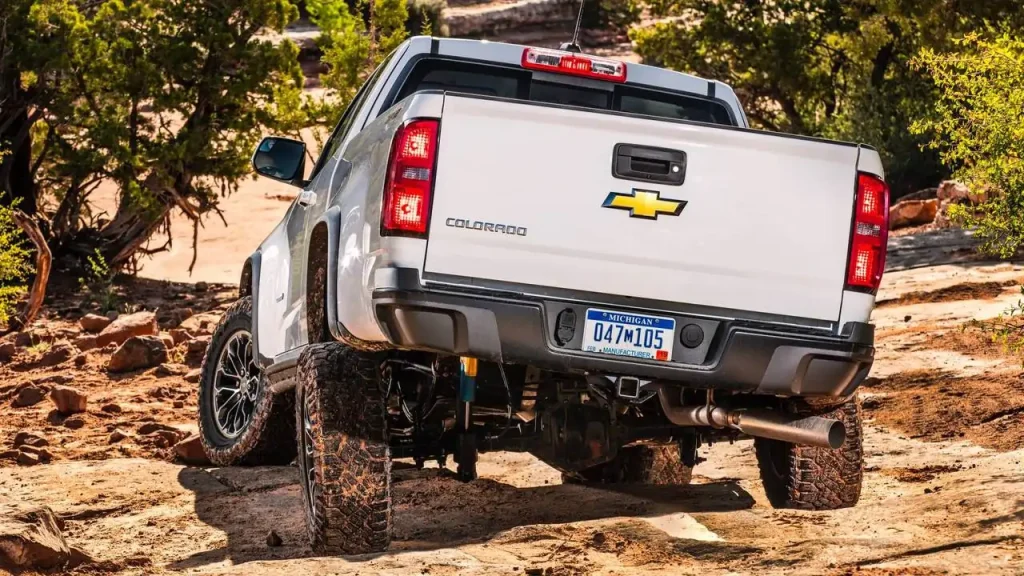
Table of Contents
Wheel Travel
Articulation describes how far a vehicle’s wheels and axles can move vertically, also commonly called wheel travel. Greater articulation allows the wheels to maintain contact with the ground as the vehicle crosses uneven terrain. That’s especially useful on rocky trails, where the suspension needs enough movement to let each wheel move up and down over obstacles.
Lower Tire Pressure
Before heading onto a trail, off-road drivers commonly lower their tire pressure below the level recommended for normal road driving. This process, known as airing down, can be done with the back of a tire-pressure gauge or a dedicated off-road deflation tool. All four tires should generally be adjusted to the same target pressure.
Lower pressure allows the tire to spread out over a larger contact patch, increasing traction on loose or uneven surfaces. It can also help the suspension absorb rough terrain more effectively. However, there isn’t one universal PSI setting for every vehicle. The appropriate pressure depends on factors such as the tire itself, the vehicle’s weight, and the type of wheel being used. Bead-lock wheels, for example, can typically operate at lower pressures than conventional wheels.
Bead-Lock Rim
A bead-lock wheel mechanically secures the tire bead to the wheel, helping prevent the tire from separating from the rim when running very low pressures. True bead-lock wheels are easy to identify by the ring of bolts around the outside of the wheel.
The main advantage is the ability to air down farther without allowing the tire bead to slip off the wheel. That gives the tire a larger footprint and can significantly improve traction on difficult terrain.
Low-Speed Gear Ratio
A crawl ratio describes how much engine torque is multiplied before it reaches the wheels in a vehicle’s lowest gearing. It is determined by the combined ratios of the transmission, transfer case, and axle differential.
For example, a Jeep Wrangler with a manual transmission can have a crawl ratio of 73.1:1. In its lowest gear and transfer-case range, that means the engine can provide substantial torque multiplication at the wheels while the vehicle moves at very low speeds.
A high crawl ratio is particularly useful when climbing steep grades, maneuvering over large rocks, or pulling heavy loads. The trade-off is speed: the higher the crawl ratio, the more slowly the vehicle travels when using its lowest gearing.

Four-Wheel-Drive Gearbox
The transfer case is a key component of a four-wheel-drive system. Located between the transmission and the axles, it distributes engine power to the front and rear driveshafts when four-wheel drive is engaged.
In vehicles equipped with low range, the transfer case also provides the gearing needed for serious off-road driving. Selecting low range multiplies torque and gives the vehicle much greater control at very low speeds, effectively unlocking its maximum crawl ratio.
Increased Ground Clearance
A suspension lift raises a vehicle’s body or chassis by modifying components such as the suspension, springs, or other hardware. Some setups also use blocks or spacers to increase ride height.
The main functional reason for lifting an off-road vehicle is to increase ground clearance, allowing it to clear larger obstacles. Of course, some owners lift their vehicles primarily for the more aggressive appearance.
Solid-axle pickups and body-on-frame SUVs are generally easier to lift because of their relatively straightforward construction. Vehicles with independent suspension or unibody construction can also be lifted, but achieving the same amount of additional clearance can require more complicated modifications.
Front Clearance Angle
Approach angle determines how steep an obstacle a vehicle can climb without its front end making contact. It is measured between the ground and an imaginary line running from the front tire to the vehicle’s lowest forward point, often the bumper.
If an obstacle is steeper than the vehicle’s approach angle, the front bumper or another component can hit the terrain before the tires are able to climb over it.
Rear Clearance Angle
Departure angle is essentially the rear equivalent of approach angle. It describes how steep an obstacle or descent can be before the rear of the vehicle contacts the ground.
The measurement is taken between the ground and an imaginary line extending from the rear tire to the vehicle’s lowest rear point, usually the bumper. A larger departure angle allows a vehicle to leave steep obstacles without dragging its rear end.
Midsection Clearance Angle
Breakover angle determines how steep a crest or obstacle a vehicle can drive over without its underbody becoming high-centered.
It is based on the angle formed between the ground and the vehicle’s underside as one front wheel and the opposite rear wheel remain in contact with the terrain. A vehicle with a larger breakover angle can negotiate sharper crests without its belly contacting the ground.
Underbody Clearance
Ground clearance is the amount of space between the ground and the lowest point underneath a vehicle. More clearance reduces the likelihood of the underbody, differential, or other components striking rocks, ruts, and other obstacles.
Increasing ride height with a suspension lift is one way to gain clearance. Installing larger tires can also raise the vehicle’s lowest points farther from the ground, providing additional room when tackling rough terrain.
Tire Design
Not all tires are designed for the same environment. Passenger tires are common on ordinary cars, while heavy-duty trucks often use truck tires with different load ratings. Off-road vehicles frequently use all-terrain or mud-terrain tires depending on how much time they spend away from pavement.
All-terrain tires are designed as a compromise, providing reasonable performance on pavement while offering additional grip on gravel, dirt, mud, and moderate trails. Mud/snow tires, meanwhile, typically feature much more aggressive tread blocks designed to dig into loose surfaces.
That extra off-road capability comes with compromises. Aggressive tread can produce more road noise and reduce ride comfort compared with conventional highway-oriented tires.
Differential Design
A differential allows the wheels on an axle to rotate at different speeds, which is essential when turning. Off-road vehicles can be equipped with several types of differentials designed to improve traction by limiting or eliminating unwanted wheelspin.
The major categories include open, selectable, automatic, limited-slip, and spool differentials.
An open differential is common in everyday road cars. It allows the two wheels to rotate at different speeds but doesn’t prevent one wheel from spinning significantly faster than the other when traction is limited.
A selectable differential, often called an E-Locker, allows the driver to engage the locking mechanism with a switch or button. This gives the driver direct control over when the axle is locked, making it a popular choice for serious off-road vehicles. The added hardware can also increase the price of a factory-equipped vehicle. The Chevrolet Colorado ZR2, for example, is available with selectable locking differentials.
An automatic differential locks when it detects wheelspin and disengages when normal driving conditions return. This eliminates the need for the driver to decide when to activate the locker, which can be useful when conditions change quickly. The downside is that the driver doesn’t have direct control over when the differential locks.
A limited-slip differential reduces the difference in wheel speed without completely locking the axle. It is well suited to vehicles that spend time both on pavement and on moderate trails because it works automatically and still permits normal cornering. However, it doesn’t provide the same maximum traction as a fully locked differential, and some wheelspin can still occur.
A spool differential takes the opposite approach by permanently locking the axle. Both wheels are forced to rotate at the same speed. Spools are useful for vehicles designed primarily to travel in a straight line, such as drag racers, but they’re generally unsuitable for trail vehicles because they make turning difficult and can cause significant tire wear.
Recovery Points
Tow hooks are heavy-duty attachment points mounted to the front or rear of a vehicle, usually connected directly to the frame. They provide a secure location for attaching a recovery strap, tow rope, or chain when a vehicle becomes stuck.
Well-designed recovery hooks extend beyond the bumper, making them easier to access without having to crawl underneath the vehicle. Serious off-road enthusiasts may replace factory hooks with larger, stronger versions designed specifically for vehicle recovery.
Suspension System
Suspension design has a major effect on an off-road vehicle’s ability to handle obstacles, as well as its ride quality. Three common configurations found on off-road vehicles are solid axles, four-link setups, and independent front suspension.
A solid-axle suspension connects the two wheels on an axle through a single rigid housing. Depending on the vehicle, leaf springs or coil springs support the axle and manage the loads placed on the suspension. Solid axles remain popular among serious off-roaders because they are durable, relatively straightforward to modify, and capable of delivering substantial wheel articulation.
A four-link suspension uses four metal links to locate and control the axle. Two upper links connect the frame to the upper portion of the axle, while two lower links connect the frame to the outer portions of the axle housing. Together, the links control axle movement and manage forces from multiple directions while allowing substantial articulation.
Independent front suspension (IFS) uses individual control arms and related components instead of connecting both front wheels through a solid axle. IFS is widely used on modern pickups and SUVs, including Chevrolet and GMC trucks and SUVs.
Compared with a solid axle, independent suspension generally provides a smoother and more controlled ride on pavement. Its primary off-road compromise is reduced articulation compared with a well-designed solid-axle setup, although modern IFS systems can still perform extremely well on challenging terrain.