
The 2016 Los Angeles Auto Show marked a turning point for the automotive industry. While traditional sports cars and luxury sedans still grabbed headlines, SUVs, performance crossovers, advanced technology, and electrification dominated the spotlight. More than 50 vehicles made their global, North American, or regional debuts, making it one of the busiest L.A. Auto Shows in years.
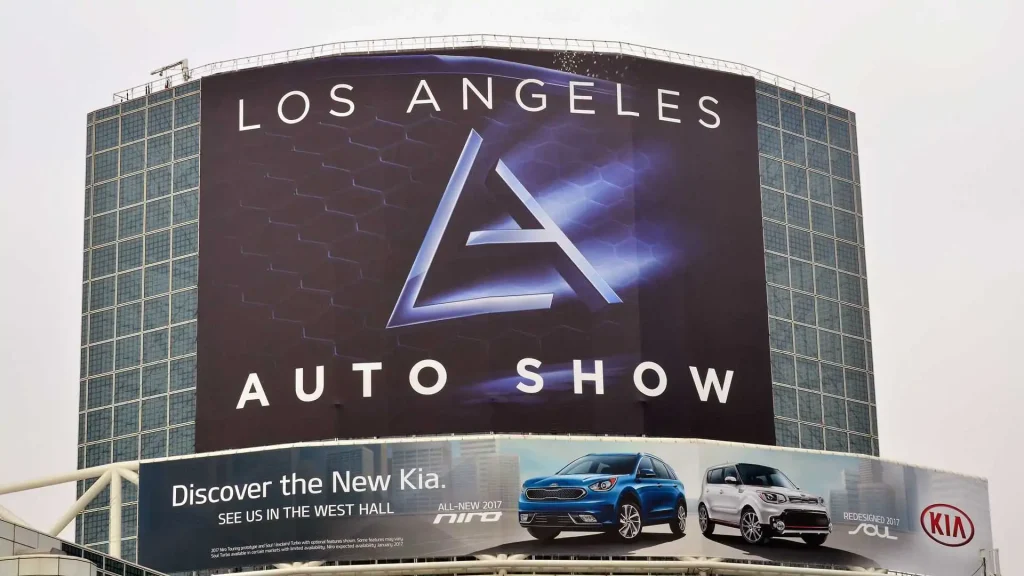
The 2016 Los Angeles Auto Show has officially wrapped up for the press, with the doors now opening to the public. Over the course of the week, the City of Angels became the center of the automotive world, with automakers rolling out new production models, refreshed favorites, and a handful of exciting concepts.
There was no shortage of variety at this year’s show. The floor was filled with everything from high-performance sports cars and exotic machinery to practical family crossovers, luxury sedans, pickup trucks, and the latest crop of electrified vehicles. With so many new cars making their debut, narrowing down the highlights wasn’t an easy task.
As always, some vehicles made a bigger impression than others. A few stood out because of their performance, others because of their design or technology, and some simply caught our attention in a crowded field of new-car reveals. Whether they were completely new models or significant updates to familiar nameplates, these were the vehicles that generated the most excitement among the Motor1 team.
We’ve gathered our favorites from the 2016 Los Angeles Auto Show in one place. From attainable new cars to seriously fast machines, these are the debuts and reveals that we think deserve a closer look.
Table of Contents
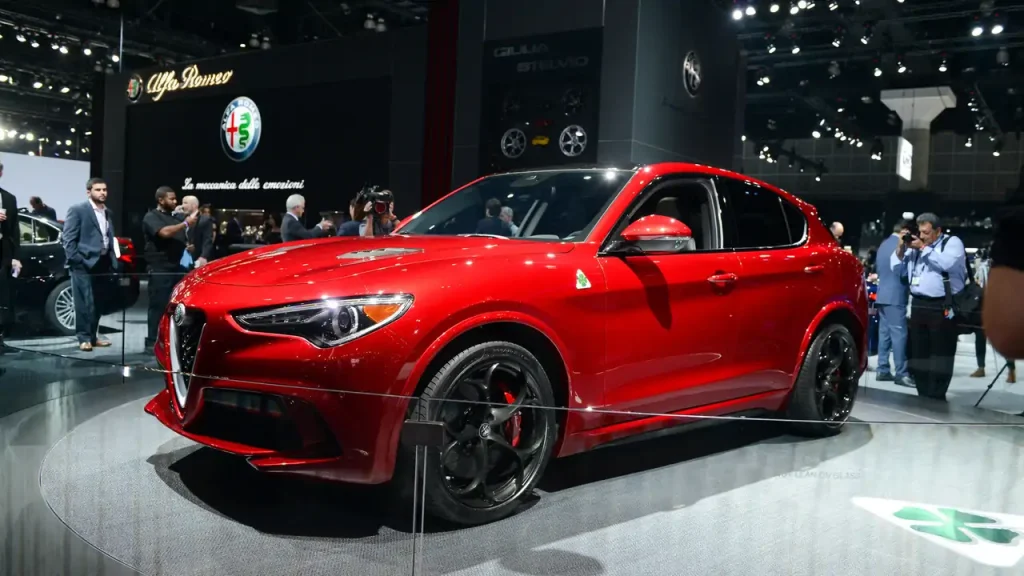
Alfa Romeo Stelvio Quadrifoglio
I’m not normally an SUV person, and I have a hard time imagining myself buying one. The Alfa Romeo Stelvio Quadrifoglio, however, might be enough to change my mind. With styling heavily influenced by the Giulia and a set of four exhaust outlets, it looks every bit as aggressive as its performance suggests. Under the hood, a Ferrari-derived 2.9-liter twin-turbocharged V6 produces an impressive 505 horsepower, making the Stelvio feel like the closest thing to an SUV Ferrari might build.
Alfa Romeo took its time entering the SUV market, but the wait appears to have paid off. The Stelvio brings the brand’s distinctive Italian design to a segment dominated by more conventional luxury crossovers, while the Quadrifoglio adds the kind of hardware and performance figures that make it genuinely exciting. Of course, the real test would be seeing whether those impressive specifications translate into equally impressive performance on the road.
The Stelvio Quadrifoglio also arrived with a serious Nürburgring claim. Alfa Romeo reported a 7-minute, 59-second lap of the Nordschleife, making it the quickest SUV at the circuit at the time and edging the Porsche Cayenne Turbo S by 0.74 seconds. For an SUV, that’s an extraordinary benchmark—and another reason the Stelvio Quadrifoglio immediately became one of the most talked-about vehicles at the show.
— Adrian Padeanu
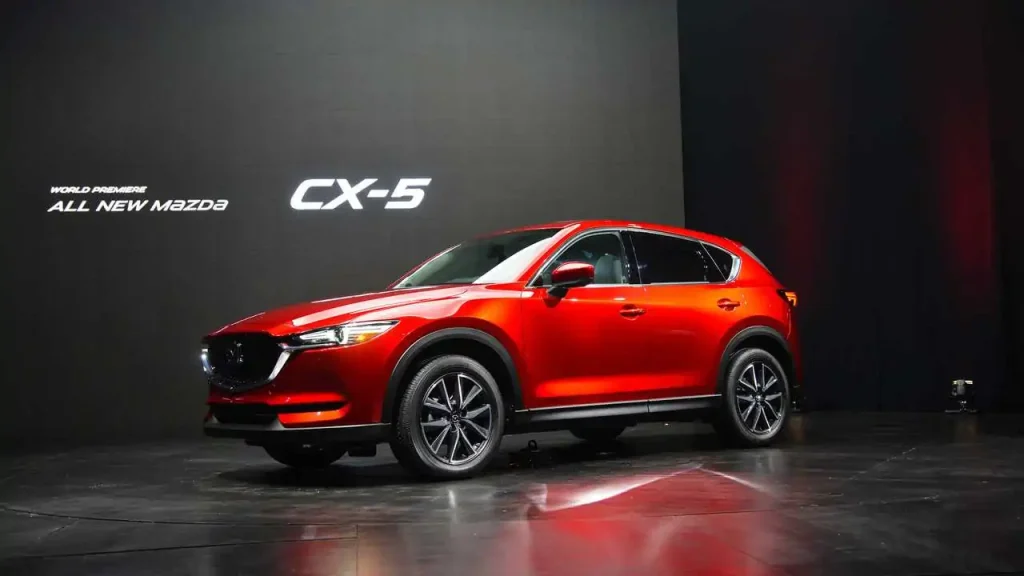
Mazda CX-5 (Second Generation)
The crossover segment may be one of the biggest parts of the automotive market, but it hasn’t always been known for producing the most exciting-looking vehicles. That’s starting to change, though. Debuts such as the Alfa Romeo Stelvio and Jaguar I-Pace at the 2016 Los Angeles Auto Show showed just how quickly crossover design is evolving, with automakers finding new ways to make practicality look genuinely appealing.
Of all the newer, more stylish crossovers on display, my favorite is the redesigned Mazda CX-5. Mazda has always had a knack for making affordable vehicles look more upscale than their price tags suggest, and the latest CX-5 is another strong example of that philosophy. I’m particularly fond of the front end, where the headlights flow neatly into the grille to create a much more unified and purposeful appearance.
The improvements continue inside. The cabin builds on the already attractive layout of the previous CX-5, while upgraded materials and a more refined presentation give the interior a distinctly premium feel. Mazda’s designers have once again managed to strike a difficult balance: creating a vehicle that looks sophisticated and desirable without pushing it out of reach for mainstream buyers.
The CX-5 also has an interesting trick waiting under the hood. Mazda planned to use the crossover as the launch vehicle for its long-promised diesel engine in the U.S., with the powerplant scheduled to arrive in the second half of 2017. Bringing a diesel to America was already a bold move, but doing so in the aftermath of Volkswagen’s emissions scandal made the decision an even bigger gamble. Whether U.S. buyers would embrace the engine remained to be seen, but the CX-5 certainly made a compelling case for Mazda’s continued push upmarket.
— Chris Bruce
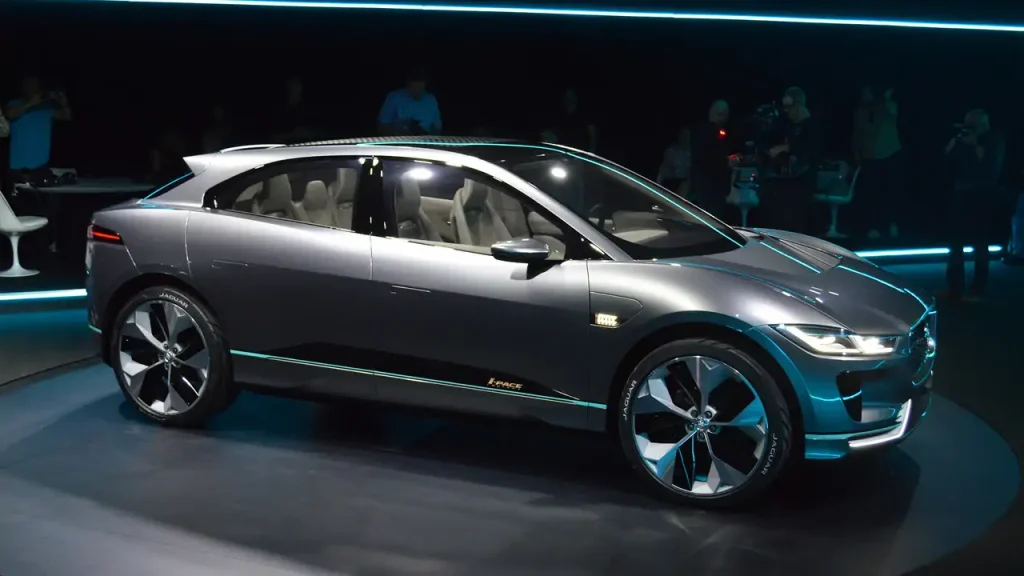
Jaguar I-Pace
Tesla deserves plenty of credit for changing the perception of electric cars. For decades, EVs were largely associated with niche enthusiasts, environmentalists, and backyard hobbyists. Then Tesla came along and proved that an electric vehicle could be desirable, quick, technologically advanced, and genuinely cool. Since then, virtually every major luxury automaker has had to take electric cars seriously, but Jaguar looked particularly well positioned to turn that shift into something special.
The Jaguar I-Pace immediately caught my attention at the 2016 Los Angeles Auto Show. Its sleek, low-slung crossover shape looked nothing like the typical EV, combining Jaguar’s unmistakable design language with the practicality of a utility vehicle. More importantly, the numbers suggested this wasn’t going to be an electric crossover built solely around efficiency.
Jaguar quoted an estimated 220-mile driving range and a 0-to-60-mph time of around 4.0 seconds, putting the I-Pace firmly in performance-car territory. The concept was also designed to support 50-kW DC fast charging, with Jaguar claiming the battery could reach an 80-percent charge in roughly 90 minutes.
The specifications were impressive, but the I-Pace’s biggest promise was its potential as an actual luxury vehicle. The spacious, futuristic cabin appeared capable of combining everyday practicality with the premium materials and design expected from a Jaguar. If the production version could deliver the concept’s performance and handling while offering a competitive price against the Tesla Model X, Jaguar could have a serious hit on its hands.
The combination of distinctive British styling, strong performance, useful range, and the possibility of genuinely engaging driving dynamics made the I-Pace one of the most intriguing electric vehicles at the show. For environmentally conscious enthusiasts who didn’t want to sacrifice style or driving enjoyment, it looked like exactly the kind of EV the market had been waiting for.
— Seyth Miersma
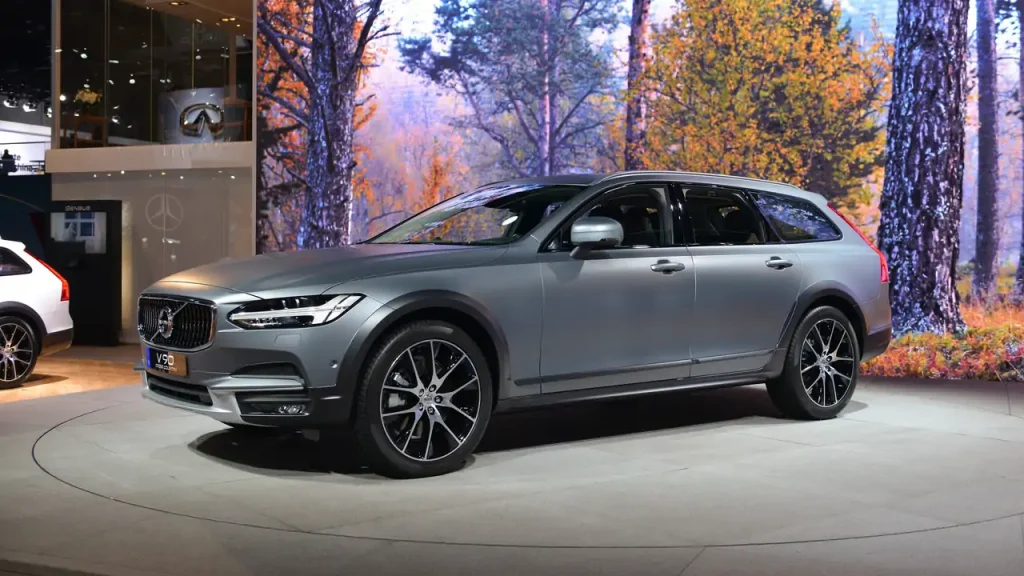
Volvo V90 Cross Country
With winter just around the corner in Detroit, seeing the Volvo V90 Cross Country basking in the Los Angeles sunshine was enough to get me thinking about snow-covered roads. I could easily picture this raised Swedish wagon powering through a Midwestern winter, its distinctive Thor’s Hammer LED headlights lighting the way through the snow. There’s something wonderfully Scandinavian about the whole idea.
The Volvo V90 is already one of the most attractive wagons on the market, and I’d argue it’s among the prettiest ever built. The Cross Country version manages to preserve that elegant shape while adding just enough ruggedness to make it look ready for rough weather and unpaved roads. Subtle body cladding, increased ground clearance, and a more adventurous stance give the wagon added character without compromising its sophisticated design.
The matte-gray finish only makes the V90 Cross Country more appealing. It’s understated but distinctive, complementing the clean lines and Scandinavian styling perfectly. Inside, the V90 offers the kind of upscale environment you’d expect from a modern Volvo, blending minimalist design with comfort, technology, and plenty of practicality.
That’s ultimately what makes the V90 Cross Country so compelling. It doesn’t force buyers to choose between style and usefulness. It’s a luxurious, handsome wagon with enough added capability to handle winter weather and light off-road adventures while remaining perfectly at home on city streets.
Honestly, if I could have driven it straight off the Los Angeles Auto Show stand, I probably would have.
— Steven Ewing
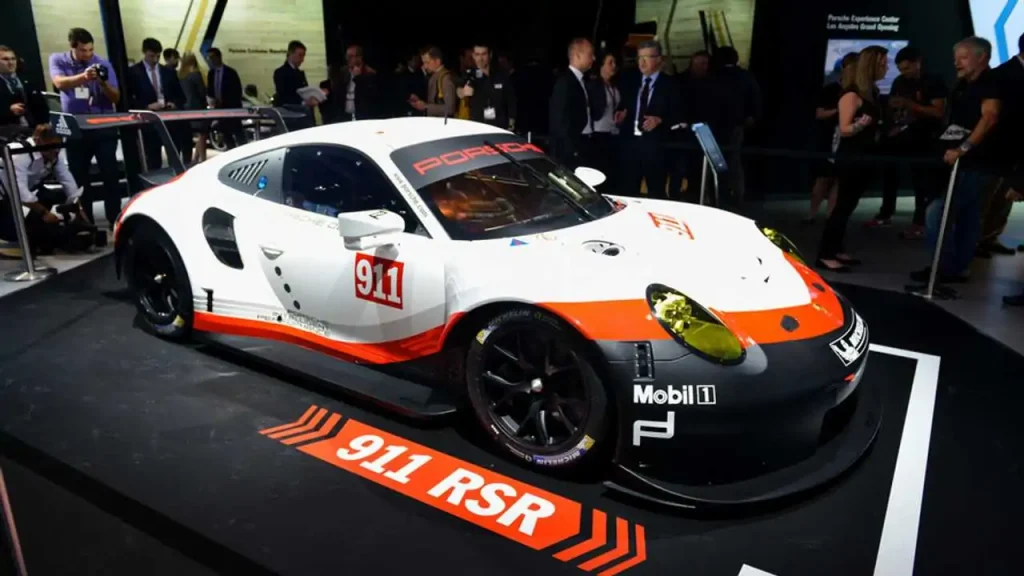
Porsche 911 RSR
I don’t follow every form of motorsport with the same enthusiasm, but endurance racing has always held a special appeal. There’s something uniquely captivating about watching a car and its drivers battle through an entire day and night with one goal in mind: winning the 24 Hours of Le Mans.
That’s a big part of why the new Porsche 911 RSR immediately caught my attention. Porsche made a major change to one of the 911’s most recognizable characteristics, moving the race car’s engine from its traditional position behind the rear axle to a mid-engine layout. For a road-going 911 enthusiast, that might seem almost sacrilegious, but on a race track, the move makes perfect sense. A mid-mounted engine can deliver better weight distribution and handling, giving the RSR a stronger foundation for the punishment of endurance competition.
And this Porsche certainly looked built for battle. Its wide body, massive aerodynamic elements, aggressive stance, and competition-focused details gave the 911 RSR an unmistakably serious appearance. There was nothing decorative about it; every element appeared designed with speed and durability in mind.
With Porsche preparing to put the new RSR through its paces in endurance racing the following year, the competition had plenty to worry about. Corvette, Ferrari, and Ford GT teams, consider yourselves warned.
— John Neff
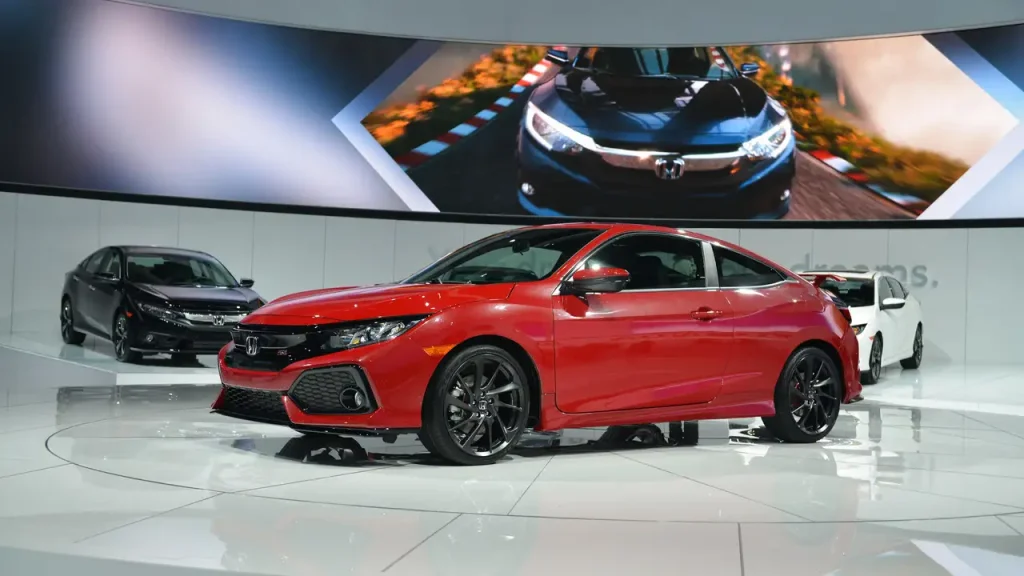
Honda Civic Si Prototype
As someone who has always had a soft spot for affordable performance cars, I was immediately drawn to the Honda Civic Si. Every version of the new Civic I’ve driven so far has impressed me with its combination of sharp handling, practicality, and refinement, so I had high expectations for the Si. Based on what Honda was promising, it looked like the performance-focused Civic would have no trouble living up to them.
Honda was keeping some details under wraps, but the company hinted that the new Si would remain surprisingly affordable despite gaining a turbocharged engine and, for the first time in the model’s history, adaptive dampers. That’s a pretty compelling formula for an enthusiast on a budget. The previous-generation 2016 Civic Si coupe started at an approachable price, and the new model promised to add significantly more technology and performance without abandoning its value-oriented character.
The prototype itself looked fantastic as a coupe. The aggressive bodywork, sporty proportions, and prominent rear wing gave it plenty of attitude. Some of my coworkers thought the styling leaned a little too heavily into the Fast and Furious aesthetic, but I think that’s part of the appeal. A performance Civic should look like something special, and this one certainly did.
Honda was also hinting at more than 200 horsepower, along with sharper brakes and improved handling. If the production car could deliver those upgrades while maintaining a reasonable price, the Civic Si had all the ingredients to become one of the most appealing affordable performance cars on the market.
There was one major disappointment, though: there wouldn’t be a Civic Si hatchback. Buyers looking for a practical Civic with some extra performance would have to choose the Sport, while those wanting something considerably more extreme would need to step up to the much more powerful Type R.
Still, based on everything Honda was showing at the 2016 Los Angeles Auto Show, the Civic Si looked like exactly the kind of affordable enthusiast car the market needed. Count me in.
— Jake Holmes
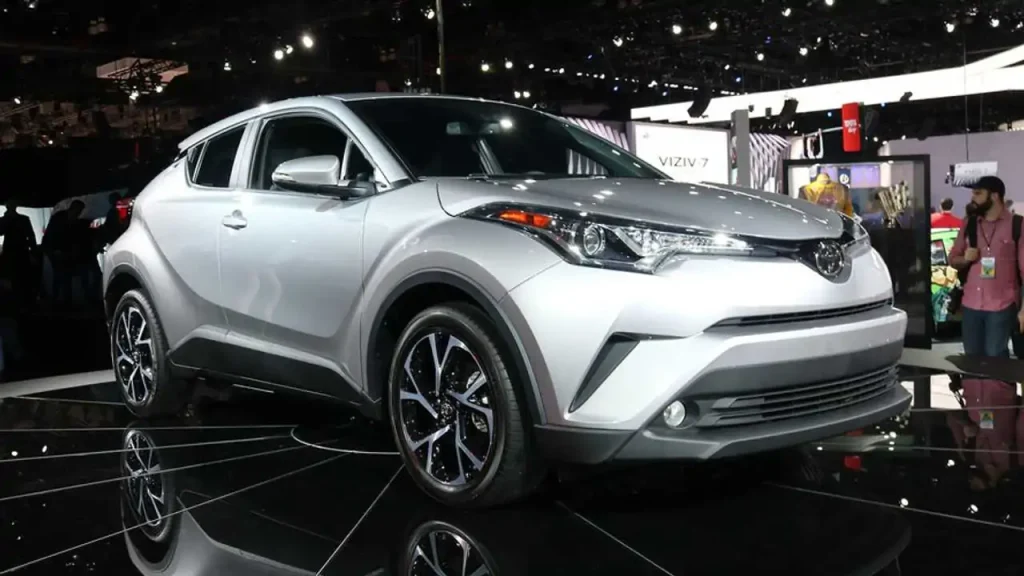
Toyota C-HR
Toyota’s first serious entry into the compact crossover market looks like it could be a formidable competitor. Built on the same basic platform architecture as the Prius, the new Toyota C-HR takes a very different approach to styling, trading the Prius’s polarizing shape for a much more aggressive and youthful design.
Under the hood, the C-HR uses a 2.0-liter four-cylinder engine producing 144 horsepower (107 kilowatts), with buyers offered a choice of front- or all-wheel drive depending on the market and configuration. Those numbers aren’t going to make the C-HR a performance crossover, but the combination of sensible power, compact dimensions, and everyday practicality should make it well suited to urban drivers and small families.
The styling is arguably the C-HR’s biggest selling point. Toyota gave the crossover sharp lines, distinctive lighting, a sloping roofline, and sculpted bodywork that helps it stand out in an increasingly crowded segment. It’s adventurous enough to attract attention without going so far that it becomes difficult to live with.
The interior is just as promising, offering a surprisingly spacious cabin along with a healthy selection of comfort and convenience features. Toyota also planned to introduce a hybrid version shortly after the initial launch, giving buyers another option for improved efficiency.
The C-HR seemed especially well suited to younger buyers looking for something practical but unwilling to settle for another anonymous crossover. If you still think millennials aren’t interested in cars, the C-HR might be enough to change your mind once it reaches dealerships.
— Jeff Perez
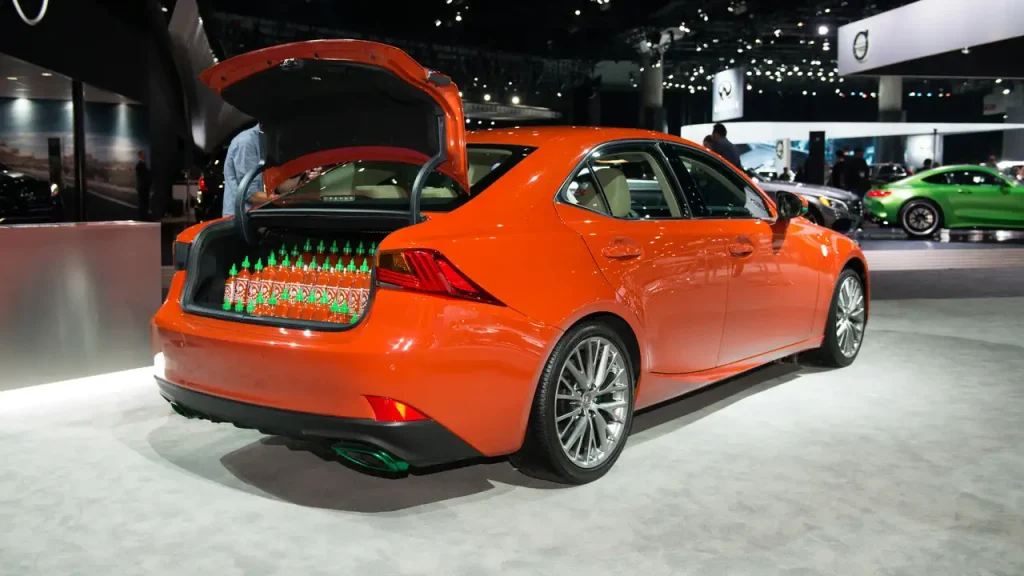
Lexus IS Sriracha Edition
As automotive journalists, we’re usually not all that excited about one-off custom cars. They’re fun to look at, sure, but there’s often a catch: the average buyer will probably never get the chance to own one, let alone drive it. The Lexus IS Sriracha Edition, however, was different. Lexus went all-in on the theme, and the attention to detail made this one-off impossible to ignore.
Yes, that’s its official name: the Lexus Sriracha IS. And the car takes its inspiration from America’s favorite hot sauce to an almost absurd degree. The red exterior features what appears to be chili-flake detailing, while bright green accents mimic the cap of a Sriracha bottle. The unmistakable red-and-white rooster logo is splashed across the car, making sure nobody could possibly mistake what inspired the build.
Lexus even leaned into the joke with the tagline “America’s favorite chili pepper based vehicle.” It’s ridiculous, but that’s precisely what makes the car so entertaining. Rather than simply giving an IS a flashy paint job, Lexus turned the entire vehicle into a rolling tribute to Sriracha.
And who better to bring such an outrageous idea to life than West Coast Customs, the legendary Los Angeles shop best known for its starring role on Pimp My Ride? The customizer transformed the concept into exactly the sort of over-the-top creation you’d expect from a build described as “Proof that everything is hotter with Sriracha.”
It’s not a car most people will ever have the opportunity to buy, but that’s beside the point. The Sriracha IS was created to have fun, grab attention, and prove that even a luxury sedan can have a sense of humor.
— Kanishka Sonnadara
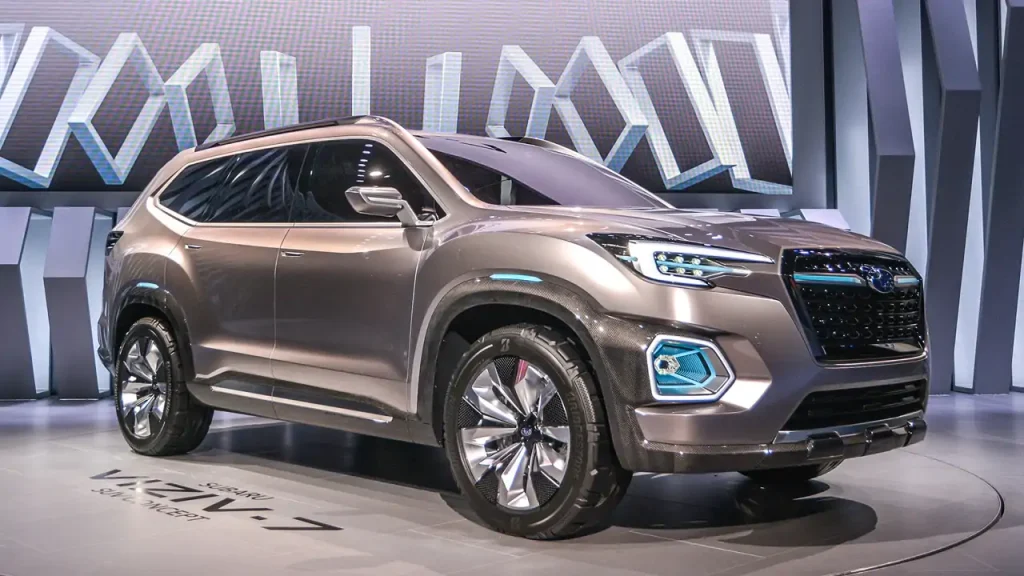
Subaru Viziv-7 Concept
I’m not usually someone who gets excited about large SUVs, but the Subaru Viziv-7 Concept managed to win me over. More importantly, it looked like exactly the kind of vehicle Subaru needed at the time. The brand was already performing strongly in the U.S., but its lineup still had a noticeable gap: there was no large, three-row SUV capable of taking on some of the biggest players in the segment.
The Viziv-7 was designed to fill that hole. Subaru envisioned it as a seven-seat SUV with enough space and versatility for growing families, while retaining the rugged character and distinctive design language associated with the brand. The concept was expected to evolve into a production model in early 2018, giving Subaru a much-needed entry into the increasingly competitive three-row crossover market.
Styling was one of the Viziv-7’s biggest strengths. In my opinion, it looked more appealing than the Volkswagen Atlas, with a massive yet surprisingly sophisticated presence. The sharp lines, modern proportions, muscular stance, and substantial bodywork gave it the visual weight you’d expect from a full-size family SUV without making it look unnecessarily bulky.
Even the complicated front fascia worked reasonably well. There was a lot happening around the grille, headlights, and bumper, but the overall design remained cohesive and distinctive. It looked modern without losing the ruggedness that Subaru buyers expect.
My biggest question was what Subaru would put under the hood. A 2.0-liter turbocharged four-cylinder seemed like one possible choice for the production seven-seater, but that sounded underwhelming for a vehicle of this size. The Viziv-7 needed an engine capable of moving a large, fully loaded SUV with confidence, especially if Subaru wanted it to compete seriously against established three-row rivals.
Still, the concept represented an important step for Subaru. The company had already built a strong following in America, and adding a large family SUV could give the brand another major growth opportunity.
— Anthony Karr
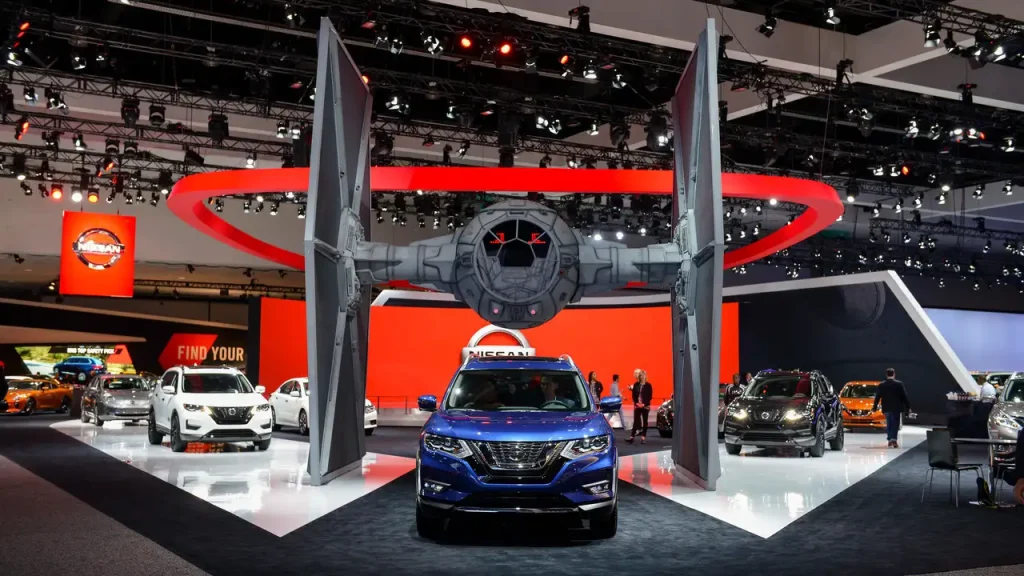
Imperial TIE Fighter + 2017 Nissan Rogue Star Wars Edition
No, your eyes aren’t deceiving you—and this isn’t some elaborate Photoshop creation. Nissan actually brought a full-size Imperial TIE Fighter to its booth at the 2016 Los Angeles Auto Show to grab attention for the limited-production 2017 Nissan Rogue One Star Wars Limited Edition.
The Rogue One package itself received a handful of Star Wars-inspired touches, including LED lighting, special Rogue One badging, black wheels, and a choice between Rebel Alliance and Galactic Empire exterior themes. It was a clever way to connect Nissan’s popular crossover with the upcoming Rogue One: A Star Wars Story film.
But let’s be honest: as cool as the Rogue One Edition was, it had absolutely no chance of stealing the spotlight from a gigantic TIE Fighter sitting right next to it.
The spacecraft was built at 1:1 scale, making it an impressive centerpiece for the Nissan display. According to the Star Wars universe, a standard TIE Fighter can reach speeds of roughly 746 miles per hour and is equipped with twin L-s1 laser cannons. Those specifications make even a sporty Nissan Rogue seem considerably less exciting by comparison.
Nissan may have set an impossible standard for itself here. How do you follow up on a full-size Imperial starfighter at the next auto show? There is only one obvious answer: introduce a Nissan called the Interceptor and park a TIE Interceptor alongside it.
— Dave Pankew
Final Verdict
The 2016 L.A. Auto Show balanced excitement with practicality better than many exhibitions of its era. The Alfa Romeo Stelvio Quadrifoglio captured imaginations with its breathtaking performance, the Mercedes-AMG E63 S redefined the super sedan, the Mazda CX-5 showed how thoughtful refinement can elevate a bestseller, and the Chevrolet Colorado ZR2 raised the bar for off-road pickups. Together with concept vehicles like the Cadillac Escala, these debuts demonstrated an industry embracing innovation without losing sight of driving enjoyment, making the 2016 Los Angeles Auto Show one of the decade’s most influential automotive showcases.
Together, these vehicles helped make the 2016 Los Angeles Auto Show one of the most memorable editions of the decade.