
The supercar badge gets thrown around far too often, but a select few machines genuinely earn it. The Porsche 959 is one of them.
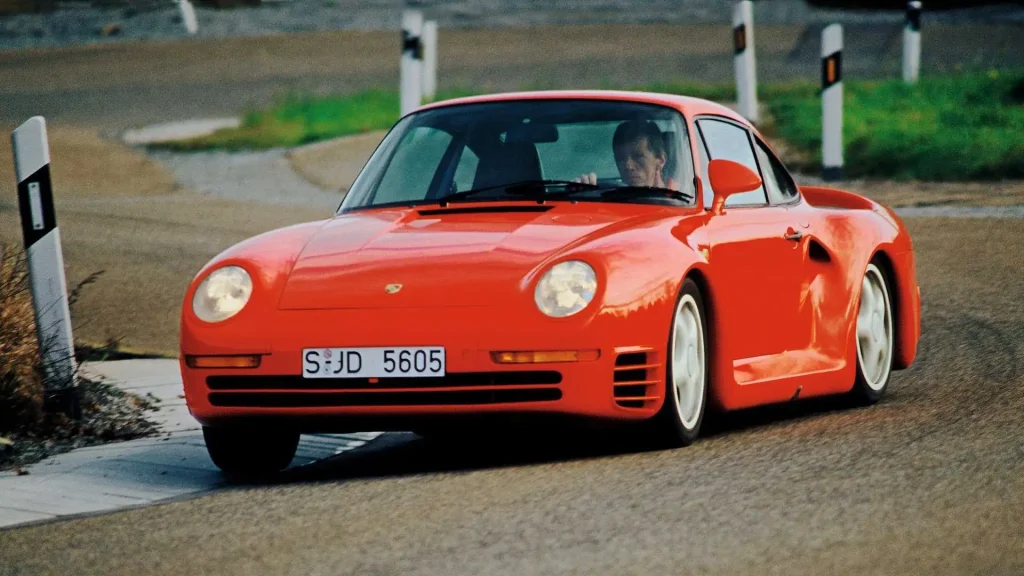
Name: Porsche 959
Debut: 1985
Production: 1987–1988, with eight additional cars built in 1993
Engine: 2.8-Liter Twin-Turbo Flat-Six
Power: 444 Horsepower
Torque: 369 Pound-Feet
Top Speed: 197 mph
Original Price: Approximately $225,000–$255,000
Modern Value: $800,000+
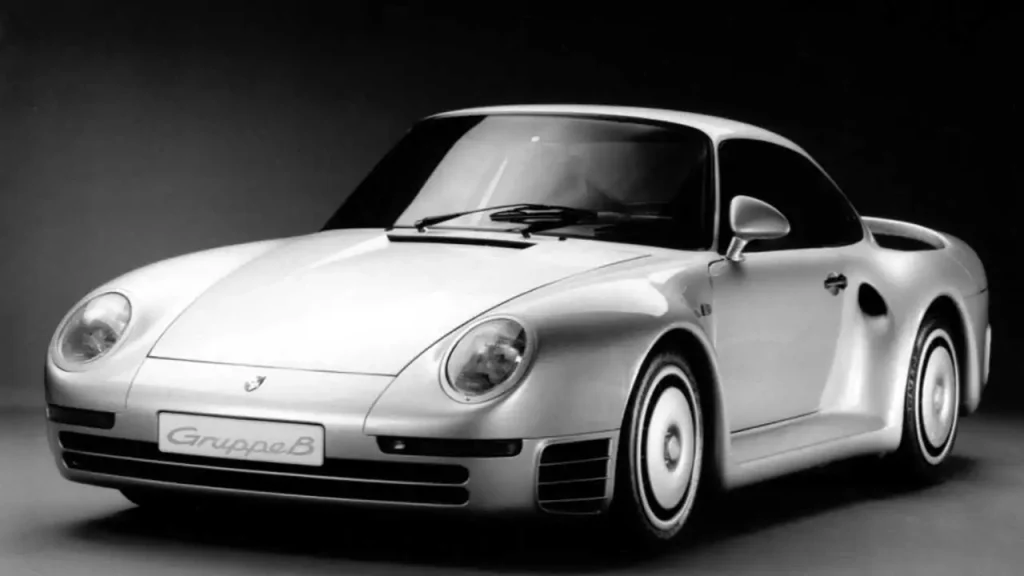
The word “supercar” gets thrown around far too often, but some cars genuinely earn the distinction. The Porsche 959 is one of them. Produced between 1987 and 1993, this technological showcase was originally conceived as a Group B machine for the World Rally Championship. Its story began with the Porsche Gruppe B concept, which made its debut at the 1983 Frankfurt Auto Show. Although the concept borrowed the basic platform and silhouette of the Porsche 911, underneath was a collection of advanced technology that seemed almost futuristic at the time, including computer-controlled variable all-wheel drive and an adjustable ride height.
The 959 was powered by a 2.8-liter twin-turbocharged flat-six producing around 444 horsepower and 369 pound-feet of torque. Power went through a sophisticated manual transmission and was distributed to all four wheels by an electronically controlled all-wheel-drive system. Unlike the simple mechanical systems found on many performance cars of the era, the 959 could vary torque distribution depending on conditions, giving the driver remarkable traction. Its adjustable suspension and ride height added another layer of sophistication, allowing the car to adapt to everything from smooth pavement to rougher surfaces.
Performance was staggering for the period. The 959 could reach approximately 197 mph and accelerate from 0 to 60 mph in about 3.6 seconds, while the quarter-mile reportedly took around 11.8 seconds at 126 mph. Those numbers put it among the fastest road cars in the world, but straight-line speed was only part of the story. The 959’s real advantage was the way it combined acceleration, stability, grip, and advanced chassis technology into one package.
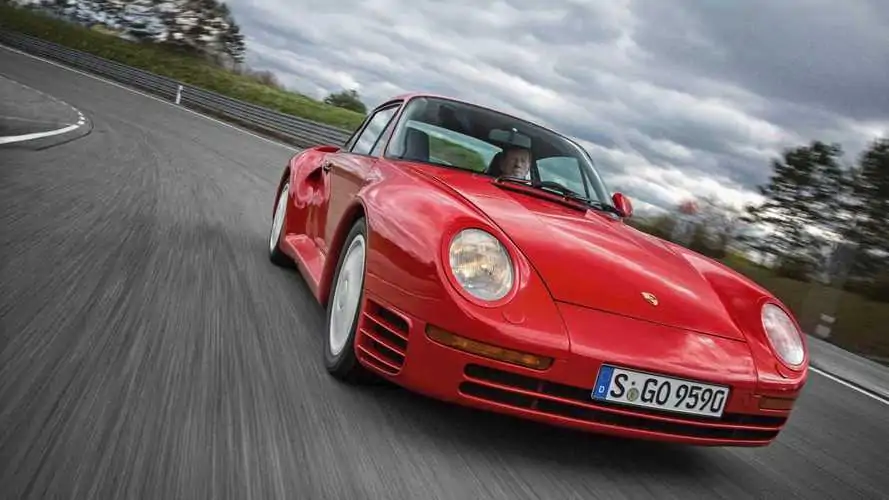
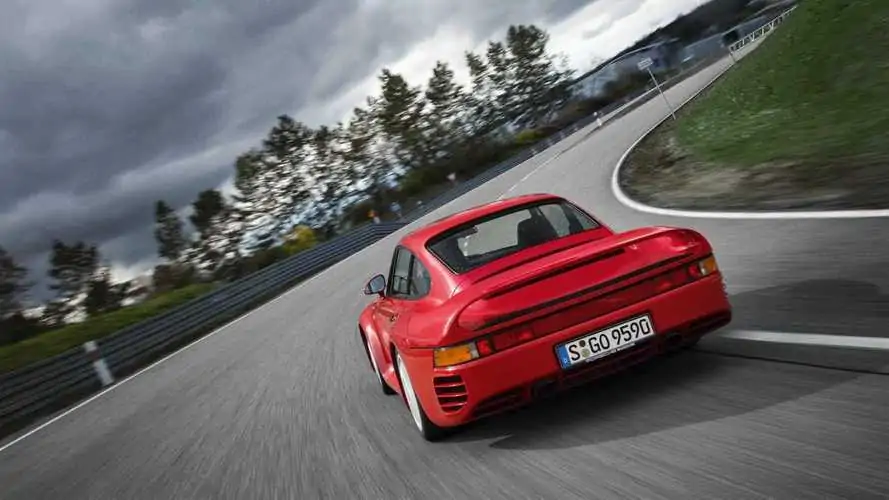
Porsche offered the 959 in Sport and Komfort forms, with the latter designed to be more suitable for road use and the Sport emphasizing performance and reduced weight. The company later produced 29 examples of the 959 S, which received modified turbochargers and produced approximately 508 horsepower. Independent testing reportedly recorded a top speed of around 211 mph, making the 959 S one of the fastest production-derived cars of its time.
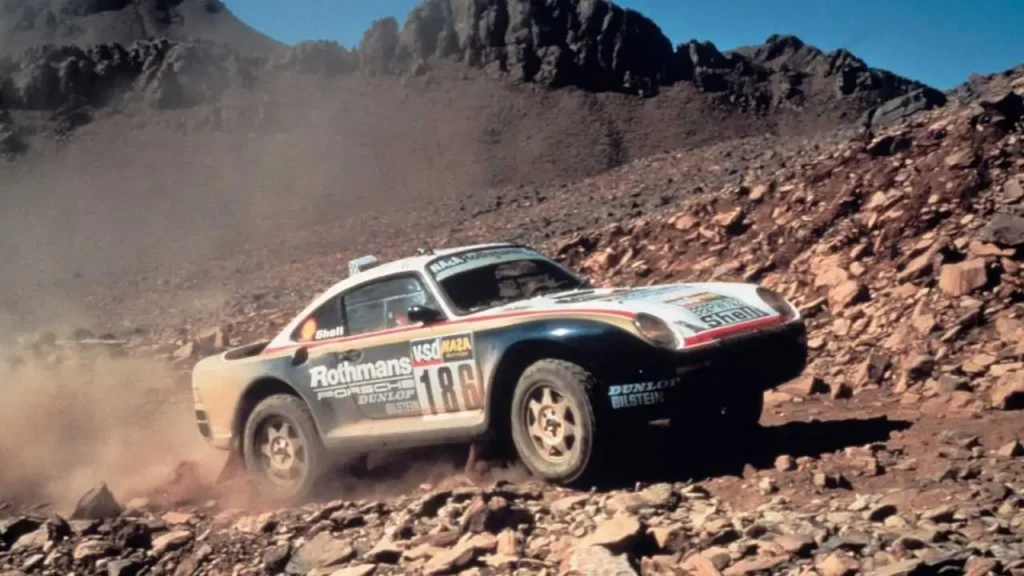
Ironically, the 959 never got the Group B career for which it had originally been designed. Development took so long that Group B was canceled before Porsche could properly campaign the production-based car in the championship. That didn’t prevent the 959 from proving its credentials in competition. Specially prepared versions entered the brutal Paris-Dakar Rally and finished first, second, and fifth in 1986. The car also competed at the 24 Hours of Le Mans that year, winning its class and finishing seventh overall.
The road-going 959 debuted at the Frankfurt Motor Show in 1985, but production didn’t begin until 1987 after a lengthy and expensive development process. The original price was reportedly around $225,000 to $255,000, although Porsche is said to have spent considerably more building each car. Only 337 examples were produced during the original run, including development cars. In 1993, Porsche assembled another eight cars from remaining parts, with those examples reportedly selling for approximately $455,000 each.
Today, the 959 is remembered as much for its engineering as its performance. Many of its innovations—advanced all-wheel drive, electronically controlled suspension, lightweight composites, and sophisticated traction management—would become standard ingredients in later generations of high-performance cars. The 959 introduced them at a time when they were still considered cutting-edge experimentation.
That is why the Porsche 959 remains one of the defining supercars of the 1980s. It wasn’t simply a faster 911 or another exotic designed to dominate magazine cover stories. It was Porsche’s attempt to build the ultimate road-going performance machine, and its influence can still be seen in the sophisticated supercars of today.