
A Classic Automotive Icon, Reimagined For The Wrist
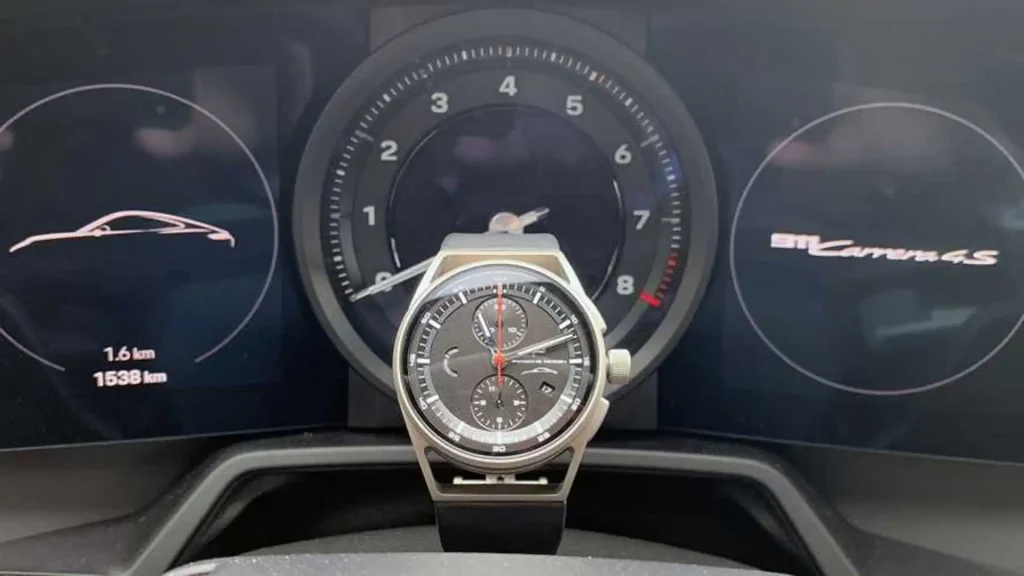
There are automakers that put their names on everything from clothing to luggage, and then there is Porsche Design. A wholly owned subsidiary of Porsche AG, Porsche Design has been turning automotive inspiration into high-end lifestyle products for decades. Its history with watches is particularly impressive. The company introduced its first timepiece in 1972 and later partnered with IWC to create groundbreaking watches, including the first black-cased wristwatch and the first titanium-cased watch. Porsche Design has even produced dive watches for the German military. It may not have the universal name recognition of Rolex or Omega, but the brand has earned serious credibility in the world of horology.
Its latest creation at the time was equally serious. The Porsche Design 911 Chronograph Timeless Machine was a limited-edition watch created to celebrate the arrival of the latest-generation Porsche 911. To see how well the two products worked together, I took the chronograph to Valencia, Spain, while attending the launch and driving the 2020 Porsche 911 Carrera 4S.
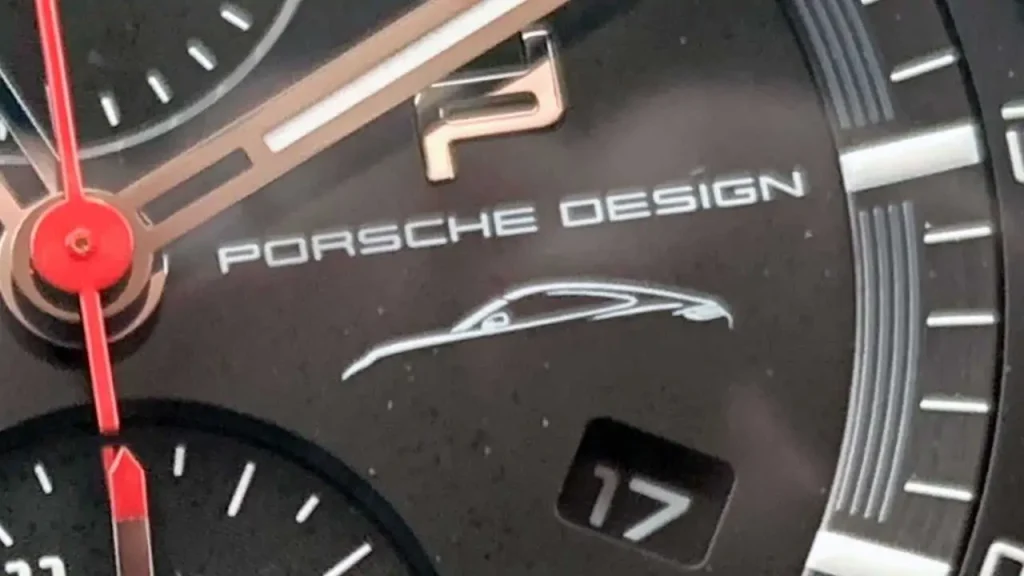
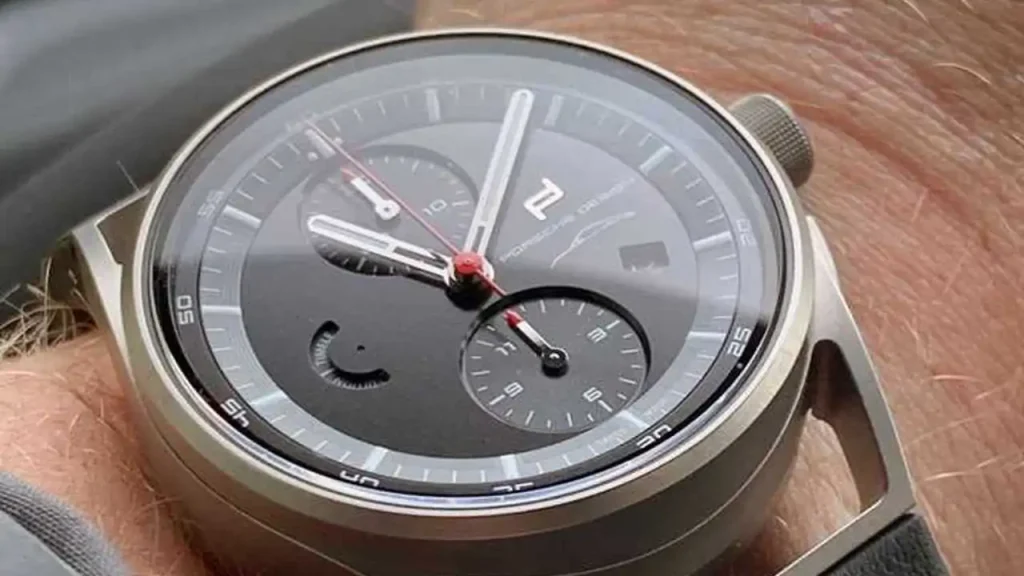
Porsche Design clearly treated the watch like one of its cars when it came to construction. The 42-millimeter case is made from bead-blasted titanium and topped with scratch-resistant sapphire crystal. A sapphire display back provides a view of the movement, while the case itself features neatly sculpted lugs and slim chronograph pushers. The leather strap uses the same type of material found in Porsche 911 seats and closes with a deployant buckle. Small details add personality, too, including the Porsche 911 silhouette beneath the logo and the unusual 9 and 11 markings incorporated into the minutes subdial. The date display at 4 o’clock is another nice touch.
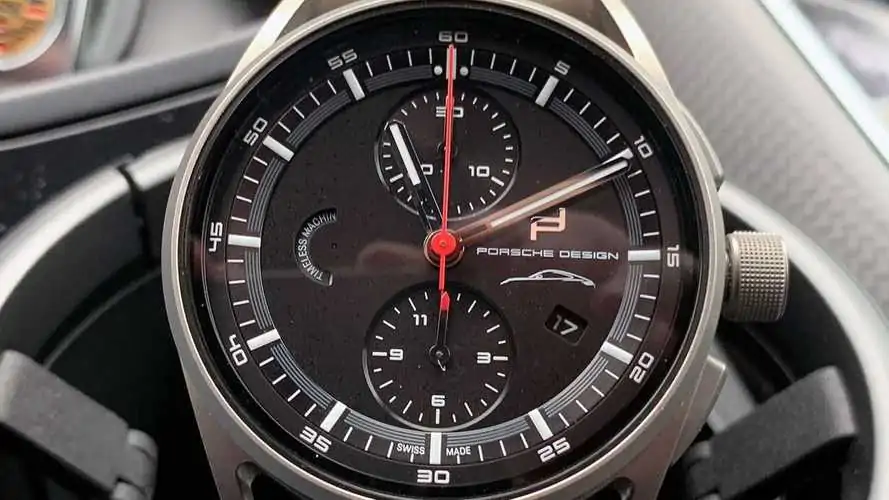
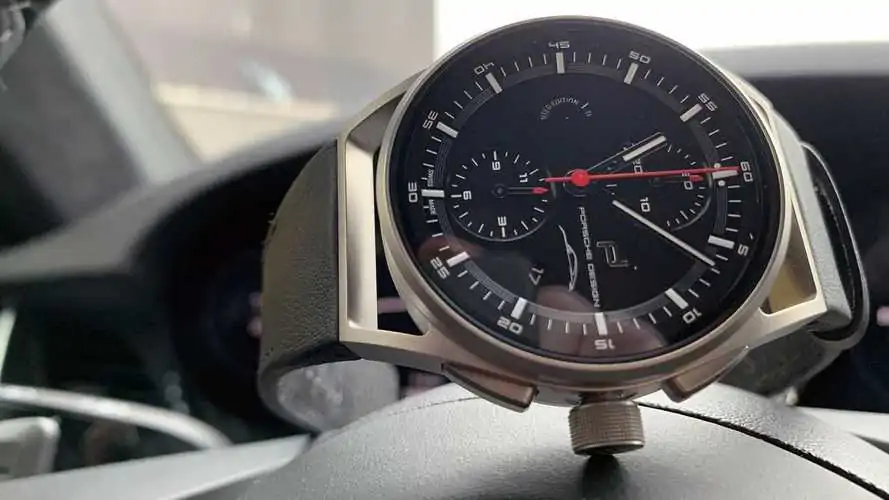
Visually, however, the watch takes a decidedly understated approach. Its black dial, black strap, and titanium case avoid the polished surfaces and flashy bezels found on many watches in this price range. There is barely any traditional bezel at all, which gives the 911 Chronograph a distinctly technical appearance. I would have liked to see a tachymeter scale, particularly given the watch’s connection to driving. Tachymeters may be old-fashioned, but they remain a fitting feature on a driver’s chronograph. The lume was another disappointment. Porsche Design says the watch uses luminous material, but during my time with it, I never found the illumination particularly noticeable. Compared with inexpensive watches that deliver surprisingly effective nighttime visibility, that was difficult to overlook.
Some fellow watch enthusiasts also questioned the 911 silhouette printed beneath the Porsche Design logo, arguing that the dial would look cleaner without it. I couldn’t agree. If you’re wearing a watch specifically created for Porsche 911 enthusiasts, there is nothing wrong with making that connection obvious.
One of the more unusual features is the rotating subdial at 9 o’clock. A small opening reveals either “Timeless Machine” or “Limited Edition” as the mechanism rotates. It gives the watch an interesting bit of theater, although its practical purpose is questionable. Because there is no conventional running-seconds hand outside of the chronograph system, the rotating display may provide some indication that the mechanism is operating. Still, putting “Timeless Machine” on a device whose entire job is to measure time feels deliberately tongue-in-cheek.
At 42 mm across, the case falls comfortably within the mainstream range for modern mechanical watches, but the 14.9-mm thickness makes it wear larger than the dimensions suggest. Compared with something like a 42-mm Omega Speedmaster, the Porsche Design feels considerably more substantial despite being slightly thinner. Part of that comes down to the shape of the case. The Speedmaster uses layers of crystal, bezel, and case surfaces to visually break up its thickness. The 911 Chronograph is much more monolithic, with its slab-sided titanium case forming a nearly uninterrupted profile.
That became especially noticeable while traveling through European airports, driving around Valencia, and visiting Circuit Ricardo Tormo. I found myself constantly conscious of the watch on my wrist and worried about knocking its expensive titanium case against something. The angular construction looks purposeful, but it does not exactly disappear on the wrist.
Readability, on the other hand, is excellent. White markings provide strong contrast against the black dial, while the red seconds hand adds a splash of color without becoming distracting. The hands are thin enough that they don’t obscure the chronograph registers, making the watch easy to read at a glance. The absence of bright, reflective surfaces is also useful behind the wheel. Unlike watches with highly polished cases and bezels, the 911 Chronograph is unlikely to throw distracting reflections toward the driver.

Underneath the case is a movement that may not be as exotic as a Porsche flat-six, but it has an equally impressive reputation for durability and versatility. The Porsche Design 911 Chronograph uses the ETA Valjoux 7750, one of the most widely recognized automatic chronograph movements in the industry. Variations of the 7750 have appeared in watches from brands including Omega, Panerai, IWC, Sinn, and Hamilton. Rather than being an exotic piece of engineering, it is essentially the dependable workhorse of the mechanical chronograph world. That also means servicing should be relatively straightforward for a competent watchmaker. The self-winding movement provides approximately 48 hours of power reserve.
As a chronograph, the watch doubles as a stopwatch. The red central hand measures elapsed seconds, while the 12 o’clock subdial records up to 30 minutes and the 6 o’clock register measures up to 12 hours. The movement operates at 28,800 vibrations per hour, and the watch is water-resistant to 100 meters. The chronograph pushers have a noticeably firm action, but that only adds to the mechanical satisfaction of operating them.
Accuracy was not something I formally tested. The watch accompanied me to the 2019 Detroit Auto Show before I headed directly to Spain for the 911 drive, requiring a switch from Eastern Standard Time to Central European Time. Despite the travel and time-zone changes, it appeared to keep good time. It is worth noting, however, that the Contrôle Officiel Suisse des Chronomètres, or C.O.S.C., had not certified the 911 Chronograph Timeless Machine as an official chronometer.
The biggest questions surrounding the watch were ultimately its price and its position in the market. At $5,411, the Porsche Design 911 Chronograph was considerably less expensive than something like a Rolex Cosmograph Daytona, but it was still competing against some extremely established names. The Omega Speedmaster Professional, for example, occupied a similar price range with its 42-mm case, while the TAG Heuer Carrera family offered several alternatives above and below the Porsche Design’s asking price. Porsche Design itself also offered less expensive chronographs, while brands such as Bulova and Citizen provided considerably cheaper options for buyers who simply wanted a mechanical-looking sports chronograph.
The Porsche Design feels well made and suitably premium, but its price was difficult to ignore. Wearing it, I didn’t necessarily get the impression that it was a $5,400 watch. Several fellow automotive writers and watch enthusiasts at the 911 launch, many of whom were wearing Rolex or Omega watches, reached a similar conclusion and suggested that the Porsche Design felt more naturally positioned in the $2,000-to-$3,000 range.
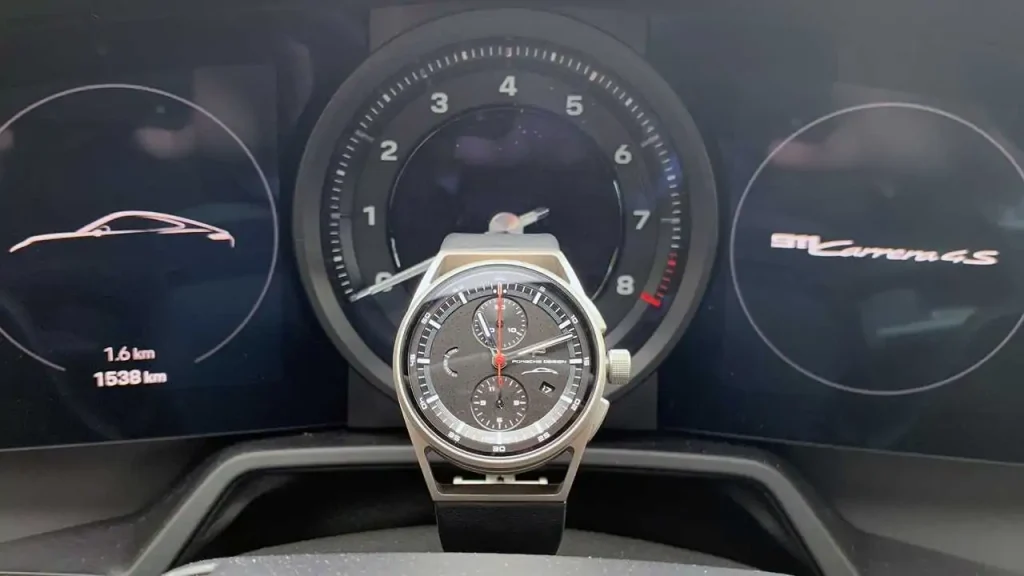
Exclusivity, however, is a major part of the equation. Porsche Design planned to produce just 911 examples of the 911 Chronograph Timeless Machine. That makes it dramatically rarer than the mainstream luxury chronographs competing for the same buyers. For a dedicated Porsche enthusiast who already owns the car, the clothing, and perhaps more Porsche memorabilia than the average garage can accommodate, the limited-production watch has an obvious appeal.
The 911 Chronograph Timeless Machine isn’t designed to compete for universal approval. It is a highly specific piece aimed at someone who appreciates both Porsche automobiles and mechanical watches. The construction is excellent, the movement has a proven pedigree, and the design ties directly into the 911 without becoming excessively flashy. For the Porsche owner with a serious watch collection, it makes a fitting accessory to rear-engined performance.
Porsche Design 911 Chronograph Timeless Machine Limited Edition
| Specification | Details |
|---|---|
| Movement | ETA Valjoux 7750 |
| Case Material | Titanium |
| Case Diameter | 42 mm |
| Case Thickness | 14.9 mm |
| Crystal | Sapphire Glass |
| Chronograph Functions | Hours, Minutes, Seconds |
| Strap Material | Leather |
| Movement Frequency | 28,800 BPH |
| Water Resistance | 100 meters |
| Price | $5,411 |
| On Sale | Spring 2019 |