
With its padded interior, weather-resistant design, and surprisingly cozy sleeping space, the Roofnest Condor makes car camping feel a lot more like home—if you’re willing to pay for the privilege.
Spring weather has a habit of making camping plans complicated. One day can bring warm sunshine, while the next delivers rain, wind, or even snow. That was the forecast for my long-planned trip to Sequoia National Park, and the last thing I wanted was to spend the weekend shivering in a soggy campsite. Making the situation even more questionable was my decision to camp inside the park rather than book an inexpensive hotel outside the entrance.
I genuinely enjoy camping. Cooking over a fire with some of my dad’s old cookware, falling asleep with the smell of cedar lingering in the air, and waking up beneath a canopy of trees is pretty close to perfection. Unfortunately, I’m not particularly talented when it comes to staying dry. Somehow, every camping trip ends with at least some wet, muddy gear. And when you’re lucky enough to secure a campsite reservation in Sequoia, you don’t casually give it up; the next opportunity could be many months away.
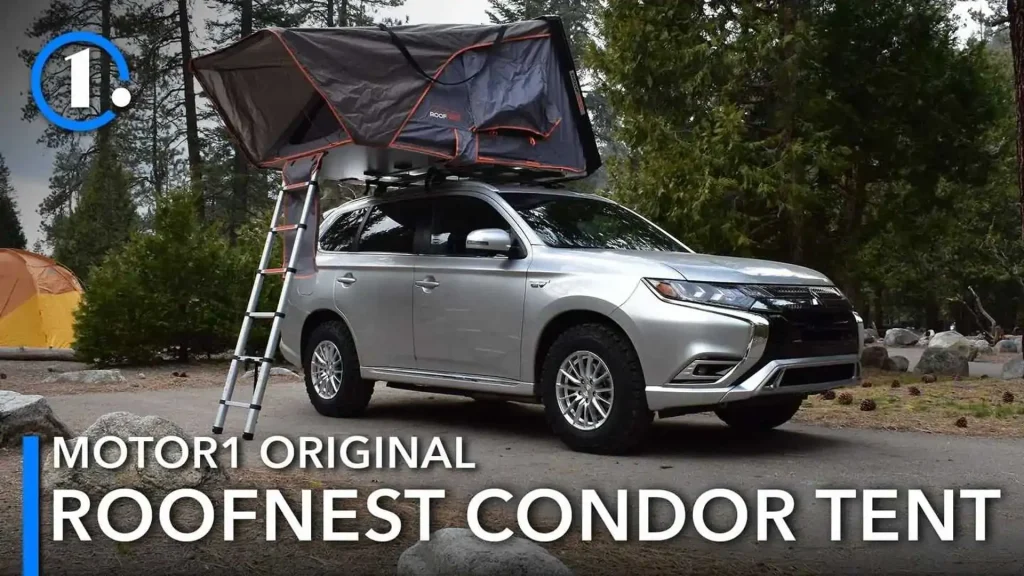
Fortunately, I had something new for this trip: a Roofnest Condor rooftop tent.
Settling Into Comfort
The Condor is Roofnest’s smallest hard-shell, fold-out rooftop tent. Unlike the company’s other compact option, the Sparrow, the Condor’s floor extends beyond the edge of the roof rack, creating additional living space once the tent is set up. Unfolded, it offers enough room for a queen-size bed, measuring 60 inches wide and 83 inches long. There’s also up to 50 inches of interior headroom, allowing two campers to sit up comfortably and read before bed, especially with the optional LED interior and deck lights. A 2.5-inch foam mattress provides the cushioning underneath, which should be comfortable enough for most people, though I brought an inflatable pad along as a backup.
I was still a little concerned about the rain and snow in the forecast. Fortunately, the Roofnest Condor uses seam-sealed, waterproof canvas walls, while its hard fiberglass shell offers additional protection from wind and precipitation. With the 2020 Mitsubishi Outlander PHEV fully charged and packed for the trip, my boyfriend and I set off for Lodgepole Campground in Sequoia National Park.
Sailing Down The Road
The drive north from Los Angeles was surprisingly free of traffic, letting us make the most of the Outlander’s limited power. Still, the added aerodynamic drag from the Roofnest quickly became apparent, especially on Interstate 5’s Grapevine, the long, steep climb that sent the Mitsubishi into battery-depleted turtle mode more than once. The Outlander PHEV was never exactly known for strong acceleration (though the 2021 model is an improvement), and adding a 135-pound, roughly foot-tall rooftop tent only made things harder for its modest powertrain. The SUV’s chunky all-terrain tires didn’t do much to help acceleration, either.
Once we crested the Grapevine, the flatter road made the extra aerodynamic drag much less noticeable, and the Outlander had an easier time holding 75 mph. After entering Sequoia through the southern gate, the scenery changed dramatically. With the speed limit dropping to 25 mph, the final hour became a much more relaxed and enjoyable part of the drive.
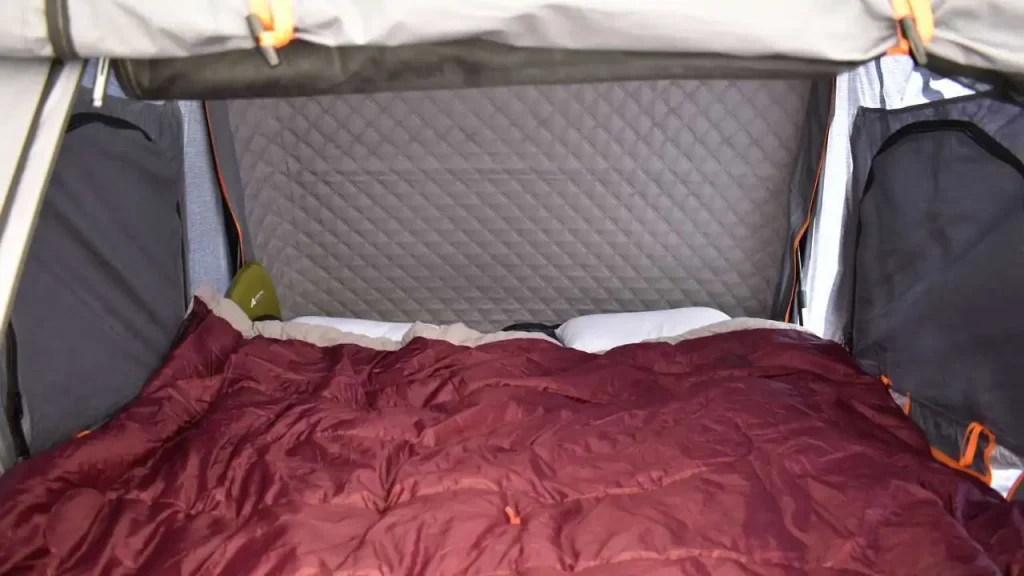
With only about five minutes of daylight remaining when we reached our campsite, Noah and I immediately started setting up the Condor. Releasing the latches allowed the sturdy gas struts to lift the fiberglass shell, revealing an integrated adjustable ladder that also supports the fold-out platform. The tent itself went up in about two minutes, although attaching the front door’s rainfly took a little longer because of its rigid metal support rods. Even as first-time users, we had the Condor ready for sleeping in roughly five minutes—about half the time I normally need to pitch my traditional dome tent.
Since rain wasn’t expected that first night, we left the tent windows open and enjoyed the cool, crisp air. In those nearly perfect spring camping conditions, the Roofnest was remarkably comfortable. The built-in mattress was better than some hotel beds I’ve slept on, while the click-lock ladder kept the tent platform steady as we moved around inside. I did manage to bump my head against the hard, unfinished fiberglass shell once or twice, but that was a minor inconvenience. Overall, the Condor was a welcome upgrade from the uneven floors, insects, and general discomfort of the tents I’m accustomed to.
Putting The Tent To The Test
One drawback of a rooftop tent is that you can’t simply drive away without packing everything up first. So when we decided to take the Mitsubishi around the park the next morning, the Condor had to come down. Fortunately, breaking camp was only slightly more involved than setting it up, and having already gone through the process once made things even easier.
We were glad we made the drive to the trailhead. Visiting General Sherman, the House, the Senate, the Supreme Court, and the President—not government buildings, but some of Sequoia National Park’s giant trees—put about 10 miles on my hiking boots. That was more than enough to make this hiking novice thankful we hadn’t attempted the trek back to camp on foot.
Back at camp, we raised the Condor again and started making dinner. Before long, though, storm clouds rolled in, and the wind carried that unmistakable smell of approaching rain. We managed to finish dinner and enjoy some s’mores, but just as we changed into our pajamas, the skies opened up. Our timing was almost perfect, but now came the real test: Would the tent keep us dry?
Despite my concerns, I eventually drifted off, briefly remembering a Boy Scouts camping trip when I forgot my waterproof ground cover and woke up in a puddle of freezing rain. Apparently, “Be prepared” still applies.
Miraculously, the next thing I knew, I was waking to the soft patter of rain against the canvas, with patches of sunlight barely filtering through the clouds. We had made it through the night without a problem—cold, perhaps, but completely dry. Whether it was the 10-mile hike, the comfortable mattress, or simply exhaustion, I’m not sure, but it turned out to be one of the best nights of sleep I’ve ever had while camping. I felt almost completely refreshed when it was time to head home.
Noah and I managed a quick breakfast between showers, then packed everything up and folded the Condor back into its compact form before pointing the Outlander toward the interstate.
“The Comfort Comes At A Cost”
I’m not being paid to say this, but my weekend with the Roofnest Condor delivered some of the most comfortable camping experiences I’ve ever had. Despite its uninsulated walls, the tent kept out the rain and wind, and setting it up proved easier than I expected—certainly less work than pitching a traditional ground tent. Sleeping above the ground also kept Noah and me away from the mud, dirt, and creepy-crawlies that seem to come with the territory. Maybe I’m getting soft, but after two restful nights without waking up to any unwelcome eight-legged visitors, I was pretty much sold on rooftop camping.
There was one major sticking point, though: the price. The Roofnest Condor cost $2,995 at the time, and that was before factoring in a roof rack and crossbars if your vehicle didn’t already have them. For that kind of money, you could put together an impressive ground-camping setup with a quality tent, a couple of cots, warm sleeping bags, and enough money left over to buy a National Park pass for the next 25 years. You could even cover around 40 hotel stays if a comfortable bed and private bathroom sound more appealing than sleeping beneath the stars. Still, for frequent weekend campers and serious overland travelers, the Roofnest Condor’s combination of convenience, comfort, and weather protection makes a compelling case for spending the extra money.