
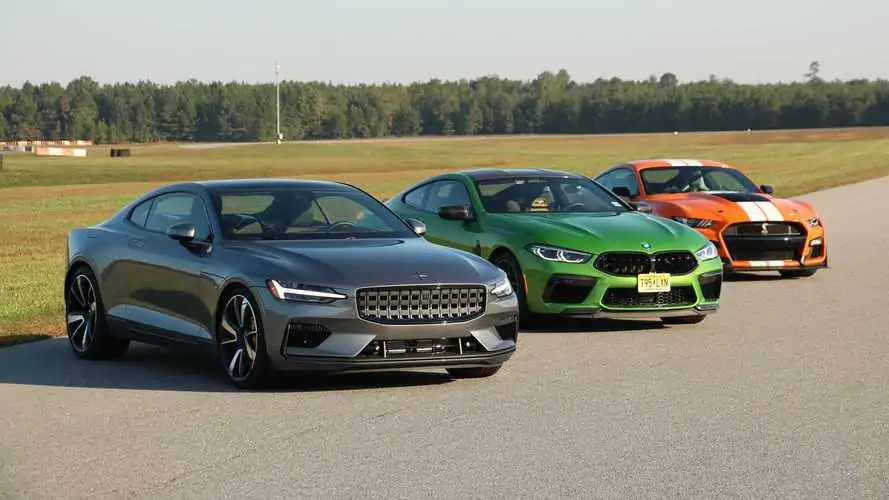
Three radically different performance cars put nearly 2,000 horsepower to the test.
If you’re a regular reader, you already know we have a soft spot for drag races. When the chance came to put three modern performance cars—the BMW M8 Competition, Ford Mustang Shelby GT500, and Polestar 1—head-to-head, there was only one thing to do: line them up and see which one could cover the quarter-mile fastest.
We headed south from New York City, making our way through Pennsylvania and West Virginia and taking advantage of some of the region’s twisty roads along the way. The destination was the North Carolina Center for Automotive Research, a closed-course facility where we could safely put all three cars side by side on the front straight and settle the question of which one was quickest.
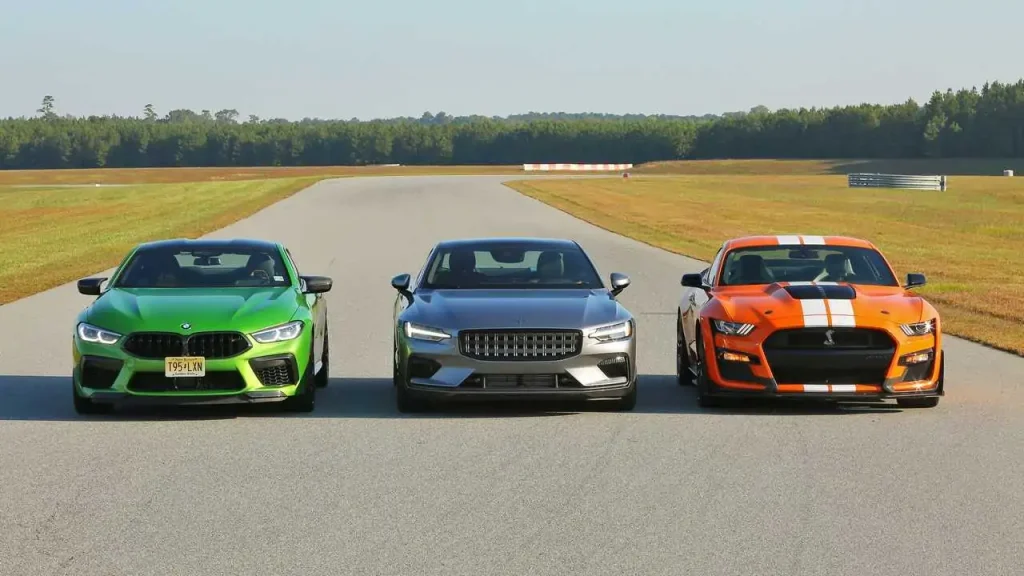
You might look at these three cars and wonder how they could possibly compete with one another. They’re wildly different machines, but the numbers tell a different story. The Shelby GT500 is the most powerful of the bunch, with its supercharged 5.2-liter V8 producing 760 horsepower and 625 pound-feet of torque. Ford says that, under ideal conditions, it can blast from 0 to 60 mph in just 3.3 seconds.
The BMW M8 Competition makes 617 hp and 553 lb-ft from its twin-turbocharged 4.4-liter V8. With all-wheel drive and a sophisticated launch-control system, BMW claims the M8 can reach 60 mph in 3.0 seconds, giving it the quickest claimed acceleration of the three. The Polestar 1 brings a completely different formula, combining a supercharged and turbocharged 2.0-liter four-cylinder with electric motors for 619 hp and a massive 737 lb-ft of torque. That’s more torque than either rival, but the Polestar weighs more than 5,000 pounds, limiting its straight-line performance to roughly 4.0 seconds to 60 mph. On paper, here’s how the three stack up:
| 2020 BMW M8 Competition | 2020 Ford Mustang Shelby GT500 | 2020 Polestar 1 | |
| Engine | Twin-turbo 4.4L V8 | Supercharged 5.2L V8 | Twincharged 2.0L I4 Hybrid |
| Output | 617 hp / 553 lb-ft | 760 hp / 625 lb-ft | 619 hp / 737 lb-ft |
| Transmission | 8-speed automatic | 7-speed dual-clutch | 8-speed automatic |
| Drive Type | AWD | RWD | AWD |
| 0-60 mph | 3.0 sec. | 3.3 sec. | 4.2 sec. |
| Top Speed | 189 mph | 180 mph | 155 mph |
| Weight | 4,251 lbs. | 4,171 lbs. | 5,170 lbs. |
| Base Price | $146,000 | $70,300 | $155,000 |
| Price As Tested | $175,745 | $81,980 | $155,000 |
Round One: Shelby GT500 vs. Polestar 1
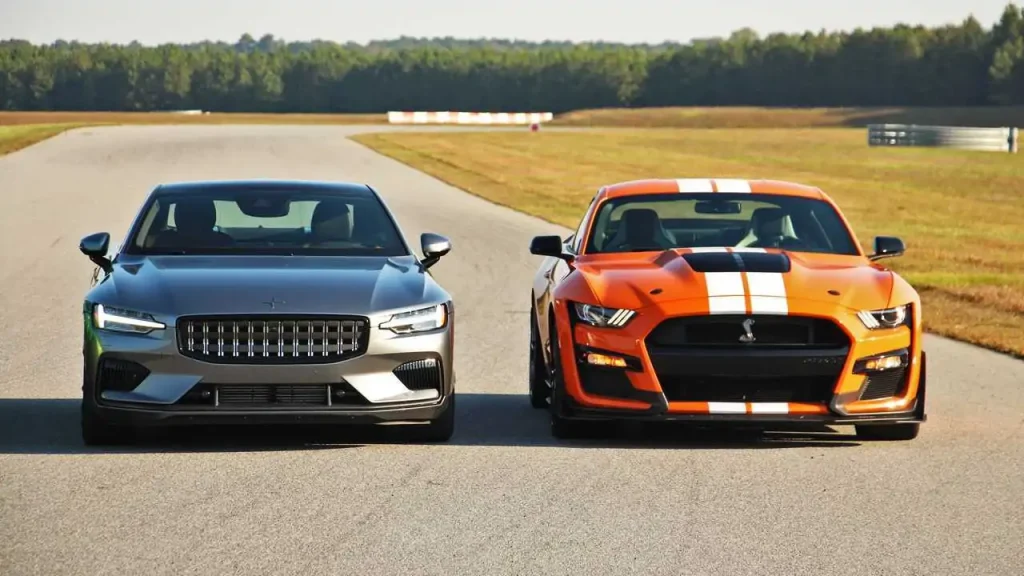
Because the BMW had the quickest claimed 0-to-60 time, it sat out the opening run. The relatively narrow front straight meant we could only line up two cars at a time, leaving the 760-hp Mustang and Polestar 1 to face off first. The Shelby had a substantial horsepower advantage, but the Polestar countered with another 100 lb-ft of torque and all-wheel drive—two advantages that can make a big difference in a short drag race, especially off the line.
The Shelby also had the advantage of Ford’s dedicated Drag Strip mode and adjustable launch control. We set the system at roughly 3,000 rpm, looking for the sweet spot between an aggressive launch and enough traction to keep the rear tires from spinning away the Mustang’s power.
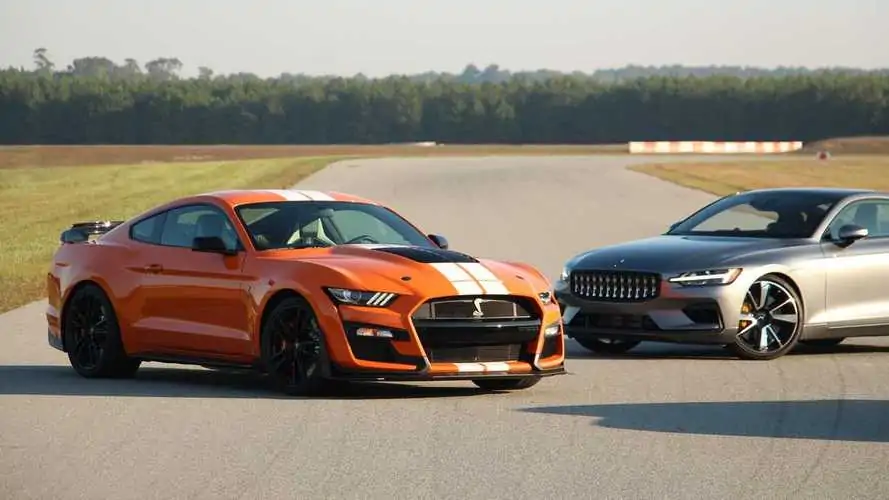
Despite having no dedicated launch-control system, the Polestar 1 rockets away from the line, immediately opening a gap on the Shelby. The Mustang’s launch control struggles to tame its massive power, with the wide Michelin Pilot Sport Cup 2 tires spinning until nearly third gear before they finally find traction. Once they hook up, though, the Shelby comes alive.
The Mustang’s 760 supercharged horses rapidly erase the Polestar’s early advantage. The hybrid’s mountain of torque gives it a strong jump off the line, but its 2.0-liter engine and electric assistance can’t match the Shelby’s V8 as the race stretches out. The Mustang takes the first victory by roughly a full car length, but the Polestar puts up a surprisingly strong fight.
Round Two: Shelby GT500 Takes On The M8 Competition
With the opening round decided, we line up the Shelby against the BMW M8 Competition. If there’s one area where the M8 has a clear advantage over both the Mustang and Polestar, it’s the launch. BMW’s sophisticated launch-control system—almost like having a supercomputer managing the start—helps the M8 reach 60 mph in a claimed 3.0 seconds under ideal conditions.
With both cars’ traction-control systems engaged and Associate Editor Clint Simone behind the wheel of the BMW, we get the signal and launch. If the Polestar seemed quick off the line, the M8 feels like a rocket. It immediately opens a huge gap on the Shelby as I once again fight to get the Mustang’s rear tires to hook up. Even with the GT500’s best launch of the day, the BMW pulls decisively ahead and cruises to a commanding victory.
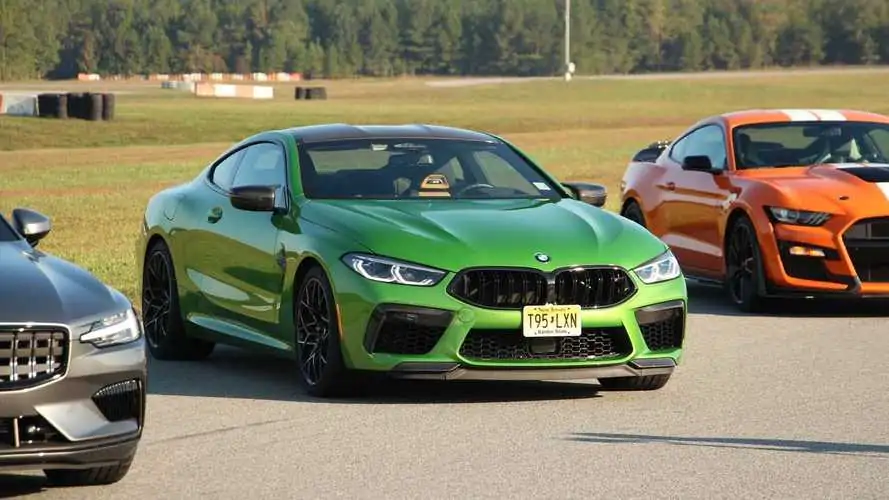
But we’ve already learned that getting the Mustang’s launch just right is no easy task. To get a better sense of the Shelby’s true straight-line performance—and avoid leaving every Ford fan frustrated—we line up the BMW and Mustang for one final showdown, this time starting from a 20-mph roll.
With the launch out of the equation, the two cars stay nearly even from the start. The BMW holds a slight advantage as we charge down the straight, quickly blowing past triple-digit speeds and closing in on the finish. Just when it looks like another win for the M8, the GT500’s extra power finally makes the difference. The Mustang edges past the BMW in the final moments, taking a dramatic photo-finish victory.
By A Nose
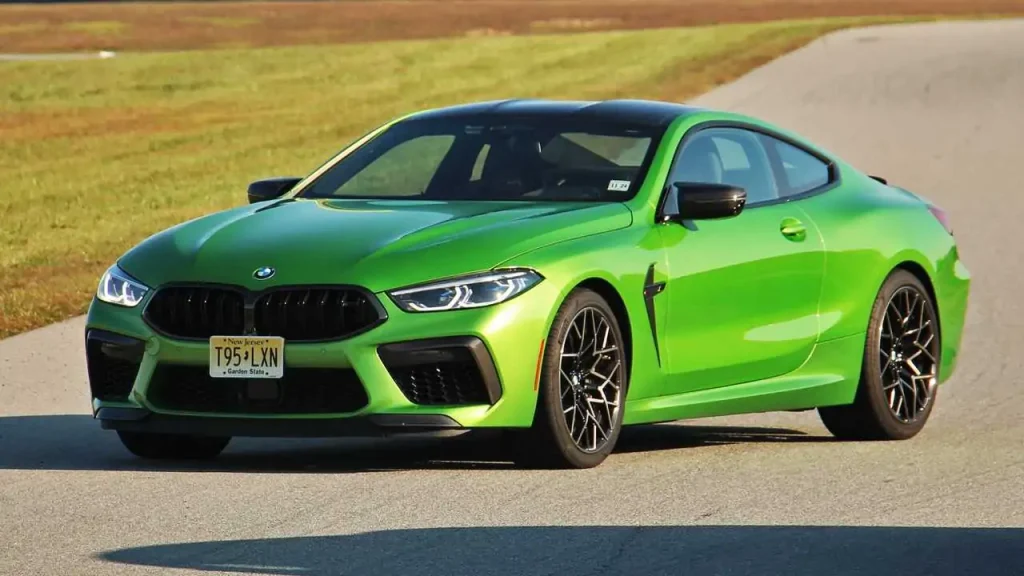
The BMW M8 Competition was unquestionably the quickest of the three off the line. The Shelby GT500, meanwhile, proved to be the most powerful, though that extra muscle can actually work against it. Even with a dedicated Drag Strip mode and sophisticated launch control, the Mustang struggles to put all that power to the pavement, spinning its tires when the race begins. It’s only when the cars are already moving that the GT500 truly shows what it can do.
Still, all three proved to be formidable drag racers, each taking a different approach to going fast. The Polestar 1 relies on instant electric torque, the BMW uses sophisticated launch technology, and the Mustang brings overwhelming V8 power. Put them on a straight stretch of pavement, and all three are seriously quick.
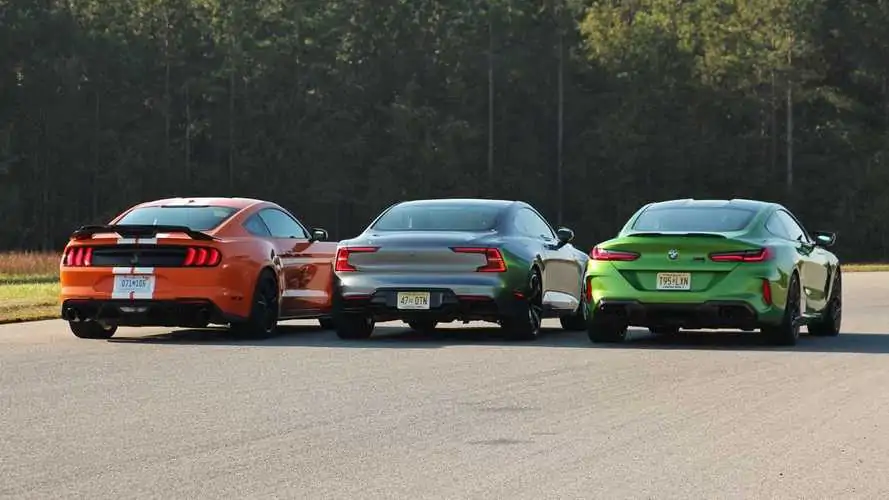
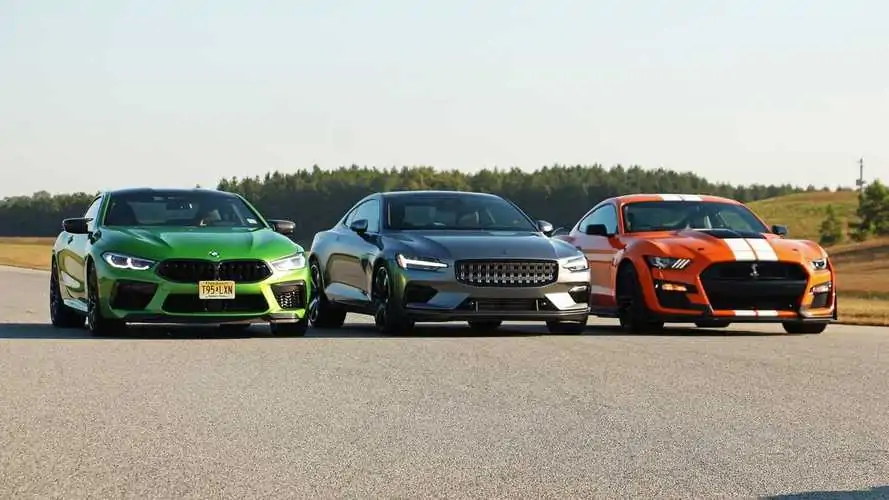
The drag races revealed three very different approaches to straight-line performance. The BMW M8 Competition was the clear winner when it came to launching from a standstill. Its all-wheel-drive system and sophisticated launch control allowed it to turn 617 hp into brutally effective acceleration.
The Polestar 1, meanwhile, demonstrated just how useful electric torque can be. Its 737 lb-ft gave it an immediate advantage off the line, even against a car with more than 100 additional horsepower.
Then there’s the Shelby GT500. With 760 hp, it is unquestionably the most powerful car here, but that power can be difficult to exploit from a dead stop. Once the car is moving, however, the supercharged V8 becomes the dominant force. The rolling race showed exactly what happens when the Mustang doesn’t have to fight its rear tires for traction.
Ultimately, there isn’t a single formula for going fast. The BMW relies on technology and traction, the Polestar combines combustion power with electric torque, and the Shelby simply overwhelms the pavement with V8 muscle. Put them together, and you get three very different interpretations of modern performance—and three cars that are seriously quick when the road ahead opens up.