
Five generations over three decades show how Subaru has continually refined its all-wheel-drive performance formula.
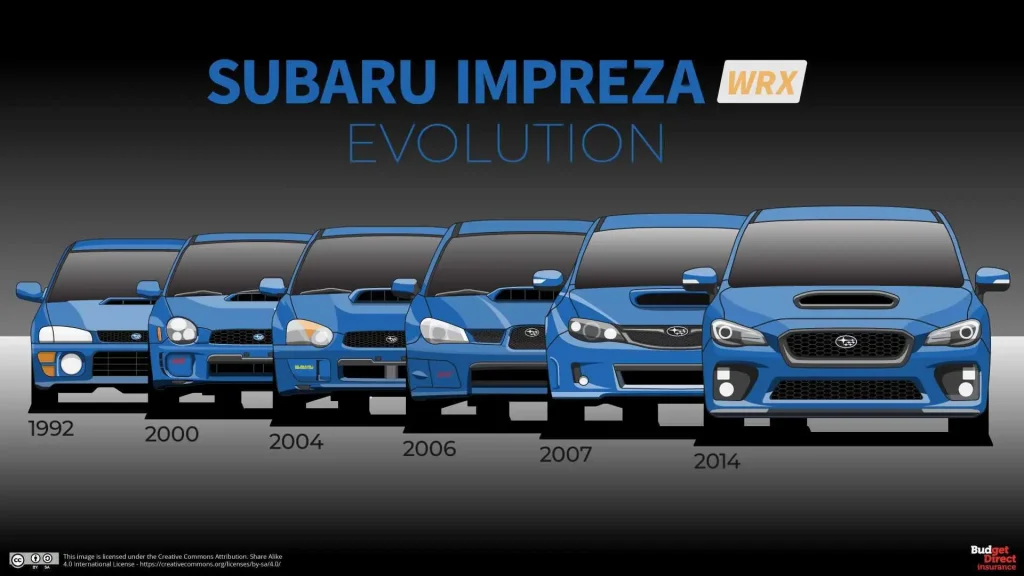
The Subaru Impreza may not be the first car that comes to mind when you think of performance, but add the letters WRX and the story changes completely. Add STI, and the ordinary compact sedan or hatchback becomes a serious performance machine.
Since the Impreza debuted in 1992, the WRX has evolved dramatically. What started as a relatively simple, rally-inspired performance car eventually became a sophisticated sports sedan featuring advanced chassis technology, electronically controlled drivetrains, and increasingly powerful turbocharged boxer engines.
The most important constant throughout that transformation has been all-wheel drive.
Subaru built the WRX around the idea that sending power to all four wheels could provide both performance and confidence. Over five generations, that philosophy has remained intact even as the hardware and software controlling the system have become far more sophisticated.
Here’s a look at how the WRX evolved from its early rally days into the modern performance sedan.
Table of Contents
First Generation:(1992-2000)
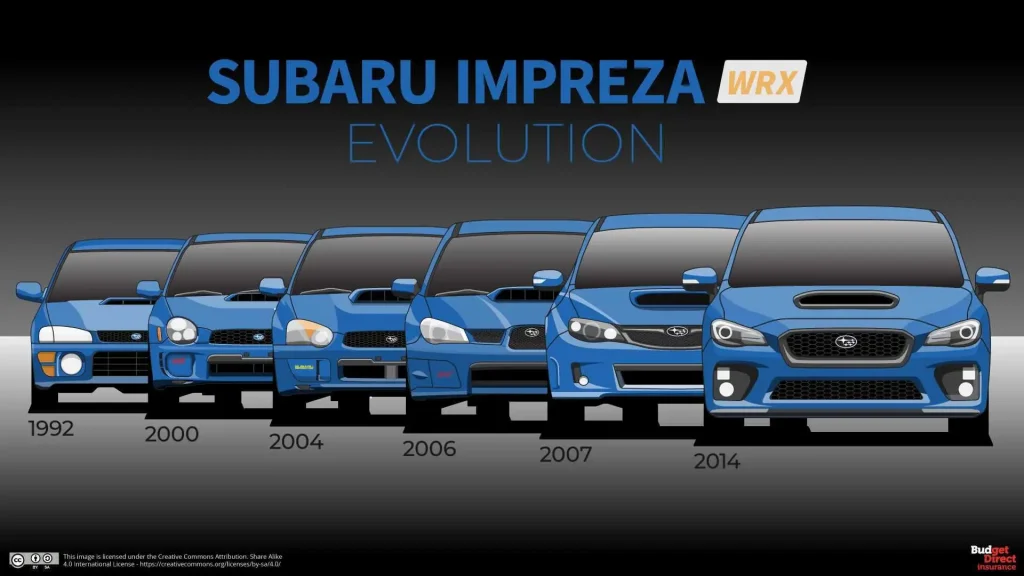
The first-generation Impreza debuted in 1992, though American enthusiasts would have to wait several years to get their hands on the WRX. Japan and other markets received the turbocharged WRX and more hardcore WRX STI, establishing the performance recipe that would eventually define Subaru’s iconic sports sedan. A turbocharged horizontally opposed four-cylinder, manual transmission, and all-wheel drive gave the WRX exceptional traction on loose surfaces while making it highly capable on twisty roads. More focused variants pushed the formula further, with the lightweight WRX RA emphasizing performance and the STI adding a stronger engine, upgraded suspension, larger brakes, and a more capable drivetrain. The first-generation WRX also cemented the relationship between Subaru’s production cars and its rally program, a connection that would become central to the model’s identity.
Second Generation:(2000-2007)
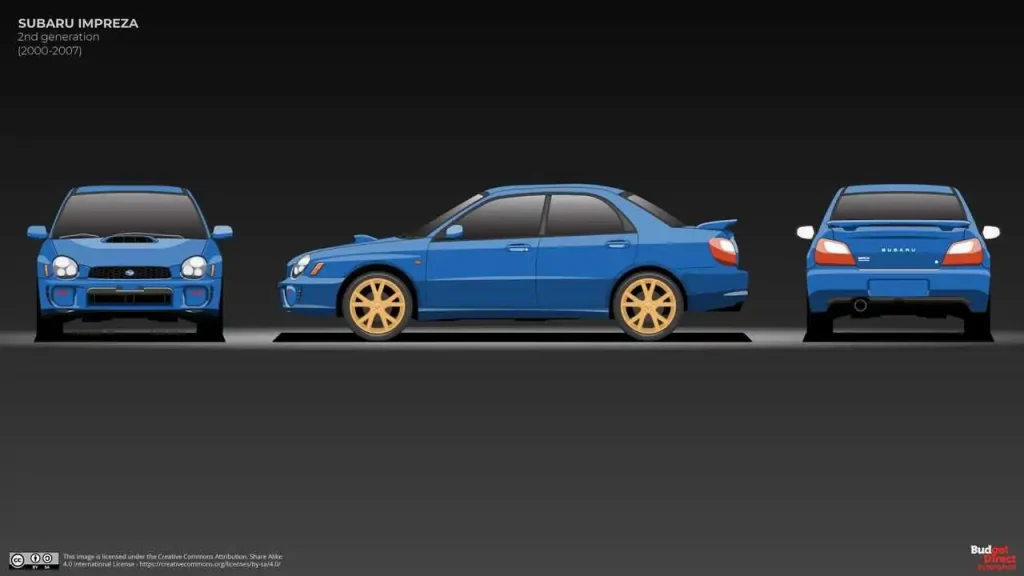
The second-generation Impreza arrived with one of Subaru’s most recognizable designs, quickly earning the “Bug Eye” nickname for its rounded headlights. Its larger body created more space and provided a stronger foundation for performance upgrades, but the biggest development for American enthusiasts was the WRX’s arrival in the United States for the 2002 model year. The U.S.-spec car used a turbocharged 2.0-liter boxer engine producing around 227 horsepower, paired with a five-speed manual transmission and standard all-wheel drive, making it one of the most affordable ways to combine serious performance with all-weather traction. Subaru later redesigned the front end twice, transforming the original Bug Eye into the more subdued Blob Eye and eventually the sharper Hawkeye.
2004 Facelift: From Bug Eye to Blob Eye
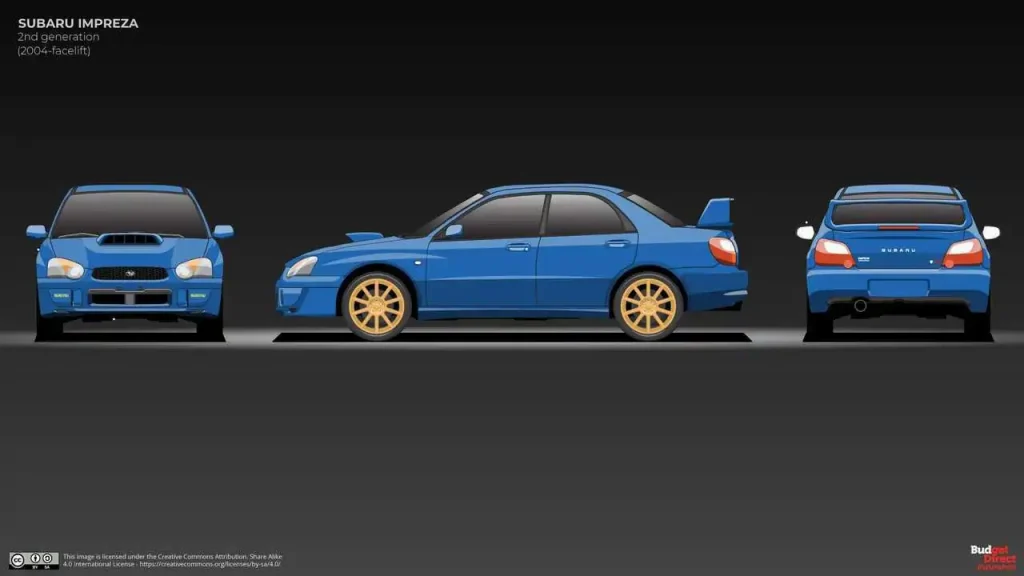
Subaru gave the Impreza a major front-end redesign for 2004, replacing the controversial round headlights with a more conventional appearance. The facelift also brought suspension revisions and other changes intended to improve the WRX’s handling. The updated styling was generally better received than the original Bug Eye design, although Subaru would soon give the car another dramatic makeover.
2006 Facelift: Enter the Hawkeye
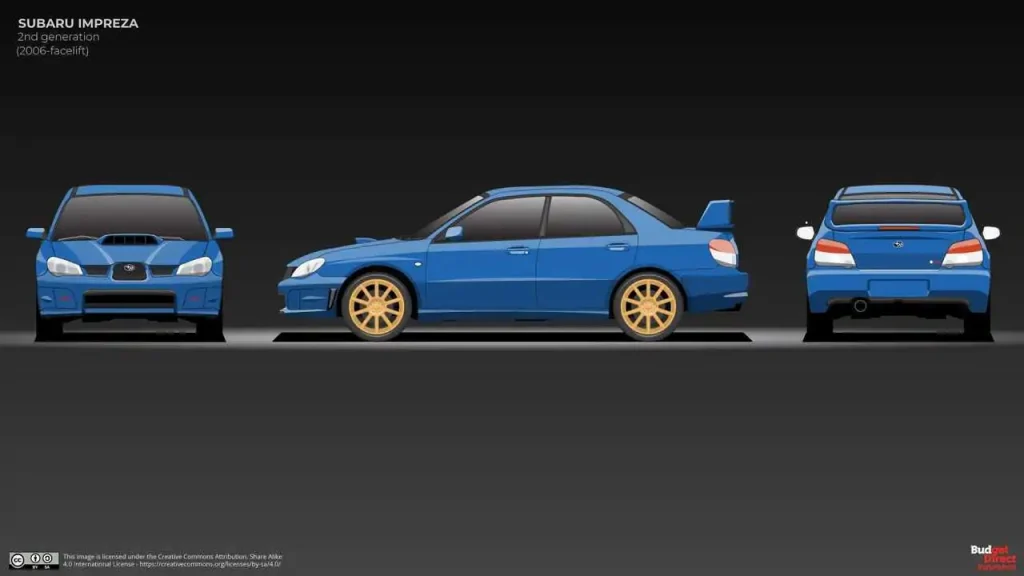
The next major facelift arrived for 2006 with a completely redesigned front fascia influenced by Subaru’s aviation heritage. New headlights, a revised grille, and an updated bumper created the appearance enthusiasts would come to know as the Hawkeye. Subaru also made important mechanical changes, including the adoption of a larger 2.5-liter turbocharged engine in several markets, along with chassis and braking improvements. The result was a more mature and capable WRX that still retained the performance formula that had made the nameplate famous.
Third Generation: (2007-2014)
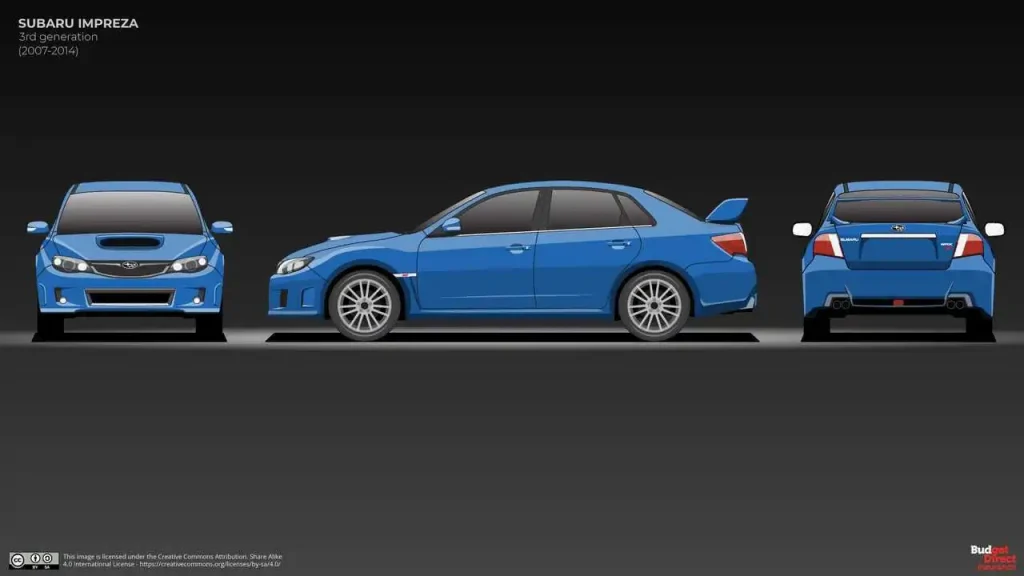
The third-generation Impreza represented another significant change, growing longer and wider to create a more substantial platform. Subaru also moved away from the traditional wagon body in favor of a five-door hatchback, adding practicality without giving up the WRX’s performance focus. The new generation retained a turbocharged boxer engine and Subaru’s symmetrical all-wheel-drive system while becoming increasingly sophisticated over its production run. The STI version evolved into an even more serious performance car, while the larger platform provided a stronger basis for suspension tuning, brake upgrades, and drivetrain improvements. The result was a WRX that delivered impressive grip and performance while becoming increasingly usable as an everyday car.
Fourth Generation: (2014-2021)
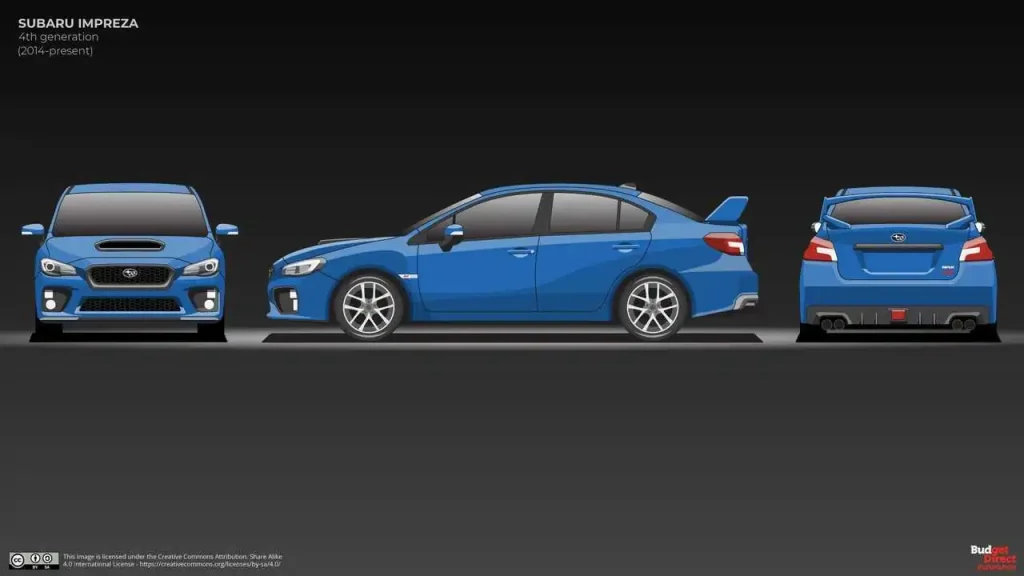
The fourth-generation WRX marked a major turning point, particularly in the U.S. market, where Subaru separated the WRX from the Impreza lineup and established it as a standalone model. The biggest mechanical change was the adoption of the FA20F 2.0-liter turbocharged boxer engine, which produced 268 horsepower and 258 pound-feet of torque. A six-speed manual remained available for enthusiasts, while Subaru also offered a continuously variable transmission with a performance-oriented control strategy. This generation introduced more sophisticated electronic chassis technology as well, including Active Torque Vectoring, which selectively applied the brakes to improve cornering and reduce understeer. The result was a more refined and technologically advanced WRX that still preserved the distinctive all-wheel-drive character established by its predecessors.
Fifth Generation:(2022-Present)
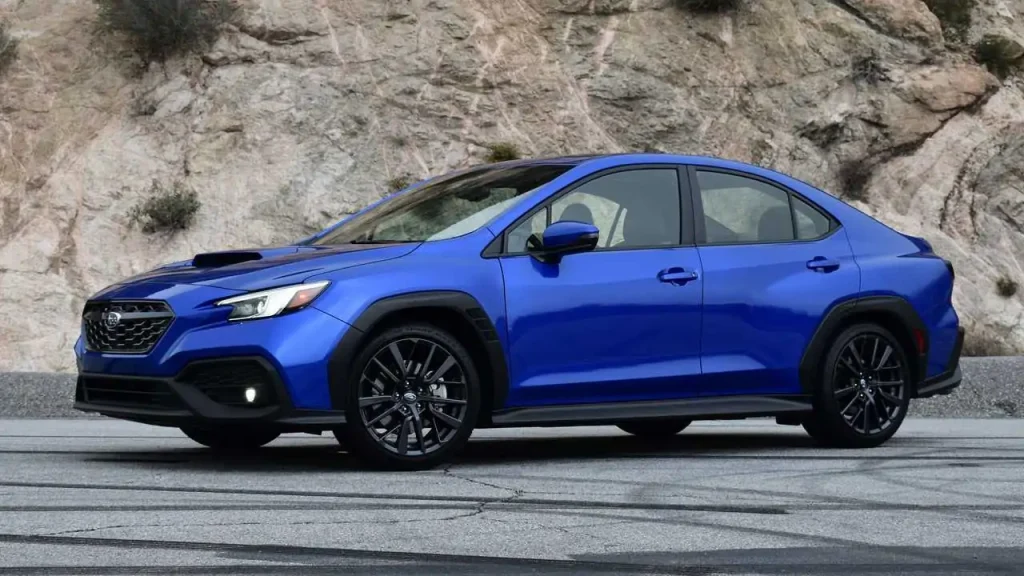
The fifth-generation WRX arrived for 2022 with another major engineering overhaul, replacing the previous 2.0-liter engine with a 2.4-liter turbocharged boxer-four producing 271 horsepower and 258 pound-feet of torque. Power continues to reach all four wheels through either a six-speed manual transmission or Subaru’s continuously variable transmission. More significant changes lie beneath the skin, however, as the fifth-generation model uses Subaru’s Global Platform, which provides a substantially stiffer structure. Subaru claimed a 28-percent increase in torsional rigidity, while the rear stabilizer bar was mounted directly to the body instead of the subframe. Combined with the revised suspension and lower center of gravity, these changes were intended to deliver sharper handling and better body control. Buyers seeking additional performance and technology can also opt for the WRX GT, which adds electronically controlled dampers and other chassis upgrades.
The WRX starts at $30,100, while stepping up to the GT trim pushes the price to nearly $43,000 and limits buyers to the CVT. Unfortunately, Subaru has already ruled out a hotter WRX STI, citing increasingly strict emissions regulations that would have given the high-performance model a relatively short future. There is still a possibility, however, as Subaru’s Australian division has suggested it could develop its own Subaru Tecnica International variant. Australia also gets a more practical alternative in the form of the WRX Sportswagon.